







Question: Question 3. Critically evaluate the effectiveness of the 70:20:10 model used in Telekom Malaysia Berhad in equipping talents to be future leaders. (Any logical answer
Question 3.
Critically evaluate the effectiveness of the 70:20:10 model used in Telekom Malaysia Berhad in equipping talents to be future leaders.(Any logical answer that is relevant to the question with the support of literature review) 400words!!! 400words!!! 400words!!!
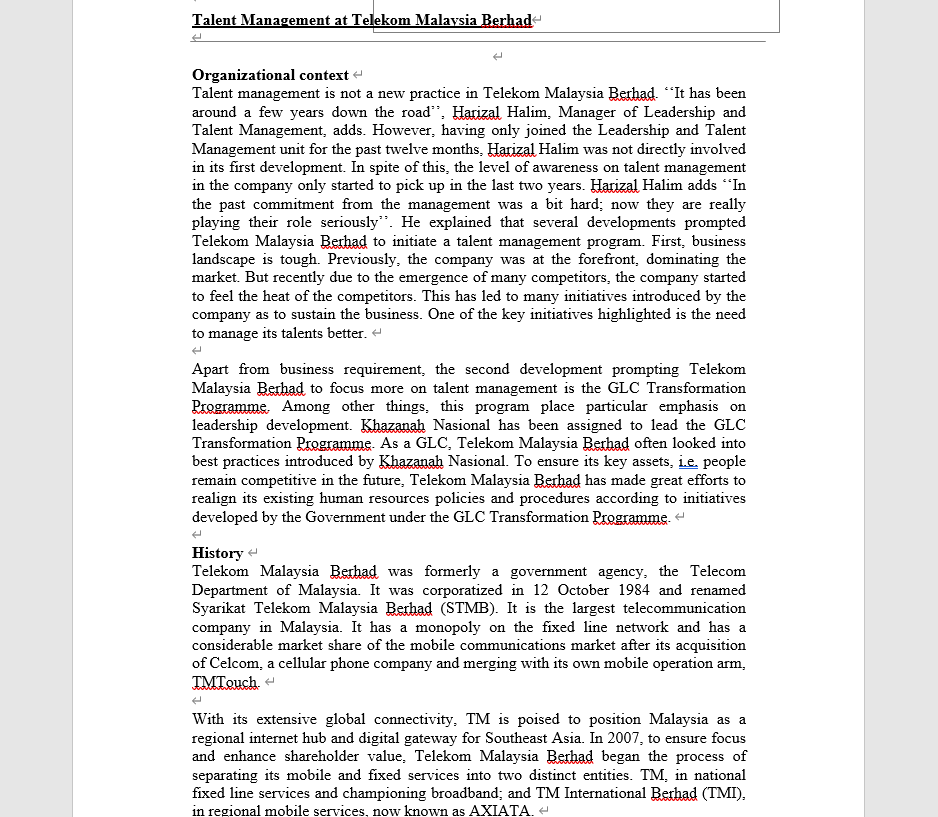
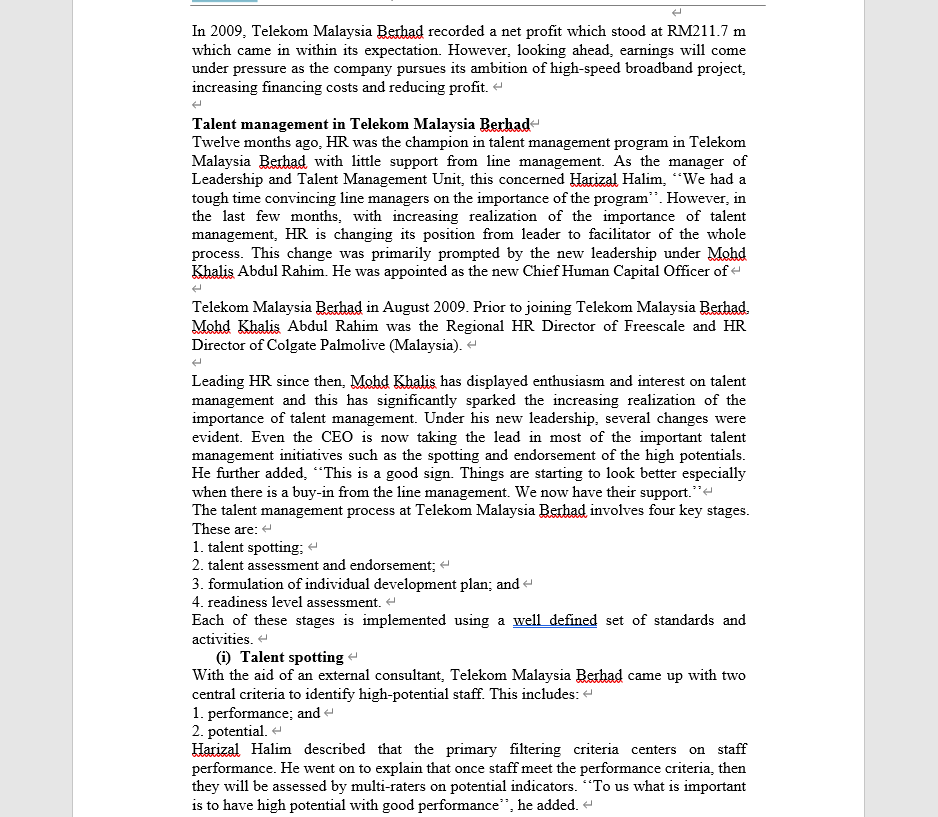
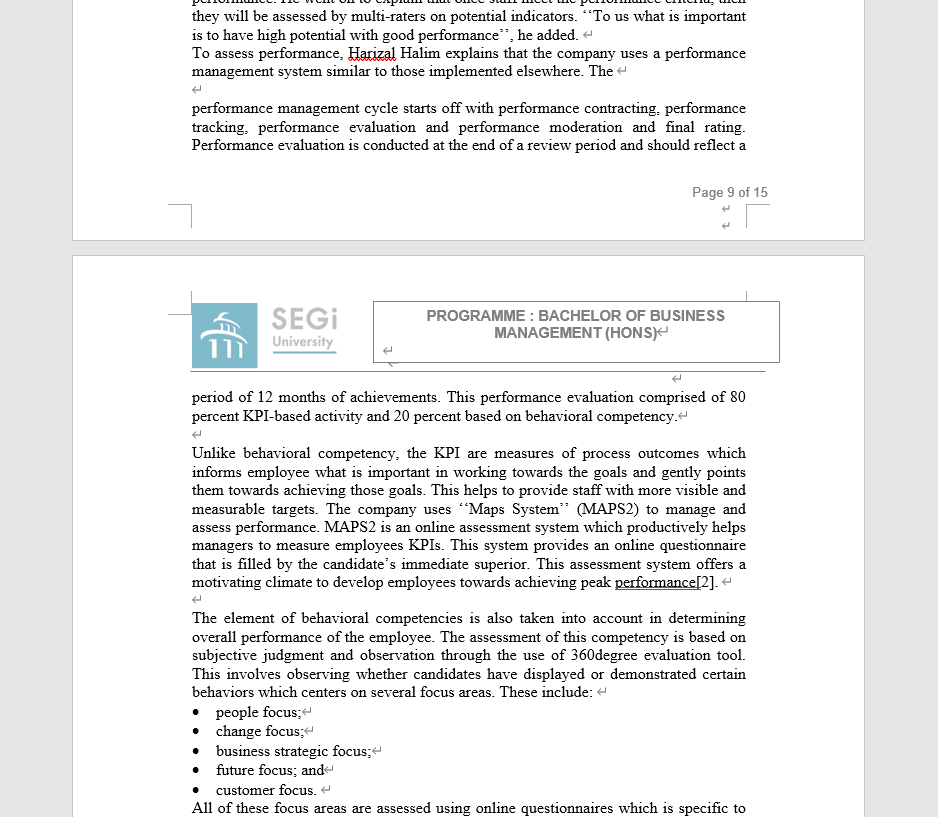
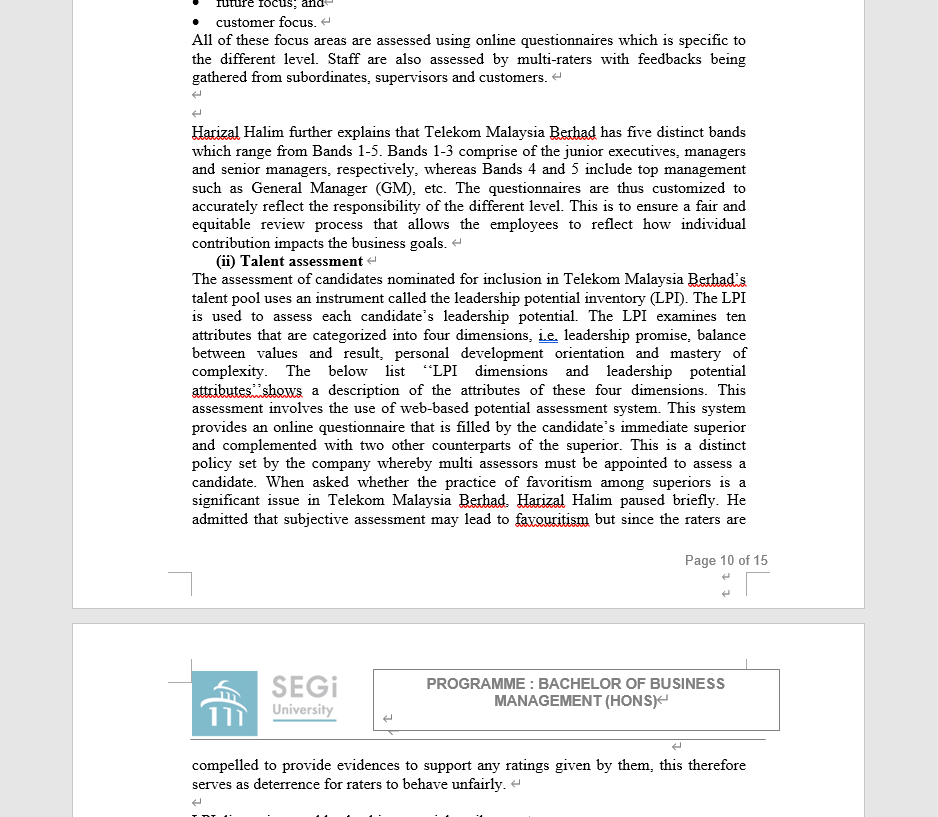
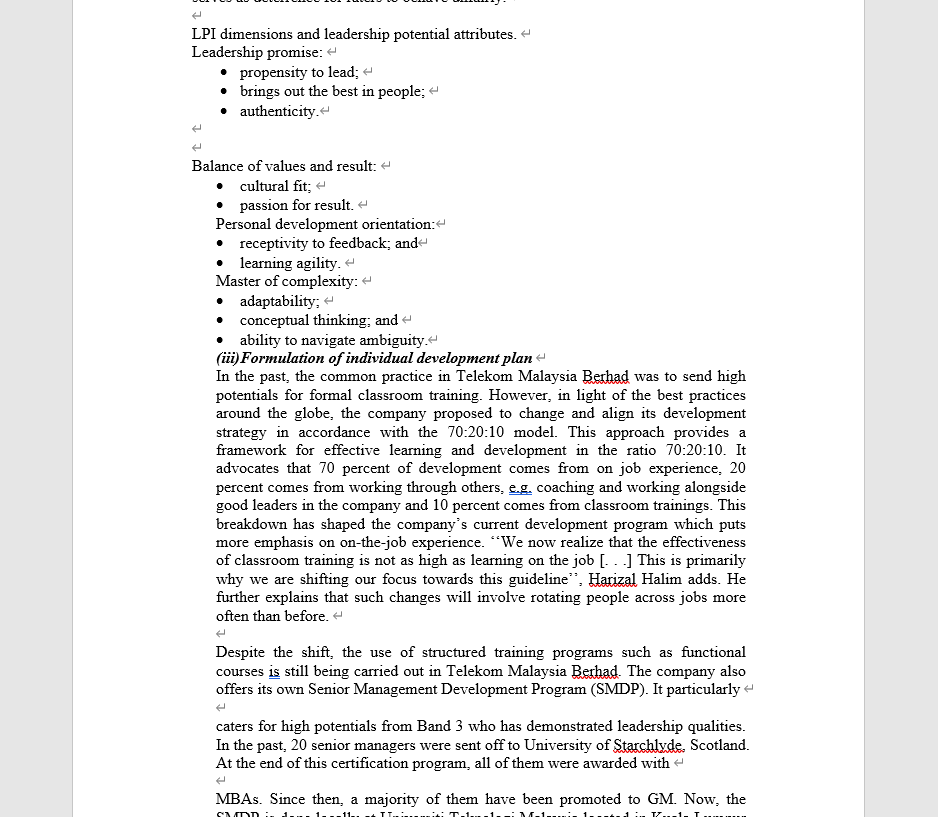
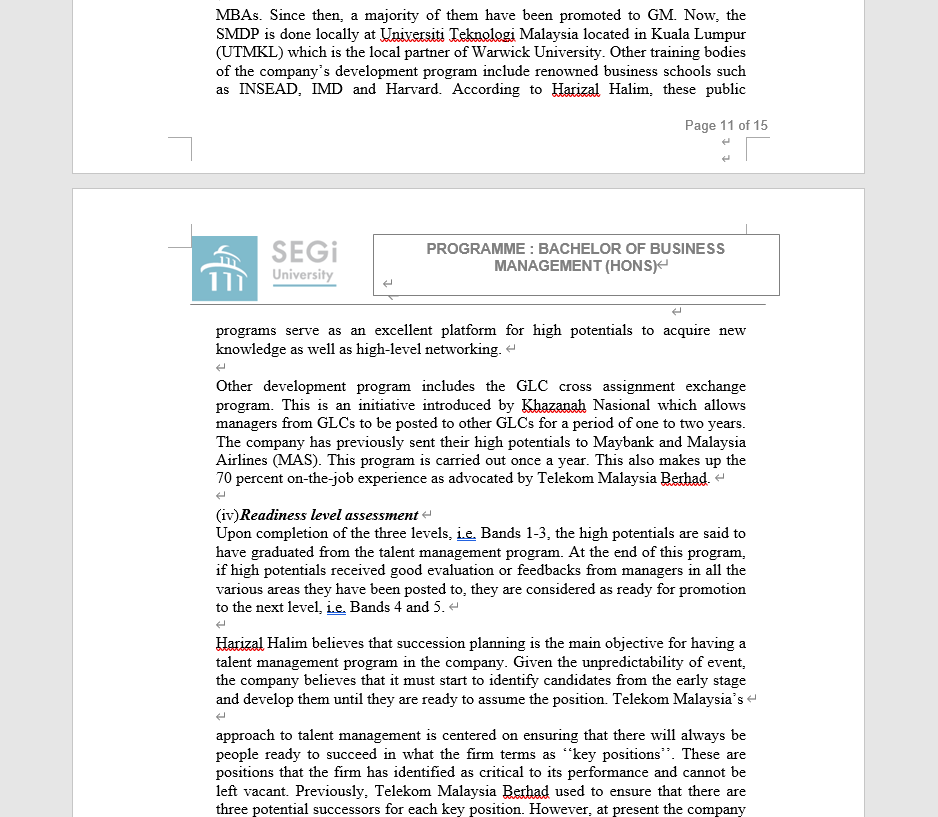
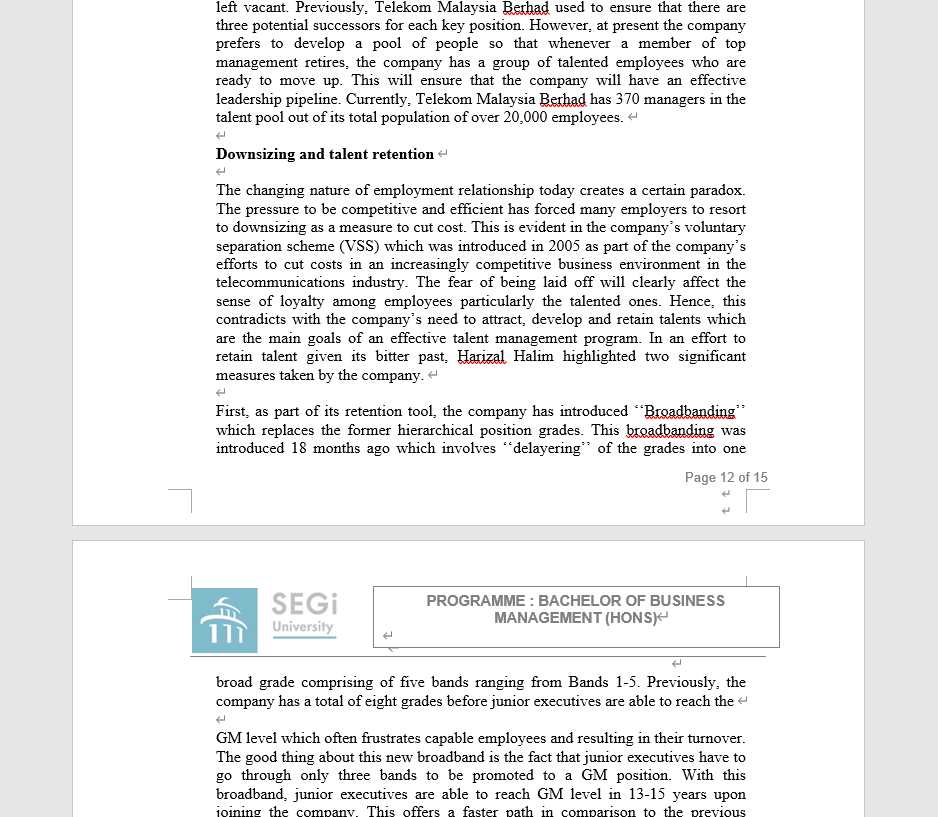
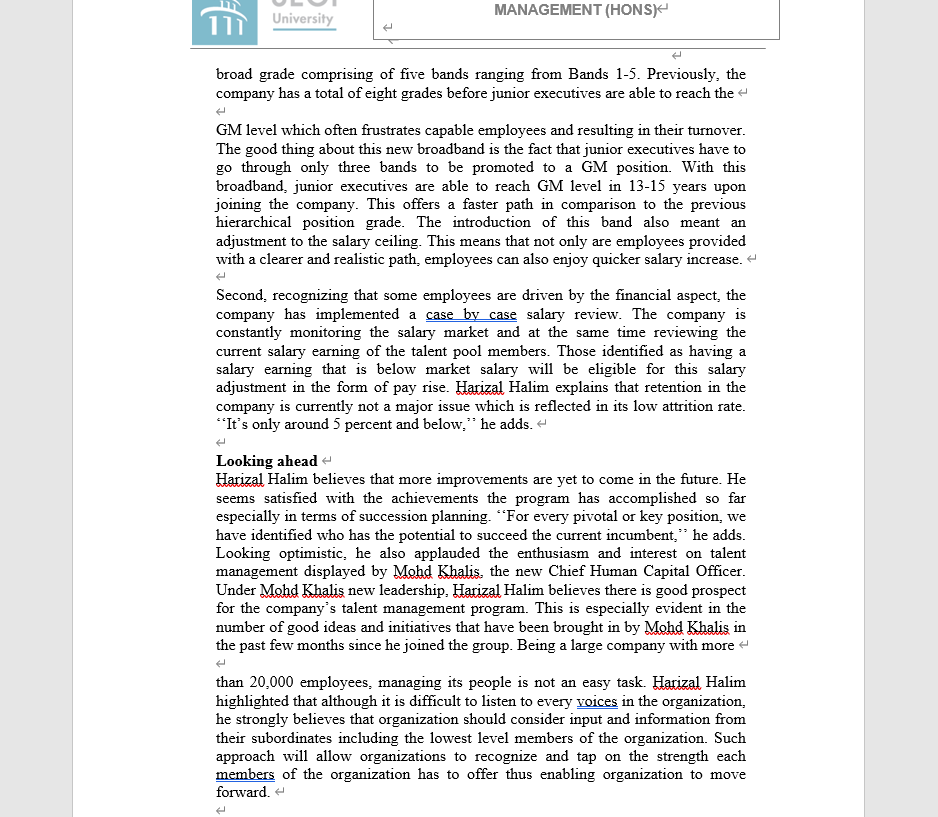
Talent Management at Telekom Malaysia Berhad Organizational context Talent management is not a new practice in Telekom Malaysia Berhad. It has been around a few years down the road. Harizal Halim, Manager of Leadership and Talent Management, adds. However, having only joined the Leadership and Talent Management unit for the past twelve months. Harizal Halim was not directly involved in its first development. In spite of this, the level of awareness on talent management in the company only started to pick up in the last two years. Harizal Halim adds In the past commitment from the management was a bit hard: now they are really playing their role seriously. He explained that several developments prompted Telekom Malaysia Berhad to initiate a talent management program. First, business landscape is tough. Previously, the company was at the forefront, dominating the market. But recently due to the emergence of many competitors, the company started to feel the heat of the competitors. This has led to many initiatives introduced by the company as to sustain the business. One of the key initiatives highlighted is the need to manage its talents better. 4 Apart from business requirement, the second development prompting Telekom Malaysia Berhad to focus more on talent management is the GLC Transformation Programme Among other things, this program place particular emphasis on leadership development. Khazanah Nasional has been assigned to lead the GLC Transformation Programme. As a GLC, Telekom Malaysia Berhad often looked into best practices introduced by Khazanah Nasional. To ensure its key assets, ie, people remain competitive in the future, Telekom Malaysia Berhad has made great efforts to realign its existing human resources policies and procedures according to initiatives developed by the Government under the GLC Transformation Programme History Telekom Malaysia Berhad was formerly a government agency, the Telecom Department of Malaysia. It was corporatized in 12 October 1984 and renamed Syarikat Telekom Malaysia Berhad (STMB). It is the largest telecommunication company in Malaysia. It has a monopoly on the fixed line network and has a considerable market share of the mobile communications market after its acquisition of Celcom, a cellular phone company and merging with its own mobile operation arm, IMTouch a With its extensive global connectivity, TM is poised to position Malaysia as a regional internet hub and digital gateway for Southeast Asia. In 2007, to ensure focus and enhance shareholder value, Telekom Malaysia Berhad began the process of separating its mobile and fixed services into two distinct entities. TM, in national fixed line services and championing broadband, and TM International Berhad (TMI). in regional mobile services, now known as AXIATA. w In 2009, Telekom Malaysia Berhad recorded a net profit which stood at RM211.7 m which came in within its expectation. However, looking ahead, earnings will come under pressure as the company pursues its ambition of high-speed broadband project, increasing financing costs and reducing profit. Talent management in Telekom Malaysia Berhad Twelve months ago. HR was the champion in talent management program in Telekom Malaysia Berhad with little support from line management. As the manager of Leadership and Talent Management Unit, this concerned Harizal Halim, We had a tough time convincing line managers on the importance of the program. However, in the last few months, with increasing realization of the importance of talent management, HR is changing its position from leader to facilitator of the whole process. This change was primarily prompted by the new leadership under Mohd Khalis Abdul Rahim. He was appointed as the new Chief Human Capital Officer of Telekom Malaysia Berhad in August 2009. Prior to joining Telekom Malaysia Berhad. Mohd Khalis Abdul Rahim was the Regional HR Director of Freescale and HR Director of Colgate Palmolive (Malaysia). Leading HR since then, Mohd Khalis has displayed enthusiasm and interest on talent management and this has significantly sparked the increasing realization of the importance of talent management. Under his new leadership, several changes were evident. Even the CEO is now taking the lead in most of the important talent management initiatives such as the spotting and endorsement of the high potentials. He further added, This is a good sign. Things are starting to look better especially when there is a buy-in from the line management. We now have their support." The talent management process at Telekom Malaysia Berhad involves four key stages. These are: 1. talent spotting; 2. talent assessment and endorsement; 3. formulation of individual development plan; and 4. readiness level assessment. Each of these stages is implemented using a well defined set of standards and activities. (1) Talent spotting With the aid of an external consultant, Telekom Malaysia Berhad came up with two central criteria to identify high-potential staff. This includes: 1. performance; and 2. potential. Harizal Halim described that the primary filtering criteria centers on staff performance. He went on to explain that once staff meet the performance criteria, then they will be assessed by multi-raters on potential indicators. "To us what is important is to have high potential with good performance, he added. they will be assessed by multi-raters on potential indicators. "To us what is important is to have high potential with good performance, he added. To assess performance, Harizal Halim explains that the company uses a performance management system similar to those implemented elsewhere. The performance management cycle starts off with performance contracting performance tracking. performance evaluation and performance moderation and final rating. Performance evaluation is conducted at the end of a review period and should reflect a Page 9 of 15 SEGi University PROGRAMME : BACHELOR OF BUSINESS MANAGEMENT (HONS) 111 e period of 12 months of achievements. This performance evaluation comprised of 80 percent KPI-based activity and 20 percent based on behavioral competency. Unlike behavioral competency, the KPI are measures of process outcomes which informs employee what is important in working towards the goals and gently points them towards achieving those goals. This helps to provide staff with more visible and measurable targets. The company uses Maps System (MAPS2) to manage and assess performance. MAPS2 is an online assessment system which productively helps managers to measure employees KPIs. This system provides an online questionnaire that is filled by the candidate's immediate superior. This assessment system offers a motivating climate to develop employees towards achieving peak performance[2]. - & The element of behavioral competencies is also taken into account in determining overall performance of the employee. The assessment of this competency is based on subjective judgment and observation through the use of 360degree evaluation tool. This involves observing whether candidates have displayed or demonstrated certain behaviors which centers on several focus areas. These include: people focus; change focus business strategic focus: future focus; and customer focus. All of these focus areas are assessed using online questionnaires which is specific to Liture focus, and customer focus. All of these focus areas are assessed using online questionnaires which is specific to the different level. Staff are also assessed by multi-raters with feedbacks being gathered from subordinates, supervisors and customers. + Harizal Halim further explains that Telekom Malaysia Berhad has five distinct bands which range from Bands 1-5. Bands 1-3 comprise of the junior executives, managers and senior managers, respectively, whereas Bands 4 and 5 include top management such as General Manager (GM), etc. The questionnaires are thus customized to accurately reflect the responsibility of the different level. This is to ensure a fair and equitable review process that allows the employees to reflect how individual contribution impacts the business goals. (ii) Talent assessment The assessment of candidates nominated for inclusion in Telekom Malaysia Berhadis talent pool uses an instrument called the leadership potential inventory (LPI). The LPI is used to assess each candidate's leadership potential. The LPI examines ten attributes that are categorized into four dimensions, ie, leadership promise, balance between values and result, personal development orientation and mastery of complexity. The below list LPI dimensions and leadership potential attributes shows a description of the attributes of these four dimensions. This assessment involves the use of web-based potential assessment system. This system provides an online questionnaire that is filled by the candidate's immediate superior and complemented with two other counterparts of the superior. This is a distinct policy set by the company whereby multi assessors must be appointed to assess a candidate. When asked whether the practice of favoritism among superiors is a significant issue in Telekom Malaysia Berhad. Harizal Halim paused briefly. He admitted that subjective assessment may lead to favquritism but since the raters are Page 10 of 15 SEGi University PROGRAMME : BACHELOR OF BUSINESS MANAGEMENT (HONS) 111 compelled to provide evidences to support any ratings given by them, this therefore serves as deterrence for raters to behave unfairly. + LPI dimensions and leadership potential attributes. Leadership promise: propensity to lead; brings out the best in people; authenticity. Balance of values and result: cultural fit; passion for result. Personal development orientation: receptivity to feedback; and learning agility. + Master of complexity: 4 adaptability; conceptual thinking, and ability to navigate ambiguity. (iii) Formulation of individual development plan In the past, the common practice in Telekom Malaysia Berhad was to send high potentials for formal classroom training. However, in light of the best practices around the globe, the company proposed to change and align its development strategy in accordance with the 70:20:10 model. This approach provides a framework for effective learning and development in the ratio 70:20:10. It advocates that 70 percent of development comes from on job experience, 20 percent comes from working through others, eg. coaching and working alongside good leaders in the company and 10 percent comes from classroom trainings. This breakdown has shaped the company's current development program which puts more emphasis on on-the-job experience. We now realize that the effectiveness of classroom training is not as high as learning on the job [...] This is primarily why we are shifting our focus towards this guideline. Harizal Halim adds. He further explains that such changes will involve rotating people across jobs more often than before. Despite the shift, the use of structured training programs such as functional courses is still being carried out in Telekom Malaysia Berhad. The company also offers its own Senior Management Development Program (SMDP). It particularly caters for high potentials from Band 3 who has demonstrated leadership qualities. In the past 20 senior managers were sent off to University of Starshlyde. Scotland. At the end of this certification program, all of them were awarded with MBAs. Since then, a majority of them have been promoted to GM. Now, the SUDI iT TU MBAs. Since then, a majority of them have been promoted to GM. Now, the SMDP is done locally at Universiti Teknologi Malaysia located in Kuala Lumpur (UTMKL) which is the local partner of Warwick University. Other training bodies of the company's development program include renowned business schools such as INSEAD, IMD and Harvard. According to Harizal Halim, these public Page 11 of 15 SEGI University PROGRAMME: BACHELOR OF BUSINESS MANAGEMENT (HONS) 111 programs serve as an excellent platform for high potentials to acquire new knowledge as well as high-level networking. Other development program includes the GLC cross assignment exchange program. This is an initiative introduced by Khazanah Nasional which allows managers from GLCs to be posted to other GLCs for a period of one to two years. The company has previously sent their high potentials to Maybank and Malaysia Airlines (MAS). This program is carried out once a year. This also makes up the 70 percent on-the-job experience as advocated by Telekom Malaysia Berhad. + (iv)Readiness level assessment Upon completion of the three levels, ie Bands 1-3, the high potentials are said to have graduated from the talent management program. At the end of this program, if high potentials received good evaluation or feedbacks from managers in all the various areas they have been posted to, they are considered as ready for promotion to the next level, i.e. Bands 4 and 5.4 Harizal Halim believes that succession planning is the main objective for having a talent management program in the company. Given the unpredictability of event, the company believes that it must start to identify candidates from the early stage and develop them until they are ready to assume the position. Telekom Malaysia's approach to talent management is centered on ensuring that there will always be people ready to succeed in what the firm terms as "key positions. These are positions that the firm has identified as critical to its performance and cannot be left vacant. Previously, Telekom Malaysia Berhad used to ensure that there are three potential successors for each key position. However, at present the company left vacant. Previously, Telekom Malaysia Berhad used to ensure that there are three potential successors for each key position. However, at present the company prefers to develop a pool of people so that whenever a member of top management retires, the company has a group of talented employees who are ready to move up. This will ensure that the company will have an effective leadership pipeline. Currently, Telekom Malaysia Berhad has 370 managers in the talent pool out of its total population of over 20,000 employees. Downsizing and talent retention The changing nature of employment relationship today creates a certain paradox. The pressure to be competitive and efficient has forced many employers to resort to downsizing as a measure to cut cost. This is evident in the company's voluntary separation scheme (VSS) which was introduced in 2005 as part of the company's efforts to cut costs in an increasingly competitive business environment in the telecommunications industry. The fear of being laid off will clearly affect the sense of loyalty among employees particularly the talented ones. Hence, this contradicts with the company's need to attract, develop and retain talents which are the main goals of an effective talent management program. In an effort to retain talent given its bitter past, Harizal Halim highlighted two significant measures taken by the company. + First, as part of its retention tool, the company has introduced "Broadbanding" which replaces the former hierarchical position grades. This broadbanding was introduced 18 months ago which involves "delayering" of the grades into one Page 12 of 15 SEGi University PROGRAMME : BACHELOR OF BUSINESS MANAGEMENT (HONS) 111 broad grade comprising of five bands ranging from Bands 1-5. Previously, the company has a total of eight grades before junior executives are able to reach the GM level which often frustrates capable employees and resulting in their turnover. The good thing about this new broadband is the fact that junior executives have to go through only three bands to be promoted to a GM position. With this broadband, junior executives are able to reach GM level in 13-15 years upon joining the company. This offers a faster path in comparison to the previous MANAGEMENT (HONS) 111 University broad grade comprising of five bands ranging from Bands 1-5. Previously, the company has a total of eight grades before junior executives are able to reach the a GM level which often frustrates capable employees and resulting in their turnover. The good thing about this new broadband is the fact that junior executives have to go through only three bands to be promoted to a GM position. With this broadband, junior executives are able to reach GM level in 13-15 years upon joining the company. This offers a faster path in comparison to the previous hierarchical position grade. The introduction of this band also meant an adjustment to the salary ceiling. This means that not only are employees provided with a clearer and realistic path, employees can also enjoy quicker salary increase. Second, recognizing that some employees are driven by the financial aspect, the company has implemented a case by case salary review. The company is constantly monitoring the salary market and at the same time reviewing the current salary earning of the talent pool members. Those identified as having a salary earning that is below market salary will be eligible for this salary adjustment in the form of pay rise. Harizal Halim explains that retention in the company is currently not a major issue which is reflected in its low attrition rate. "It's only around 5 percent and below," he adds. Looking ahead Harizal Halim believes that more improvements are yet to come in the future. He seems satisfied with the achievements the program has accomplished so far especially in terms of succession planning. For every pivotal or key position, we have identified who has the potential to succeed the current incumbent, he adds. Looking optimistic, he also applauded the enthusiasm and interest on talent management displayed by Mohd Khalis, the new Chief Human Capital Officer. Under Mohd Khalis new leadership. Harizal Halim believes there is good prospect for the company's talent management program. This is especially evident in the number of good ideas and initiatives that have been brought in by Mohd Khalis in the past few months since he joined the group. Being a large company with more than 20,000 employees, managing its people is not an easy task. Harizal Halim highlighted that although it is difficult to listen to every voices in the organization, he strongly believes that organization should consider input and information from their subordinates including the lowest level members of the organization. Such approach will allow organizations to recognize and tap on the strength each members of the organization has to offer thus enabling organization to move forwardStep by Step Solution
There are 3 Steps involved in it
1 Expert Approved Answer
Step: 1 Unlock

Question Has Been Solved by an Expert!
Get step-by-step solutions from verified subject matter experts
Step: 2 Unlock
Step: 3 Unlock
 Study Help