







Question: Question 3: (Lessons 7 & 8) a) Draw a DD-AA diagram of an economy operating with FLEXIBLE exchange rates and use it to show the
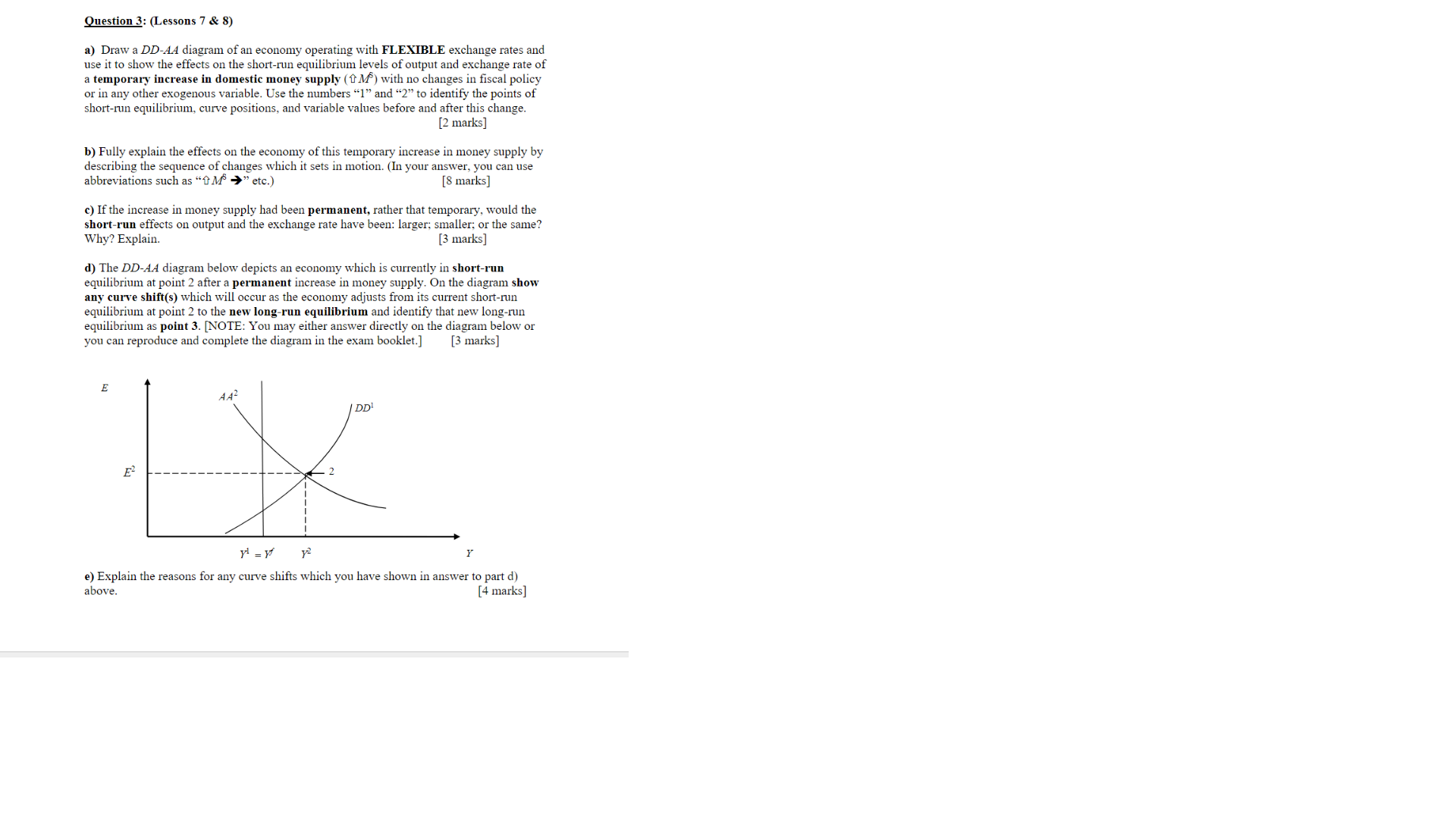
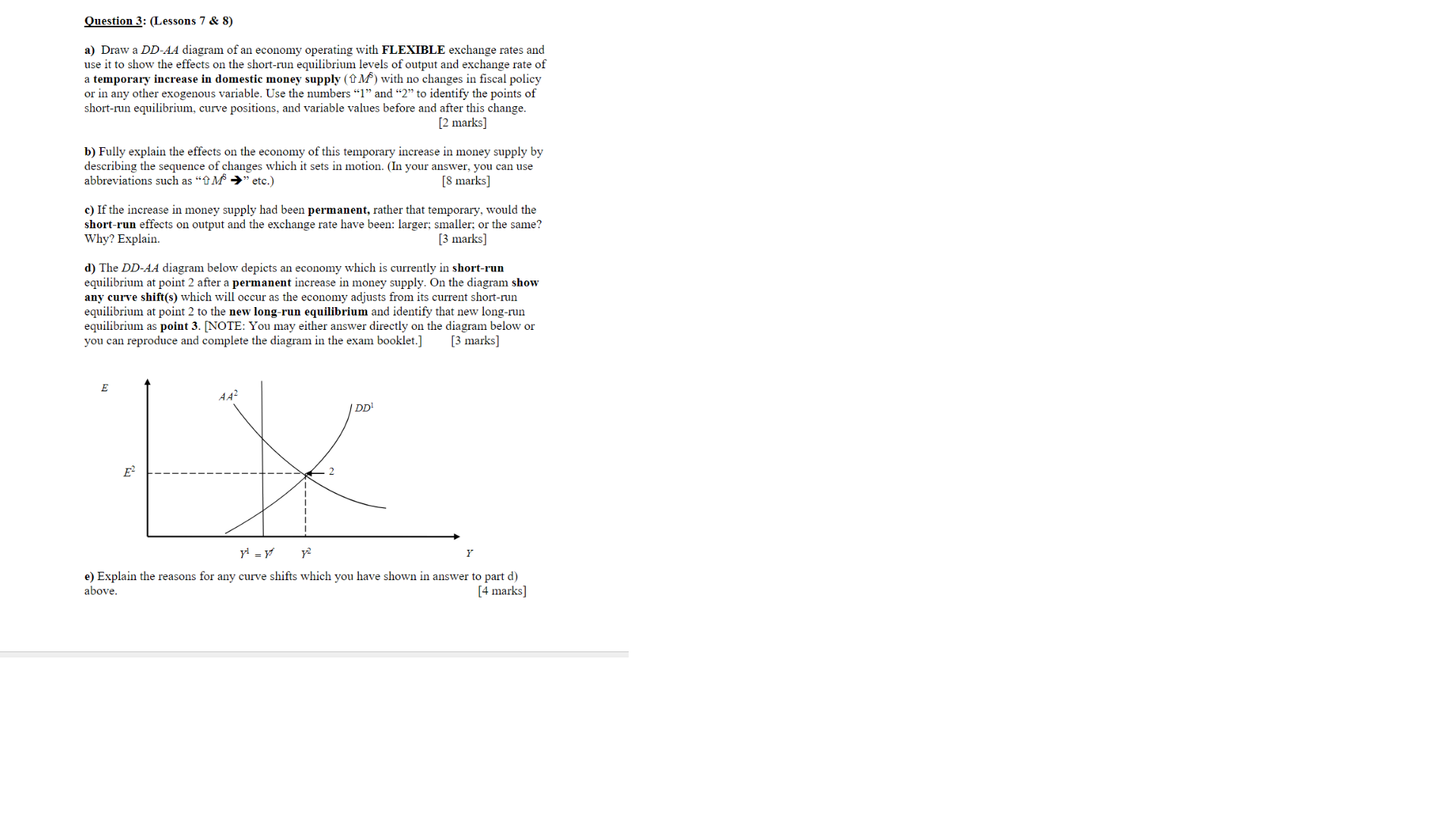
Question 3: (Lessons 7 & 8) a) Draw a DD-AA diagram of an economy operating with FLEXIBLE exchange rates and use it to show the effects on the short-run equilibrium levels of output and exchange rate of a temporary increase in domestic money supply (1MP) with no changes in fiscal policy or in any other exogenous variable. Use the numbers "1" and "2" to identify the points of short-run equilibrium, curve positions, and variable values before and after this change. [2 marks] b) Fully explain the effects on the economy of this temporary increase in money supply by describing the sequence of changes which it sets in motion. (In your answer, you can use abbreviations such as "1 M -" etc.) [8 marks] c) If the increase in money supply had been permanent, rather that temporary, would the short-run effects on output and the exchange rate have been: larger; smaller; or the same? Why? Explain. [3 marks] d) The DD-AA diagram below depicts an economy which is currently in short-run equilibrium at point 2 after a permanent increase in money supply. On the diagram show any curve shift(s) which will occur as the economy adjusts from its current short-run equilibrium at point 2 to the new long-run equilibrium and identify that new long-run equilibrium as point 3. [NOTE: You may either answer directly on the diagram below or you can reproduce and complete the diagram in the exam booklet.] [3 marks] E AA2 DDI E y = y e) Explain the reasons for any curve shifts which you have shown in answer to part d) above. [4 marks]
Step by Step Solution
There are 3 Steps involved in it

Get step-by-step solutions from verified subject matter experts
 Study Help