







Question: QUESTION 3 [ndicate whether the function f(n) is 0 (g(n)) but not (g(n), or (g(n) but not O(g(n)), or O(g(n)). f(n)= 2-1000 n(n+1) +
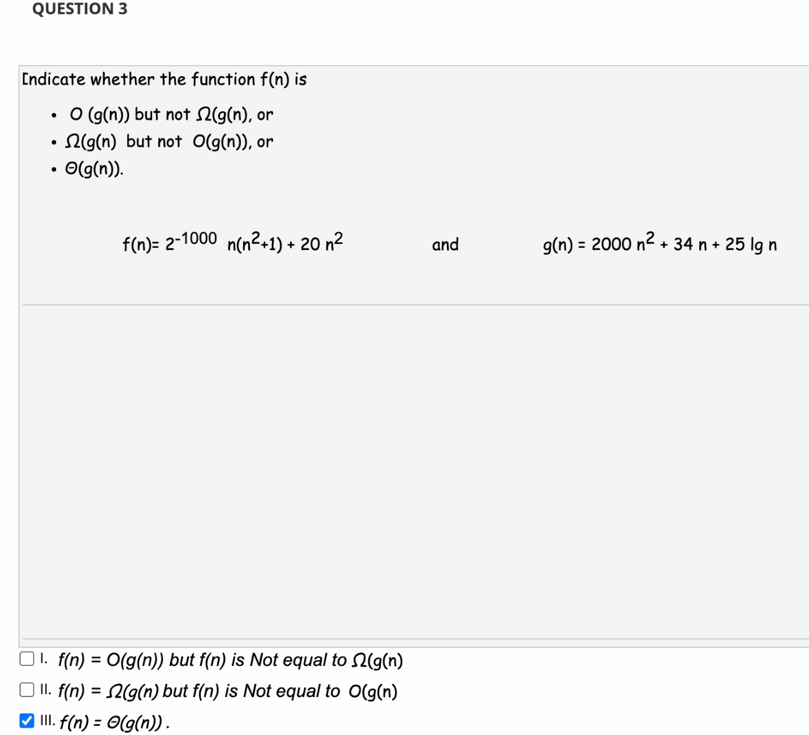
QUESTION 3 [ndicate whether the function f(n) is 0 (g(n)) but not (g(n), or (g(n) but not O(g(n)), or O(g(n)). f(n)= 2-1000 n(n+1) + 20 n 1. f(n) = O(g(n)) but f(n) is Not equal to 2(g(n) | II. f(n) = (g(n) but f(n) is Not equal to O(g(n) III. f(n)= (g(n)). and g(n) = 2000 n + 34 n + 25 lg n
Step by Step Solution
There are 3 Steps involved in it
1 Expert Approved Answer
Step: 1 Unlock

Steps Step 1 of 2 To determine the relationship between fn and gn we can use the formal definitions ... View full answer
Question Has Been Solved by an Expert!
Get step-by-step solutions from verified subject matter experts
Step: 2 Unlock
Step: 3 Unlock
 Study Help