Question: Question 4 (2 points) In the meta-analysis table that describes the relationship between the direct measures of the Big Five personality traits and transformational leadership,
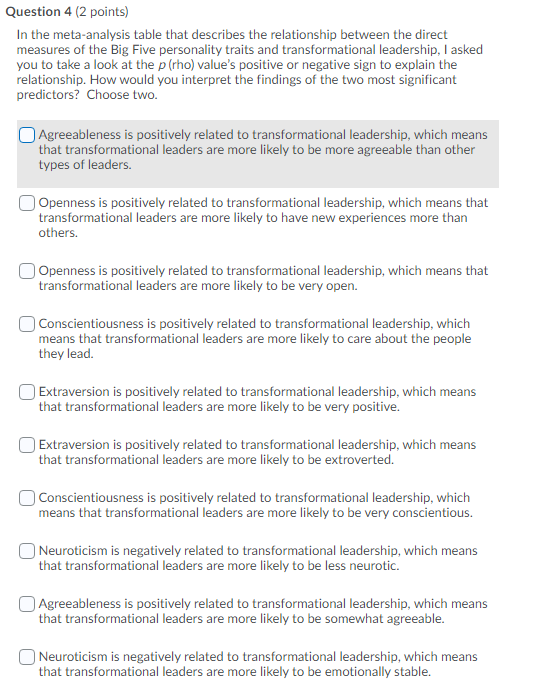
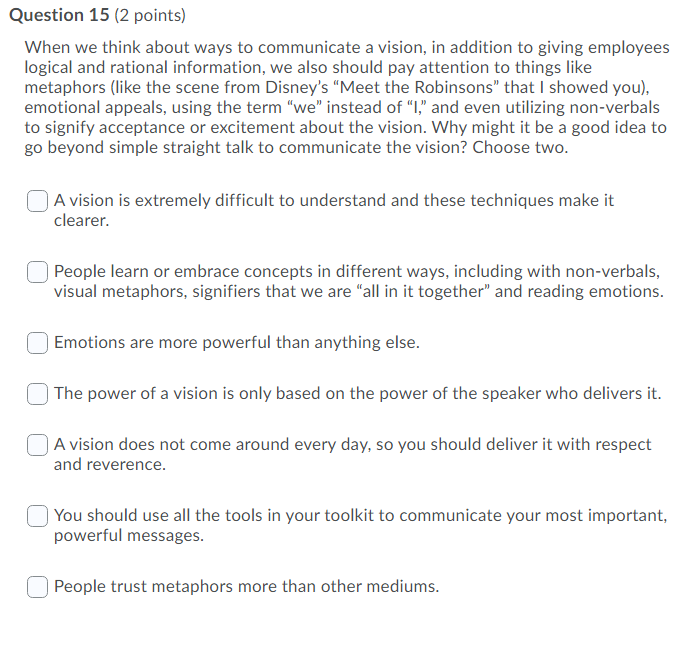
Question 4 (2 points) In the meta-analysis table that describes the relationship between the direct measures of the Big Five personality traits and transformational leadership, I asked you to take a look at the p (rho) value's positive or negative sign to explain the relationship. How would you interpret the findings of the two most significant predictors? Choose two. Agreeableness is positively related to transformational leadership, which means that transformational leaders are more likely to be more agreeable than other types of leaders. Openness is positively related to transformational leadership, which means that transformational leaders are more likely to have new experiences more than others. Openness is positively related to transformational leadership, which means that transformational leaders are more likely to be very open. Conscientiousness is positively related to transformational leadership, which means that transformational leaders are more likely to care about the people they lead. Extraversion is positively related to transformational leadership, which means that transformational leaders are more likely to be very positive. Extraversion is positively related to transformational leadership, which means that transformational leaders are more likely to be extroverted. Conscientiousness is positively related to transformational leadership, which means that transformational leaders are more likely to be very conscientious. Neuroticism is negatively related to transformational leadership, which means that transformational leaders are more likely to be less neurotic. Agreeableness is positively related to transformational leadership, which means that transformational leaders are more likely to be somewhat agreeable. Neuroticism is negatively related to transformational leadership, which means that transformational leaders are more likely to be emotionally stable. Question 15 (2 points) When we think about ways to communicate a vision, in addition to giving employees logical and rational information, we also should pay attention to things like metaphors (like the scene from Disney's "Meet the Robinsons" that I showed you), emotional appeals, using the term "we" instead of "L" and even utilizing non-verbals to signify acceptance or excitement about the vision. Why might it be a good idea to go beyond simple straight talk to communicate the vision? Choose two. A vision is extremely difficult to understand and these techniques make it clearer. | People learn or embrace concepts in different ways, including with non-verbals, visual metaphors, signifiers that we are "all in it together" and reading emotions. Emotions are more powerful than anything else. The power of a vision is only based on the power of the speaker who delivers it. A vision does not come around every day, so you should deliver it with respect and reverence. You should use all the tools in your toolkit to communicate your most important, powerful messages. People trust metaphors more than other mediums









 Study Help