



Question: Question 5 (a) Explain the following terms: (i) 'Treasury bill'. (2 marks) (ii) 'Unit trust'. (2 marks) (b) Explain how monetary policy may be used
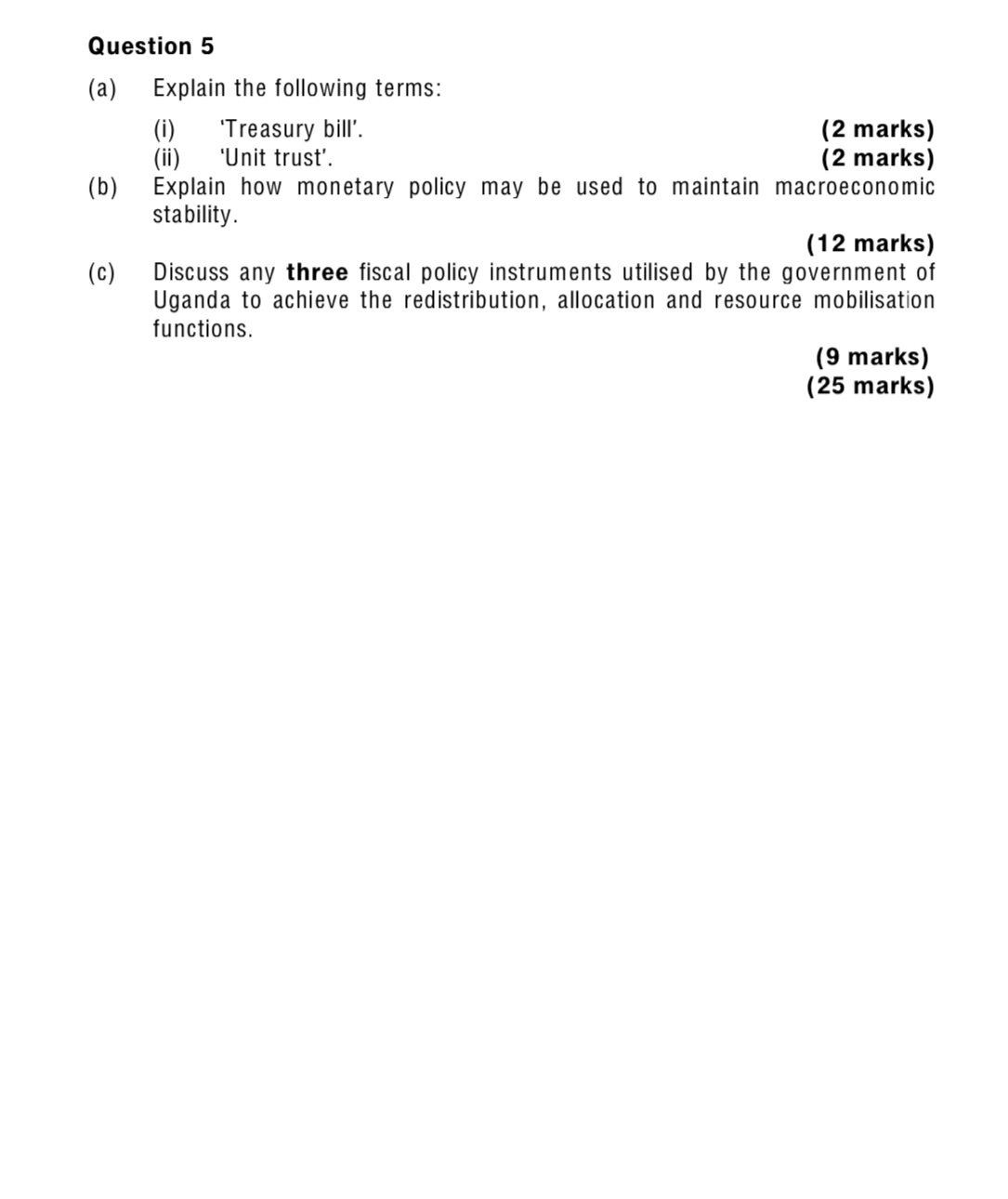
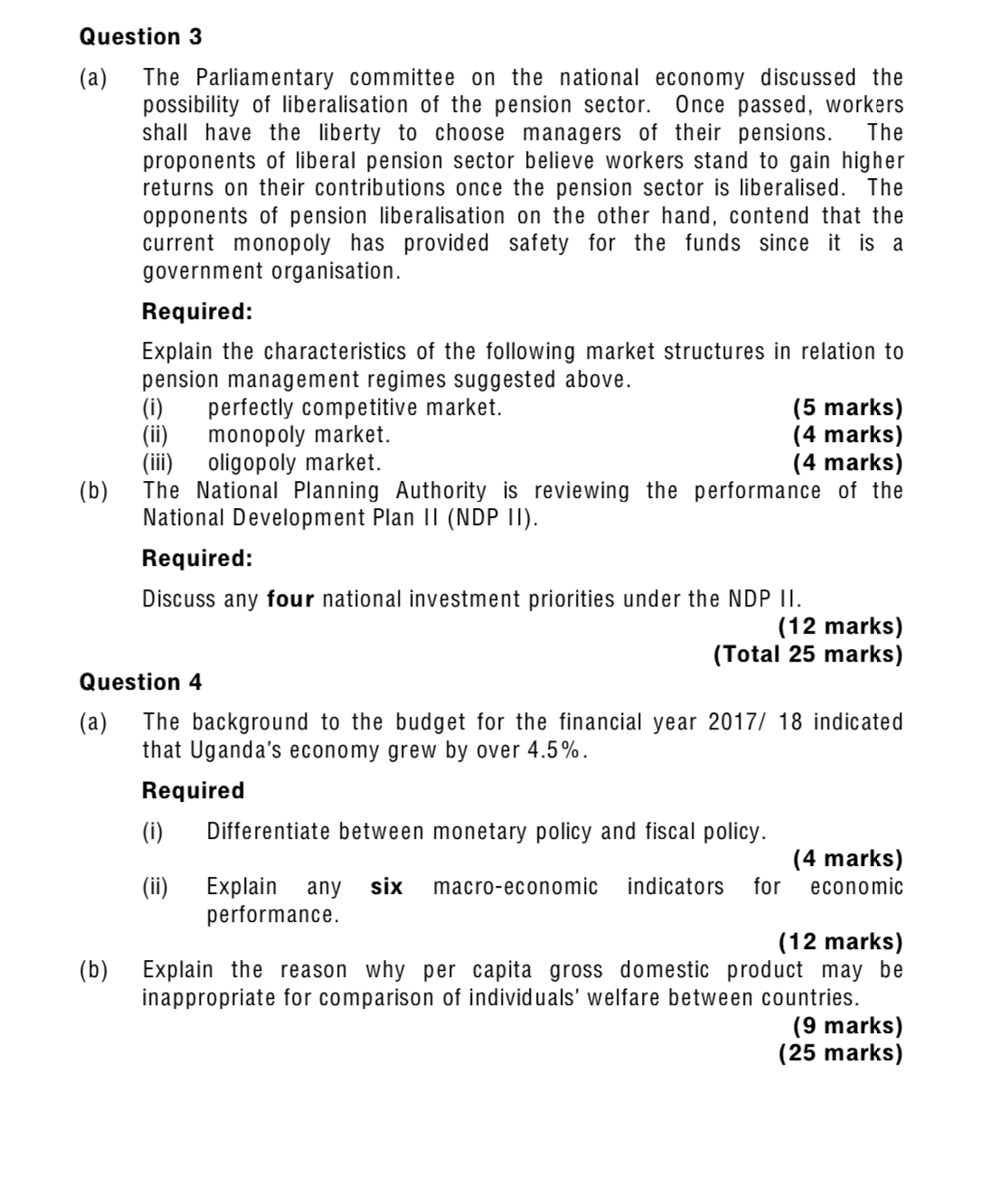
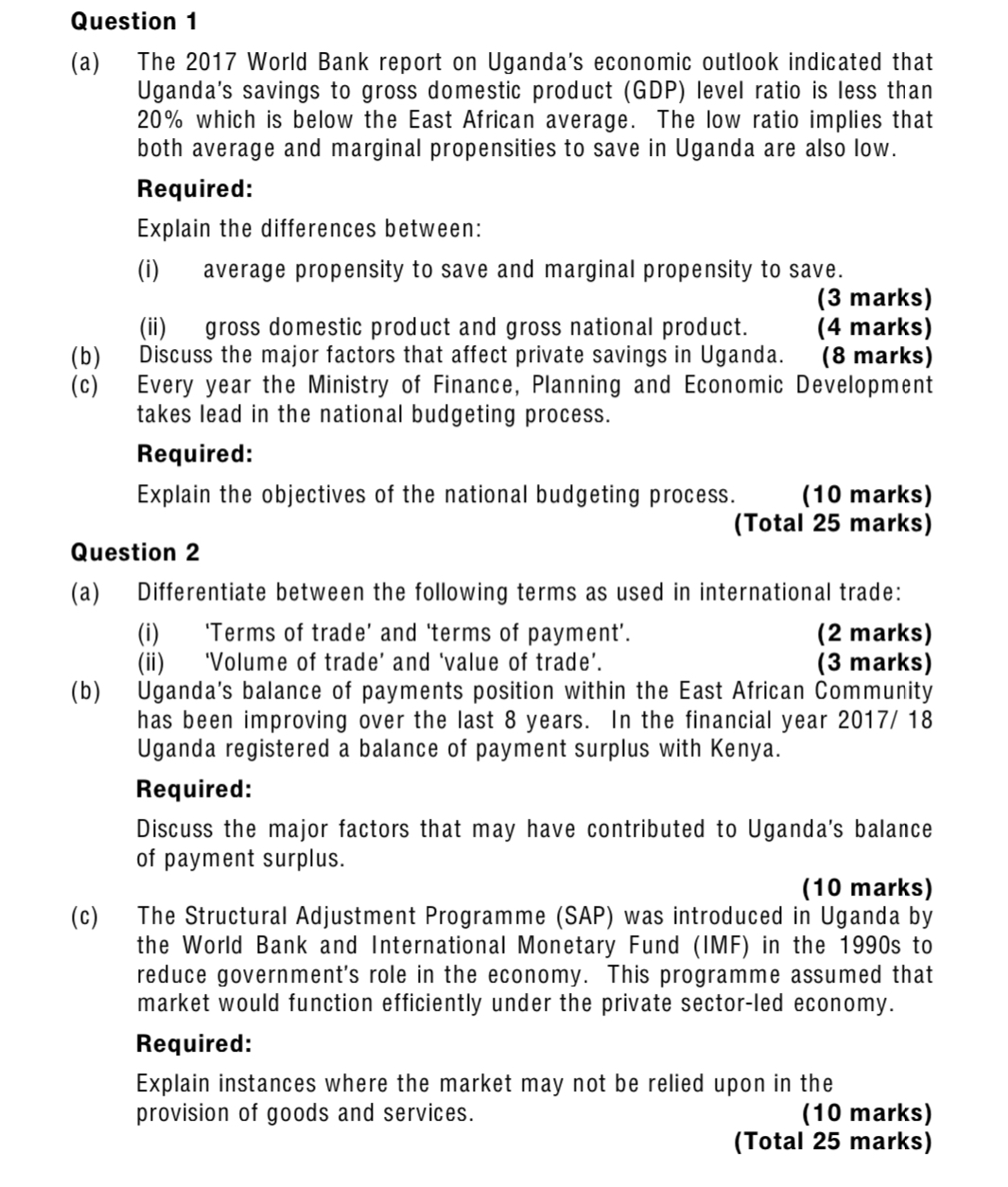
Question 5 (a) Explain the following terms: (i) 'Treasury bill'. (2 marks) (ii) 'Unit trust'. (2 marks) (b) Explain how monetary policy may be used to maintain macroeconomic stability. (12 marks) (c) Discuss any three fiscal policy instruments utilised by the government of Uganda to achieve the redistribution, allocation and resource mobilisation functions. (9 marks) (25 marks)Question 3 (a) The Parliamentary committee on the national economy discussed the possibility of liberalisation of the pension sector. Once passed. workers shall have the liberty to choose managers of their pensions. The proponents of liberal pension sector believe workers stand to gain higher returns on their contributions once the pension sector is liberalised. The opponents of pension liberalisation on the other hand. contend that the current monopoly has provided safety for the funds since it is a government organisation. Required: Explain the characteristics of the following market structures in relation to pension management regimes suggested above. (i) perfectly competitive market. (5 marks) (ii) monopoly market. (4 marks) (iii) oligopoly market. (4 marks) (b) The National Planning Authority is reviewing the performance of the National Development Plan ll (NDP II). Required: Discuss any four national investment priorities under the NDP II. (12 marks) (Total 25 marks) Question 4 (a) The background to the budget for the financial year 2017/ 18 indicated ([1) that Uganda's economy grew by over 4.5%. Required (i) Differentiate between monetary policy and fiscal policy. (4 marks) (ii) Explain any six macro-economic indicators for economic performance. (12 marks) Explain the reason why per capita gross domestic product may be inappropriate for comparison of individuals' welfare between countries. (9 marks) (25 marks) Question 1 (a) The 2017 World Bank report on Uganda's economic outlook indicated that Uganda's savings to gross domestic product (GDP) level ratio is less than 20% which is below the East African average. The low ratio implies that both average and marginal propensities to save in Uganda are also low. Required: Explain the differences between: (i) average propensity to save and marginal propensity to save. (3 marks) (ii) gross domestic product and gross national product. (4 marks) (b) Discuss the major factors that affect private savings in Uganda. (8 marks) (c) Every year the Ministry of Finance, Planning and Economic DeveIOpment takes lead in the national budgeting process. Required: Explain the objectives of the national budgeting process. (10 marks) (Total 25 marks) Question 2 (a) Differentiate between the following terms as used in international trade: (i) 'Terms of trade' and 'terms of payment'. (2 marks) (ii) 'Volume of trade' and 'value of trade'. (3 marks) (b) Uganda's balance of payments position within the East African Community has been improving over the last 8 years. In the financial year 2017/ 18 Uganda registered a balance of payment surplus with Kenya. Required: Discuss the maior factors that may have contributed to Uganda's balance of payment surplus. (10 marks) (c) The Structural Adjustment Programme (SAP) was introduced in Uganda by the World Bank and International Monetary Fund (IMF) in the 19903 to reduce government's role in the economy. This programme assumed that market would function efficiently under the private sector-led economy. Required: Explain instances where the market may not be relied upon in the provision of goods and services. (10 marks) (Total 25 marks)
Step by Step Solution
There are 3 Steps involved in it

Get step-by-step solutions from verified subject matter experts