







Question: Question 6 (3 points) Based on what we have learned about thin films, choose all the answers that are correct: C An observer sees the
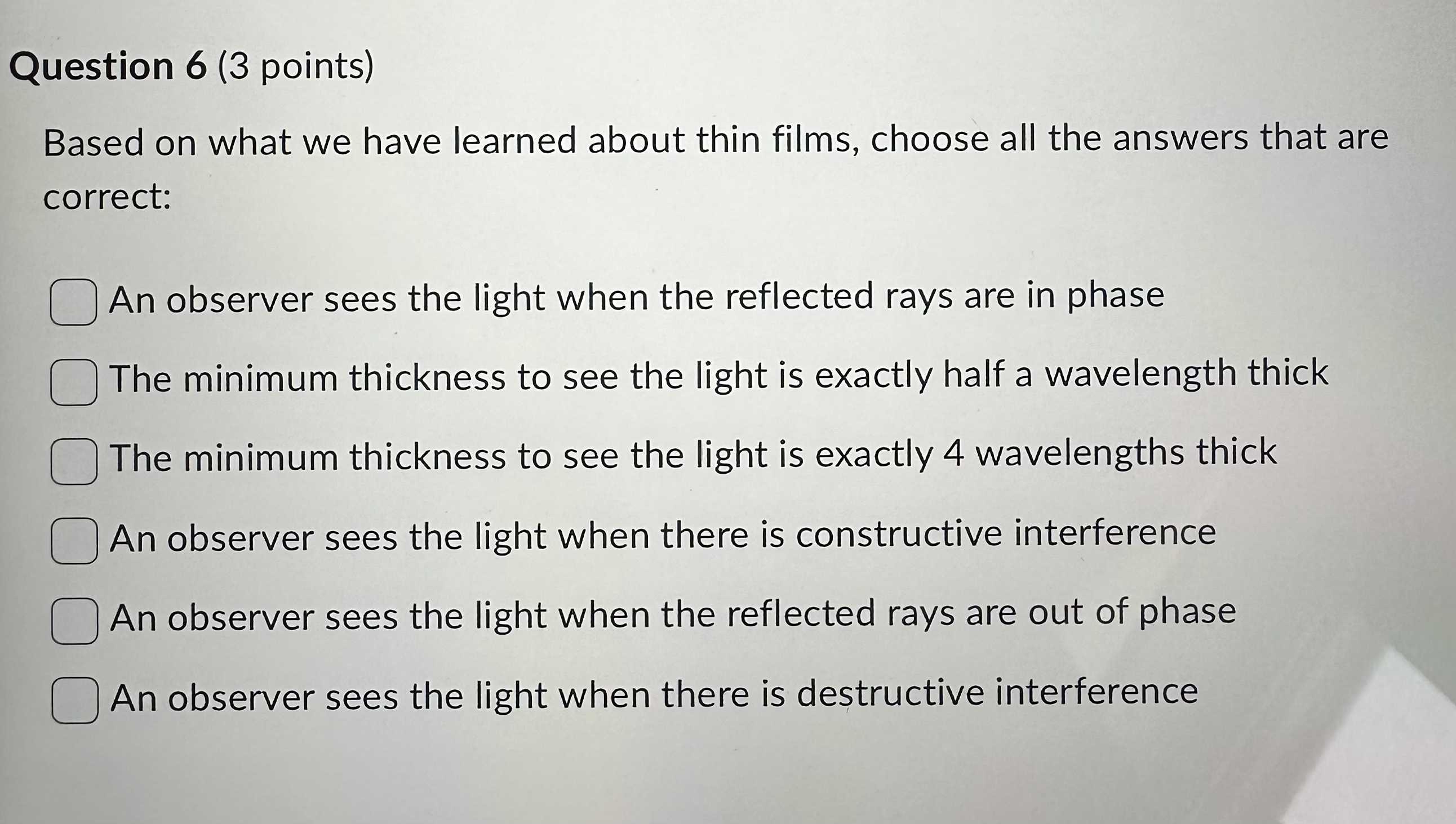
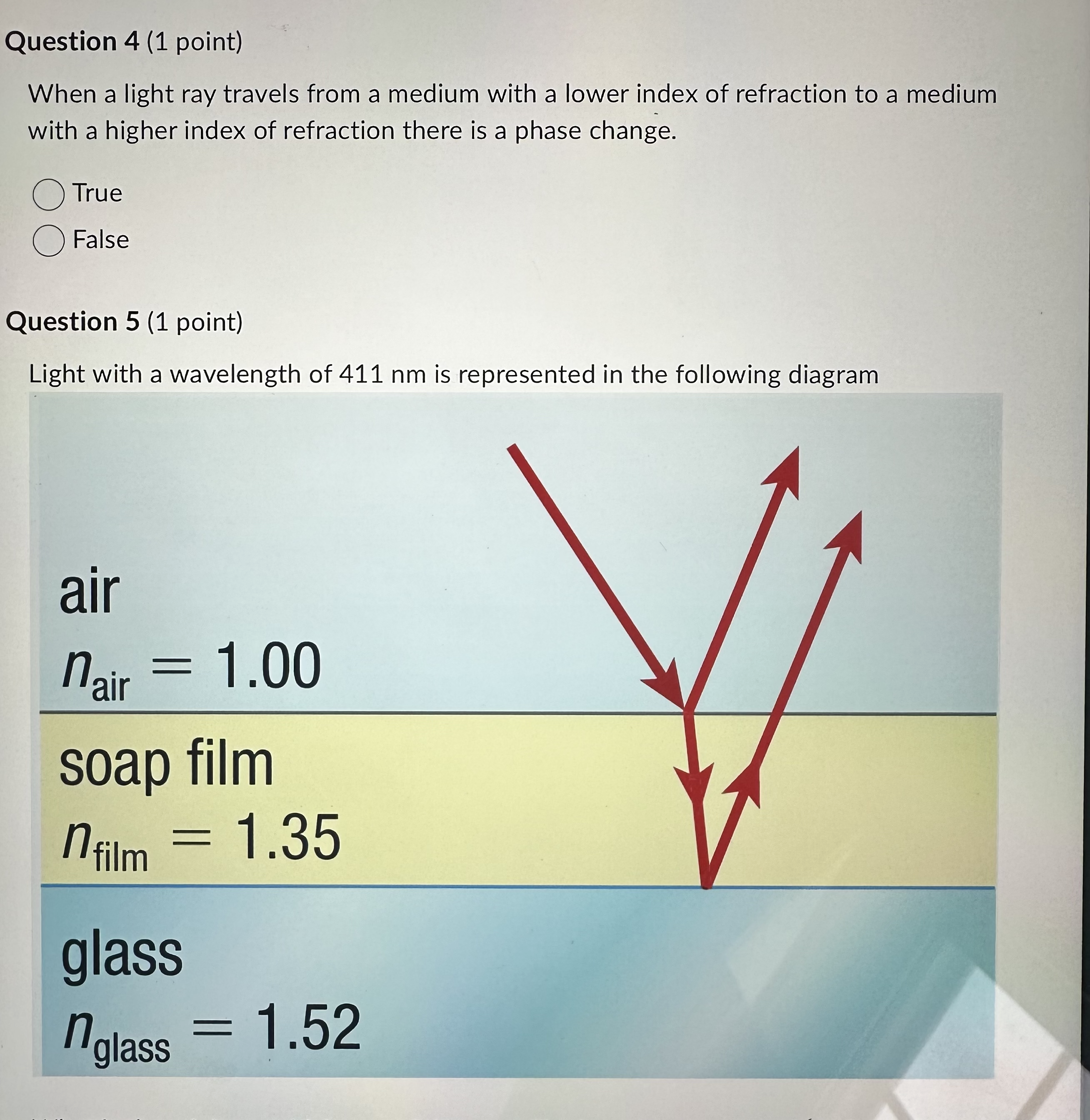
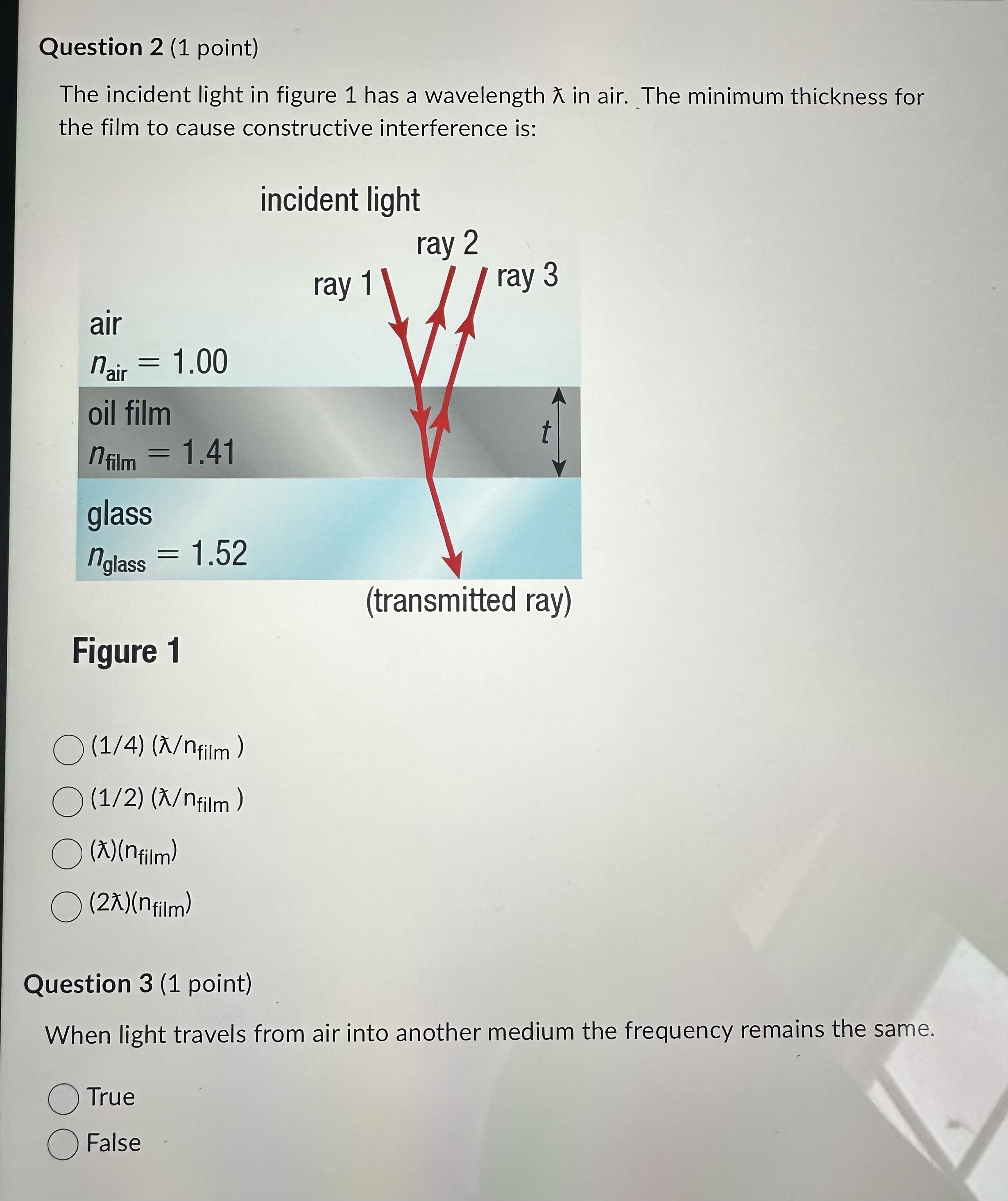
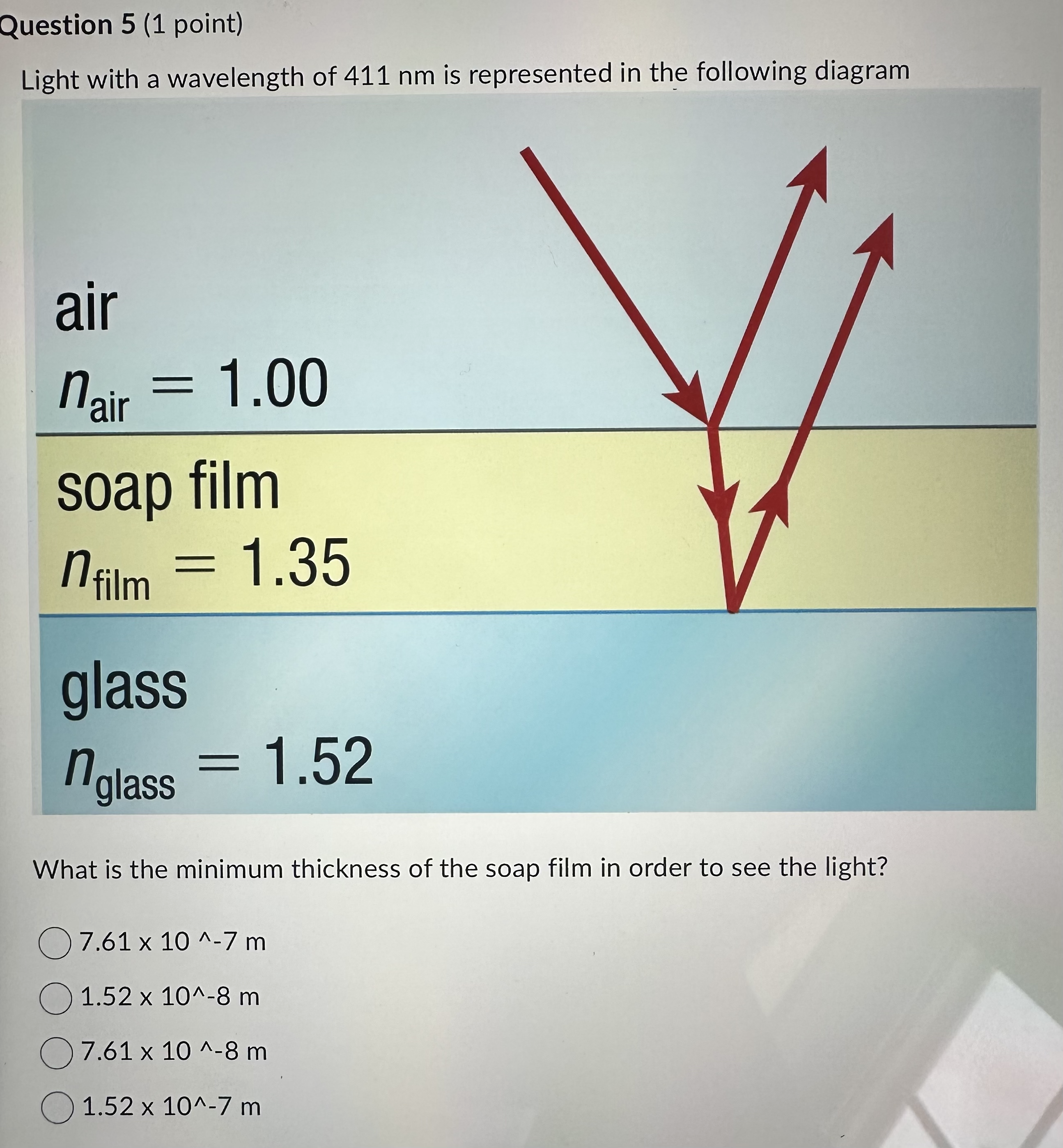
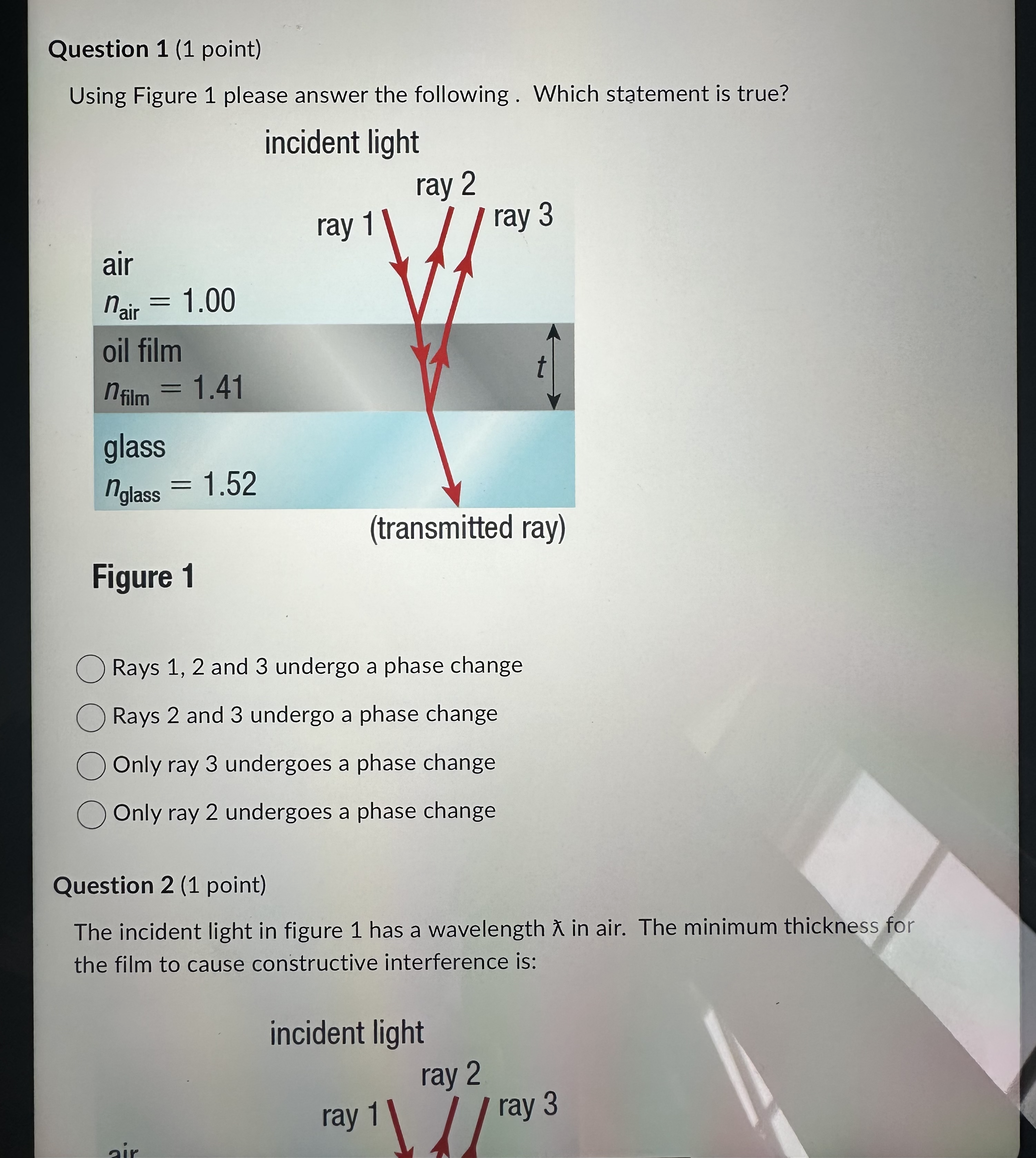
Question 6 (3 points) Based on what we have learned about thin films, choose all the answers that are correct: C An observer sees the light when the reflected rays are in phase D The minimum thickness to see the light is exactly half a wavelength thick The minimum thickness to see the light is exactly 4 wavelengths thick An observer sees the light when there is constructive interference An observer sees the light when the reflected rays are out of phase O An observer sees the light when there is destructive interferenceQuestion 4 (1 point) When a light ray travels from a medium with a lower index of refraction to a medium with a higher index of refraction there is a phase change. True False Question 5 (1 point) Light with a wavelength of 411 nm is represented in the following diagram air nair = 1.00 soap film n film = 1.35 glass nglass = 1.52Question 2 (1 point) The incident light in figure 1 has a wavelength & in air. The minimum thickness for the film to cause constructive interference is: incident light ray 2 ray 1 ray 3 air nair = 1.00 oil film nfilm = 1.41 glass nglass = 1.52 (transmitted ray) Figure 1 O ( 1/4 ) ( x / nfilm ) O ( 1/ 2 ) (x / nfilm ) O ( x) (nfilm ) O ( 2 x ) (nfilm ) Question 3 (1 point) When light travels from air into another medium the frequency remains the same. True FalseQuestion 5 (1 point) Light with a wavelength of 411 nm is represented in the following diagram air nair = 1.00 soap film nfilm = 1.35 glass nglass = 1.52 What is the minimum thickness of the soap film in order to see the light? 7.61 x 10 1-7m 1.52 x 101-8 m 7.61 x 10 1-8 m 1.52 x 101-7mQuestion 1 (1 point) Using Figure 1 please answer the following . Which statement is true? incident light ray 2 ray 3 air nair = 1.00 oil film t nfilm = 1.41 glass nglass = 1.52 (transmitted ray) Figure 1 Rays 1, 2 and 3 undergo a phase change Rays 2 and 3 undergo a phase change Only ray 3 undergoes a phase change Only ray 2 undergoes a phase change Question 2 (1 point) The incident light in figure 1 has a wavelength & in air. The minimum thickness for the film to cause constructive interference is: incident light ray 2 ray 1 \\ ray 3
Step by Step Solution
There are 3 Steps involved in it

Get step-by-step solutions from verified subject matter experts
 Study Help