







Question: question answers CASE STUDY 8D Bridging the Gap Between E-Commerce and Traditional Commerce Naimeu florence Various tools and technolo- gies are helping to bridge the
question answers
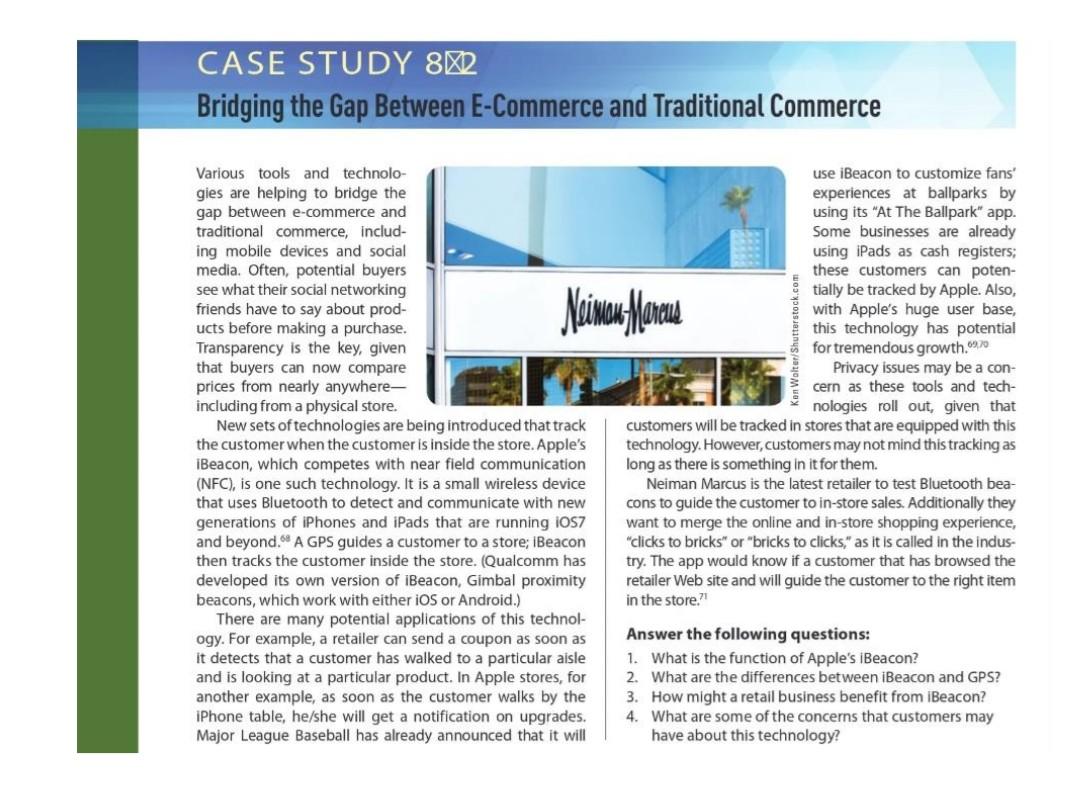
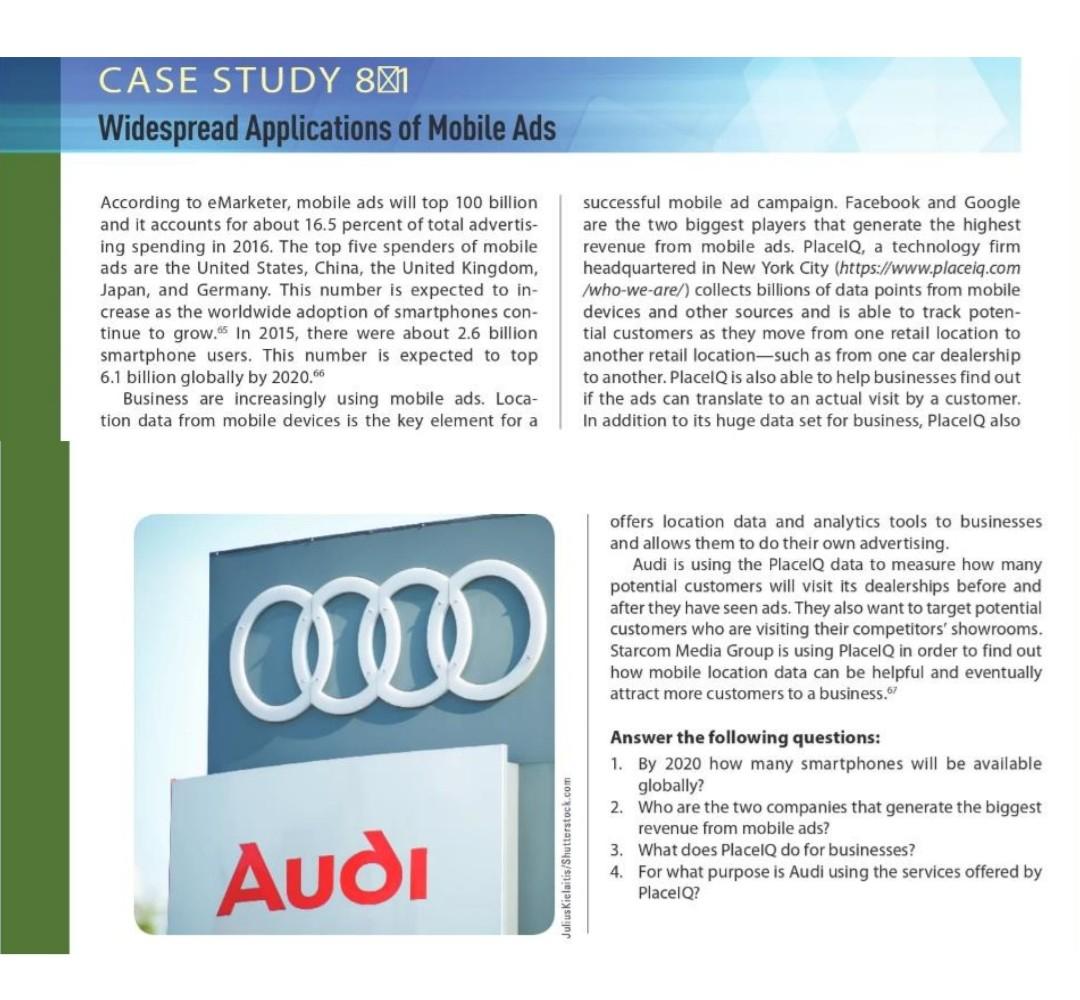
CASE STUDY 8D Bridging the Gap Between E-Commerce and Traditional Commerce Naimeu florence Various tools and technolo- gies are helping to bridge the gap between e-commerce and traditional commerce, includ- ing mobile devices and social media. Often, potential buyers see what their social networking friends have to say about prod- ucts before making a purchase. Transparency is the key, given that buyers can now compare prices from nearly anywhere- including from a physical store. New sets of technologies are being introduced that track the customer when the customer is inside the store. Apple's iBeacon, which competes with near field communication (NFC), is one such technology. It is a small wireless device that uses Bluetooth to detect and communicate with new generations of iPhones and iPads that are running iOS7 and beyond. A GPS guides a customer to a store; iBeacon then tracks the customer inside the store. Qualcomm has developed its own version of iBeacon, Gimbal proximity beacons, which work with either iOS or Android.) There are many potential applications of this technol- ogy. For example, a retailer can send a coupon as soon as it detects that a customer has walked to a particular aisle and is looking at a particular product. In Apple stores, for another example, as soon as the customer walks by the iPhone table, he/she will get a notification on upgrades. Major League Baseball has already announced that it will use iBeacon to customize fans' experiences at ballparks by using its "At The Ballpark" app. Some businesses are already using iPads as cash registers; these customers can poten- tially be tracked by Apple. Also, with Apple's huge user base, this technology has potential for tremendous growth.0970 Privacy issues may be a con- cern as these tools and tech- nologies roll out, given that customers will be tracked in stores that are equipped with this technology. However, customers may not mind this tracking as long as there is something in it for them. Neiman Marcus is the latest retailer to test Bluetooth bea- cons to guide the customer to in-store sales. Additionally they want to merge the online and in-store shopping experience, "clicks to bricks" or "bricks to clicks," as it is called in the indus- try. The app would know if a customer that has browsed the retailer Web site and will guide the customer to the right item in the store. Answer the following questions: 1. What is the function of Apple's iBeacon? 2. What are the differences between iBeacon and GPS? 3. How might a retail business benefit from iBeacon? 4. What are some of the concerns that customers may have about this technology? CASE STUDY 801 Widespread Applications of Mobile Ads According to eMarketer, mobile ads will top 100 billion and it accounts for about 16.5 percent of total advertis- ing spending in 2016. The top five spenders of mobile ads are the United States, China, the United Kingdom, Japan, and Germany. This number is expected to in- crease as the worldwide adoption of smartphones con- tinue to grow. In 2015, there were about 2.6 billion smartphone users. This number is expected to top 6.1 billion globally by 2020.66 Business are increasingly using mobile ads. Loca- tion data from mobile devices is the key element for a successful mobile ad campaign. Facebook and Google are the two biggest players that generate the highest revenue from mobile ads. Placelo, a technology firm headquartered in New York City (https://www.placeio.com /who-we-are/) collects billions of data points from mobile devices and other sources and is able to track poten- tial customers as they move from one retail location to another retail location-such as from one car dealership to another. PlacelQ is also able to help businesses find out if the ads can translate to an actual visit by a customer. In addition to its huge data set for business, Placel also au offers location data and analytics tools to businesses and allows them to do their own advertising. Audi is using the PlacelQ data to measure how many potential customers will visit its dealerships before and after they have seen ads. They also want to target potential customers who are visiting their competitors' showrooms. Starcom Media Group is using PlacelQ in order to find out how mobile location data can be helpful and eventually attract more customers to a business.67 Answer the following questions: 1. By 2020 how many smartphones will be available globally? 2. Who are the two companies that generate the biggest revenue from mobile ads? 3. What does PlacelQ do for businesses? 4. For what purpose is Audi using the services offered by PlaceIQ? Audi JuliusKielaitis/Shutterstock.comStep by Step Solution
There are 3 Steps involved in it
1 Expert Approved Answer
Step: 1 Unlock

Question Has Been Solved by an Expert!
Get step-by-step solutions from verified subject matter experts
Step: 2 Unlock
Step: 3 Unlock
 Study Help