Question: Question One Consider the exponential function below. f(X)=7(5 )'X + 3 (a) Describe in words how the graph of y = 7( S )X can
Question One Consider the exponential functionQuestion One Consider the exponential functionQuestion One Consider the exponential functionQuestion One Consider the exponential functionQuestion One Consider the exponential function
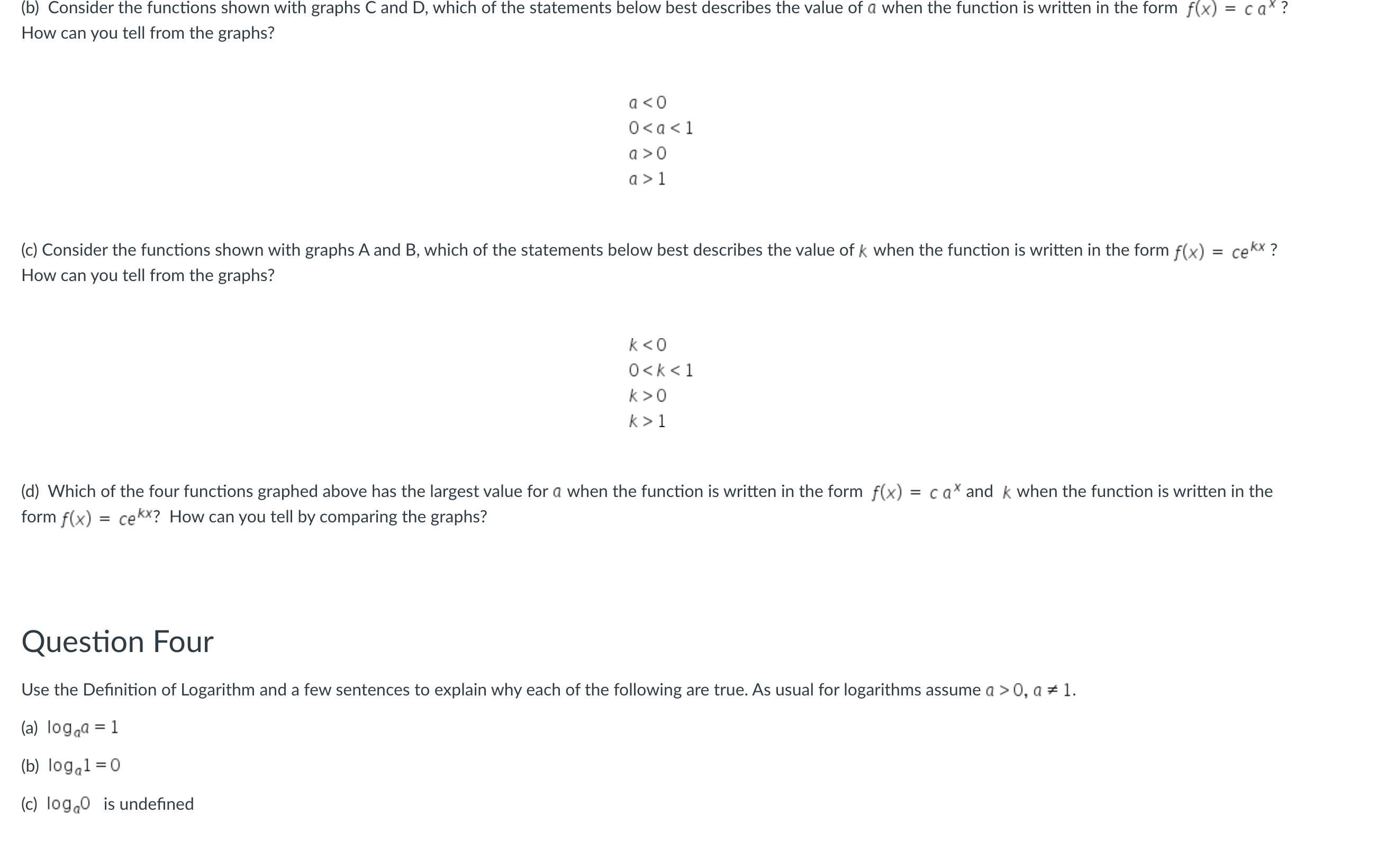
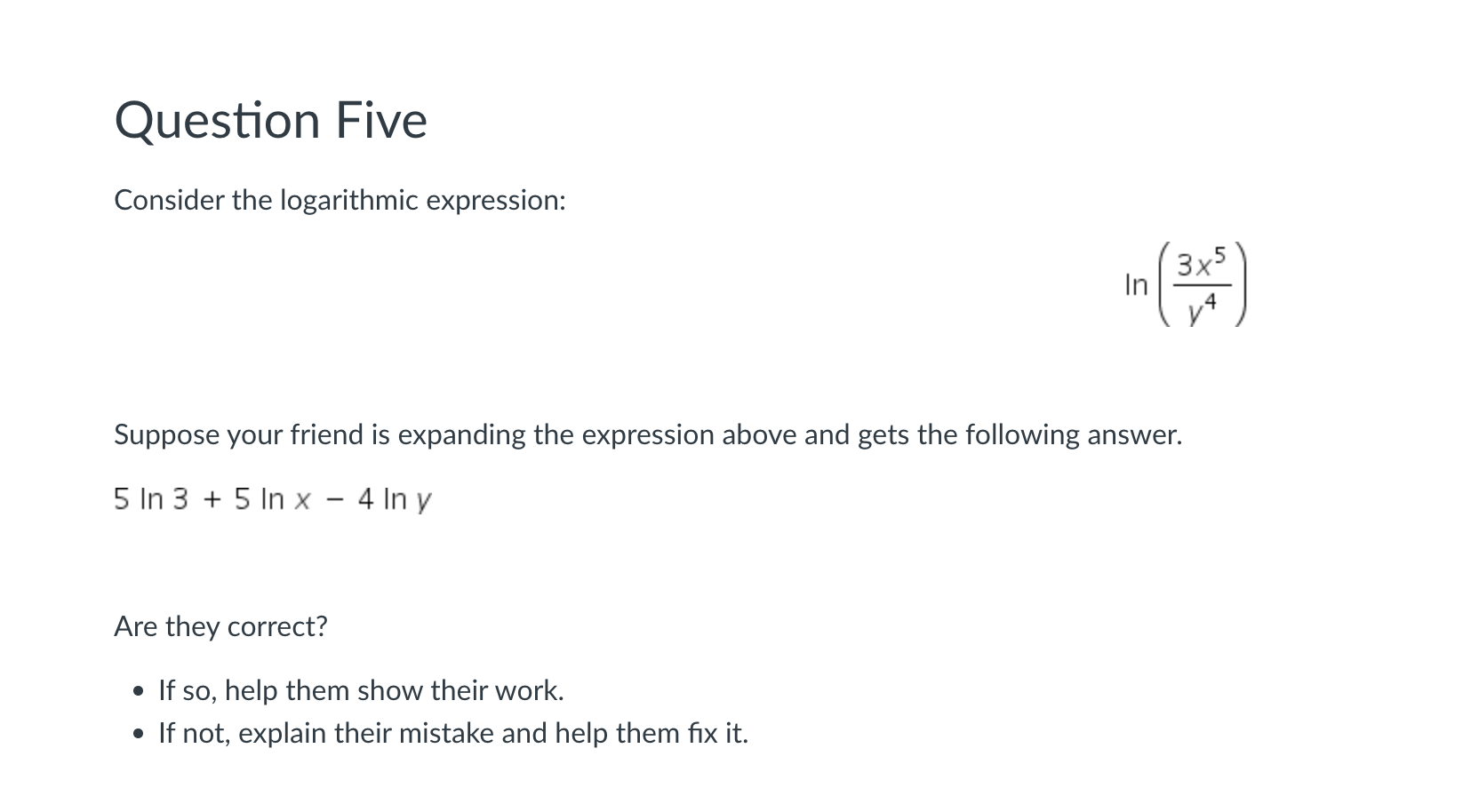
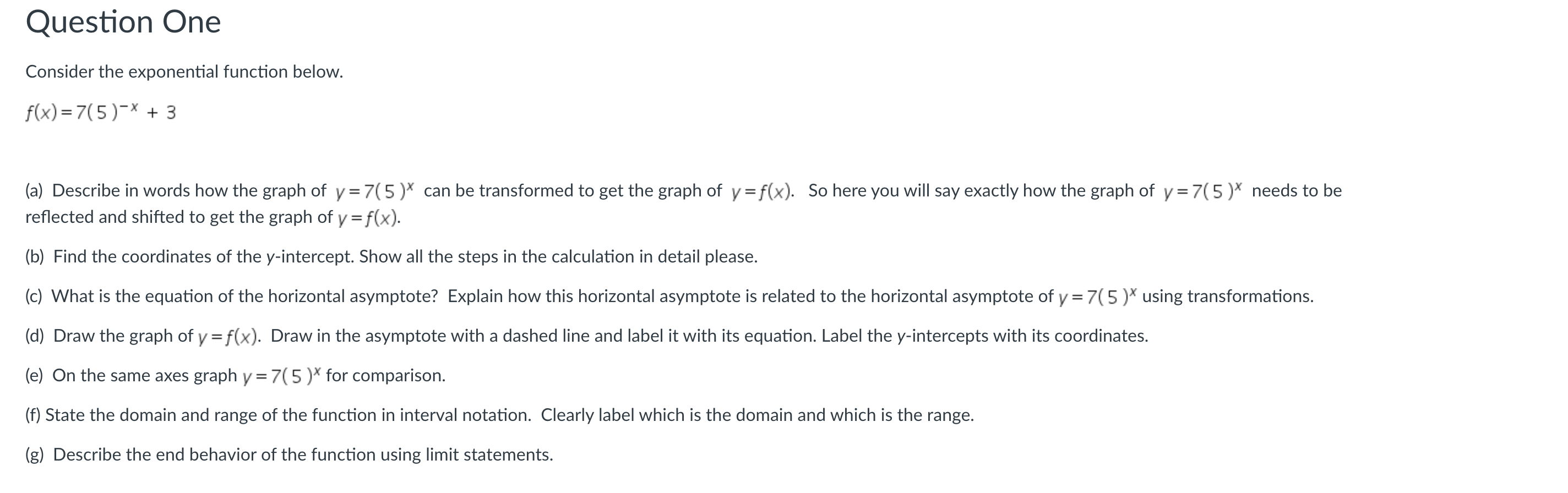
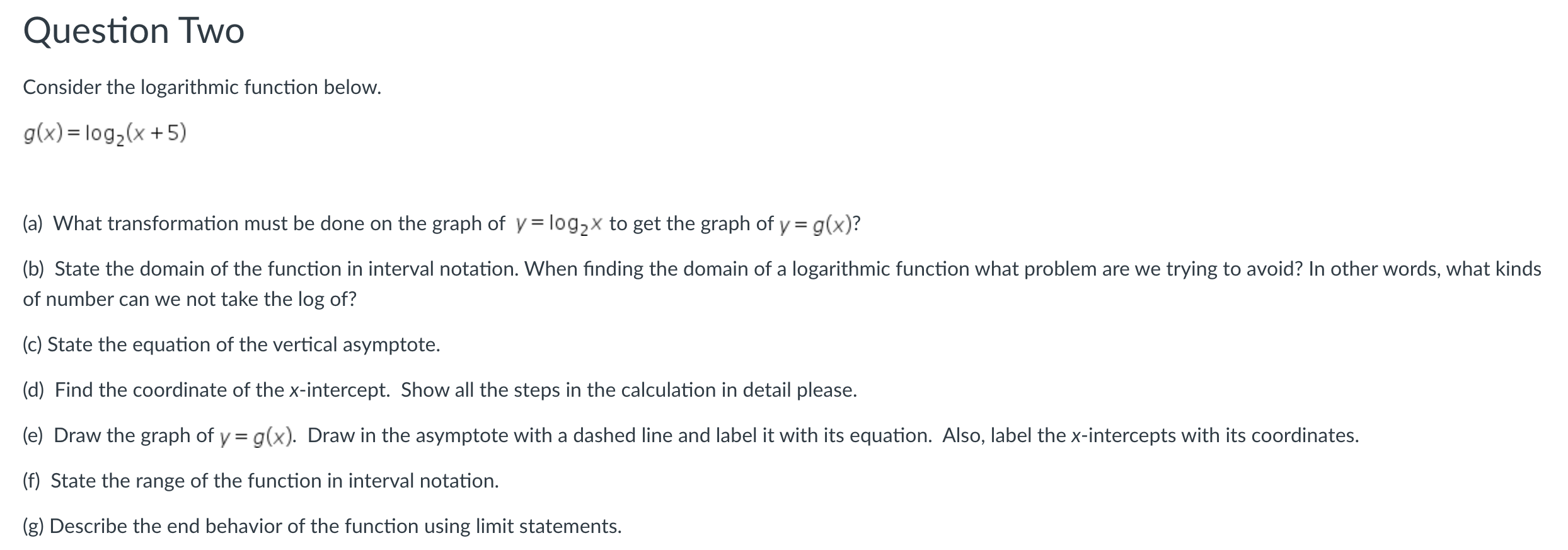
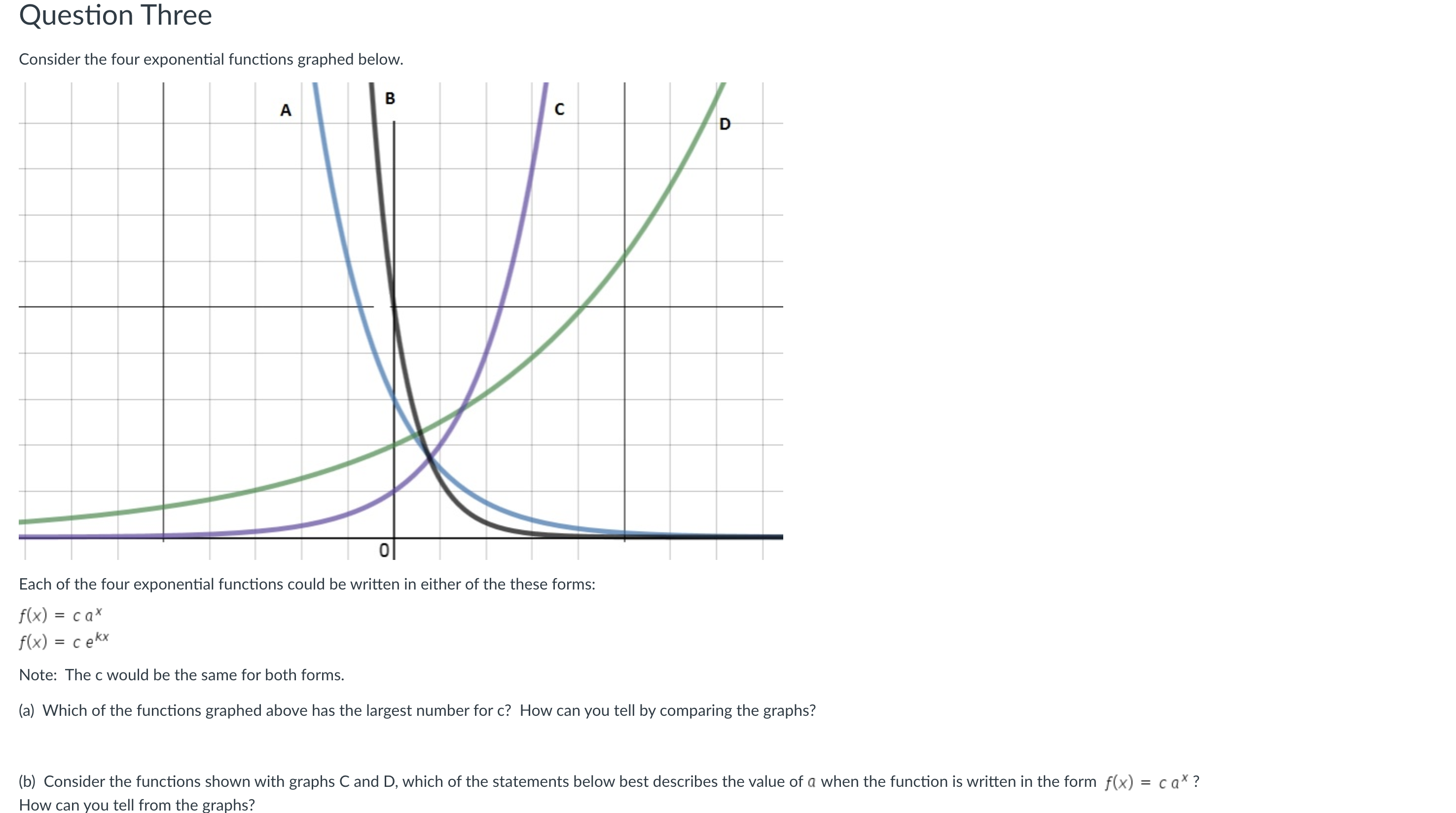
Question One Consider the exponential function below. f(X)=7(5 )'X + 3 (a) Describe in words how the graph of y = 7( S )X can be transformed to get the graph of y =f(x). So here you will say exactly how the graph of y = 7( 5 )" needs to be reected and shifted to get the graph of y =f(x). (b) Find the coordinates of the y-intercept. Show all the steps in the calculation in detail please. (c) What is the equation of the horizontal asymptote? Explain how this horizontal asymptote is related to the horizontal asymptote of y = 7( S )X using transformations. (d) Draw the graph of y =f(x). Draw in the asymptote with a clashed line and label it with its equation. Label the y-intercepts with its coordinates. (e) On the same axes graph y: 7( S )X for comparison. (f) State the domain and range of the function in interval notationt Clearly label which is the domain and which is the range (g) Describe the end behavior of the function using limit statements. Question Two Consider the logarithmic function below. g(x)= Iogz(x +5) (a) What transformation must be done on the graph of V = Iogzx to get the graph of y = g(x)? (b) State the domain of the function in interval notation. When nding the domain of a logarithmic function what problem are we trying to avoid? In other words, what kinds of number can we not take the log of? (c) State the equation of the vertical asymptote. (cl) Find the coordinate of the x-intercept. Show all the steps in the calculation in detail please. (e) Draw the graph of y = 900. Draw in the asymptote with a dashed line and label it with its equation. Also, label the x-intercepts with its coordinates. (f) State the range of the function in interval notation. (3) Describe the end behavior of the function using limit statements. Question Three Consider the four exponential functions graphed below. Each of the four exponential functions could be written in either of the these forms: f(x) = ca" f(x) = ce'\" Note: The c would be the same for both forms. (a) Which of the functions graphed above has the largest number for c? How can you tell by comparing the graphs? (b) Consider the functions shown with graphs C and D, which of the statements below best describes the value of a when the function is written in the form f(x) = c a X ? How can you tell from the graphs? (b) Consider the functions shown with graphs C and D, which of the statements below best describes the value of a when the function is written in the form f(x) = ca* ? How can you tell from the graphs? ao a> 1 (c) Consider the functions shown with graphs A and B, which of the statements below best describes the value of k when the function is written in the form f(x) = cekx ? How can you tell from the graphs? K O k > 1 (d) Which of the four functions graphed above has the largest value for a when the function is written in the form f(x) = ca* and k when the function is written in the form f(x) = cekx? How can you tell by comparing the graphs? Question Four Use the Definition of Logarithm and a few sentences to explain why each of the following are true. As usual for logarithms assume a > 0, a # 1. (a) logaa = 1 (b) logal = 0 (c) log q0 is undefinedQuestion Five Consider the logarithmic expression: 3x 5 In 4 Suppose your friend is expanding the expression above and gets the following answer. 5 In 3 + 5 In x - 4 Iny Are they correct? . If so, help them show their work. . If not, explain their mistake and help them fix it
Step by Step Solution

There are 3 Steps involved in it

1 Expert Approved Answer
Step: 1 Unlock blur-text-image

Question Has Been Solved by an Expert!

Get step-by-step solutions from verified subject matter experts

Step: 2 Unlock
Step: 3 Unlock

Students Have Also Explored These Related Mathematics Questions!