







Question: QUESTION ONE I have just invented a new scheduling algorithm that I claim gives the highest priority to processes that have just entered the system
QUESTION ONE
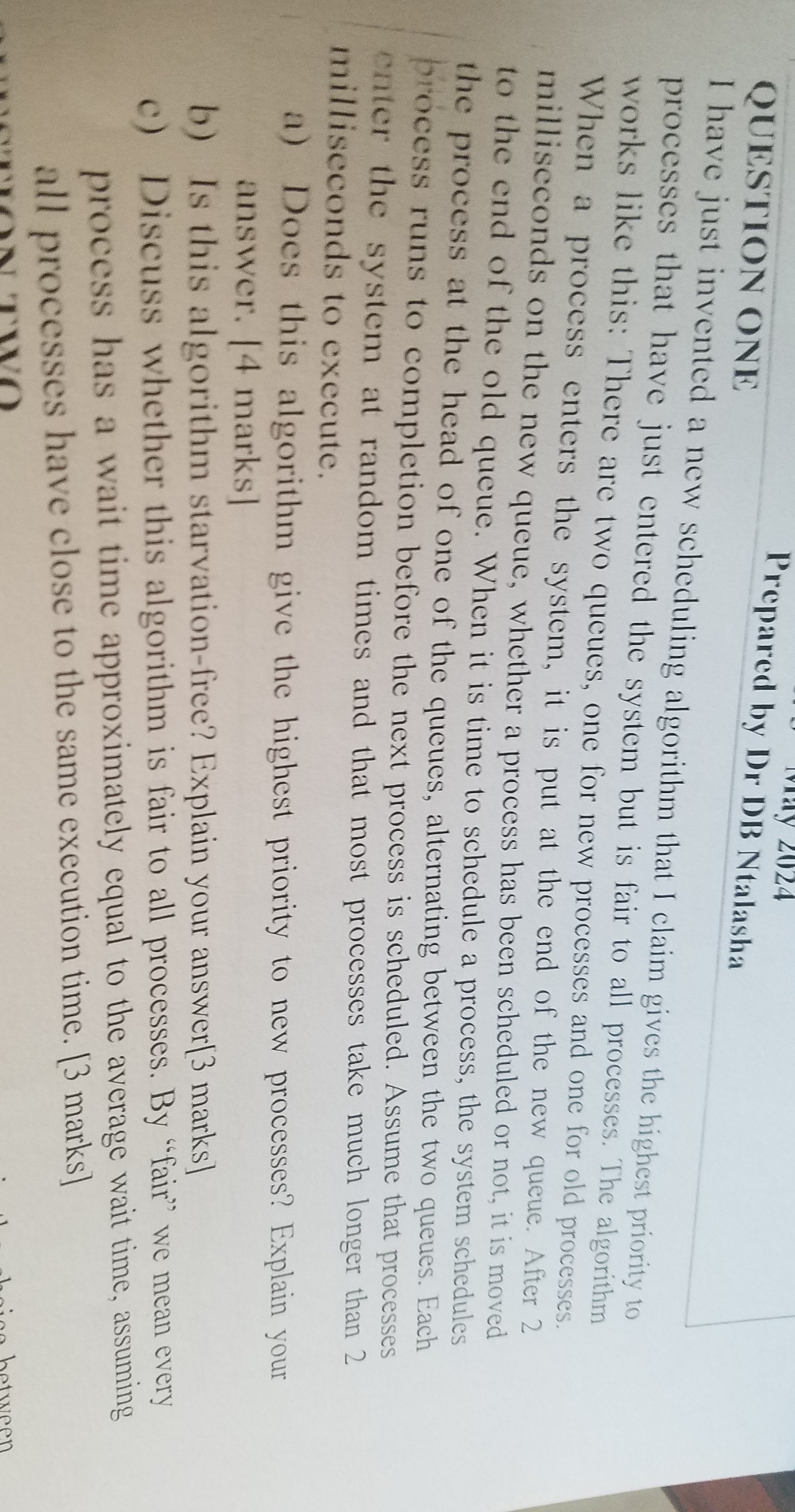
I have just invented a new scheduling algorithm that I claim gives the highest priority to processes that have just entered the system but is fair to all processes. The algorithm works like this: There are two queues, one for new processes and one for old processes. When a process enters the system, it is put at the end of the new queue. After milliseconds on the new queue, whether a process has been scheduled or not, it is moved to the end of the old queue. When it is time to schedule a process, the system schedules the process at the head of one of the queues, alternating between the two queues. Each process runs to completion before the next process is scheduled. Assume that processes enter the system at random times and that most processes take much longer than milliseconds to execute.
a Does this algorithm give the highest priority to new processes? Explain your answer. marks
b Is this algorithm starvationfree? Explain your answer marks
c Discuss whether this algorithm is fair to all processes. By "fair" we mean every process has a wait time approximately equal to the average wait time, assuming all processes have close to the same execution time. marks
Step by Step Solution
There are 3 Steps involved in it
1 Expert Approved Answer
Step: 1 Unlock

Question Has Been Solved by an Expert!
Get step-by-step solutions from verified subject matter experts
Step: 2 Unlock
Step: 3 Unlock
 Study Help