Question: Question One Instructions: Read the following Mini Case Nike Managing Ethical Missteps: Sweatshops to Leadership in Employment Practices The Nike case is one of redemption,
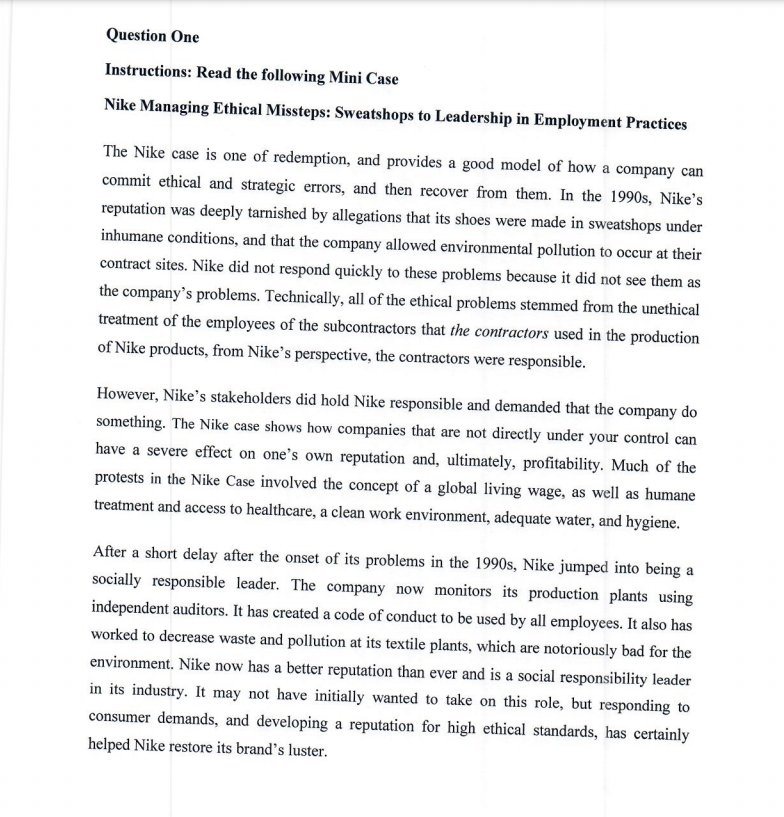
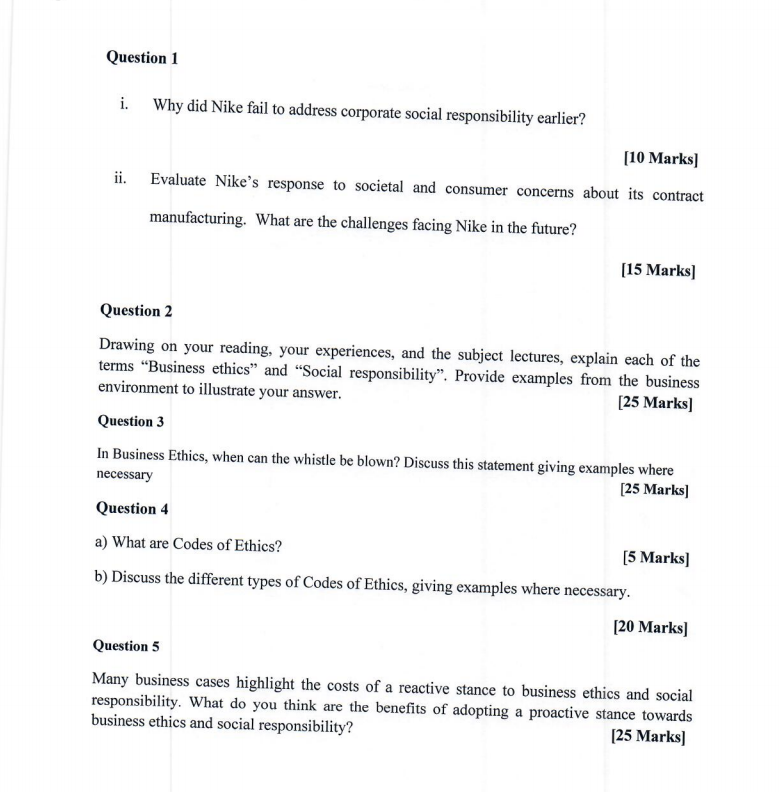
Question One Instructions: Read the following Mini Case Nike Managing Ethical Missteps: Sweatshops to Leadership in Employment Practices The Nike case is one of redemption, and provides a good model of how a company can commit ethical and strategic errors, and then recover from them. In the 1990s, Nike's reputation was deeply tarnished by allegations that its shoes were made in sweatshops under inhumane conditions, and that the company allowed environmental pollution to occur at their contract sites. Nike did not respond quickly to these problems because it did not see them as the company's problems. Technically, all of the ethical problems stemmed from the unethical treatment of the employees of the subcontractors that the contractors used in the production of Nike products, from Nike's perspective, the contractors were responsible. However, Nike's stakeholders did hold Nike responsible and demanded that the company do something. The Nike case shows how companies that are not directly under your control can have a severe effect on one's own reputation and, ultimately, profitability. Much of the protests in the Nike Case involved the concept of a global living wage, as well as humane treatment and access to healthcare, a clean work environment, adequate water, and hygiene. After a short delay after the onset of its problems in the 1990s, Nike jumped into being a socially responsible leader. The company now monitors its production plants using independent auditors. It has created a code of conduct to be used by all employees. It also has worked to decrease waste and pollution at its textile plants, which are notoriously bad for the environment. Nike now has a better reputation than ever and is a social responsibility leader in its industry. It may not have initially wanted to take on this role, but responding to consumer demands, and developing a reputation for high ethical standards, has certainly helped Nike restore its brand's luster. Question 1 i. Why did Nike fail to address corporate social responsibility earlier? [10 Marks ii. Evaluate Nike's response to societal and consumer concerns about its contract manufacturing. What are the challenges facing Nike in the future? [15 Marks) Question 2 Drawing on your reading, your experiences, and the subject lectures, explain each of the terms Business ethics and Social responsibility. Provide examples from the business environment to illustrate your answer. [25 Marks) Question 3 In Business Ethics, when can the whistle be blown? Discuss this statement giving examples where necessary [25 Marks) Question 4 a) What are Codes of Ethics? [5 Marks) b) Discuss the different types of Codes of Ethics, giving examples where necessary. [20 Marks) Question 5 Many business cases highlight the costs of a reactive stance to business ethics and social responsibility. What do you think are the benefits of adopting a proactive stance towards business ethics and social responsibility? [25 Marks)









 Study Help