







Question: Question (use text to explain your answer) According to Marx and Engels, what are the classes the dominate industrialized Europe? How do they relate to
 Question (use text to explain your answer)
According to Marx and Engels, what are the "classes" the dominate industrialized Europe? How do they relate to each other (or interact)? Why?
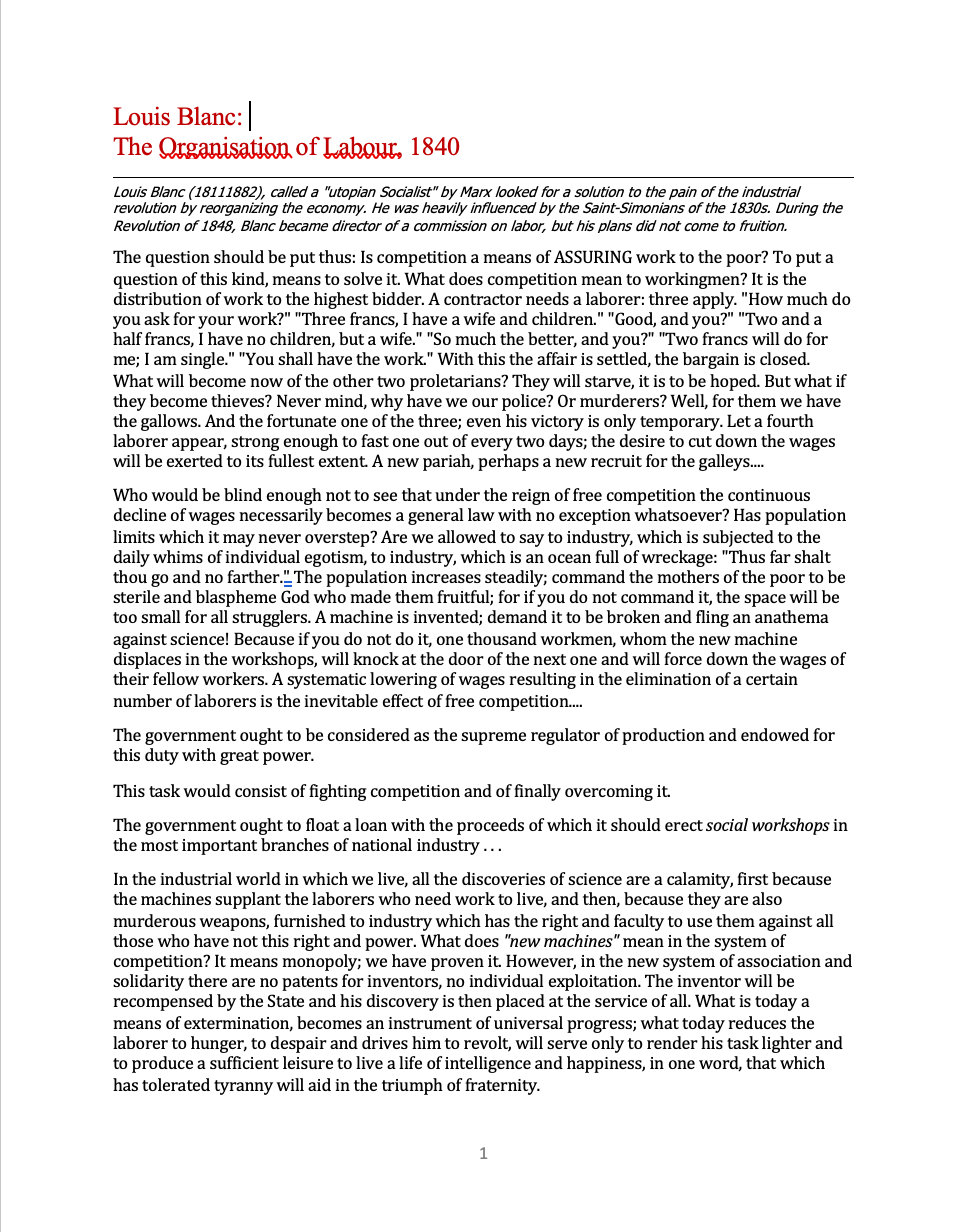
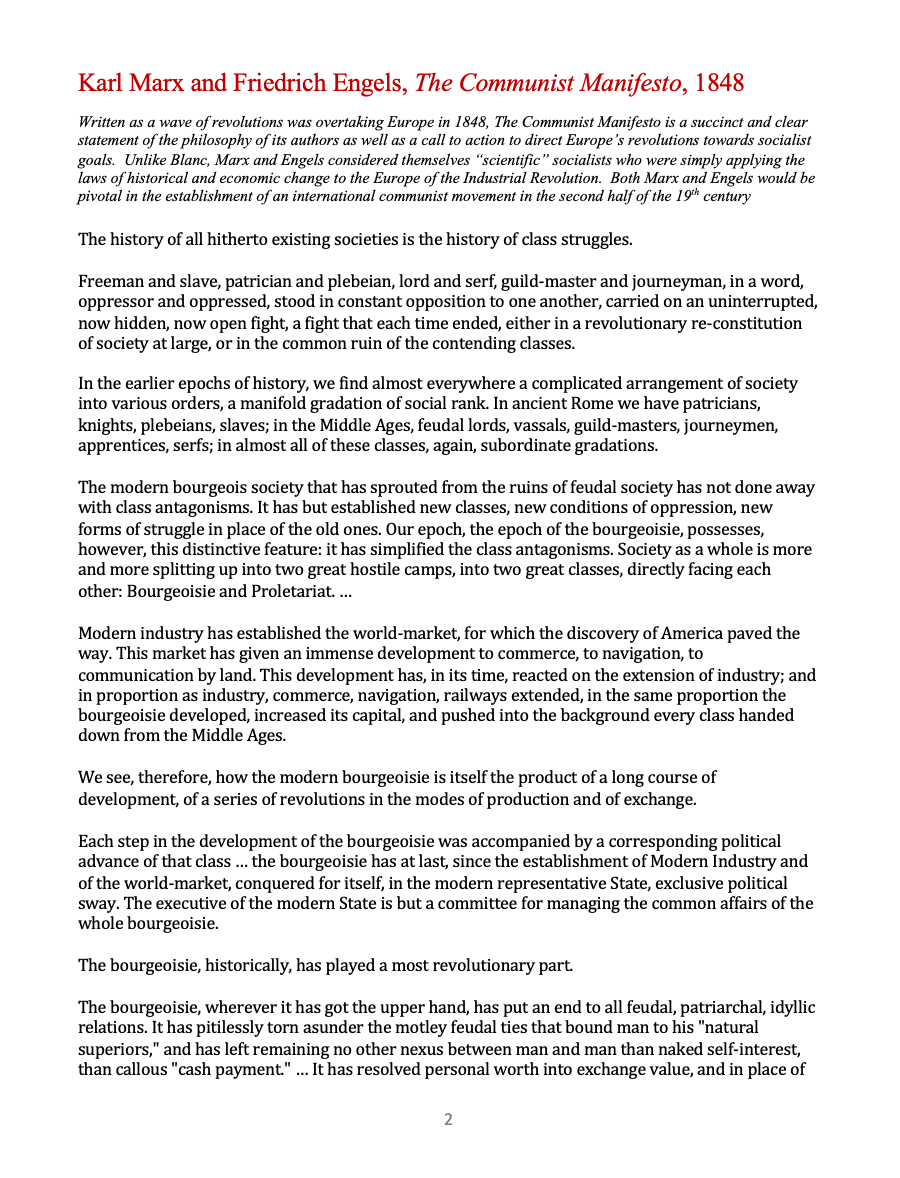
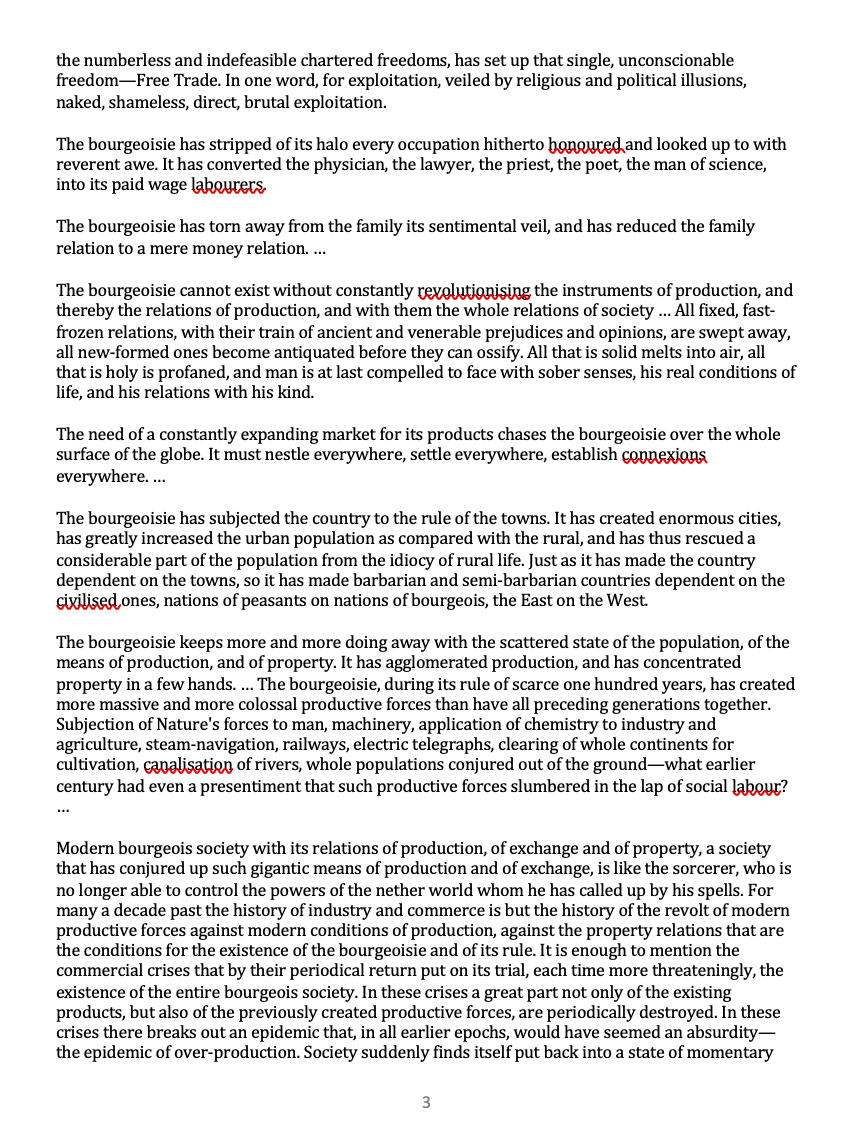
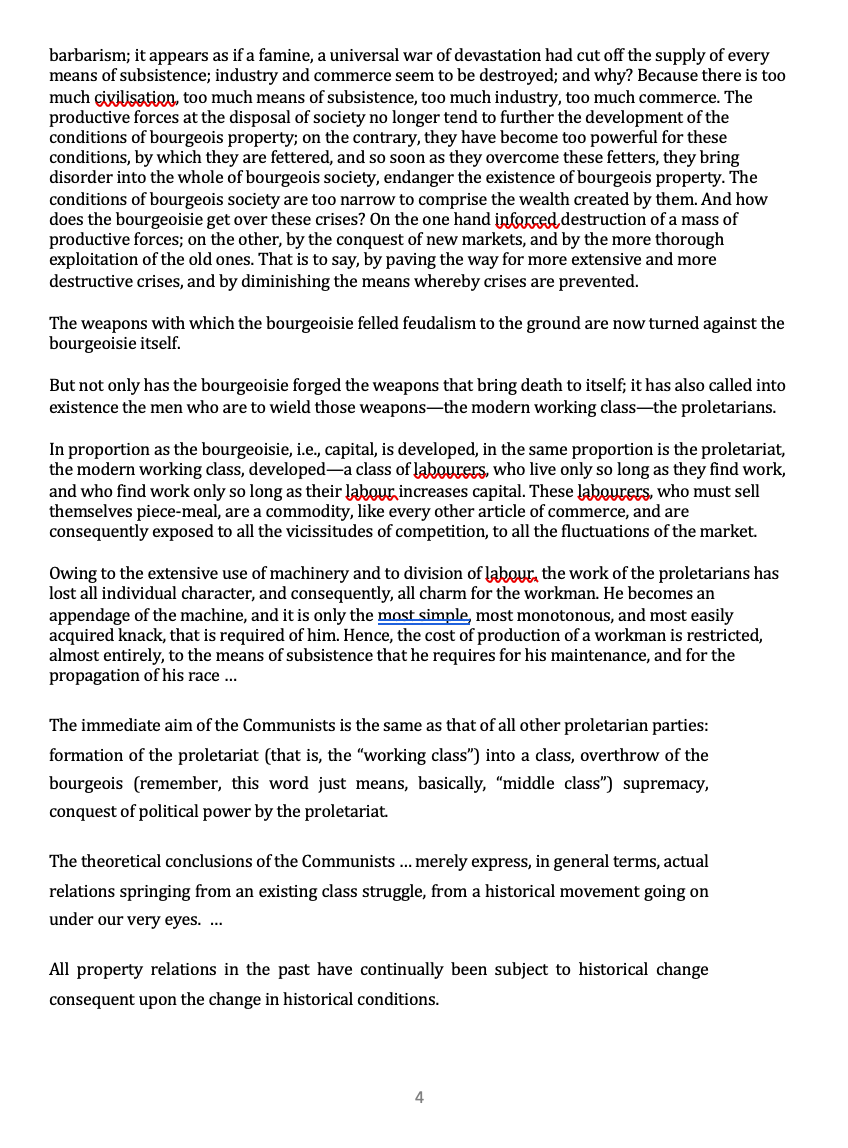
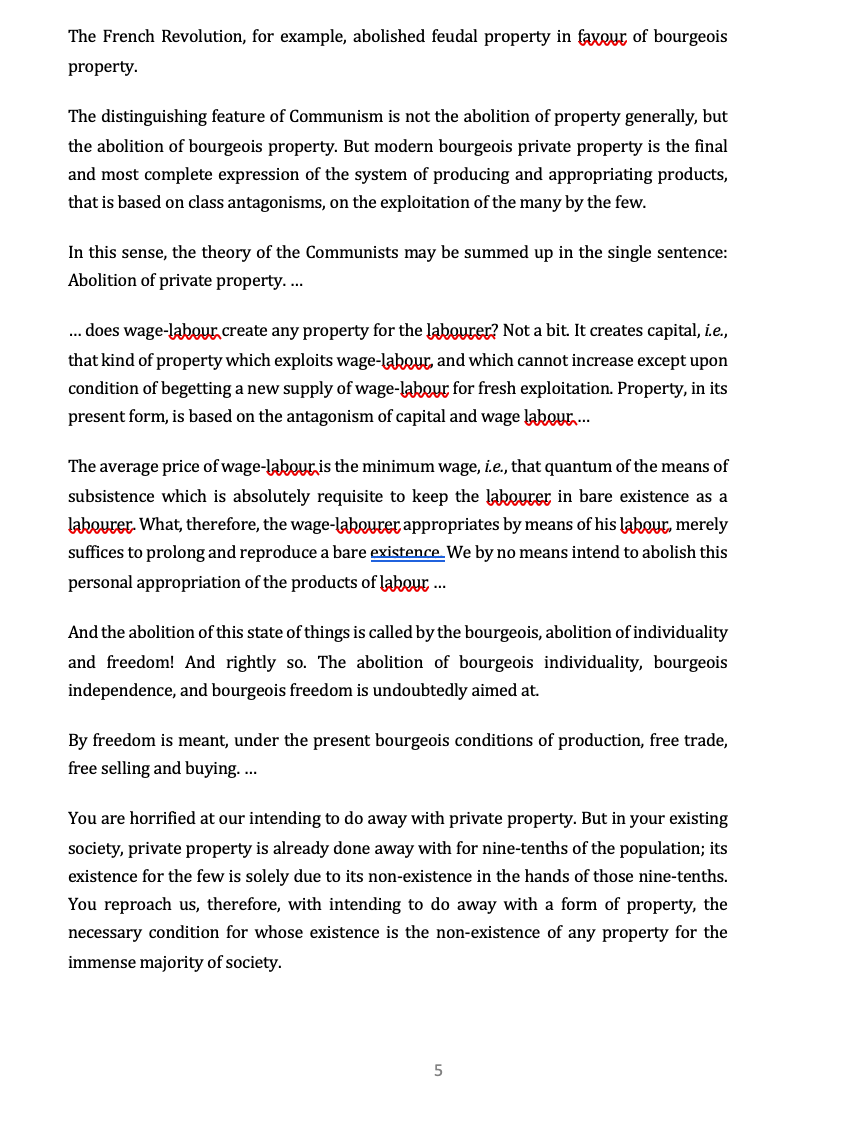
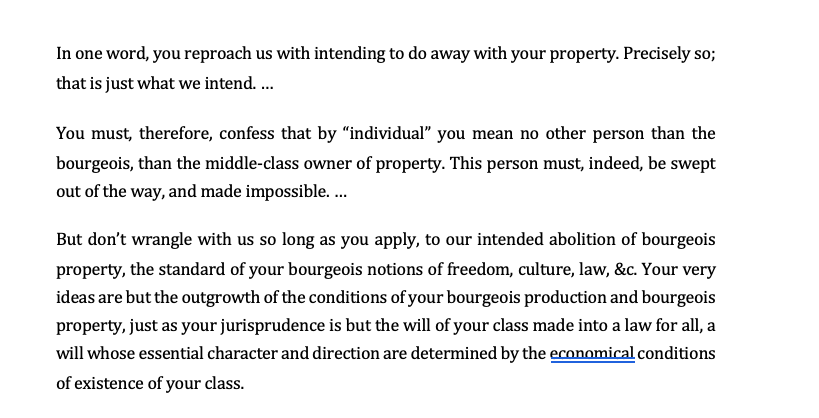
Louis Blanc: The Organisation of Labour, 1840 Louis Blanc (18111882), called a "utopian Socialist" by Marx looked for a solution to the pain of the industrial revolution by reorganizing the economy. He was heavily influenced by the Saint-Simonians of the 1830s. During the Revolution of 1848, Blanc became director of a commission on labor, but his plans did not come to fruition. The question should be put thus: Is competition a means of ASSURING work to the poor? To put a question of this kind, means to solve it. What does competition mean to workingmen? It is the distribution of work to the highest bidder. A contractor needs a laborer: three apply. "How much do you ask for your work?" "Three francs, I have a wife and children." "Good, and you?" "Two and a half francs, I have no children, but a wife." "So much the better, and you?" "Two francs will do for me; I am single." "You shall have the work." With this the affair is settled, the bargain is closed. What will become now of the other two proletarians? They will starve, it is to be hoped. But what if they become thieves? Never mind, why have we our police? Or murderers? Well, for them we have the gallows. And the fortunate one of the three; even his victory is only temporary. Let a fourth laborer appear, strong enough to fast one out of every two days; the desire to cut down the wages will be exerted to its fullest extent. A new pariah, perhaps a new recruit for the galleys.... Who would be blind enough not to see that under the reign of free competition the continuous decline of wages necessarily becomes a general law with no exception whatsoever? Has population limits which it may never overstep? Are we allowed to say to industry, which is subjected to the daily whims of individual egotism, to industry, which is an ocean full of wreckage: "Thus far shalt thou go and no farther.". The population increases steadily; command the mothers of the poor to be sterile and blaspheme God who made them fruitful; for if you do not command it, the space will be too small for all strugglers. A machine is invented; demand it to be broken and fling an anathema against science! Because if you do not do it, one thousand workmen, whom the new machine displaces in the workshops, will knock at the door of the next one and will force down the wages of their fellow workers. A systematic lowering of wages resulting in the elimination of a certain number of laborers is the inevitable effect of free competition.... The government ought to be considered as the supreme regulator of production and endowed for this duty with great power. This task would consist of fighting competition and of finally overcoming it. The government ought to float a loan with the proceeds of which it should erect social workshops in the most important branches of national industry... In the industrial world in which we live, all the discoveries of science are a calamity, first because the machines supplant the laborers who need work to live, and then, because they are also murderous weapons, furnished to industry which has the right and faculty to use them against all those who have not this right and power. What does "new machines" mean in the system of competition? It means monopoly; we have proven it. However, in the new system of association and solidarity there are no patents for inventors, no individual exploitation. The inventor will be recompensed by the State and his discovery is then placed at the service of all. What is today a means of extermination, becomes an instrument of universal progress; what today reduces the laborer to hunger, to despair and drives him to revolt, will serve only to render his task lighter and to produce a sufficient leisure to live a life of intelligence and happiness, in one word, that which has tolerated tyranny will aid in the triumph of fraternity. 1 Karl Marx and Friedrich Engels, The Communist Manifesto, 1848 Written as a wave of revolutions was overtaking Europe in 1848, The Communist Manifesto is a succinct and clear statement of the philosophy of its authors as well as a call to action to direct Europe's revolutions towards socialist goals. Unlike Blanc, Marx and Engels considered themselves "scientific" socialists who were simply applying the laws of historical and economic change to the Europe of the Industrial Revolution. Both Marx and Engels would be pivotal in the establishment of an international communist movement in the second half of the 19th century The history of all hitherto existing societies is the history of class struggles. Freeman and slave, patrician and plebeian, lord and serf, guild-master and journeyman, in a word, oppressor and oppressed, stood in constant opposition to one another, carried on an uninterrupted, now hidden, now open fight, a fight that each time ended, either in a revolutionary re-constitution of society at large, or in the common ruin of the contending classes. In the earlier epochs of history, we find almost everywhere a complicated arrangement of society into various orders, a manifold gradation of social rank. In ancient Rome we have patricians, knights, plebeians, slaves; in the Middle Ages, feudal lords, vassals, guild-masters, journeymen, apprentices, serfs; in almost all of these classes, again, subordinate gradations. The modern bourgeois society that has sprouted from the ruins of feudal society has not done away with class antagonisms. It has but established new classes, new conditions of oppression, new forms of struggle in place of the old ones. Our epoch, the epoch of the bourgeoisie, possesses, however, this distinctive feature: it has simplified the class antagonisms. Society as a whole is more and more splitting up into two great hostile camps, into two great classes, directly facing each other: Bourgeoisie and Proletariat.... Modern industry has established the world-market, for which the discovery of America paved the way. This market has given an immense development to commerce, to navigation, to communication by land. This development has, in its time, reacted on the extension of industry; and in proportion as industry, commerce, navigation, railways extended, in the same proportion the bourgeoisie developed, increased its capital, and pushed into the background every class handed down from the Middle Ages. We see, therefore, how the modern bourgeoisie is itself the product of a long course of development, of a series of revolutions in the modes of production and of exchange. Each step in the development of the bourgeoisie was accompanied by a corresponding political advance of that class ... the bourgeoisie has at last, since the establishment of Modern Industry and of the world- market, conquered for itself, in the modern representative State, exclusive political sway. The executive of the modern State is but a committee for managing the common affairs of the whole bourgeoisie. The bourgeoisie, historically, has played a most revolutionary part The bourgeoisie, wherever it has got the upper hand, has put an end to all feudal, patriarchal, idyllic relations. It has pitilessly torn asunder the motley feudal ties that bound man to his "natural superiors," and has left remaining no other nexus between man and man than naked self-interest, than callous "cash payment." ... It has resolved personal worth into exchange value, and in place of 2 the numberless and indefeasible chartered freedoms, has set up that single, unconscionable freedom-Free Trade. In one word, for exploitation, veiled by religious and political illusions, naked, shameless, direct, brutal exploitation. The bourgeoisie has stripped of its halo every occupation hitherto honoured and looked up to with reverent awe. It has converted the physician, the lawyer, the priest, the poet, the man of science, into its paid wage labourers, The bourgeoisie has torn away from the family its sentimental veil, and has reduced the family relation to a mere money relation. ... The bourgeoisie cannot exist without constantly revolutionising the instruments of production, and thereby the relations of production, and with them the whole relations of society ... All fixed, fast- frozen relations, with their train of ancient and venerable prejudices and opinions, are swept away, all new-formed ones become antiquated before they can ossify. All that is solid melts into air, all that is holy is profaned, and man is at last compelled to face with sober senses, his real conditions of life, and his relations with his kind. The need of a constantly expanding market for its products chases the bourgeoisie over the whole surface of the globe. It must nestle everywhere, settle everywhere, establish connexions everywhere. ... The bourgeoisie has subjected the country to the rule the towns. It has created enormous cities, has greatly increased the urban population as compared with the rural, and has thus rescued a considerable part of the population from the idiocy of rural life. Just as it has made the country dependent on the towns, so it has made barbarian and semi-barbarian countries dependent on the civilised ones, nations of peasants on nations of bourgeois, the East on the West. The bourgeoisie keeps more and more doing away with the scattered state of the population, of the means of production, and of property. It has agglomerated production, and has concentrated property in a few hands. ... The bourgeoisie, during its rule of scarce one hundred years, has created more massive and more colossal productive forces than have all preceding generations together. Subjection of Nature's forces to man, machinery, application of chemistry to industry and agriculture, steam-navigation, railways, electric telegraphs, clearing of whole continents for cultivation, canalisation of rivers, whole populations conjured out of the groundwhat earlier century had even a presentiment that such productive forces slumbered in the lap of social labour? Modern bourgeois society with its relations of production, of exchange and of property, a society that has conjured up such gigantic means of production and of exchange, is like the sorcerer, who is no longer able to control the powers of the nether world whom he has called up by his spells. For many a decade past the history of industry and commerce is but the history of the revolt of modern productive forces against modern conditions of production, against the property relations that are the conditions for the existence of the bourgeoisie and of its rule. It is enough to mention the commercial crises that by their periodical return put on its trial, each time more threateningly, the existence of the entire bourgeois society. In these crises a great part not only of the existing products, but also of the previously created productive forces, are periodically destroyed. In these crises there breaks out an epidemic that, in all earlier epochs, would have seemed an absurdity- the epidemic of over-production. Society suddenly finds itself put back into a state of momentary 3 barbarism; it appears as if a famine, a universal war of devastation had cut off the supply of every means of subsistence; industry and commerce seem to be destroyed; and why? Because there is too much civilisation, too much means of subsistence, too much industry, too much commerce. The productive forces at the disposal of society no longer tend to further the development of the conditions of bourgeois property; on the contrary, they have become too powerful for these conditions, by which they are fettered, and so soon as they overcome these fetters, they bring disorder into the whole of bourgeois society, endanger the existence of bourgeois property. The conditions of bourgeois society are too narrow to comprise the wealth created by them. And how does the bourgeoisie get over these crises? On the one hand inforced destruction of a mass of productive forces; on the other, by the conquest of new markets, and by the more thorough exploitation of the old ones. That is to say, by paving the way for more extensive and more destructive crises, and by diminishing the means whereby crises are prevented. The weapons with which the bourgeoisie felled feudalism to the ground are now turned against the bourgeoisie itself. But not only has the bourgeoisie forged the weapons that bring death to itself; it has also called into existence the men who are to wield those weaponsthe modern working classthe proletarians. In proportion as the bourgeoisie, i.e., capital, is developed, in the same proportion is the proletariat, the modern working class, developeda class of labourers, who live only so long as they find work, and who find work only so long as their labour increases capital. These labourers, who must sell themselves piece-meal, are a commodity, like every other article of commerce, and are consequently exposed to all the vicissitudes of competition, to all the fluctuations of the market. Owing to the extensive use of machinery and to division of labour, the work of the proletarians has lost all individual character, and consequently, all charm for the workman. He becomes an appendage of the machine, and it is only the most simple, most monotonous, and most easily acquired knack, that is required of him. Hence, the cost of production of a workman is restricted, almost entirely, to the means of subsistence that he requires for his maintenance, and for the propagation of his race ... The immediate aim of the Communists is the same as that of all other proletarian parties: formation of the proletariat (that is, the "working class) into a class, overthrow of the bourgeois (remember, this word just means, basically, middle class) supremacy, conquest of political power by the proletariat. The theoretical conclusions of the Communists ... merely express, in general terms, actual relations springing from an existing class struggle, from a historical movement going on under our very eyes. ... All property relations in the past have continually been subject to historical change consequent upon the change in historical conditions. 4 The French Revolution, for example, abolished feudal property in favour of bourgeois property. The distinguishing feature of Communism is not the abolition of property generally, but the abolition of bourgeois property. But modern bourgeois private property is the final and most complete expression of the system of producing and appropriating products, that is based on class antagonisms, on the exploitation of the many by the few. In this sense, the theory of the Communists may be summed up in the single sentence: Abolition of private property.... ... does wage-labour create any property for the labourer? Not a bit. It creates capital, i.e., that kind of property which exploits wage-labour, and which cannot increase except upon condition of begetting a new supply of wage-labour for fresh exploitation. Property, in its present form, is based on the antagonism of capital and wage labour.... The average price of wage-labour is the minimum wage, i.e., that quantum of the means of subsistence which is absolutely requisite to keep the labourer in bare existence as a labourer. What, therefore, the wage-labourer appropriates by means of his labour, merely suffices to prolong and reproduce a bare existence. We by no means intend to abolish this personal appropriation of the products of labour ... And the abolition of this state of things is called by the bourgeois, abolition of individuality and freedom! And rightly so. The abolition of bourgeois individuality, bourgeois independence, and bourgeois freedom is undoubtedly aimed at. By freedom is meant, under the present bourgeois conditions of production, free trade, free selling and buying. ... You are horrified at our intending to do away with private property. But in your existing society, private property is already done away with for nine-tenths of the population; its existence for the few is solely due to its non-existence in the hands of those nine-tenths. You reproach us, therefore, with intending to do away with a form of property, the necessary condition for whose existence is the non-existence of any property for the immense majority of society. 5 In one word, you reproach us with intending to do away with your property. Precisely so; that is just what we intend.... You must, therefore, confess that by individual you mean no other person than the bourgeois, than the middle-class owner of property. This person must, indeed, be swept out of the way, and made impossible. ... But don't wrangle with us so long as you apply, to our intended abolition of bourgeois property, the standard of your bourgeois notions of freedom, culture, law, &c. Your very ideas are but the outgrowth of the conditions of your bourgeois production and bourgeois property, just as your jurisprudence is but the will of your class made into a law for all, a will whose essential character and direction are determined by the economical conditions of existence of your classStep by Step Solution
There are 3 Steps involved in it
1 Expert Approved Answer
Step: 1 Unlock

Question Has Been Solved by an Expert!
Get step-by-step solutions from verified subject matter experts
Step: 2 Unlock
Step: 3 Unlock
 Study Help