Question: Question: Write and draw a Research Framework/Theoretical Framework (please read and use the below information to write and draw the Research Framework/Theoretical Framework ) Chapter

Question: Write and draw a Research Framework/Theoretical Framework (please read and use the below information to write and draw the Research Framework/Theoretical Framework )

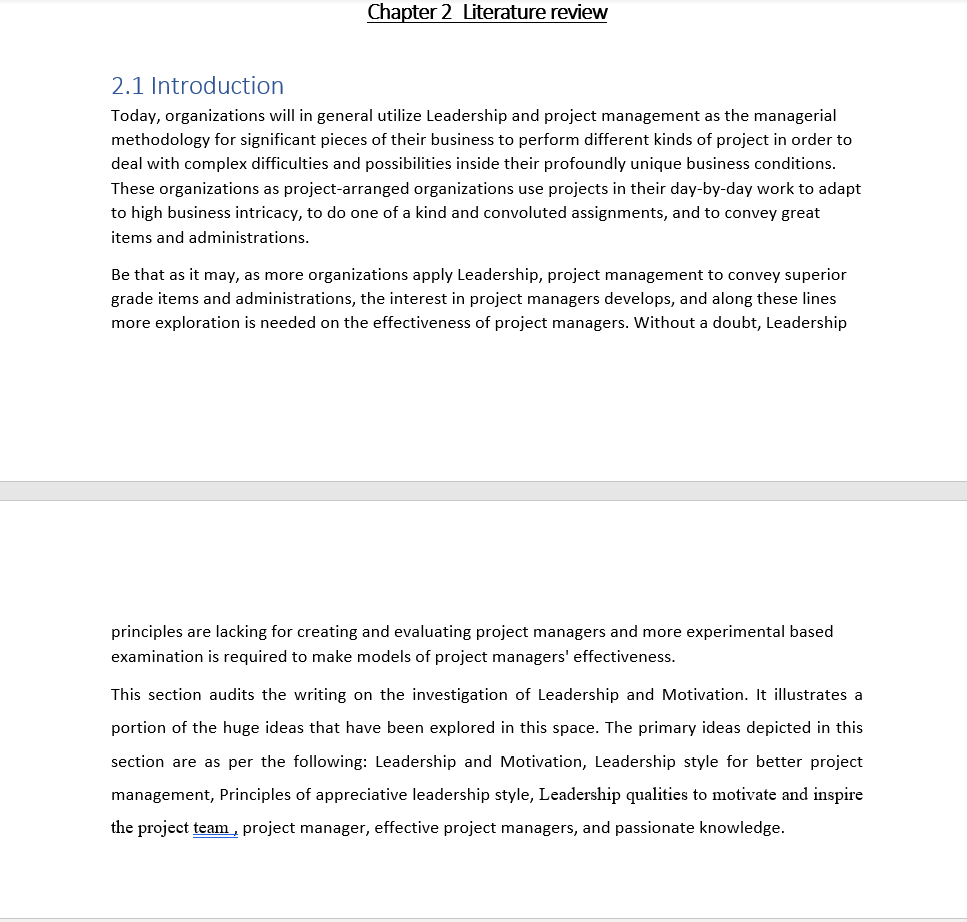
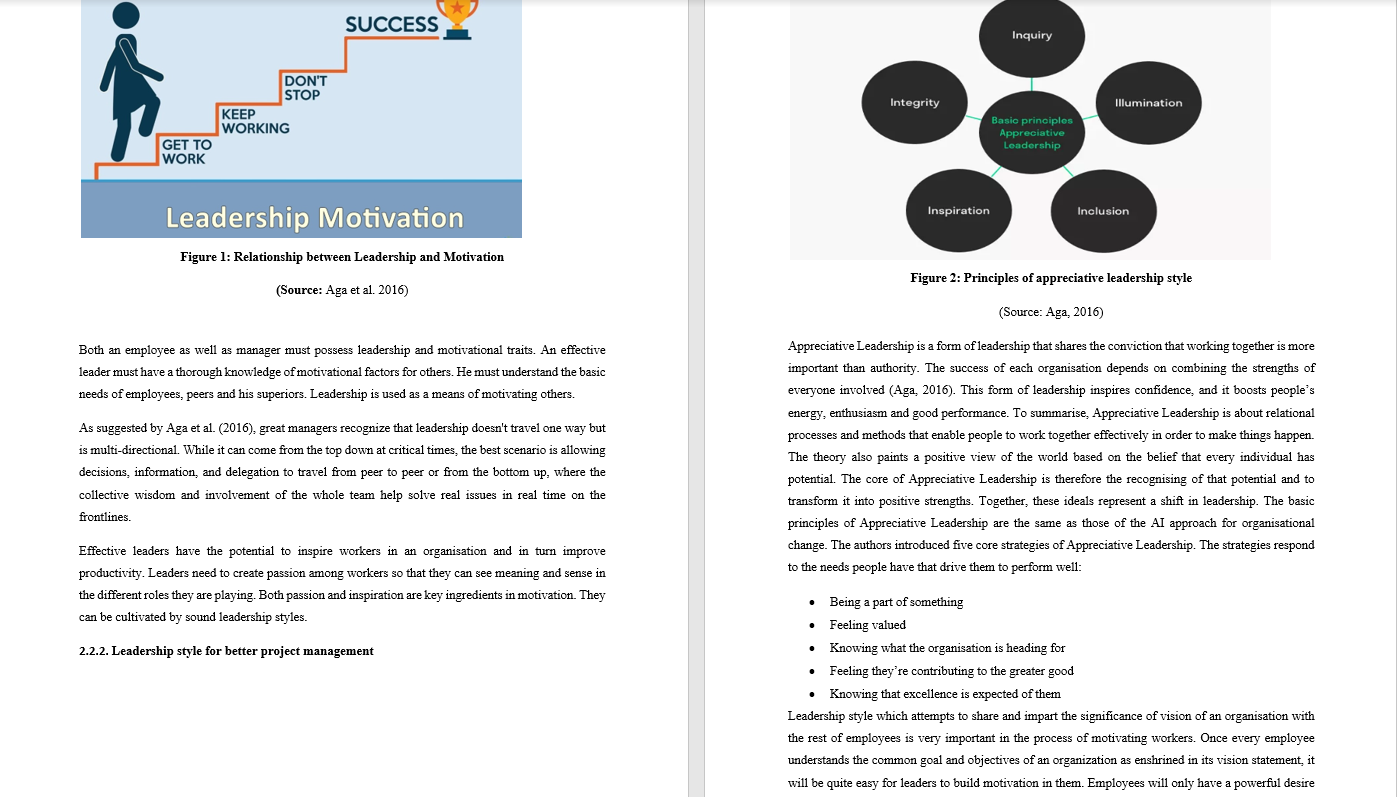
Chapter 2 Literature review 2.1 Introduction Today, organizations will in general utilize Leadership and project management as the managerial methodology for significant pieces of their business to perform different kinds of project in order to deal with complex difficulties and possibilities inside their profoundly unique business conditions. These organizations as project-arranged organizations use projects in their day-by-day work to adapt to high business intricacy, to do one of a kind and convoluted assignments, and to convey great items and administrations. Be that as it may, as more organizations apply Leadership, project management to convey superior grade items and administrations, the interest in project managers develops, and along these lines more exploration is needed on the effectiveness of project managers. Without a doubt, Leadership principles are lacking for creating and evaluating project managers and more experimental based examination is required to make models of project managers' effectiveness. This section audits the writing on the investigation of Leadership and Motivation. It illustrates a portion of the huge ideas that have been explored in this space. The primary ideas depicted in this section are as per the following: Leadership and Motivation, Leadership style for better project management, Principles of appreciative leadership style, Leadership qualities to motivate and inspire the project team , project manager, effective project managers, and passionate knowledge. SUCCESS Inquiry Integrity Illumination DON'T STOP KEEP WORKING GET TO WORK Basic principles Appreciative Leadership Inspiration Inclusion Leadership Motivation Figure 1: Relationship between Leadership and Motivation Figure 2: Principles of appreciative leadership style (Source: Aga et al. 2016) (Source: Aga, 2016) Both an employee as well as manager must possess leadership and motivational traits. An effective leader must have a thorough knowledge of motivational factors for others. He must understand the basic needs of employees, peers and his superiors. Leadership is used as a means of motivating others. As suggested by Aga et al. (2016), great managers recognize that leadership doesn't travel one way but is multi-directional. While it can come from the top down at critical times, the best scenario is allowing decisions, information, and delegation to travel from peer to peer or from the bottom up, where the collective wisdom and involvement of the whole team help solve real issues in real time on the frontlines. Appreciative Leadership is a form of leadership that shares the conviction that working together is more important than authority. The success of each organisation depends on combining the strengths of everyone involved (Aga, 2016). This form of leadership inspires confidence, and it boosts people's energy, enthusiasm and good performance. To summarise, Appreciative Leadership is about relational processes and methods that enable people to work together effectively in order to make things happen. The theory also paints a positive view of the world based on the belief that every individual has potential. The core of Appreciative Leadership is therefore the recognising of that potential and to transform it into positive strengths. Together, these ideals represent a shift in leadership. The basic principles of Appreciative Leadership are the same as those of the Al approach for organisational change. The authors introduced five core strategies of Appreciative Leadership. The strategies respond to the needs people have that drive them to perform well: Effective leaders have the potential to inspire workers in an organisation and in turn improve productivity. Leaders need to create passion among workers so that they can see meaning and sense in the different roles they are playing. Both passion and inspiration are key ingredients in motivation. They can be cultivated by sound leadership styles. 2.2.2. Leadership style for better project management Being a part of something Feeling valued Knowing what the organisation is heading for Feeling they're contributing to the greater good Knowing that excellence is expected of them Leadership style which attempts to share and impart the significance of vision of an organisation with the rest of employees is very important in the process of motivating workers. Once every employee understands the common goal and objectives of an organization as enshrined in its vision statement, it will be quite easy for leaders build motivation in them. Employees will only have a powerful desire to achieve the goals of an organisation if they understand or identify themselves with its vision (Novo et al. 2017). It is only through a relational leadership style that vision can be shared from the top leadership to junior employees. effort by employees. Exceptional performance by workers ought to be rewarded. Both monetary and verbal recognition from the leadership is welcome so that motivation can be enhanced. An effective leadership style will ensure that workers are well informed of the impact of the vision and mission of the organisation. They should be made to feel part and parcel of the entire process of achieving success as well as enjoying the beneficial outcomes of their commitment. Once this is achieved, workers will be motivated not only because they have attractive fringe benefits but also because they have a bright future together with the organization. As recommended by Scott-Young et al. (2019), poor leadership will conceal pertinent information from workers. This will make them have a feeling of alienation from the organisation and become less motivated. It is common knowledge that people will tend to have personal drive if they know quite well that they have something to benefit from or be excited about either in the short or long term. When such employee relation is achieved, then the work of a leader will be very smooth. Leaders who understand the fact that they need to create a close working relationship with employees are often successful. It is out of being close with fellow workers that it will be easy to identify and solve their problems at work and therefore motivate them. Nevertheless, there are some instances when leadership has been considered to be a subsidiary factor as far as organizational performance is concerned. The argument is that junior employees are the one who execute the actual task in an organization while leaders are mainly mandated to give guidance and direction on what is supposed to be done Mazzetto, 2019). It is perhaps better to consider teams within an organisation and investigate how team leaders can motivate workers. There is a vivid evidence that the presence of a team leader in an organization is a real motivating factor to workers. The level of motivation may be quite low whenever a team leader is absent. From this perspective, the general perception is that leaders who steer small teams in organizations are more influential to the teams they are leading compared to top executives. This can be explained from the fact they are very close to the rest of team members and will often listen and act expeditiously to arising issues (Zhu et al. 2019). Moreover, workers are found to be less motivated when their team leader has been substituted with another one. It takes a significant amount of time before the team can adjust itself to the changes. Nevertheless, it is imperative to underscore the fact that it is only transformational leadership which can usher full motivation. Leadership styles are different and so is the application. The link between leadership and motivation has scarcely been researched upon in the past although each of the concepts has been studied at great length. The manner in which the two components of organizational behaviour interact is very important in ensuring positive growth in a business organisation. One main factor which often leads to team members being motivated in the presence of their leader is the team bonding spirit which develops with time. Members in a team tend to bond emotionally with their leader to the extent that separating the two becomes tricky. Even in cases where a substitute team leader is brought on board, he or she is more or less regarded as a manager but not a leader. This implies that the link between effective leadership and motivation is not instantaneous. It is a process which demands time and space. Since it is not possible to measure or quantify motivation, its impacts in an organization can only be felt or realized in the performance of a company over a given period of time. The process of motivation is complex and unless the impact of leadership on the latter is brought on board, it may not be an easy task. Nevertheless, it is sometimes possible for a leader in an organisation to motivate workers without translating to positive outcome in the organization. There are several initiatives which can be put in place in order to motivate workers. However, it is imperative to point out that any such measures can be hampered or enhanced by the leadership style in operation. For example, most workers will be motivated to offer their services if they have job satisfaction. This cannot exist in an organization unless it is well cultivated. It is upon the leader to change the leadership style for employees to derive satisfaction at work. For instance, one way of making sure that employees are satisfied at their place of work is by reducing the level of supervision. Effective leaders do not supervise their juniors too closely. According to Gorsky et al. (2016), this may create an environment of discomfort and a feeling of being threatened. Most workers would generally prefer to work with minimal control. This is also important because each one of them is made should be made accountable and responsible as well. Additionally, good leadership will recognize the extra However, there are demerits when leaders bond too closely with team members. For instance, charismatic leaders who seem to be all efficient and fail to delegate roles to members may prove to be fruitless in the long run. Such leaders fail to empower team members leading to de-motivation. Leaders who take control position of their teams and leave nothing to chance also fall into this category. As recommended by Mller et al. (2018), members of a team need to be given the chance to exercise their abilities bearing in mind that each one of them has unique potential different from the rest. Notwithstanding this argument, organizations which have established a culture of exemplary performance may not experience much of the impact of charismatic leaders. This is diffused by the growth momentum of the organization. At this point, it is crucial to note that there are some team leadership styles which can uplift the team spirit of junior staff. The subordinates also need to be empowered. This is one way through they can be made to feel a sense of belonging not just within a team but also in the entire organization. The subordinate workers will also derive great job satisfaction at their work place when this kind of transformational leadership is adopted. From the Social exchange standpoint, real empowerment of team members leads to the understanding that each member is important in the process of production and above the normal remuneration will definitely lead to job satisfaction (Zheng et al. 2017). This may be supplemented by verbal recognition on every little achievement by a worker. and no one is treated as means to achieve the end product. This will definitely improve performance of the organisation owing to intrinsically motivated group. Another area of importance in leadership and motivation is the decision making process within small working teams or the entire organization. Workers will feel a sense of value, respect and dignity when they are actively involved in the process of decision making at all levels of the organisation Workers who take part in passing important decisions affecting them will appreciate a great deal and work even harder to achieve the goals of the decisions made. The security of the job is yet another positive influence towards satisfaction. Employees need to be assured that their jobs are secure and that they do not need to dwell on worries on how sustainable their work is. Additionally, job security will reduce the rate of turn out in an organisation because workers have the assurance their future livelihood and hence satisfaction. Committed leadership is fundamental in the realization of organizational goals and objectives. When ideas are internalized, deliberated upon and finally transformed into action, the greatest positive effect in the entire organization is produced (Mller et al. 2017). Leaders who are not committed to their course of duty may send the wrong signals to subordinate staff. It is obvious that the junior employees will tend to emulate the leadership of the team or organization. Therefore, a less committed leader will Besides, workers should not be supervised too closely. There should be some degree of freedom. However, they should be made to be accountable on their service delivery. This approach will enhance responsibility, sense of purpose and worth hence leading to job satisfaction. A worker who is supervised too closely will often feel threatened and uncomfortable. Hence, leadership style can improve motivation at workplace. equally reverse the commitment of workers and eventually de-motivate them. 2.2.3. Leadership qualities to motivate and inspire the project team Transparent form of leadership is the one that operates on an open system. Organizational leadership which runs the affairs of the entire team behind the curtains may not be liked by workers at all. This is also synonymous to directive leadership style whereby workers are supposed to take orders from above and perform their tasks regardless of difficulties. This form of leadership does not permit an open forum where each member of the organization can air opinions. A leadership style based on such principles will de-motivate workers. It makes them belong to the periphery and less significant in the organizational processes (Lin et al. 2017). Set clear goals for completing a project so that your team knows what is expected of them. Ensure that your team agrees with goals and deadlines you have set, and can identify with them on a personal level. According to Hassan et al. (2017), this way they can be motivated to work harder and achieve those goals, boosting productivity levels in turn Making sure that your team are in agreement and happy with goals and deadlines you have set will help them feel more involved in their work Encourage members to work together as a team by stressing the importance of and the connection between teamwork and achieving group goals. Note the fact that when people work together, work is much easier and quicker to do. You can further motivate your team by linking performance with team goals. It is factual that unless workers are happy, they will not be productive. Firstly, people who are happy work well with others because they are intrinsically motivated. They create a warm working environment and fellow colleagues enjoy working with them. As a result, a strong and well enhanced team work is built. In the case of a leader, a better working relationship with employees is also harnessed and this facilitates smooth running of the organisation. Encouraging teamwork will help individual team members feel less isolated and separate from the workplace. Employees will feel more engaged and a part of a larger community, inspiring them to work harder and enjoy what they do. It is worth to note that happy workers tend to be more creative at their place of work because their minds are liberated to think and act positively. This is also evident when problems arise in an organisation: workers who are happy would prefer to fix the challenge in preference to complaints. Furthermore, workers who are happy are more energetic and they devote this energy towards achieving the common goal of the organisation. These are elements of positive leadership which leads to motivation of workers. Having a positive attitude and an optimist outlook, even when times are tough, can inspire your team members to adopt the same attitude and outlook and continue to work hard. Remaining positive will show your team that it's not the end of the world if things are going wrong and keep them focused on the greater picture. Either monetary or material rewards are good starting points in the process of motivating workers who in turn feel satisfied at their work place. The justification for rewarding workers is that the primary reason for working is to earn. From the perspective that human wants are insatiable, workers will ever value a token of appreciation due to their achievements at work. Therefore, any additional earning over 2.3. Underpinning theory Situation at a workplace can be as complex as possible and at the same time very simple just by the way it is handled. When we talk of matters being handled in workplace, we refer to the Leader who is driving the entire workforce. Each and everything is inter linked. We cannot run an Organisation without the manpower which seems to be the most crucial because we cannot make any thing work without the manpower available to the Organisation. Manpower as the name suggest is the power which is being driven by a human being. The most important question that can arise is, what does this power mean? This power is definitely to do with producing results. Hence the power is combination of Knowledge, skill and attitude. Now we can have another question coming up, can we have the productivity in place if the Attitude does not exist and the other two or vice versa? When we talk of Attitude ,it means the inner feeling or emotion to do something. You might me highly qualified to perform a job but if not driven to do it you will not do it the way expected. Here comes the role of a Leader! A Leader meaning the person who is leading the entire workplace if intends to keep up the high spirits of the individual will be able to produce better results from the individual in comparison to the individual who does not hold the correct spirit. This act of a Leader has been coined under different situation as different style of Leadership. Hence a Leadership is an act and the outcome from it can have its benefits and losses. Thus no leadership is good or bad but depends completely on the situation and the more it is compatible to the various needs to extract the best of the employee while keeping the employee engaged and satisfied the better it is. An employee will be more focussed at this work only when he/she knows where the path is heading to. We as human do not want to enter into a path which unknown to us in personal lives and the same goes in the workplace. Hence the leader to start with which ever style of working opts must start with a guidance towards to the goal. The more the Organisational goals are connected to the individual goals the more focussed they would be to achieve it. 2.4 Research Framework/Theoretical Framework Is there existing theory, construct or considered opinion on which the study can be theoretically or conceptually based? Is there a logic that supports the study? Sometimes it is necessary to use more than one theoretical construct to support the study. For example, if you were studying job performance, you may want to partially support with Conservation of Resources (COR) Theory and you may want to support with Social Exchange Theory. This may be presented by a. Schematic Diagram or b. A statistical Model -The model must be explained -The expected relationships must be stated Example: Independent Variables Dependent Variable Psychological Capital Self-efficacy Optimism Hope Resilience Job Performance Social Support Supervisor Support Co-worker Support Figure 2.1 Theoretical framework









 Study Help