







Question: Question1 1-Design a high-level sequence diagram for TA matching system.(DO IT BY YOUR HAND) 2-Modify the high-level sequence diagram to include those Classes that you
Question1
1-Design a high-level sequence diagram for TA matching system.(DO IT BY YOUR HAND)
2-Modify the high-level sequence diagram to include those Classes that you have defined in your architecture. Choose one interaction model control style and comment on why you made this choice.
. Interaction model control styles
Before commencing to create the sequence diagrams for your project one should note that there are typically 3 control style patterns that can be applied to the interactions. These are i) centralized, ii) delegated, and iii) dispersed.
A.In centralized control, there is one component that is the main controller and typically most messages will come from this component. Note, that this violates one of the interaction heuristics.
B.In delegated control, responsibility is delegated to other components but still coordinated by a central controller.
C.In the dispersed control, components have very few operations that result in many interactions with the other components in the system.
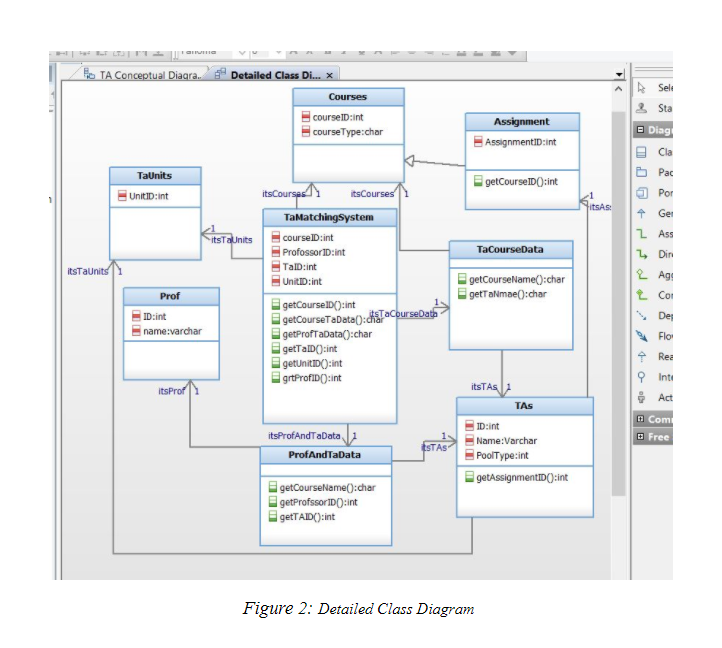
Courses Sta a Diag Cla courseID:int courseType:char AssignmentlD:Int TaUnits getCourselD(): int Por Gei L Ass l Din UnitID:int tsAs: courseID:int ProfossorID:int TalD:int Unit10: int Prof getTaNmae():char L Co ID:int name :varchar " getCourseTaData(): getProfTaData(): char getTaD():int getUnitD():int Flo Rea Int Act Com itsT TAS ID:int Name:Varchar PoolType:int itsProfAndTaData Free As ProfAndTaData getTAD():int Figure 2: Detailed Class Diagram Courses Sta a Diag Cla courseID:int courseType:char AssignmentlD:Int TaUnits getCourselD(): int Por Gei L Ass l Din UnitID:int tsAs: courseID:int ProfossorID:int TalD:int Unit10: int Prof getTaNmae():char L Co ID:int name :varchar " getCourseTaData(): getProfTaData(): char getTaD():int getUnitD():int Flo Rea Int Act Com itsT TAS ID:int Name:Varchar PoolType:int itsProfAndTaData Free As ProfAndTaData getTAD():int Figure 2: Detailed Class Diagram
Step by Step Solution
There are 3 Steps involved in it

Get step-by-step solutions from verified subject matter experts
 Study Help