



Question: questions 1) How should mr Soderberg take the alternative prices into account in making his decision about the silicone x project? 2) From Mcfaddens point
questions
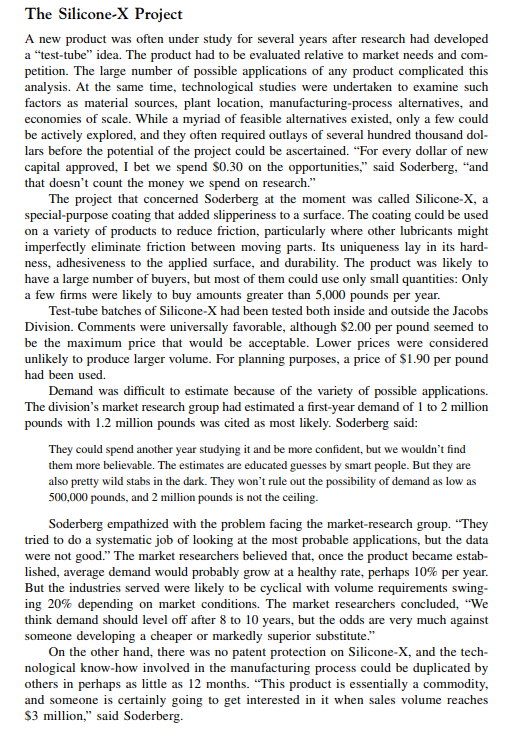
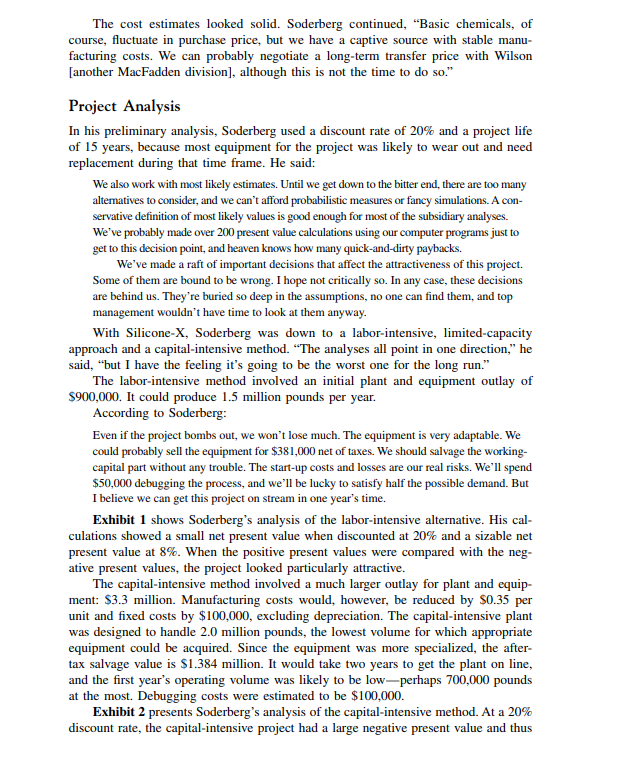
1) How should mr Soderberg take the alternative prices into account in making his decision about the silicone x project?
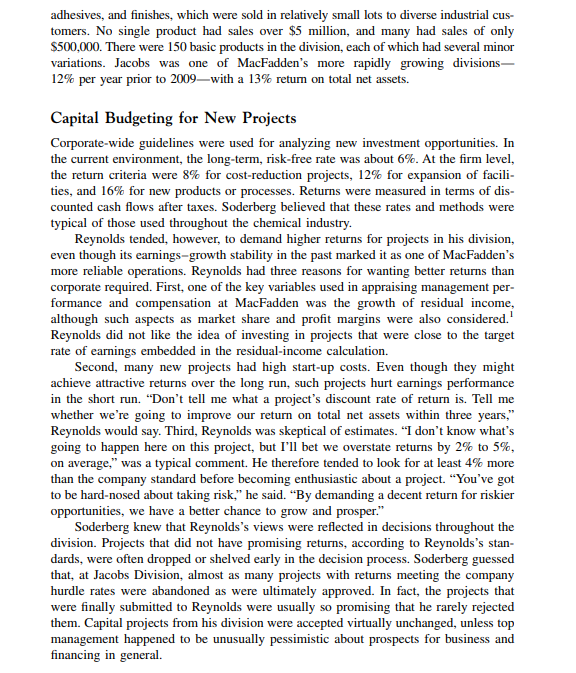
2) From Mcfaddens point of view how do you like mr reynolds method of analyzing investments at the jacobs division?
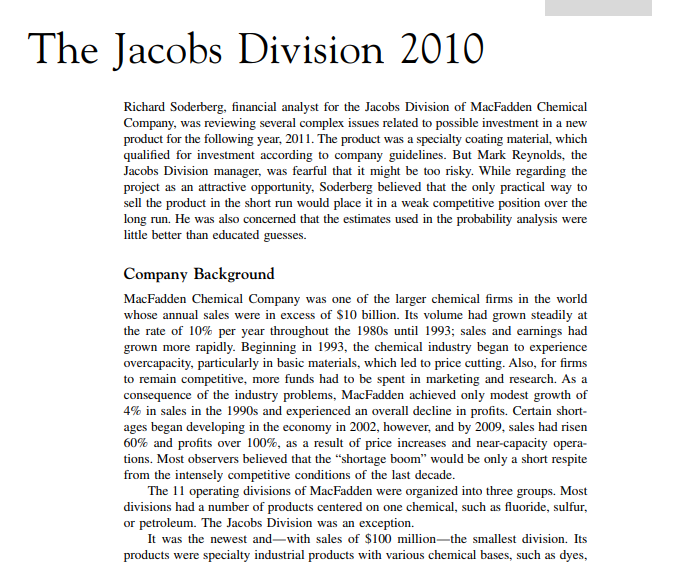
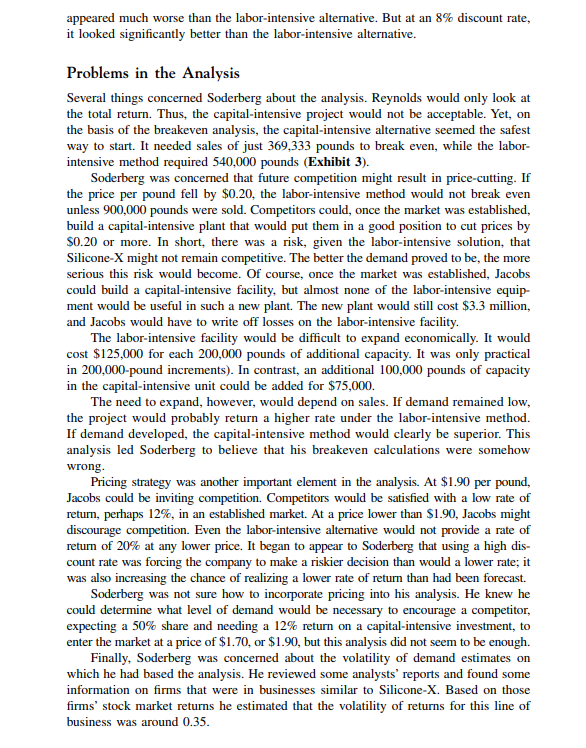
The Jacobs Division 2010 Richard Soderberg, financial analyst for the Jacobs Division of MacFadden Chemical Company, was reviewing several complex issues related to possible investment in a nevw product for the following year, 2011. The product was a specialty coating material, which qualified for investment according to company guidelines. But Mark Reynolds, the Jacobs Division manager, was fearful that it might be too risky. While regarding the project as an attractive opportunity, Soderberg believed that the only practical way to sell the product in the short run would place it in a weak competitive position over the long run. He was also concerned that the estimates used in the probability analysis were little better than educated guesses. Company Background MacFadden Chemical Company was one of the larger chemical firms in the world whose annual sales were in excess of S10 billion. Its volume had grown steadily at the rate of 10% per year throughout the 1980s until 1993; sales and earnings had grown more rapidly. Beginning in 1993, the chemical industry began to experience overcapacity, particularly in basic materials, which led to price cutting. Also, for firms to remain competitive, more funds had to be spent in marketing and research. As a consequence of the industry problems, MacFadden achieved only modest growth of ages began developing in the economy in 2002, however, and by 2009, sales had risen 60% and profits over 100%, as a result of price increases and near-capacity opera- tions. Most observers believed that the "shortage boom" would be only a short respite from the intensely competitive conditions of the last decade. The 11 operating divisions of MacFadden were organized into three groups. Most divisions had a number of products centered on one chemical, such as fluoride, sulfur, or petroleum. The Jacobs Division was an exception. It was the newest and-with sales of $100 million-the smallest division. Its products were specialty industrial products with various chemical bases, such as dyes
Step by Step Solution
There are 3 Steps involved in it

Get step-by-step solutions from verified subject matter experts