







Question: questions: Problem 11-3. A risk averse man faces two possible states of the world. In state 1, his income is Y, and in state 2
questions:
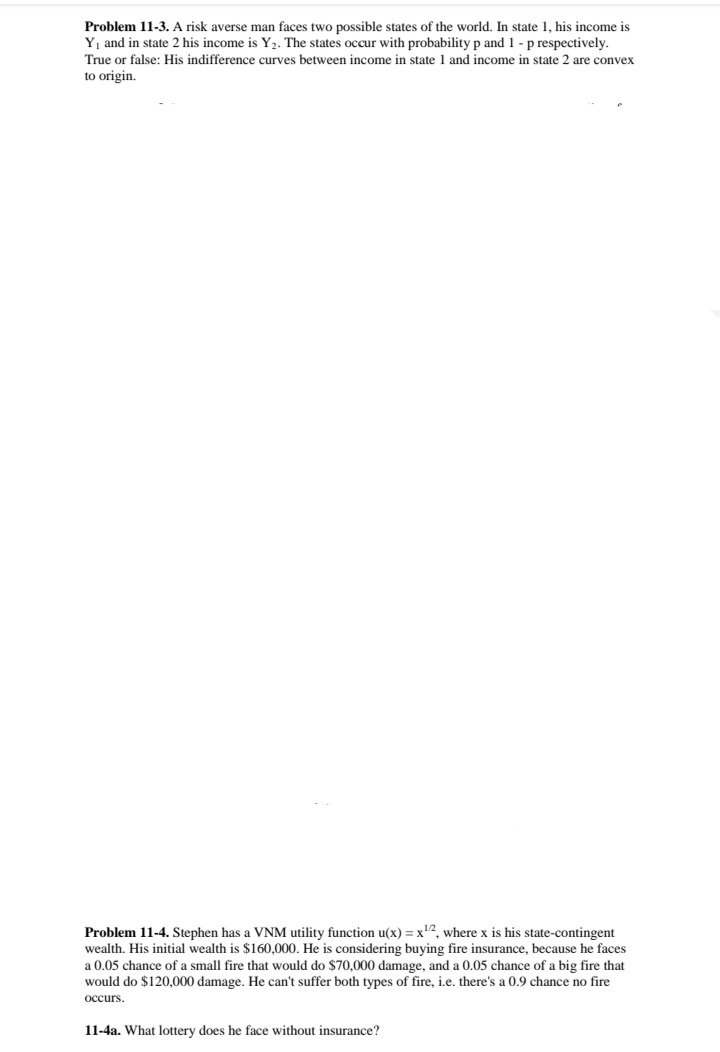
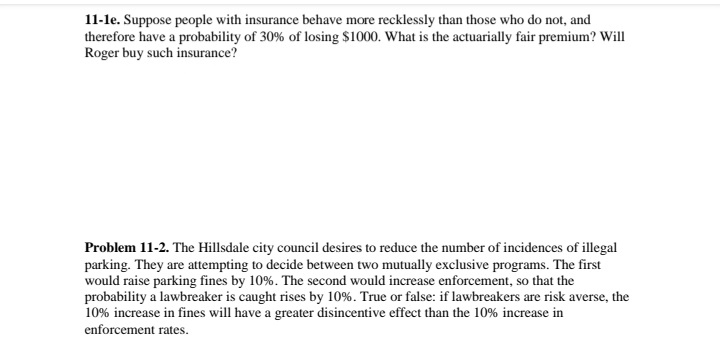
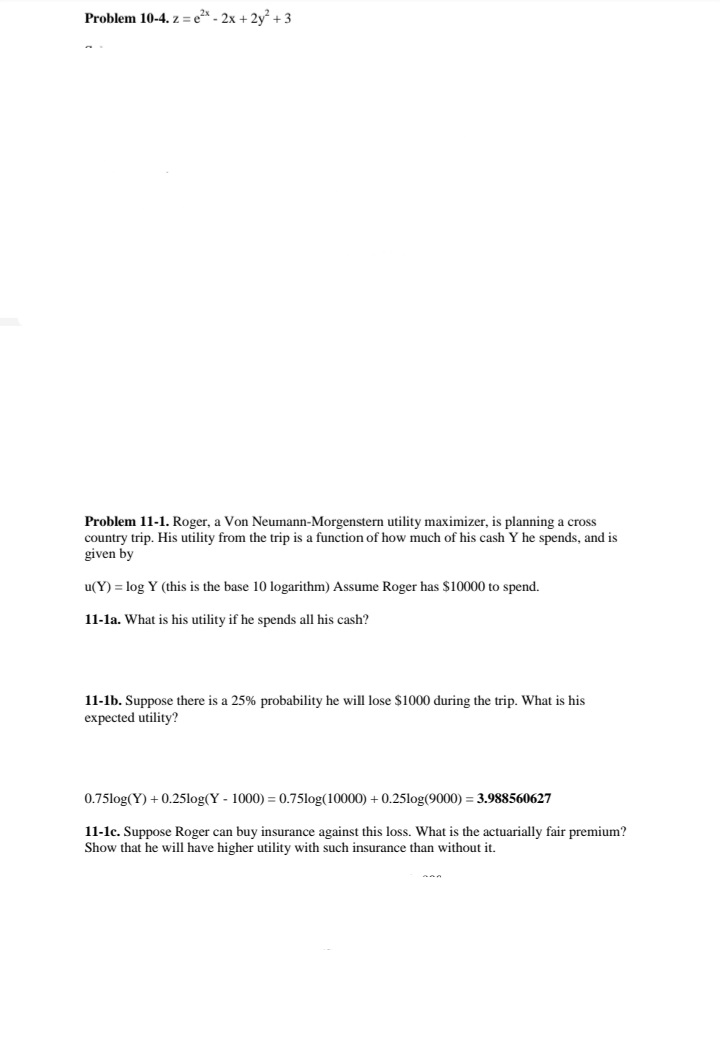
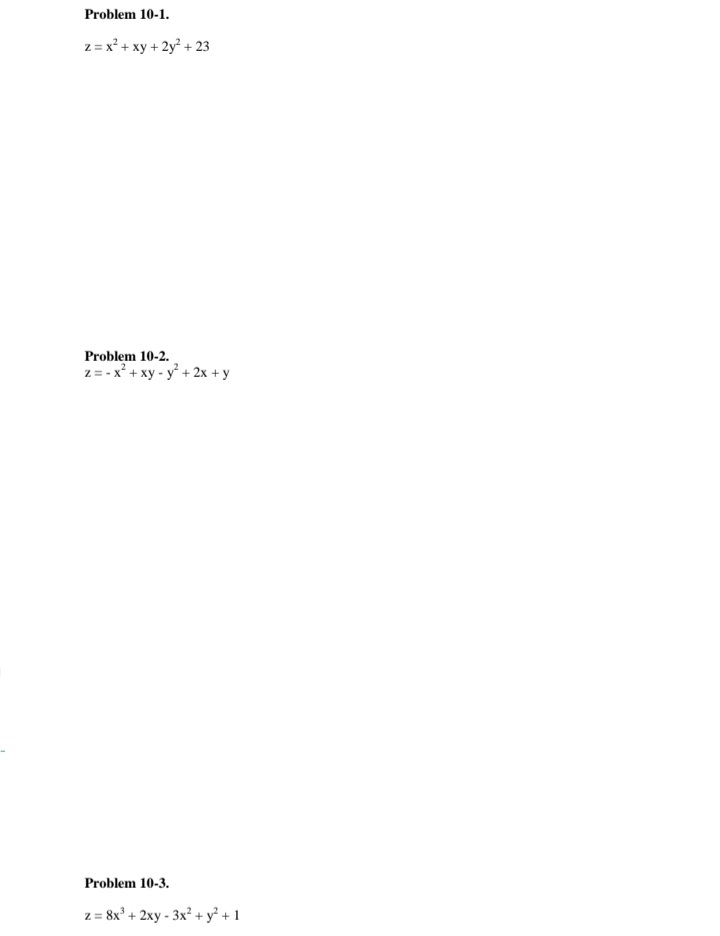
Problem 11-3. A risk averse man faces two possible states of the world. In state 1, his income is Y, and in state 2 his income is Y2. The states occur with probability p and 1 - p respectively. True or false: His indifference curves between income in state 1 and income in state 2 are convex to origin. Problem 11-4. Stephen has a VNM utility function u(x) = x", where x is his state-contingent wealth. His initial wealth is $160,000. He is considering buying fire insurance, because he faces a 0.05 chance of a small fire that would do $70,000 damage, and a 0.05 chance of a big fire that would do $120,000 damage. He can't suffer both types of fire, i.e. there's a 0.9 chance no fire occurs. 11-4a. What lottery does he face without insurance?11-le. Suppose people with insurance behave more recklessly than those who do not, and therefore have a probability of 30% of losing $1000. What is the actuarially fair premium? Will Roger buy such insurance? Problem 11-2. The Hillsdale city council desires to reduce the number of incidences of illegal parking. They are attempting to decide between two mutually exclusive programs. The first would raise parking fines by 10%. The second would increase enforcement, so that the probability a lawbreaker is caught rises by 10%. True or false: if lawbreakers are risk averse, the 10% increase in fines will have a greater disincentive effect than the 10% increase in enforcement rates.Problem 10-4. z = ex - 2x + 2y + 3 Problem 11-1. Roger, a Von Neumann-Morgenstern utility maximizer, is planning a cross country trip. His utility from the trip is a function of how much of his cash Y he spends, and is given by u(Y) = log Y (this is the base 10 logarithm) Assume Roger has $10000 to spend. 11-la. What is his utility if he spends all his cash? 11-1b. Suppose there is a 25% probability he will lose $1000 during the trip. What is his expected utility? 0.75log(Y) + 0.25log(Y - 1000) = 0.75log(10000) + 0.25log(9000) = 3.988560627 11-1c. Suppose Roger can buy insurance against this loss. What is the actuarially fair premium? Show that he will have higher utility with such insurance than without it.\f
Step by Step Solution
There are 3 Steps involved in it

Get step-by-step solutions from verified subject matter experts
 Study Help