







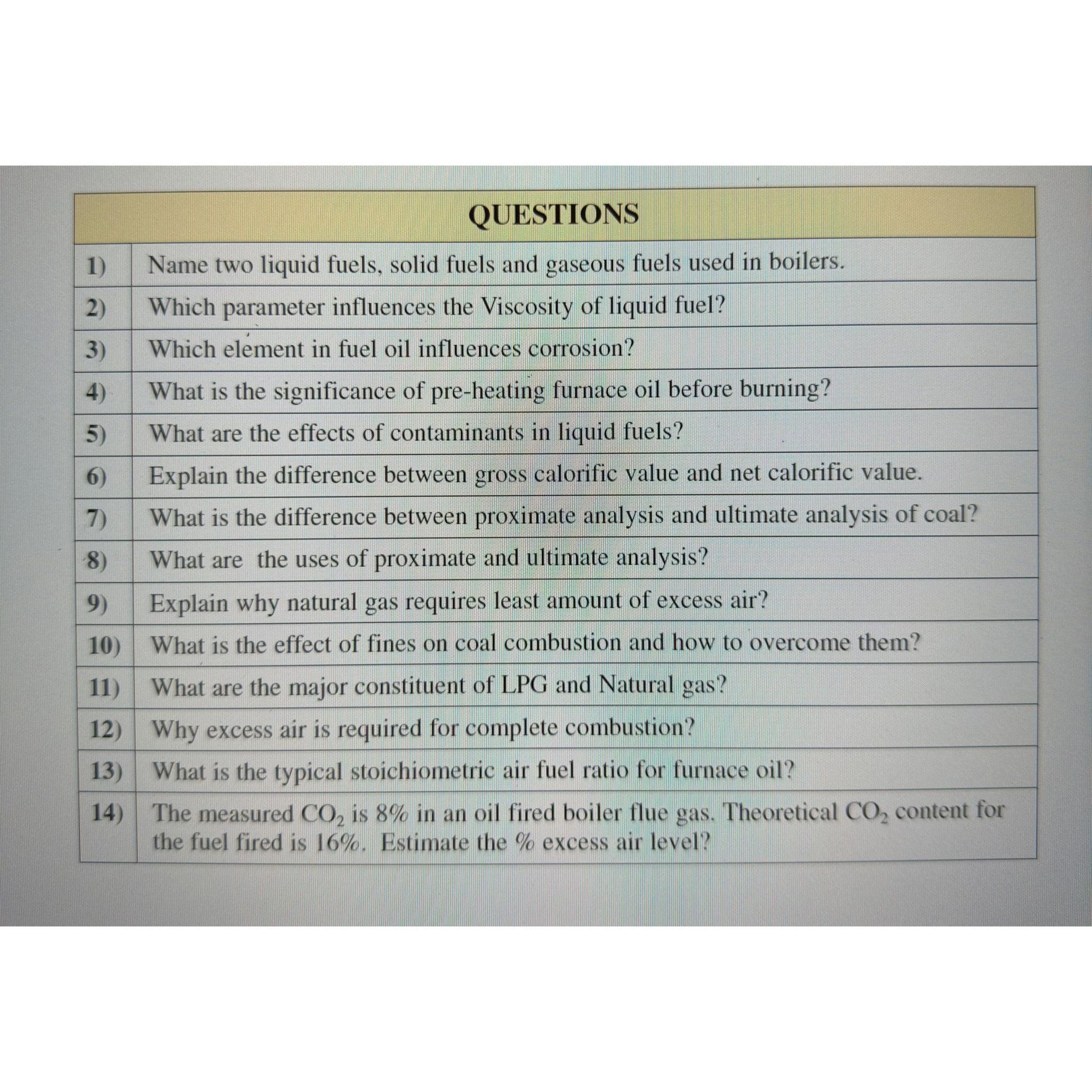
Question: QUESTIONS table [ [ 1 ) , Name two liquid fuels, solid fuels and gaseous fuels used in boilers. ] , [ 2 )
QUESTIONS
tableName two liquid fuels, solid fuels and gaseous fuels used in boilers.Which parameter influences the Viscosity of liquid fuel?Which element in fuel oil influences corrosion?What is the significance of preheating furnace oil before burning?What are the effects of contaminants in liquid fuels?Explain the difference between gross calorific value and net calorific value.What is the difference between proximate analysis and ultimate analysis of coal?What are the uses of proximate and ultimate analysis?Explain why natural gas requires least amount of excess air?What is the effect of fines on coal combustion and how to overcome them?What are the major constituent of LPG and Natural gas?Why excess air is required for complete combustion?What is the typical stoichiometric air fuel ratio for furnace oil?The measured is in an oil fired boiler flue gas. Theoretical content for
Step by Step Solution
There are 3 Steps involved in it
1 Expert Approved Answer
Step: 1 Unlock

Question Has Been Solved by an Expert!
Get step-by-step solutions from verified subject matter experts
Step: 2 Unlock
Step: 3 Unlock
 Study Help