







Question: Read Case Study 25-3 and answer Critical Thinking and Ethical Decision Making at the end thoroughly. CASE 25-3 UNITED STATES v. KAPLAN, United States Court
Read Case Study 25-3 and answer Critical Thinking and Ethical Decision Making at the end thoroughly.
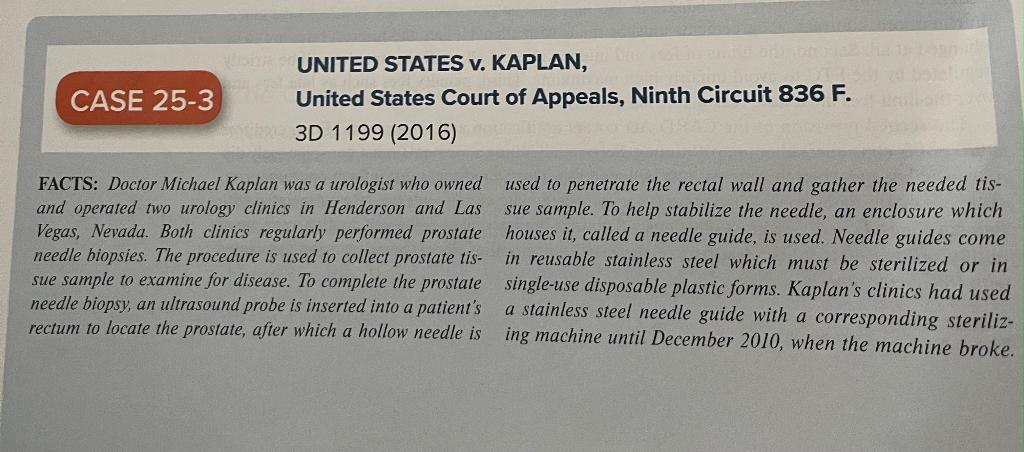
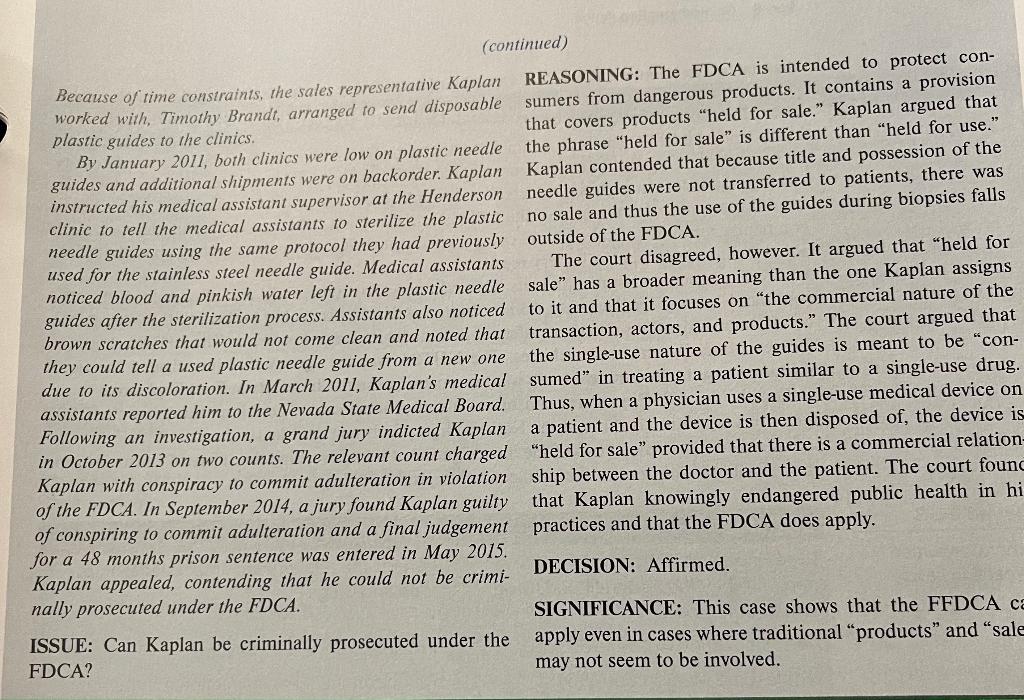
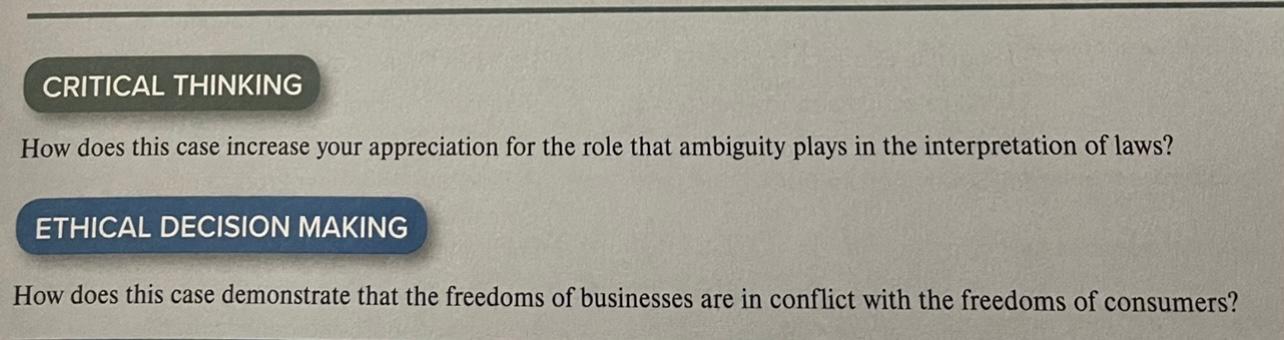
CASE 25-3 UNITED STATES v. KAPLAN, United States Court of Appeals, Ninth Circuit 836 F. 3D 1199 (2016) FACTS: Doctor Michael Kaplan was a urologist who owned used to penetrate the rectal wall and gather the needed tis- and operated two urology clinics in Henderson and Las sue sample. To help stabilize the needle, an enclosure which Vegas, Nevada. Both clinics regularly performed prostate houses it, called a needle guide, is used. Needle guides come needle biopsies. The procedure is used to collect prostate tis- in reusable stainless steel which must be sterilized or in sue sample to examine for disease. To complete the prostate single-use disposable plastic forms. Kaplan's clinics had used needle biopsy, an ultrasound probe is inserted into a patient's a stainless steel needle guide with a corresponding steriliz- rectum to locate the prostate, after which a hollow needle is ing machine until December 2010, when the machine broke. (continued) Because of time constraints, the sales representative Kaplan REASONING: The FDCA is intended to protect con- worked with, Timothy Brandt, arranged to send disposable sumers from dangerous products. It contains a provision plastic guides to the clinics. that covers products "held for sale." Kaplan argued that By January 2011, both clinics were low on plastic needle the phrase "held for sale" is different than "held for use." guides and additional shipments were on backorder. Kaplan Kaplan contended that because title and possession of the instructed his medical assistant supervisor at the Henderson needle guides were not transferred to patients, there was clinic to tell the medical assistants to sterilize the plastic no sale and thus the use of the guides during biopsies falls needle guides using the same protocol they had previously outside of the FDCA. used for the stainless steel needle guide. Medical assistants The court disagreed, however. It argued that "held for noticed blood and pinkish water left in the plastic needle sale" has a broader meaning than the one Kaplan assigns guides after the sterilization process. Assistants also noticed to it and that it focuses on "the commercial nature of the brown scratches that would not come clean and noted that transaction, actors, and products." The court argued that they could tell a used plastic needle guide from a new one the single-use nature of the guides is meant to be "con- due to its discoloration. In March 2011, Kaplan's medical sumed in treating a patient similar to a single-use drug. assistants reported him to the Nevada State Medical Board. Thus, when a physician uses a single-use medical device on Following an investigation, a grand jury indicted Kaplan a patient and the device is then disposed of, the device is in October 2013 on two counts. The relevant count charged "held for sale" provided that there is a commercial relation- Kaplan with conspiracy to commit adulteration in violation ship between the doctor and the patient. The court found of the FDCA. In September 2014, a jury found Kaplan guilty that Kaplan knowingly endangered public health in hi of conspiring to commit adulteration and a final judgement practices and that the FDCA does apply. for a 48 months prison sentence was entered in May 2015. Kaplan appealed, contending that he could not be crimi- DECISION: Affirmed. nally prosecuted under the FDCA. SIGNIFICANCE: This case shows that the FFDCA ca ISSUE: Can Kaplan be criminally prosecuted under the apply even in cases where traditional products" and "sale FDCA? may not seem to be involved. CRITICAL THINKING How does this case increase your appreciation for the role that ambiguity plays in the interpretation of laws? ETHICAL DECISION MAKING How does this case demonstrate that the freedoms of businesses are in conflict with the freedoms of consumers? CASE 25-3 UNITED STATES v. KAPLAN, United States Court of Appeals, Ninth Circuit 836 F. 3D 1199 (2016) FACTS: Doctor Michael Kaplan was a urologist who owned used to penetrate the rectal wall and gather the needed tis- and operated two urology clinics in Henderson and Las sue sample. To help stabilize the needle, an enclosure which Vegas, Nevada. Both clinics regularly performed prostate houses it, called a needle guide, is used. Needle guides come needle biopsies. The procedure is used to collect prostate tis- in reusable stainless steel which must be sterilized or in sue sample to examine for disease. To complete the prostate single-use disposable plastic forms. Kaplan's clinics had used needle biopsy, an ultrasound probe is inserted into a patient's a stainless steel needle guide with a corresponding steriliz- rectum to locate the prostate, after which a hollow needle is ing machine until December 2010, when the machine broke. (continued) Because of time constraints, the sales representative Kaplan REASONING: The FDCA is intended to protect con- worked with, Timothy Brandt, arranged to send disposable sumers from dangerous products. It contains a provision plastic guides to the clinics. that covers products "held for sale." Kaplan argued that By January 2011, both clinics were low on plastic needle the phrase "held for sale" is different than "held for use." guides and additional shipments were on backorder. Kaplan Kaplan contended that because title and possession of the instructed his medical assistant supervisor at the Henderson needle guides were not transferred to patients, there was clinic to tell the medical assistants to sterilize the plastic no sale and thus the use of the guides during biopsies falls needle guides using the same protocol they had previously outside of the FDCA. used for the stainless steel needle guide. Medical assistants The court disagreed, however. It argued that "held for noticed blood and pinkish water left in the plastic needle sale" has a broader meaning than the one Kaplan assigns guides after the sterilization process. Assistants also noticed to it and that it focuses on "the commercial nature of the brown scratches that would not come clean and noted that transaction, actors, and products." The court argued that they could tell a used plastic needle guide from a new one the single-use nature of the guides is meant to be "con- due to its discoloration. In March 2011, Kaplan's medical sumed in treating a patient similar to a single-use drug. assistants reported him to the Nevada State Medical Board. Thus, when a physician uses a single-use medical device on Following an investigation, a grand jury indicted Kaplan a patient and the device is then disposed of, the device is in October 2013 on two counts. The relevant count charged "held for sale" provided that there is a commercial relation- Kaplan with conspiracy to commit adulteration in violation ship between the doctor and the patient. The court found of the FDCA. In September 2014, a jury found Kaplan guilty that Kaplan knowingly endangered public health in hi of conspiring to commit adulteration and a final judgement practices and that the FDCA does apply. for a 48 months prison sentence was entered in May 2015. Kaplan appealed, contending that he could not be crimi- DECISION: Affirmed. nally prosecuted under the FDCA. SIGNIFICANCE: This case shows that the FFDCA ca ISSUE: Can Kaplan be criminally prosecuted under the apply even in cases where traditional products" and "sale FDCA? may not seem to be involved. CRITICAL THINKING How does this case increase your appreciation for the role that ambiguity plays in the interpretation of laws? ETHICAL DECISION MAKING How does this case demonstrate that the freedoms of businesses are in conflict with the freedoms of consumers
Step by Step Solution
There are 3 Steps involved in it

Get step-by-step solutions from verified subject matter experts
 Study Help