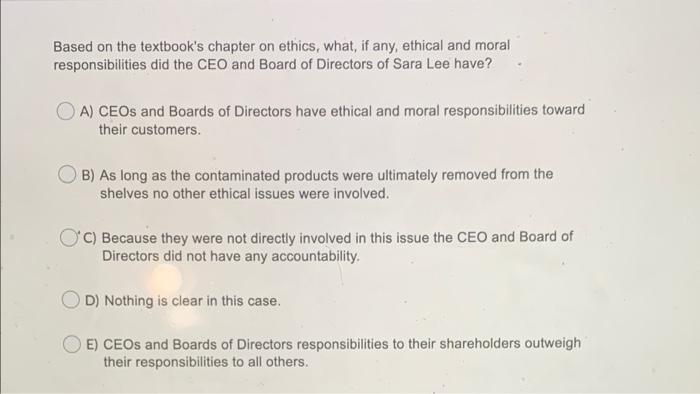
Question: read sara lee case first Based on the textbook's chapter on ethics, what, if any, ethical and moral responsibilities did the CEO and Board of
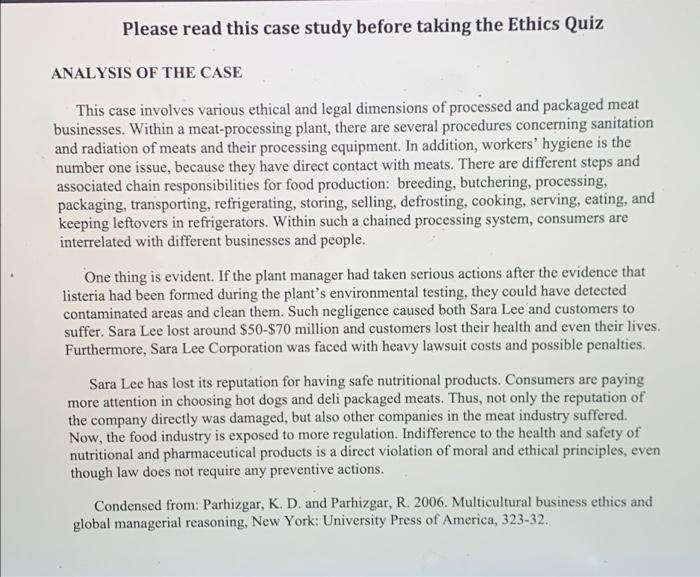
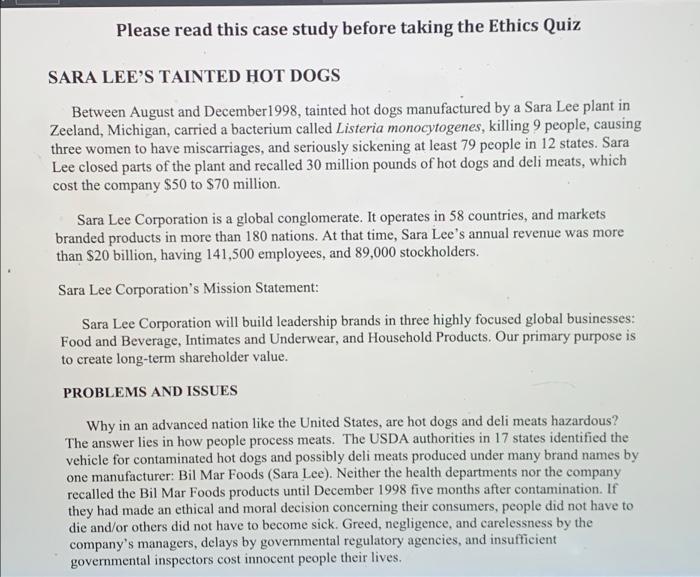
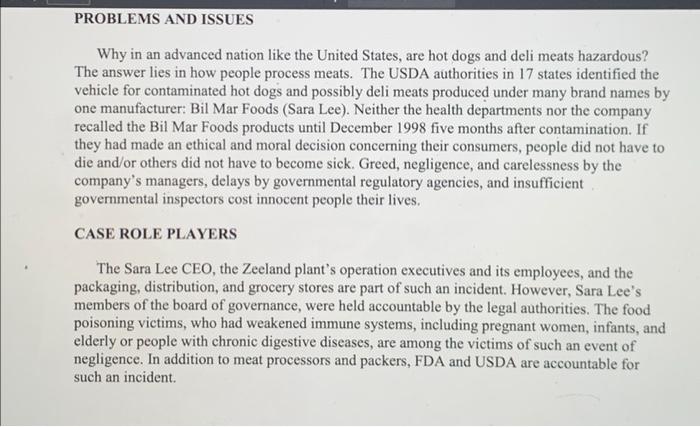
Based on the textbook's chapter on ethics, what, if any, ethical and moral responsibilities did the CEO and Board of Directors of Sara Lee have? A) CEOs and Boards of Directors have ethical and moral responsibilities toward their customers. B) As long as the contaminated products were ultimately removed from the shelves no other ethical issues were involved. OC) Because they were not directly involved in this issue the CEO and Board of Directors did not have any accountability. OD) Nothing is clear in this case, E) CEOs and Boards of Directors responsibilities to their shareholders outweigh their responsibilities to all others. Please read this case study before taking the Ethics Quiz ANALYSIS OF THE CASE This case involves various ethical and legal dimensions of processed and packaged meat businesses. Within a meat-processing plant, there are several procedures concerning sanitation and radiation of meats and their processing equipment. In addition, workers' hygiene is the number one issue, because they have direct contact with meats. There are different steps and associated chain responsibilities for food production: breeding, butchering, processing, packaging, transporting, refrigerating, storing, selling, defrosting, cooking, serving, eating, and keeping leftovers in refrigerators. Within such a chained processing system, consumers are interrelated with different businesses and people. One thing is evident. If the plant manager had taken serious actions after the evidence that listeria had been formed during the plant's environmental testing, they could have detected contaminated areas and clean them. Such negligence caused both Sara Lee and customers to suffer. Sara Lee lost around $50-$70 million and customers lost their health and even their lives. Furthermore, Sara Lee Corporation was faced with heavy lawsuit costs and possible penalties. Sara Lee has lost its reputation for having safe nutritional products. Consumers are paying more attention in choosing hot dogs and deli packaged meats. Thus, not only the reputation of the company directly was damaged, but also other companies in the meat industry suffered. Now, the food industry is exposed to more regulation. Indifference to the health and safety of nutritional and pharmaceutical products is a direct violation of moral and ethical principles, eve though law does not require any preventive actions. Condensed from: Parhizgar, K. D. and Parhizgar, R. 2006. Multicultural business ethics and global managerial reasoning, New York: University Press of America, 323-32. Please read this case study before taking the Ethics Quiz SARA LEE'S TAINTED HOT DOGS Between August and December 1998, tainted hot dogs manufactured by a Sara Lee plant in Zeeland, Michigan, carried a bacterium called Listeria monocytogenes, killing 9 people, causing three women to have miscarriages, and seriously sickening at least 79 people in 12 states. Sara Lee closed parts of the plant and recalled 30 million pounds of hot dogs and deli meats, which cost the company $50 to $70 million. Sara Lee Corporation is a global conglomerate. It operates in 58 countries, and markets branded products in more than 180 nations. At that time, Sara Lee's annual revenue was more than $20 billion, having 141,500 employees, and 89,000 stockholders. Sara Lee Corporation's Mission Statement: Sara Lee Corporation will build leadership brands in three highly focused global businesses: Food and Beverage, Intimates and Underwear, and Household Products. Our primary purpose is to create long-term shareholder value. PROBLEMS AND ISSUES Why in an advanced nation like the United States, are hot dogs and deli meats hazardous? The answer lies in how people process meats. The USDA authorities in 17 states identified the vehicle for contaminated hot dogs and possibly deli meats produced under many brand names by one manufacturer: Bil Mar Foods (Sara Lee). Neither the health departments nor the company recalled the Bil Mar Foods products until December 1998 five months after contamination. If they had made an ethical and moral decision concerning their consumers, people did not have to die and/or others did not have to become sick. Greed, negligence, and carelessness by the company's managers, delays by governmental regulatory agencies, and insufficient governmental inspectors cost innocent people their lives. PROBLEMS AND ISSUES Why in an advanced nation like the United States, are hot dogs and deli meats hazardous? The answer lies in how people process meats. The USDA authorities in 17 states identified the vehicle for contaminated hot dogs and possibly deli meats produced under many brand names by one manufacturer: Bil Mar Foods (Sara Lee). Neither the health departments nor the company recalled the Bil Mar Foods products until December 1998 five months after contamination. If they had made an ethical and moral decision concerning their consumers, people did not have to die and/or others did not have to become sick. Greed, negligence, and carelessness by the company's managers, delays by governmental regulatory agencies, and insufficient governmental inspectors cost innocent people their lives, CASE ROLE PLAYERS The Sara Lee CEO, the Zeeland plant's operation executives and its employees, and the packaging, distribution, and grocery stores are part of such an incident. However, Sara Lee's members of the board of governance, were held accountable by the legal authorities. The food poisoning victims, who had weakened immune systems, including pregnant women, infants, and elderly or people with chronic digestive diseases, are among the victims of such an event of negligence. In addition to meat processors and packers, FDA and USDA are accountable for such an incident









 Study Help