







Question: Read the 2 attachments above (it's 1 article). 1. Provide a detailed summary of the article. 2. State what stood out to you about the
Read the 2 attachments above (it's 1 article).
1. Provide a detailed summary of the article.
2. State what stood out to you about the article that is related to the legal makeup of the employment environment.
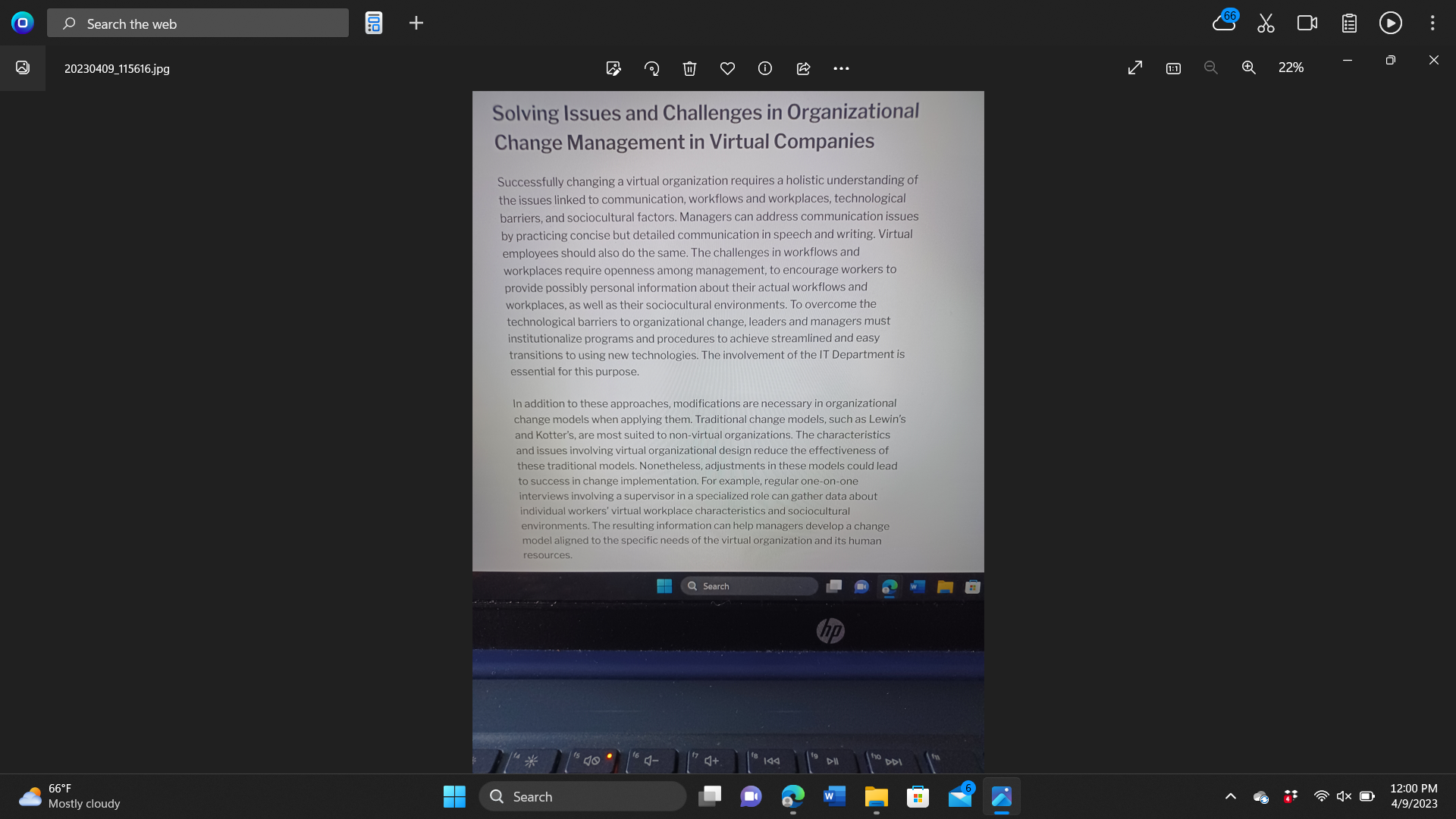
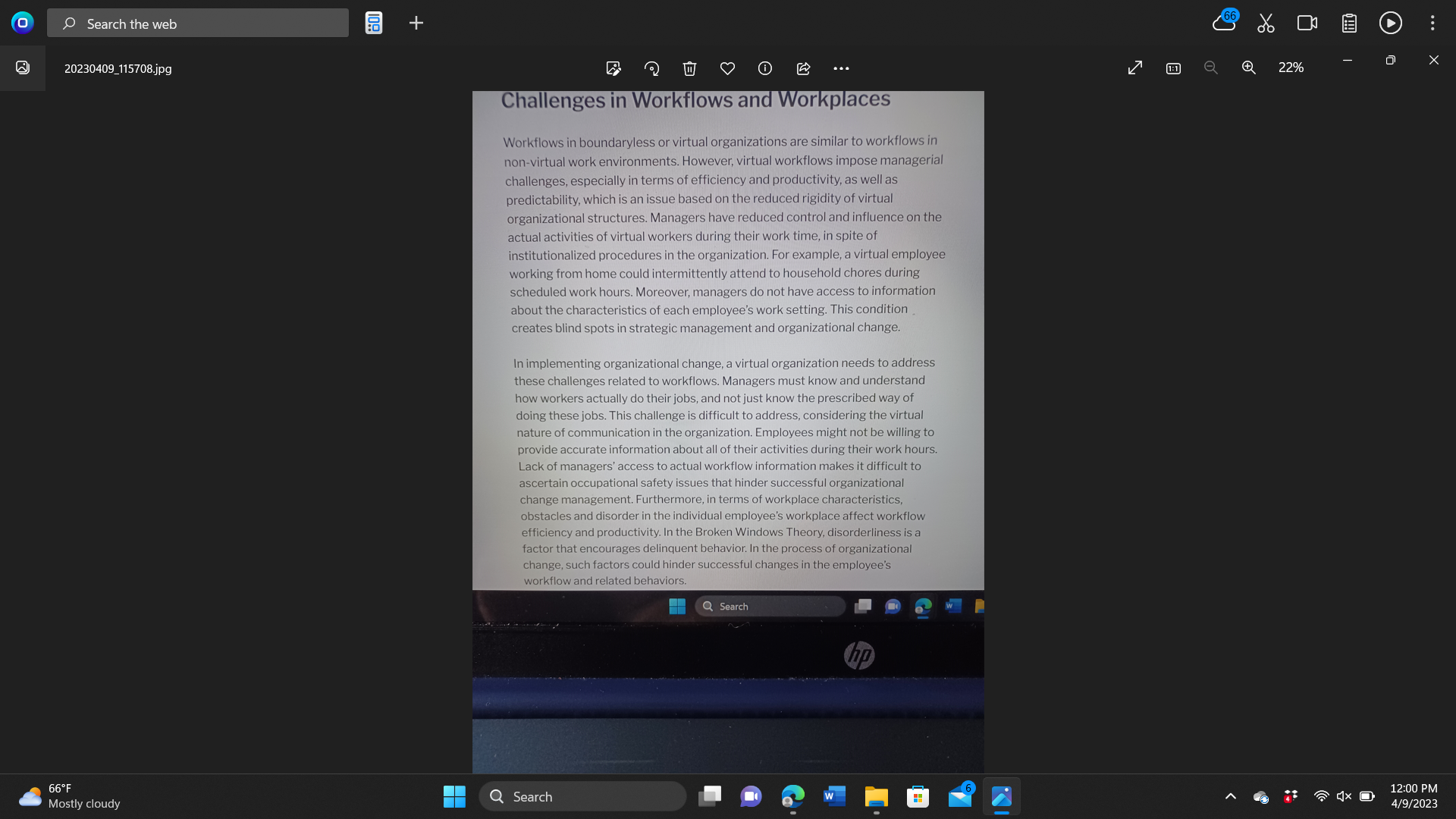
Solving Issues and Challenges in Organizational Change Management in Virtual Companies Successfully changing a virtual organization requires a holistic understanding of the issues linked to communication, workflows and workplaces, technological barriers, and sociocultural factors. Managers can address communication issues by practicing concise but detailed communication in speech and writing. Virtual employees should also do the same. The challenges in workflows and workplaces require openness among management, to encourage workers to provide possibly personal information about their actual workflows and workplaces, as well as their sociocultural environments. To overcome the technological barriers to organizational change, leaders and managers must institutionalize programs and procedures to achieve streamlined and easy transitions to using new technologies. The involvement of the IT Department is essential for this purpose. In addition to these approaches, modifications are necessary in organizational change models when applying them. Traditional change models, such as Lewin's and Kotter's, are most suited to non-virtual organizations. The characteristics and issues involving virtual organizational design reduce the effectiveness of these traditional models. Nonetheless, adjustments in these models could lead to success in change implementation. For example, regular one-on-one interviews involving a supervisor in a specialized role can gather data about individual workers' virtual workplace characteristics and sociocultural environments. The resulting information can help managers develop a change model aligned to the specific needs of the virtual organization and its human Workflows in boundaryless or virtual organizations are similar to workflows in non-virtual work environments. However, virtual workflows impose managerial challenges, especially in terms of efficiency and productivity, as well as predictability, which is an issue based on the reduced rigidity of virtual organizational structures. Managers have reduced control and influence on the actual activities of virtual workers during their work time, in spite of institutionalized procedures in the organization. For example, a virtual employee working from home could intermittently attend to household chores during scheduled work hours. Moreover, managers do not have access to information about the characteristics of each employee's work setting. This condition creates blind spots in strategic management and organizational change. In implementing organizational change, a virtual organization needs to address these challenges related to workflows. Managers must know and understand how workers actually do their jobs, and not just know the prescribed way of doing these jobs. This challenge is difficult to address, considering the virtual nature of communication in the organization. Employees might not be willing to provide accurate information about all of their activities during their work hours. Lack of managers' access to actual workflow information makes it difficult to ascertain occupational safety issues that hinder successful organizational change management. Furthermore, in terms of workplace characteristics, obstacles and disorder in the individual employee's workplace affect workflow efficiency and productivity. In the Broken Windows Theory, disorderliness is a factor that encourages delinquent behavior. In the process of organizational change, such factors could hinder successful changes in the employee's workflow and related behaviors
Step by Step Solution
There are 3 Steps involved in it

Get step-by-step solutions from verified subject matter experts
 Study Help