







Question: Read the case study then answer 2) For each TOGAF ADM lifecycle phase, you should explain the solutions they designed and show i) at least
Read the case study then answer
2) For each TOGAF ADM lifecycle phase, you should explain the solutions they designed and show
i) at least one output deliverable for that phase,
ii) one or more artifacts.
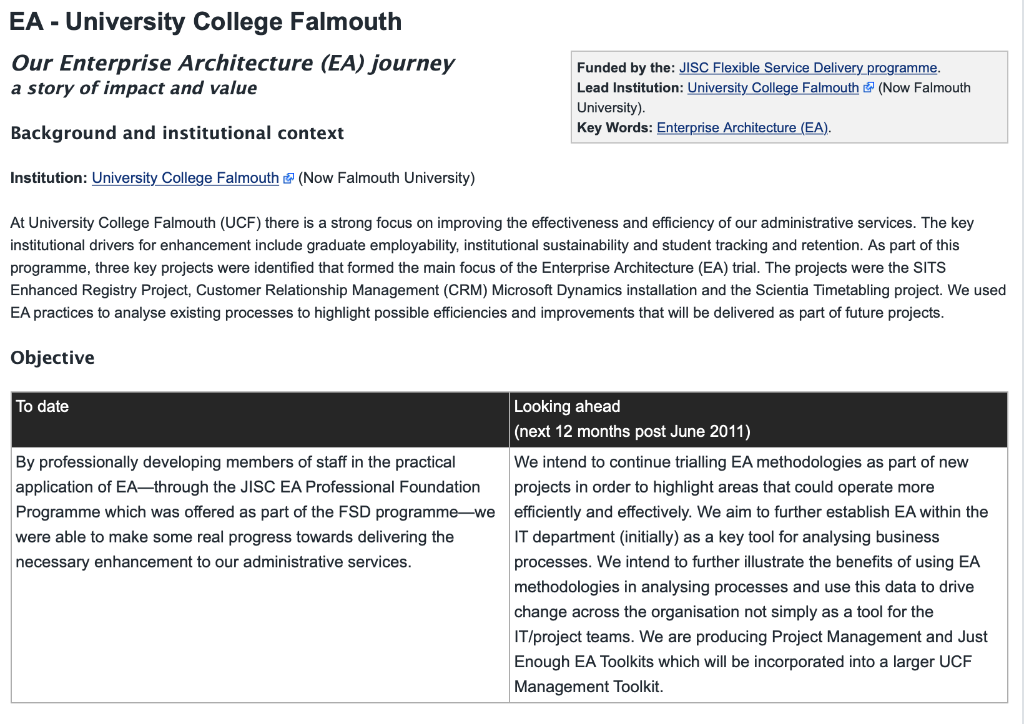
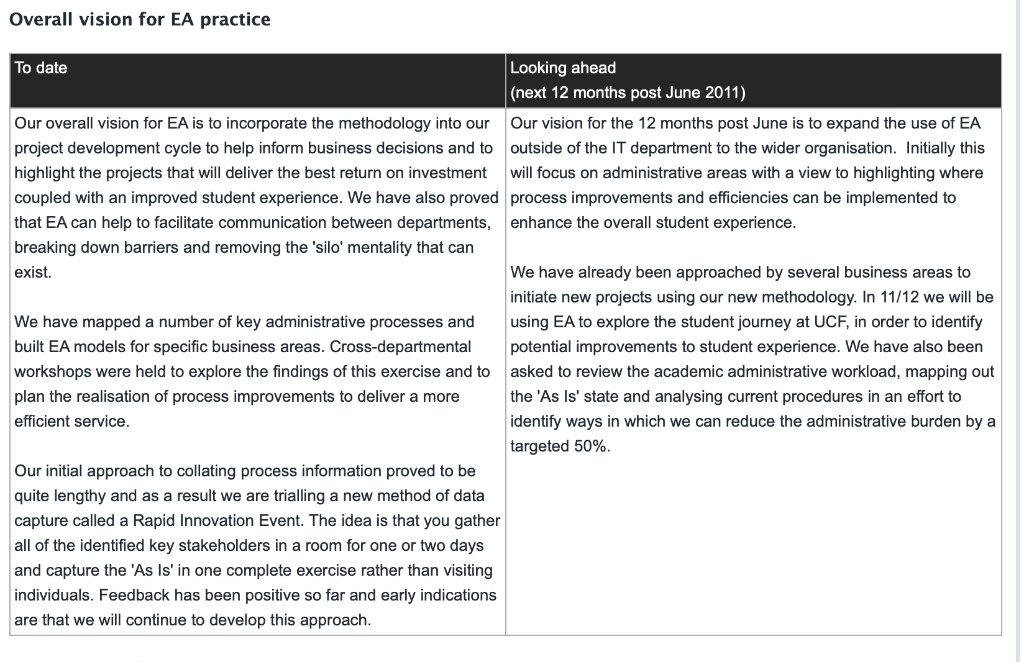
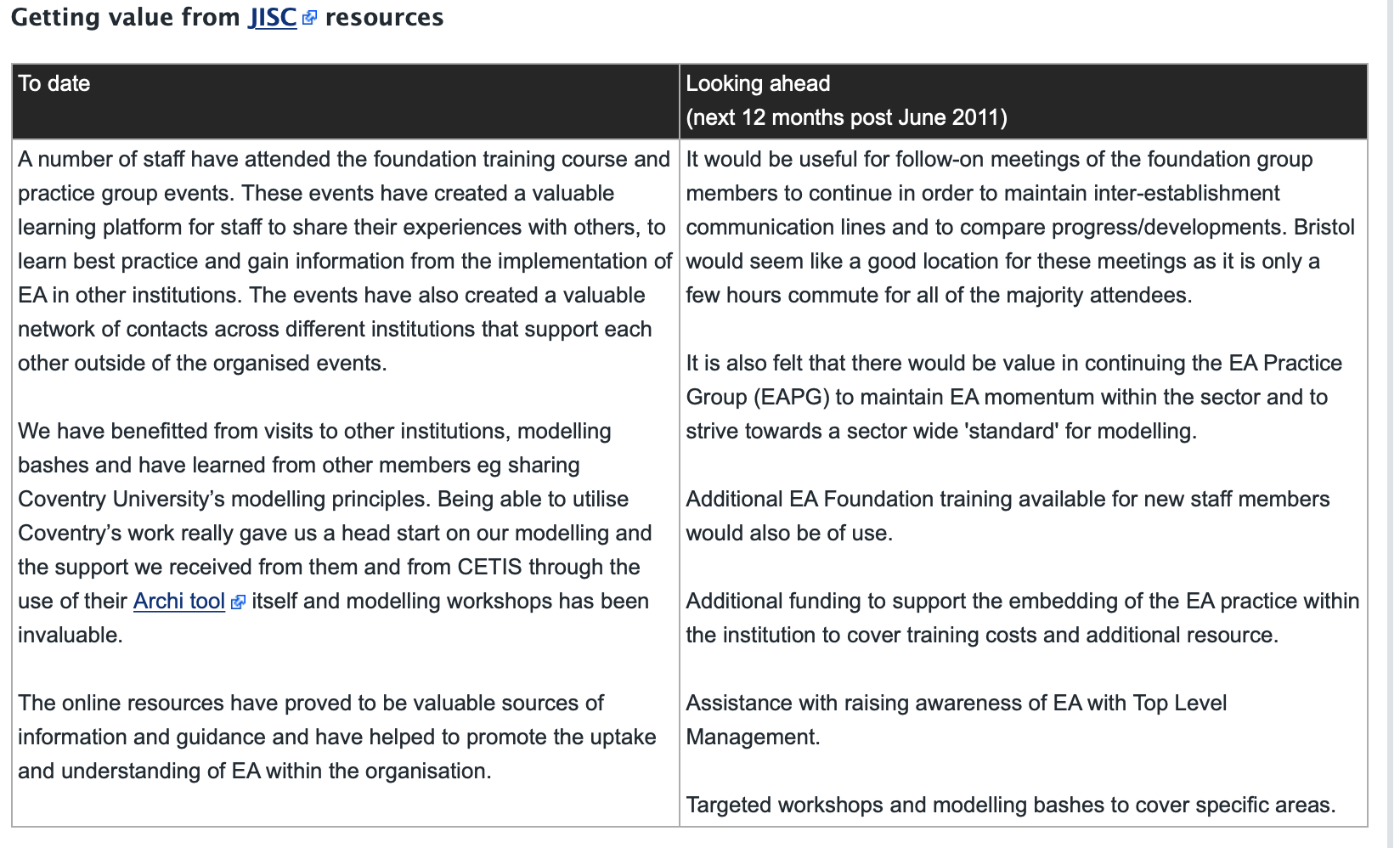
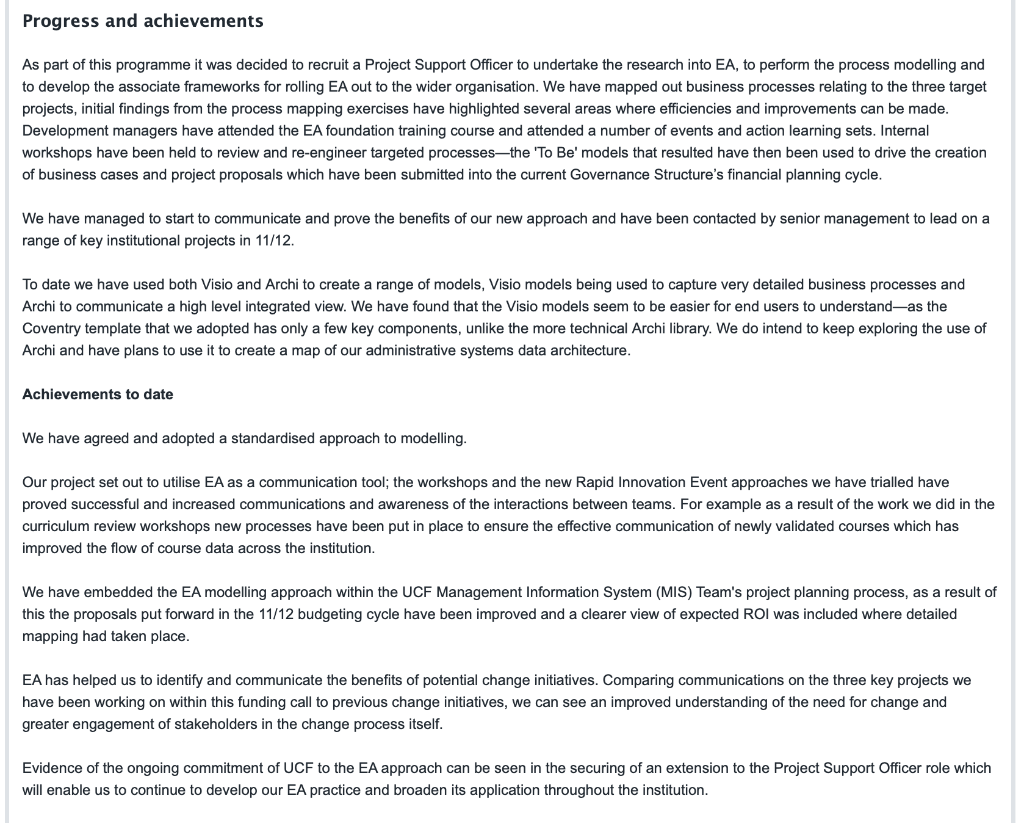
EA - University College Falmouth Our Enterprise Architecture (EA) journey a story of impact and value Funded by the: JISC Flexible Service Delivery programme. Lead Institution: University College Falmouth (Now Falmouth University). Background and institutional context Key Words: Enterprise Architecture (EA). Institution: University College Falmouth (Now Falmouth University) At University College Falmouth (UCF) there is a strong focus on improving the effectiveness and efficiency of our administrative services. The key institutional drivers for enhancement include graduate employability, institutional sustainability and student tracking and retention. As part of this programme, three key projects were identified that formed the main focus of the Enterprise Architecture (EA) trial. The projects were the SITS Enhanced Registry Project, Customer Relationship Management (CRM) Microsoft Dynamics installation and the Scientia Timetabling project. We used EA practices to analyse existing processes to highlight possible efficiencies and improvements that will be delivered as part of future projects. Objective To date Looking ahead (next 12 months post June 2011) professiona developing members of staff in the prac application of EA-through the JISC EA Professional Foundation Programme which was offered as part of the FSD programme-we were able to make some real progress towards delivering the necessary enhancement to our administrative services. We end continue trialling EA methodologies as part of projects in order to highlight areas that could operate more efficiently and effectively. We aim to further establish EA within the IT department (initially) as a key tool for analysing business processes. We intend to further illustrate the benefits of using EA methodologies in analysing processes and use this data to drive change across the organisation not simply as a tool for the IT/project teams. We are producing Project Management and Just Enough EA Toolkits which will be incorporated into a larger UCF Management Toolkit. Overall vision for EA practice To date Our overall vision for EA is to incorporate the methodology into our project development cycle to help inform business decisions and to highlight the projects that will deliver the best return on investment coupled with an improved student experience. We have also proved that EA can help to facilitate communication between departments, breaking down barriers and removing the 'silo' mentality that can exist. We have mapped a number of key administrative processes and built EA models for specific business areas. Cross-departmental workshops were held to explore the findings of this exercise and to plan the realisation of process improvements to deliver a more efficient service. Our initial approach to collating process information proved to be quite lengthy and as a result we are trialling a new method of data capture called a Rapid Innovation Event. The idea is that you gather all of the identified key stakeholders in a room for one or two days and capture the 'As Is' in one complete exercise rather than visiting individuals. Feedback has been positive so far and early indications are that we will continue to develop this approach. Looking ahead (next 12 months post June 2011) Our vision for the 12 months post June is to expand the use of EA outside of the IT department to the wider organisation. Initially this will focus on administrative areas with a view to highlighting where process improvements and efficiencies can be implemented to enhance the overall student experience. We have already been approached by several business areas to initiate new projects using our new methodology. In 11/12 we will be using EA to explore the student journey at UCF, in order to identify potential improvements to student experience. We have also been asked to review the academic administrative workload, mapping out the 'As Is' state and analysing current procedures in an effort to identify ways in which we can reduce the administrative burden by a targeted 50%. Getting value from JISC resources To date Looking ahead (next 12 months post June 2011) A number of staff have attended the foundation training course and It would be useful for follow-on meetings of the foundation group practice group events. These events have created a valuable learning platform for staff to share their experiences with others, to learn best practice and gain information from the implementation of EA in other institutions. The events have also created a valuable network of contacts across different institutions that support each other outside of the organised events. members to continue in order to maintain inter-establishment communication lines and to compare progress/developments. Bristol would seem like a good location for these meetings as it is only a few hours commute for all of the majority attendees. It is also felt that there would be value in continuing the EA Practice Group (EAPG) to maintain EA momentum within the sector and to strive towards a sector wide 'standard' for modelling. We have benefitted from visits to other institutions, modelling bashes and have learned from other members eg sharing Coventry University's modelling principles. Being able to utilise Coventry's work really gave us a head start on our modelling and the support we received from them and from CETIS through the use of their Archi tool itself and modelling workshops has been invaluable. Additional EA Foundation training available for new staff members would also be of use. Additional funding to support the embedding of the EA practice within the institution to cover training costs and additional resource. The online resources have proved to be valuable sources of information and guidance and have helped to promote the uptake and understanding of EA within the organisation. Assistance with raising awareness of EA with Top Level Management. Targeted workshops and modelling bashes to cover specific areas. Progress and achievements As part of this programme it was decided to recruit a Project Support Officer to undertake the research into EA, to perform the process modelling and to develop the associate frameworks for rolling EA out to the wider organisation. We have mapped out business processes relating to the three target projects, initial findings from the process mapping exercises have highlighted several areas where efficiencies and improvements can be made. Development managers have attended the EA foundation training course and attended a number of events and action learning sets. Internal workshops have been held to review and re-engineer targeted processes-the 'To Be' models that resulted have then been used to drive the creation of business cases and project proposals which have been submitted into the current Governance Structure's financial planning cycle. We have managed to start to communicate and prove the benefits of our new approach and have been contacted by senior management to lead on a range of key institutional projects in 11/12. To date we have used both Visio and Archi to create a range of models, Visio models being used to capture very detailed business processes and Archi to communicate a high level integrated view. We have found that the Visio models seem to be easier for end users to understand-as the Coventry template that we adopted has only a few key components, unlike the more technical Archi library. We do intend to keep exploring the use of Archi and have plans to use it to create a map of our administrative systems data architecture. Achievements to date We have agreed and adopted a standardised approach to modelling. Our project set out to utilise EA as a communication tool; the workshops and the new Rapid Innovation Event approaches we have trialled have proved successful and increased communications and awareness of the interactions between teams. For example as a result of the work we did in the curriculum review workshops new processes have been put in place to ensure the effective communication of newly validated courses which has improved the flow of course data across the institution. We have embedded the EA modelling approach within the UCF Management Information System (MIS) Team's project planning process, as a result of this the proposals put forward in the 11/12 budgeting cycle have been improved and a clearer view of expected ROI was included where detailed mapping had taken place. EA has helped us to identify and communicate the benefits of potential change initiatives. Comparing communications on the three key projects we have been working on within this funding call to previous change initiatives, we can see an improved understanding of the need for change and greater engagement of stakeholders in the change process itself. Evidence of the ongoing commitment of UCF to the EA approach can be seen in the securing of an extension to the Project Support Officer role which will enable us to continue to develop our EA practice and broaden its application throughout the institution. Business benefits (impact) and opportunities (3xE's) Communication-improved between departments. By involving the key teams in the EA process mapping workshops it has improved the communication between teams through developing a greater understanding of the wider process. This has allowed issues relating to information transfer between teams to be highlighted and subsequent improvements to be implemented. Awareness of whole process and impacts. By raising awareness of the whole process teams have been able to highlight issues in current operations and take ownership for making improvements. Holistic overview-breaking down silos between departments. Having an awareness of the whole process and how teams rely on each other helps to breakdown 'silo' working practices. Teams now consider the impact of changes on other teams and actively work together to find more efficient ways of working. Identifying gaping holes and bottlenecks in processes. By mapping out a number of key processes it has shown that there is an over reliance on a specific team to undertake business critical operations, resulting in bottlenecks and overloading those team members. As a result of this project and the process reviews that have been carried out, work is now being considered to balance the load across other teams by up-skilling these teams to undertake the tasks. The mapping has also highlighted gaps in information flow between various teams which resulted in delayed information entry and process inefficiencies. Raising awareness of these issues has allowed solutions to be implemented to close the gap and improve the information flow within the institution. Improved business case preparation. By mapping the 'As Is' process and developing 'To Be' models as part of our EA approach a better understanding of the project requirements has been gained. This consequently results in improved (more detailed and accurate) business case development for proposed projects. Capturing ROI on proposal. By capturing accurate timings and costing as part of the 'As Is' EA modelling process and estimating the 'To Be' timings and costing a more accurate ROI can be calculated. This leads to an improved project planning/approval process. Improved clarity on project selection. Through improved business case development and more accurate ROI information clearer prioritisation of future projects can be achieved in order to maximise business benefits and make improvements to the student experience. Efficiency savings on re-engineered processes. We are utilising JISC infoNet's Impact Calculator as an end of project tool-this will be populated with details of the re-engineered process along with the anticipated costs saving. Business owners will be responsible for measuring ROI each year following project completion. We have struggled to measure non-financial project benefits and are still investigating how we can best capture things like improvements to student experience, and are currently looking at the AMOSSHE Value and Impact Toolkit. Key learning points: do's and don'ts, and advice to those who follow Time to develop and maintain process maps. Unless clearly documented existing process models are available within the organisation the amount of time required to develop and maintain accurate models can be significant. The one-to-one process capture approach can be drawn out, due to availability of key stakeholders. The rapid innovation approach seems to offer a compromise between time and resource availability although scheduling a time for all key stakeholders to attend can be difficult and may result in follow-up/one-to-one sessions with missing parties. Attitude to change in time of economic hardship. People are often reluctant to change particularly in times of economic hardship. Overcoming this barrier can be difficult but is essential to the success of the project concerned. By involving teams through workshops and group sessions it can help to obtain their buy-in and support for the project. What is EA? Have a clear message and understanding of what EA means to your institution and stick with it when promoting the benefits of the approach to members of the institution! Gaining support internally. Ensure that senior management support is available and that they are actively engaged with the project to illustrate to others that this is a business priority, thereby encouraging appropriate levels of engagement from other departments. Cost of staff time and investment in training. Do not under estimate the cost of staff time and investment in training that is required to effectively embed EA into the organisation. Over time the use of EA will hopefully justify these costs through the realisation of process improvements and their associated efficiencies. Additional Comments EA modelling and business process mapping is now integral to the new project start-up process within the MIS team in UCF. Support from UCF's Management Board is in place. EA approaches are now integrated into annual project planning cycles. UCF continues to explore EA and anticipate that as we begin to understand more about our core business processes our modelling will develop and change its focus from problem solving existing processes to strategic redesigning of services. The support, engagement and learning opportunities provided to us by JISC over the last few months have empowered us as a team to drive the adoption of EA here at UCF and we feel that we are in a good position to continue our journey with the support of JISC and its community. Before $D Prior to this project, our various teams tended to operate in an isolated 'silo' based approach and the existing processes (which had evolved over years to meet the changing demands of the institution) relied heavily on manual processes. This resulted in breakdowns in communication between teams and duplication of effort across the institution. After Through this project we have been able to use EA methodologies to review various business operations, involving teams in group workshops to increase their understanding of the processes and improve inter-team communications. This has resulted in more efficient, streamlined processes and an increased understanding of the importance of the roles teams play within the institution. Images courtesy of Amber Nimmervoll CC-NC-SAStep by Step Solution
There are 3 Steps involved in it
1 Expert Approved Answer
Step: 1 Unlock

Question Has Been Solved by an Expert!
Get step-by-step solutions from verified subject matter experts
Step: 2 Unlock
Step: 3 Unlock
 Study Help