







Question: Read the Decision-Making Model found in the attached pages below then consider the following questions when identifying and diagnosing the problem: Is there a difference
Read the Decision-Making Model found in the attached pages below then consider the following questions when identifying and diagnosing the problem:
- Is there a difference between what is actually happening and what should be happening?
- How can you describe the deviation, as specifically as possible?
- What is/are the cause (s) of the deviation?
- What specific goals should be met?
- Which of these goals are absolutely critical to the success of the decision
- Are there any ethical considerations?
- Develop a diagram or flow chart to graphically illustrate the problem
- Identify all of the stakeholders this problem impacts
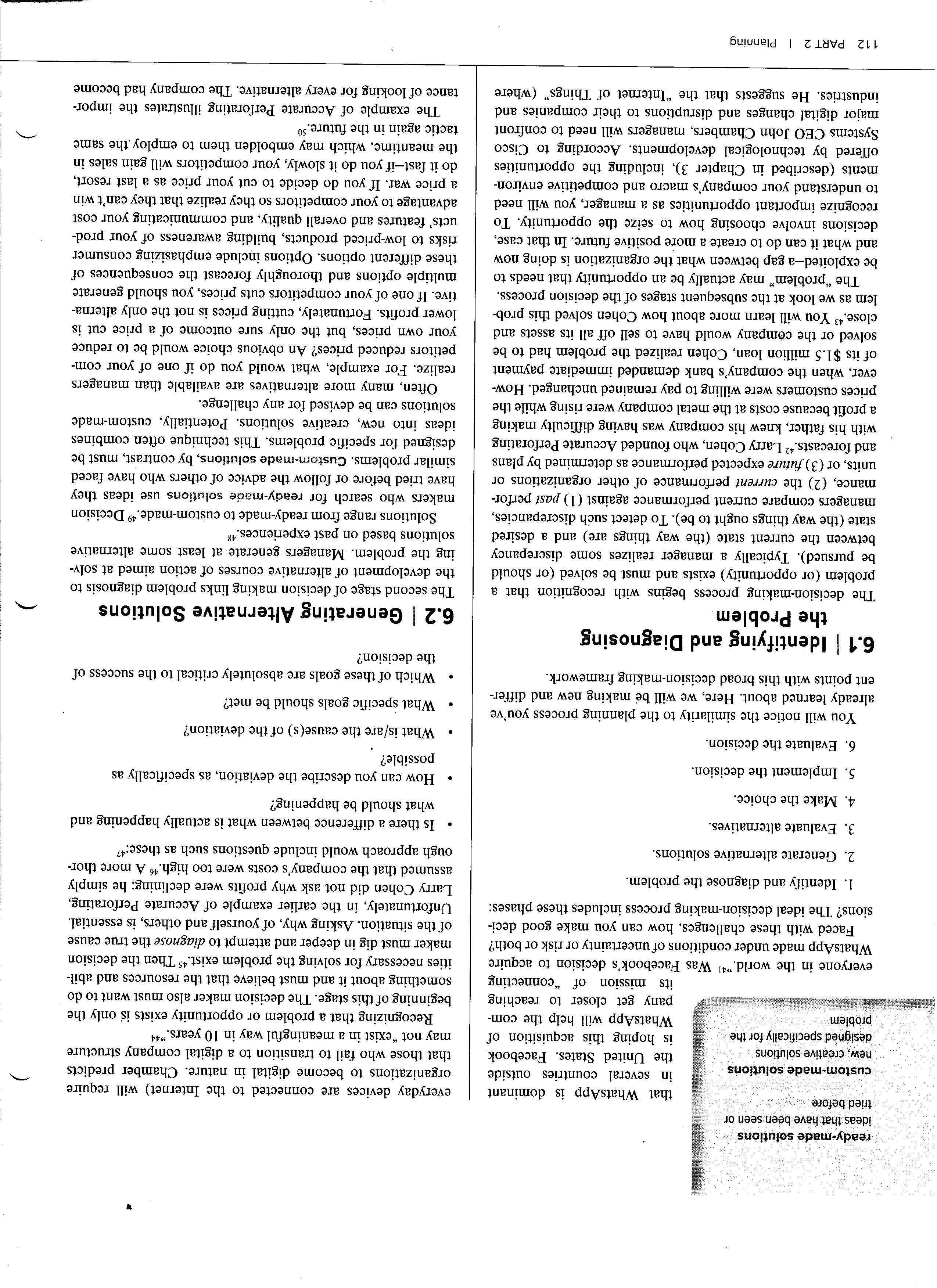
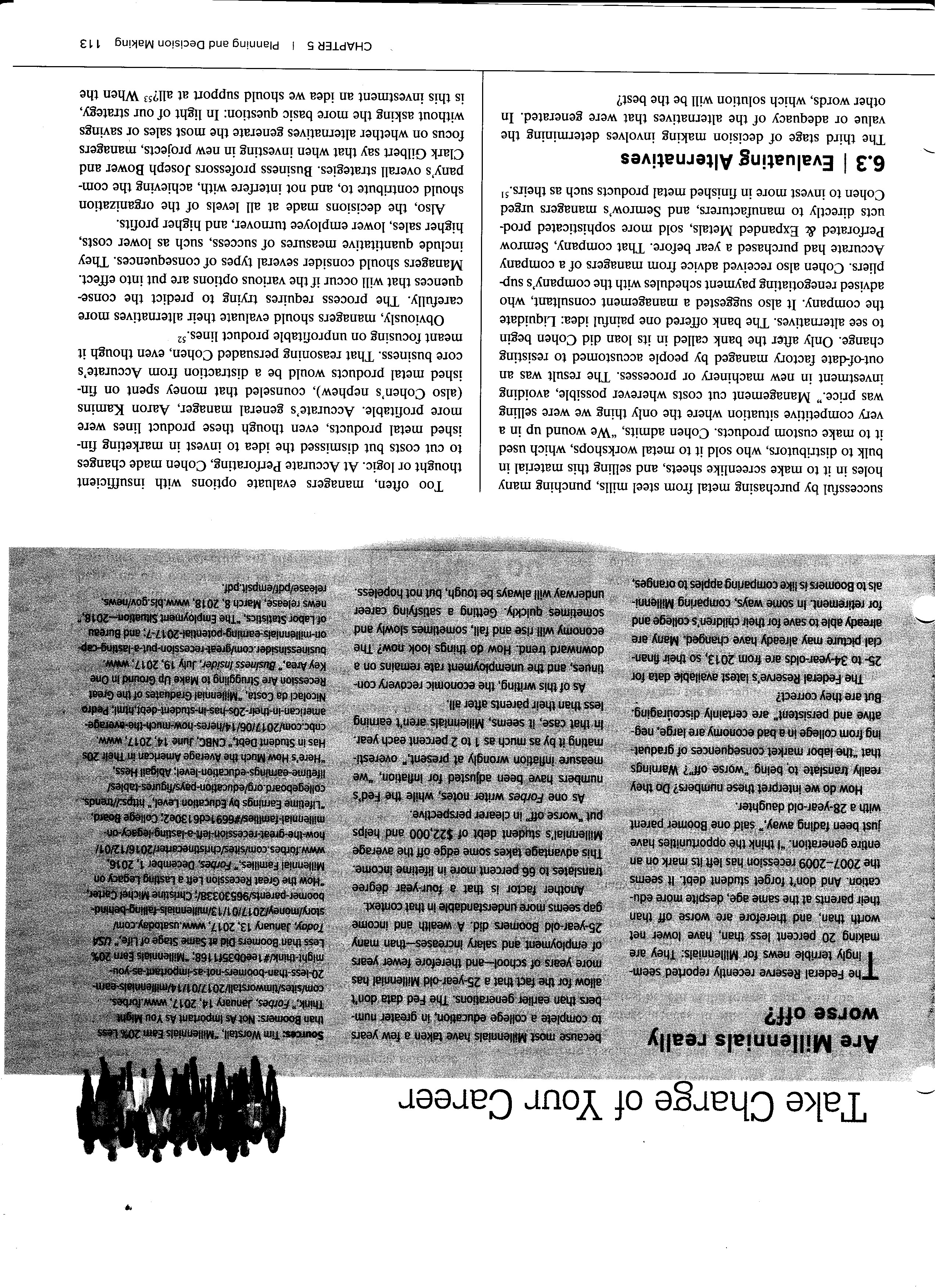
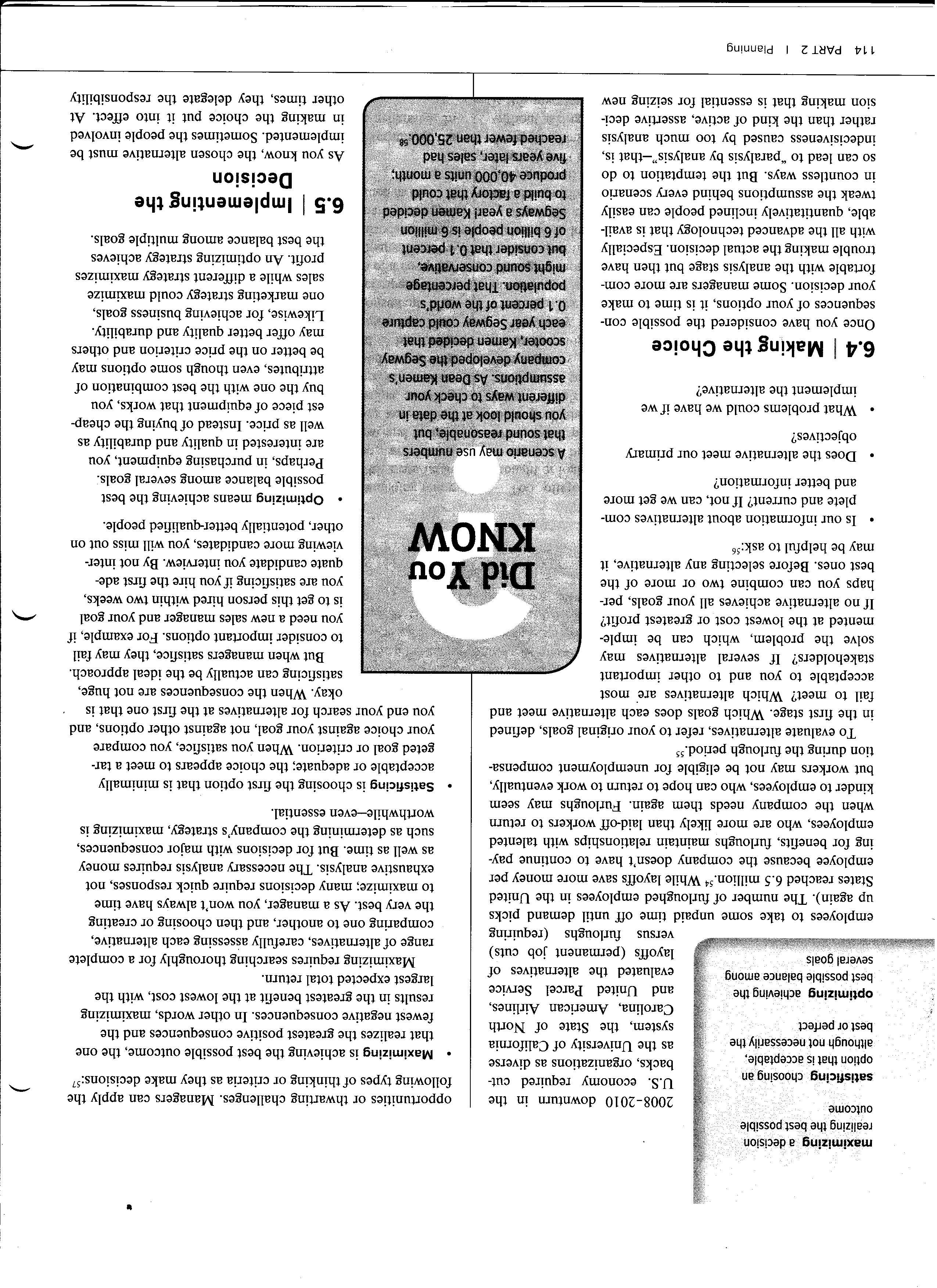
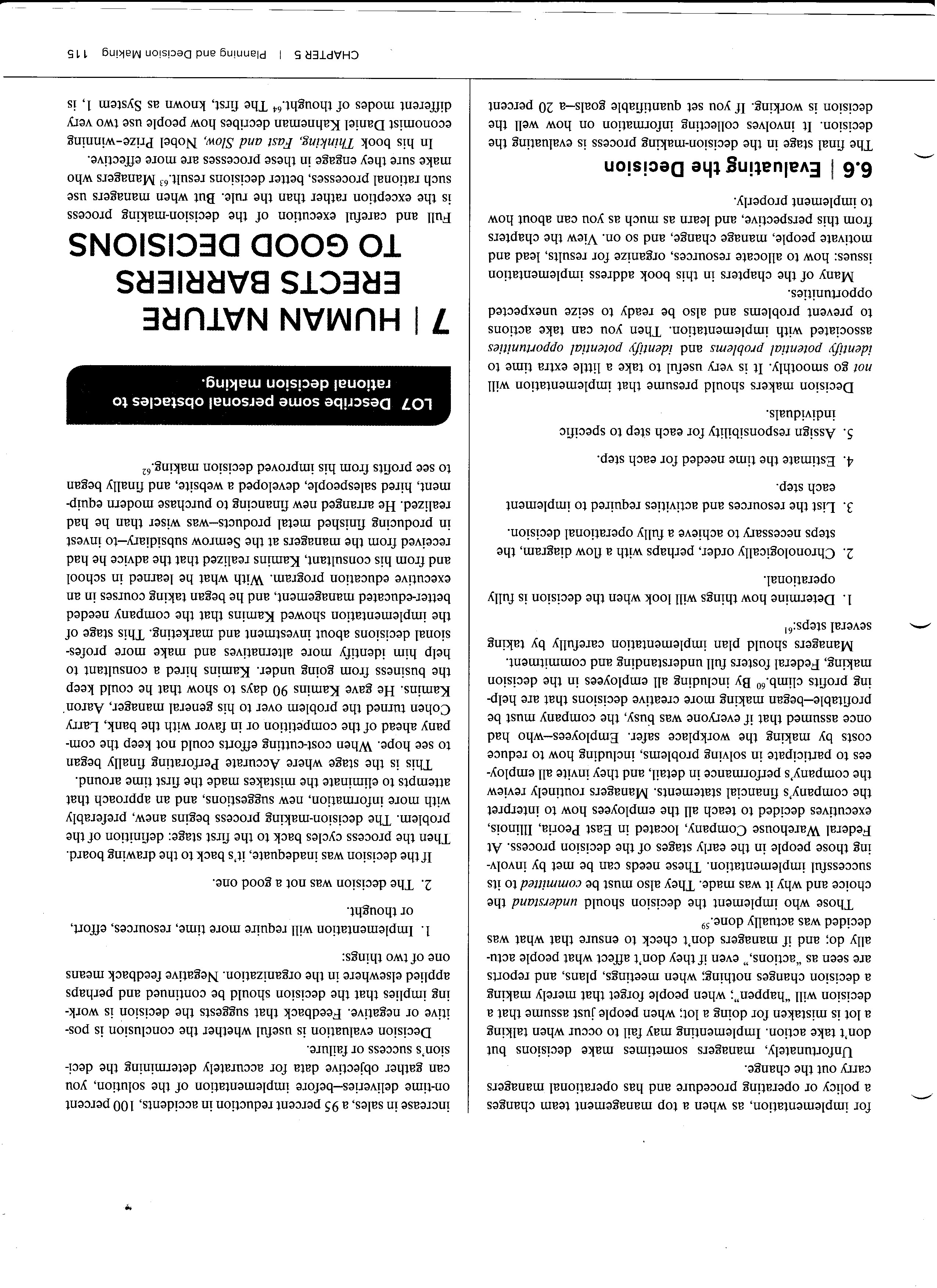
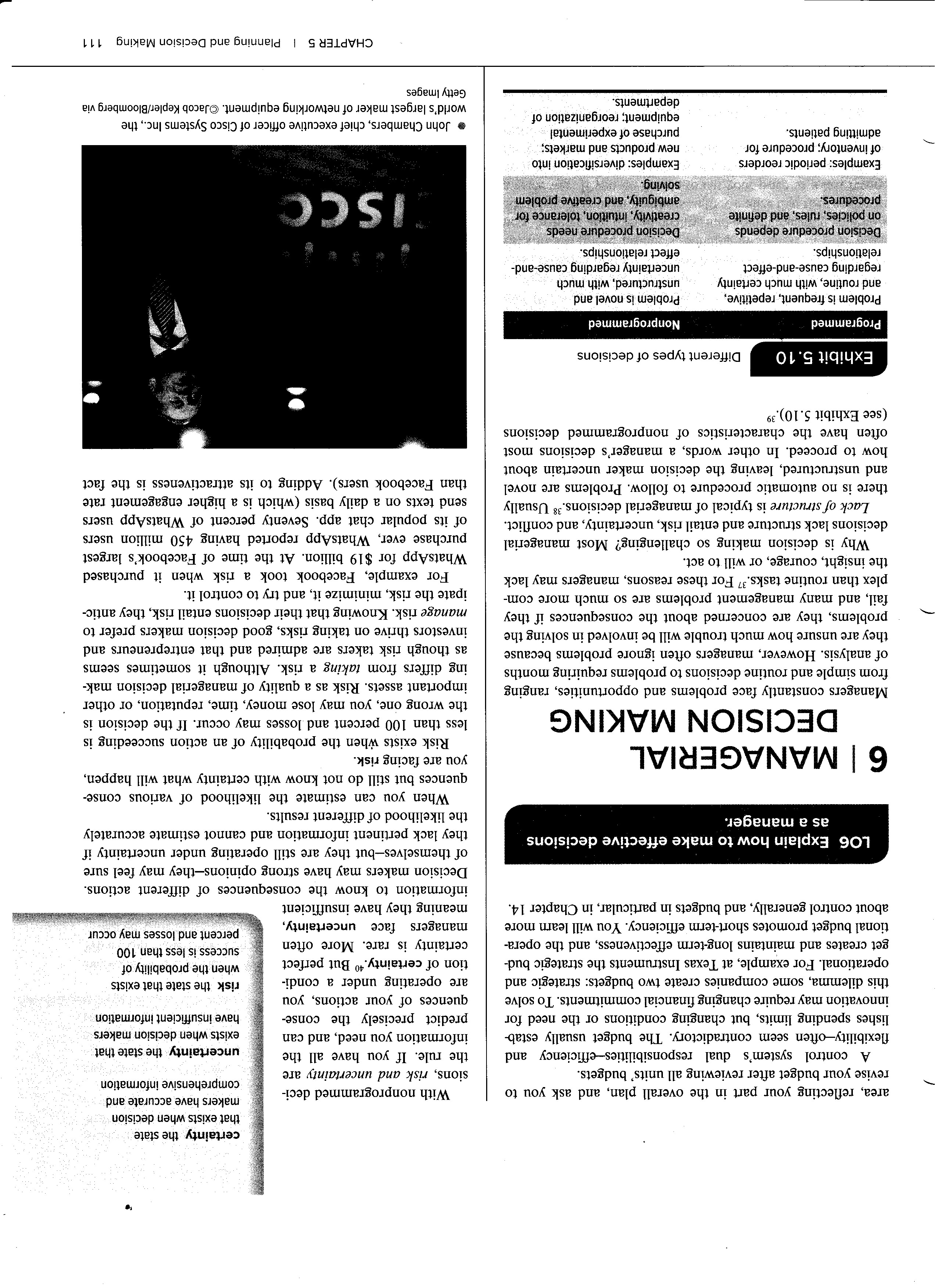
ready-made solutions ideas that have been seen or tried before that WhatsApp is dominant everyday devices are connected to the Internet) will require custom-made solutions in several countries outside organizations to become digital in nature. Chamber predicts new, creative solutions the United States. Facebook that those who fail to transition to a digital company structure designed specifically for the is hoping this acquisition of may not "exist in a meaningful way in 10 y problem WhatsApp will help the com- Recognizing that a problem or opportunity exists is only the pany get closer to reaching beginning of this stage. The decision maker also must want to do its mission of "connecting something about it and must believe that the resources and abil- everyone in the world."4 Was Facebook's decision to acquire ities necessary for solving the problem exist.* Then the decision WhatsApp made under conditions of uncertainty or risk or both? maker must dig in deeper and attempt to diagnose the true cause Faced with these challenges, how can you make good deci- of the situation. Asking why, of yourself and others, is essential. sions? The ideal decision-making process includes these phases: Unfortunately, in the earlier example of Accurate Perforating, 1. Identify and diagnose the problem. Larry Cohen did not ask why profits were declining; he simply assumed that the company's costs were too high." A more thor- 2. Generate alternative solutions. ough approach would include questions such as these:* 3. Evaluate alternatives. Is there a difference between what is actually happening and 4. Make the choice. what should be happening? 5. Implement the decision. How can you describe the deviation, as specifically as possible? 6. Evaluate the decision What is/are the cause(s) of the deviation? You will notice the similarity to the planning process you've already learned about. Here, we will be making new and differ- What specific goals should be met? ent points with this broad decision-making framework. Which of these goals are absolutely critical to the success of the decision? 6.1 | Identifying and Diagnosing the Problem 6.2 | Generating Alternative Solutions The decision-making process begins with recognition that a The second stage of decision making links problem diagnosis to problem (or opportunity) exists and must be solved (or should the development of alternative courses of action aimed at solv- be pursued). Typically a manager realizes some discrepancy ing the problem. Managers generate at least some alternative between the current state (the way things are) and a desired solutions based on past experiences.48 state (the way things ought to be). To detect such discrepancies. Solutions range from ready-made to custom-made." Decision managers compare current performance against (1) past perfor- makers who search for ready-made solutions use ideas they mance, (2) the current performance of other organizations or have tried before or follow the advice of others who have faced units, or (3) future expected performance as determined by plans similar problems. Custom-made solutions, by contrast, must be and forecasts.* Larry Cohen, who founded Accurate Perforating designed for specific problems. This technique often combines with his father, knew his company was having difficulty making ideas into new, creative solutions. Potentially, custom-made a profit because costs at the metal company were rising while the solutions can be devised for any challenge. prices customers were willing to pay remained unchanged. How- Often, many more alternatives are available than managers ever, when the company's bank demanded immediate payment realize. For example, what would you do if one of your com- of its $1.5 million loan, Cohen realized the problem had to be petitors reduced prices? An obvious choice would be to reduce solved or the company would have to sell off all its assets and your own prices, but the only sure outcome of a price cut is close.4 You will learn more about how Cohen solved this prob- lower profits. Fortunately, cutting prices is not the only alterna- lem as we look at the subsequent stages of the decision process. live. If one of your competitors cuts prices, you should generate The "problem" may actually be an opportunity that needs to multiple options and thoroughly forecast the consequences of be exploited-a gap between what the organization is doing now these different options. Options include emphasizing consumer and what it can do to create a more positive future. In that case, risks to low-priced products, building awareness of your prod- decisions involve choosing how to seize the opportunity. To ucts' features and overall quality, and communicating your cost recognize important opportunities as a manager, you will need advantage to your competitors so they realize that they can't win to understand your company's macro and competitive environ- a price war. If you do decide to cut your price as a last resort, ments (described in Chapter 3), including the opportunities do it fast-if you do it slowly, your competitors will gain sales in offered by technological developments. According to Cisco the meantime, which may embolden them to employ the same Systems CEO John Chambers, managers will need to confront tactic again in the future. 50 major digital changes and disruptions to their companies and The example of Accurate Perforating illustrates the impor- industries. He suggests that the "Internet of Things" (where tance of looking for every alternative. The company had become 112 PART 2 | PlanningTake Charge of Your Career Are Millennials really ken a f worse off? to complete a college education, in greater num- ant As Y bers than earlier generations. The Fed data don't allow for the fact that a 25-year-old Millennial has The Federal Reserve recently reported seem- not as-imports Ingly terrible news for Millennials: They are more years of school-and therefore fewer years 35f1 168, "Millent making 20 percent less than, have lower net of employment and salary increases-than many Boomers Did at Same Stage of ! 25-year-old Boomers did. A wealth and income 13, 2017, www.u worth than, and therefore are worse off than gap seems more understandable in that context. y/2017/01/13/millennia their parents at the same age, despite more edu- Another factor is that a four-year degree 530338/; Christine cation. And don't forget student debt. It seems translates to 66 percent more in lifetime income. cession Left a L Forbes, ecembe the 2007-2009 recession has left its mark on an This advantage takes some edge off the average entire generation. "I think the opportunities have Millennial's student debt of $22,000 and helps how just been fading away," sald one Boomer parent put "worse off" in clearer perspective, with a 28-year-old daughter. As one Forbes writer notes, while the Fed's by Educ on Level How do we interpret these numbers? Do they numbers have been adjusted for inflation, we eally translate to being "worse off"? Warnings that "the labor market consequences of graduat- inflation wrongly at present," overesti- the Average American s much as 1 to 2 percent each year. " CNBC, June 14, 2 ing from college in a bad economy are large, neg- In ti that case, It seems, Millennials aren't earning cnbc.com/2017/06/14/heres-how ative and persistent" are certainly discouraging. american In-stude But are they correct? less than their parents after all. Nicolaci da Costa, " As of this writing, the economic recovery con- ennial Graduates o The Federal Reserve's latest available data for Recession ling to Make Up Grow tinues, and the unemployment rate remains on a Key Area Insider, July 19. 2 25- to 34-year-olds are from 2013, so their finan- downward trend. How do things look now? The busi clal picture may already have changed. Many are economy will rise and fall, sometim slowly and already able to save for their children's college and sometimes quickly. Getting a sati tatistics. for retirement, In some ways, compa March 8 way will always be tough, but not hope! ais to Boomers is like comparing apples successful by purchasing metal from steel mills, punching many Too often, managers evaluate options with insufficient holes in it to make screenlike sheets, and selling this material in thought or logic. At Accurate Perforating, Cohen made changes bulk to distributors, who sold it to metal workshops, which used to cut costs but dismissed the idea to invest in marketing fin- it to make custom products. Cohen admits, "We wound up in a ished metal products, even though these product lines were very competitive situation where the only thing we were selling more profitable. Accurate's general manager, Aaron Kamins was price." Management cut costs wherever possible, avoiding also Cohen's nephew), counseled that money spent on fin- investment in new machinery or processes. The result was an ished metal products would be a distraction from Accurate's out-of-date factory managed by people accustomed to resisting core business. That reasoning persuaded Cohen, even though it change. Only after the bank called in its loan did Cohen begin meant focusing on unprofitable product lines. $2 to see alternatives. The bank offered one painful idea: Liquidate Obviously, managers should evaluate their alternatives more the company. It also suggested a management consultant, who carefully. The process requires trying to predict the conse- advised renegotiating payment schedules with the company's sup- quences that will occur if the various options are put into effect. pliers. Cohen also received advice from managers of a company Managers should consider several types of consequences. They Accurate had purchased a year before. That company, Semrow include quantitative measures of success, such as lower costs, Perforated & Expanded Metals, sold more sophisticated prod- higher sales, lower employee turnover, and higher profits ucts directly to manufacturers, and Semrow's managers urged Also, the decisions made at all levels of the organization Cohen to invest more in finished metal products such as theirs.$1 should contribute to, and not interfere with, achieving the com- pany's overall strategies. Business professors Joseph Bower and 6.3 | Evaluating Alternatives Clark Gilbert say that when investing in new projects, managers The third stage of decision making involves determining the focus on whether alternatives generate the most sales or savings value or adequacy of the alternatives that were generated. In without asking the more basic question: In light of our strategy, other words, which solution will be the best? is this investment an idea we should support at all? When the CHAPTER 5 | Planning and Decision Making 113maximizing a decision realizing the best possible outcome 2008-2010 downturn in the opportunities or thwarting challenges. Managers can apply the satisficing choosing an U.S. economy required cut- following types of thinking or criteria as they make decisions:" option that is acceptable, backs, organizations as diverse although not necessarily the as the University of California . Maximizing is achieving the best possible outcome, the one best or perfect system, the State of North that realizes the greatest positive consequences and the Carolina, American Airlines, fewest negative consequences. In other words, maximizing optimizing achieving the and United Parcel Service results in the greatest benefit at the lowest cost, with the best possible balance among evaluated the alternatives of largest expected total return. several goals layoffs (permanent job cuts) Maximizing requires searching thoroughly for a complete versus furloughs (requiring range of alternatives, carefully assessing each alternative, employees to take some unpaid time off until demand picks comparing one to another, and then choosing or creating up again). The number of furloughed employees in the United the very best. As a manager, you won't always have time States reached 6.5 million." While layoffs save more money per to maximize; many decisions require quick responses, not employee because the company doesn't have to continue pay- exhaustive analysis. The necessary analysis requires money ing for benefits, furloughs maintain relationships with talented as well as time. But for decisions with major consequences, employees, who are more likely than laid-off workers to return such as determining the company's strategy, maximizing is when the company needs them again. Furloughs may seem worthwhile-even essential. kinder to employees, who can hope to return to work eventually, Satisficing is choosing the first option that is minimally but workers may not be eligible for unemployment compensa- acceptable or adequate; the choice appears to meet a tar- tion during the furlough period. geted goal or criterion. When you satisfice, you compare luate alternatives, refer to your original goals, defined your choice against your goal, not against other options, and in the first stage. Which goals does each alternative meet and you end your search for alternatives at the first one that is fail to meet? Which alternatives are most okay. When the consequences are not huge, acceptable to you and to other important satisficing can actually be the ideal approach. stakeholders? If several alternatives may But when managers satisfice, they may fail solve the problem, which can be imple- to consider important options. For example, if mented at the lowest cost or greatest profit? you need a new sales manager and your goal If no alternative achieves all your goals, per- is to get this person hired within two weeks, haps you can combine two or more of the best ones. Before selecting any alternative, it Did You you are satisficing if you hire the first ade- quate candidate you interview. By not inter- may be helpful to ask:5 KNOW viewing more candidates, you will miss out on . Is our information about alternatives com- other, potentially better-qualified people. plete and current? If not, can we get more Optimizing means achieving the best and better information? possible balance among several goals. e meet our primary A scenario may use numbers Perhaps, in purchasing equipment, you objectives? that sound reasonable, but are interested in quality and durability as What problems could we have if we you should look at the data in well as price. Instead of buying the cheap- implement the alternative? different ways to check your est piece of equipment that works, you assumptions. As Dean Kamen's buy the one with the best combination of 6.4 | Making the Choice company developed the Segway attributes, even though some options may be better on the price criterion and others scooter, Kamen decided that may offer better quality and durability. Once you have considered the possible con- each year Segway could captur 0.1 percent of the world's Likewise, for achieving business goals, sequences of your options, it is time to make your decision. Some managers are more com- population. That percentage one marketing strategy could maximize fortable with the analysis stage but then have might sound conservative, sales while a different strategy maximizes trouble making the actual decision. Especially but consider that 0.1 percent profit. An optimizing strategy achieves with all the advanced technology that is avail- of 6 billion people is 6 million the best balance among multiple goals. able, quantitatively inclined people can easily Segways a year! Kamen decided tweak the assumptions behind every scenario to build a factory that could 6.5 | Implementing the in countless ways. But the temptation to do produce 40,000 units a month; Decision so can lead to "paralysis by analysis"-that is, five years later, sales had As you know, the chosen alternative must be indecisiveness caused by too much analysis eached fewer than 25,000.58 implemented. Sometimes the people involved rather than the kind of active, assertive deci- in making the choice put it into effect. At sion making that is essential for seizing new other times, they delegate the responsibility 114 PART 2 | Planningfor implementation, as when a top management team changes increase in sales, a 95 percent reduction in accidents, 100 percent a policy or operating procedure and has operational managers on-time deliveries-before implementation of the solution, you carry out the change. can gather objective data for accurately determining the deci- Unfortunately, managers sometimes make decisions but sion's success or failure don't take action. Implementing may fail to occur when talking Decision evaluation is useful whether the conclusion is pos- a lot is mistaken for doing a lot; when people just assume that a tive or negative. Feedback that suggests the decision is work decision will "happen"; when people forget that merely making ing implies that the decision should be continued and perhaps a decision changes nothing; when meetings, plans, and reports applied elsewhere in the organization. Negative feedback means are seen as "actions," even if they don't affect what people actu- one of two things: ally do; and if managers don't check to ensure that what was decided was actually done. 59 1. Implementation will require more time, resources, effort, Those who implement the decision should understand the or thought choice and why it was made. They also must be committed to its 2. The decision was not a good one. successful implementation. These needs can be met by involv- ing those people in the early stages of the decision process. At If the decision was inadequate, it's back to the drawing board. Federal Warehouse Company, located in East Peoria, Illinois, Then the process cycles back to the first stage: definition of the executives decided to teach all the employees how to interpret problem. The decision-making process begins anew, preferably the company's financial statements. Managers routinely review with more information, new suggestions, and an approach that the company's performance in detail, and they invite all employ- attempts to eliminate the mistakes made the first time around. ees to participate in solving problems, including how to reduce This is the stage where Accurate Perforating finally began costs by making the workplace safer. Employees-who had to see hope. When cost-cutting efforts could not keep the com- once assumed that if everyone was busy, the company must be any ahead of the competition or in favor with the bank, Larry Cohen turned the problem over to his general manager, Aaron' profitable-began making more creative decisions that are help- ing profits climb. By including all employees in the decision Kamins. He gave Kamins 90 days to show that he could keep making, Federal fosters full understanding and commitment. the business from going under. Kamins hired a consultant to Managers should plan implementation carefully by taking help him identify more alternatives and make more profes- several steps:61 sional decisions about investment and marketing. This stage of the implementation showed Kamins that the company needed 1. Determine how things will look when the decision is fully better-educated management, and he began taking courses in an operational. executive education program. With what he learned in school 2. Chronologically order, perhaps with a flow diagram, the and from his consultant, Kamins realized that the advice he had steps necessary to achieve a fully operational decision received from the managers at the Semrow subsidiary-to invest in producing finished metal products-was wiser than he had 3. List the resources and activities required to implement realized. He arranged new financing to purchase modern equip- each step. ment, hired salespeople, developed a website, and finally began 4. Estimate the time needed for each step. to see profits from his improved decision making. 62 5. Assign responsibility for each step to specific individuals. LO7 Describe some personal obstacles to Decision makers should presume that implementation will rational decision making not go smoothly. It is very useful to take a little extra time to identify potential problems and identify potential opportunities associated with implementation. Then you can take actions to prevent problems and also be ready to seize unexpected 7 | HUMAN NATURE opportunities. Many of the chapters in this book address implementation ERECTS BARRIERS issues: how to allocate resources, organize for results, lead and motivate people, manage change, and so on. View the chapters TO GOOD DECISIONS from this perspective, and learn as much as you can about how Full and careful execution of the decision-making process to implement properly. is the exception rather than the rule. But when managers use such rational processes, better decisions result. Managers who 6.6 |Evaluating the Decision make sure they engage in these processes are more effective. The final stage in the decision-making process is evaluating the In his book Thinking, Fast and Slow, Nobel Prize-winning decision. It involves collecting information on how well the economist Daniel Kahneman decribes how people use two very decision is working. If you set quantifiable goals-a 20 percent different modes of thought." The first, known as System 1, is CHAPTER 5 | Planning and Decision Making 115certainty the state that exists when decision area, reflecting your part in the overall plan, and ask you to With nonprogrammed deci- makers have accurate and comprehensive information revise your budget after reviewing all units' budgets. sions, risk and uncertainty are A control system's dual responsibilities-efficiency and the rule. If you have all the uncertainty the state that flexibility-often seem contradictory. The budget usually estab- information you need, and can exists when decision makers ishes spending limits, but changing conditions or the need for predict precisely the conse- have insufficient information innovation may require changing financial commitments. To solve quences of your actions, you this dilemma, some companies create two budgets: strategic and are operating under a condi- risk the state that exists operational. For example, at Texas Instruments the strategic bud- tion of certainty." But perfect when the probability of get creates and maintains long-term effectiveness, and the opera- certainty is rare. More often success is less than 100 tional budget promotes short-term efficiency. You will learn more managers face uncertainty, percent and losses may occur about control generally, and budgets in particular, in Chapter 14. meaning they have insufficient information to know the consequences of different actions. Decision makers may have strong opinions-they may feel sure of themselves-but they are still operating under uncertainty if LO6 Explain how to make effective decisions they lack pertinent information and cannot estimate accurately as a manager. the likelihood of different results. When you can estimate the likelihood of various conse- quences but still do not know with certainty what will happen, 6 | MANAGERIAL you are facing risk. Risk exists when the probability of an action succeeding is DECISION MAKING less than 100 percent and losses may occur. If the decision is the wrong one, you may lose money, time, reputation, or other Managers constantly face problems and opportunities, ranging important assets. Risk as a quality of managerial decision mak- from simple and routine decisions to problems requiring months ing differs from taking a risk. Although it sometimes seems of analysis. However, managers often ignore problems because as though risk takers are admired and that entrepreneurs and they are unsure how much trouble will be involved in solving the investors thrive on taking risks, good decision makers prefer to problems, they are concerned about the consequences if they manage risk. Knowing that their decisions entail risk, they antic- fail, and many management problems are so much more com- ipate the risk, minimize it, and try to control it. plex than routine tasks.' For these reasons, managers may lack For example, Facebook took a risk when it purchased the insight, courage, or will to act. WhatsApp for $19 billion. At the time of Facebook's largest Why is decision making so challenging? Most managerial purchase ever, WhatsApp reported having 450 million users decisions lack structure and entail risk, uncertainty, and conflict. of its popular chat app. Seventy percent of WhatsApp users Lack of structure is typical of managerial decisions.38 Usually send texts on a daily basis (which is a higher engagement rate there is no automatic procedure to follow. Problems are novel than Facebook users). Adding to its attractiveness is the fact and unstructured, leaving the decision maker uncertain about how to proceed. In other words, a manager's decisions most often have the characteristics of nonprogrammed decisions ( see Exhibit 5.10).39 Exhibit 5.10 Different types of decisions Programmed Nonprogramme Problem is frequent, repetitive, Problem is novel and and routine, with much certainty unstructured, with much regarding cause-and-effect uncertainty regarding cause-and- relationships. effect relationships. Decision procedure depends Decision procedure needs on policies, rules, and definite creativity, intuition, tolerance for procedures. ambiguity, and creative problem ISCC solving. Examples: periodic reorders Examples: diversification into of inventory; procedure for new products and markets; admitting patien purchase of experimental equipment; reorganization of John Chambers, chief executive officer of Cisco Systems Inc., the departments. world's largest maker of networking equipment. @Jacob Kepler/Bloomberg via Getty Images CHAPTER 5 | Planning and Decision Making 111
Step by Step Solution
There are 3 Steps involved in it

Get step-by-step solutions from verified subject matter experts
 Study Help