







Question: Read the following case study: John Bob Elementary School in New York City has a kindergarten through eighth grade offering. Over the past year, standardized
Read the following case study:
John Bob Elementary School in New York City has a kindergarten through eighth grade offering. Over the past year, standardized test results have been below expectations in their various subject areas. Below are the results obtained:
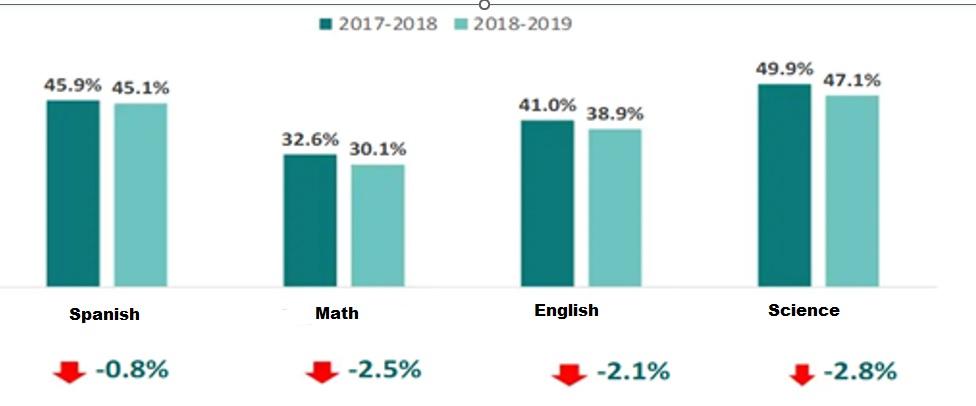
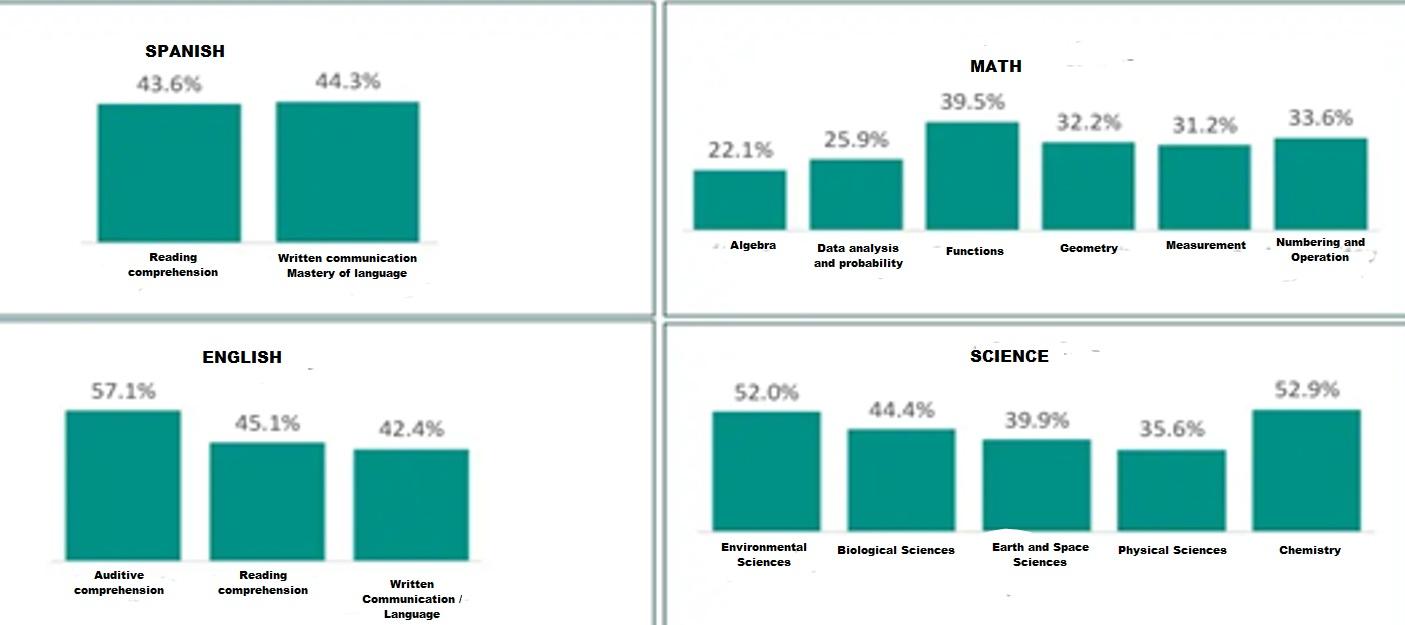
The principal of the school, when meeting with the teachers, analyzed the factors that, according to them, were causing these results. The multiplicity of tasks for the teachers and the little time they had left made the work teams of the different levels of the school despair; however, the teachers understood that something had to be done for things to change because they did not It was possible to continue with this poor performance that affected teaching at different levels and therefore student learning.
Tisha Towers, an educator with considerable experience at the school and highly respected in the educational community, said that she was very concerned about the social situation of the students who came to her classes. Several of them did not eat breakfast and were brought to school by their older brothers, because their parents were not at home. Since there was no adult to worry about picking them up, many times they did not attend or dropped out, mainly the older siblings, who suddenly disappeared from their homes and later found themselves on the streets working in very unfavorable conditions.
According to Tisha, faced with this reality there was nothing else to do, they had to limit themselves to teaching what they could, because the school had no tools or powers to intervene in situations. When Tisha finished speaking, she asked for John Leaf to speak. He was a young educator recently graduated. John agreed with the principal that the situation was complex and that it could not continue like this, however, he saw that there were many initiatives that could be done to improve learning, for example: more involvement of parents in the education of their children, make children appreciate the positive aspects of their homes, among others. All this, according to John, could contribute to the achievement of significant learning in students.
As John finished speaking, a group of teachers began to criticize his proposal. They claimed that he did not live in reality, that nothing could be done with the parents, and their low level of education meant that they could not contribute to the education of their children, they did not understand anything, according to them. Other educators complained about what they considered a "seller of dreams" (according to his own words) John's proposal. They confronted him with their little experience in education and that he was new to the school, therefore he did not know what he was talking about. They felt that for years they had tried everything and made no progress. The parents did not commit to their children, they did not even come to meetings. Given the climate that was being generated in the meeting, the director asked that they not remain critical and that they move towards a solution.
An educator named Julia Bridge who had not spoken in the entire meeting and had limited herself to listening and observing, raised her hand and calmly said: I have spent a lifetime in this school. It's only ten years, but for me it's my life. I know the reality we face and that of our students. The socioeconomic level of our students does not allow them to have access to technological equipment and systems to do their jobs when homework is assigned. It is true that the reality they face is tremendous and sometimes overwhelms and makes you want to run away, but that is where our vocation is put to the test. I am concerned about our students and their future, but more concerned about your attitude, dear colleagues. I understand your exhaustion and hopelessness, but we must get out of it. I know communities where they have programs to support the improvement of the occupational health of their teachers. You have to understand why parents don't go to meetings. I think they don't feel accepted by us. By saying that they cannot contribute to their children's education, we are closing the door to solutions. No matter how low their education may be, they are educators of their children and deserve to be recognized as such. We cannot continue to show ourselves to them as some kind of sages and owners of knowledge. The world has changed, and we have not. No matter how precarious the family situation is and the modest jobs of our students' parents, they develop trades that they could show in the courses. Many families are focused on surviving and what parents earn is only enough for that, it is their first priority. I am optimistic about the situation described by our director, and I think that we could do much more than what we are doing if we changed our way of dealing with the problem.
Some educators applauded the words of Julia Bridge, who was a mathematics teacher, while others remained silent and showed signs of disapproval. The director agreed with what was stated by teacher Bridge and asked the educators to create working groups to deal with the problem according to what was discussed at the meeting. The school has some resources such as a Social Worker, a Librarian, a Technology Specialist, a Nurse, and a security guard.
Answer the following:
1) Describe the situation presented in the case study.
2) Analyze the data and information provided in the case study and propose what are the academic and work priorities in this situation.
3) Distinguish the behaviors of instructional leadership in the school.
4) Identify and explain which US Department of Education Goals you should address as soon as possible based on the case study data.
5) Identify and explain what the strategic priorities are based on the case study.
6) What would be your first actions when you arrive at school? Explain.
7) What role does instructional leadership play in this process?
8) Include your practical recommendations for maintaining sustainable academic improvement at John Bob School.
20172018=20182019
Step by Step Solution
There are 3 Steps involved in it

Get step-by-step solutions from verified subject matter experts
 Study Help