







Question: read the questions and use the notes. Questions: NOTES: -Read Kingma's textbook Chapter Three -Study the class note 3 and use it to answer the
read the questions and use the notes.

Questions:
NOTES:
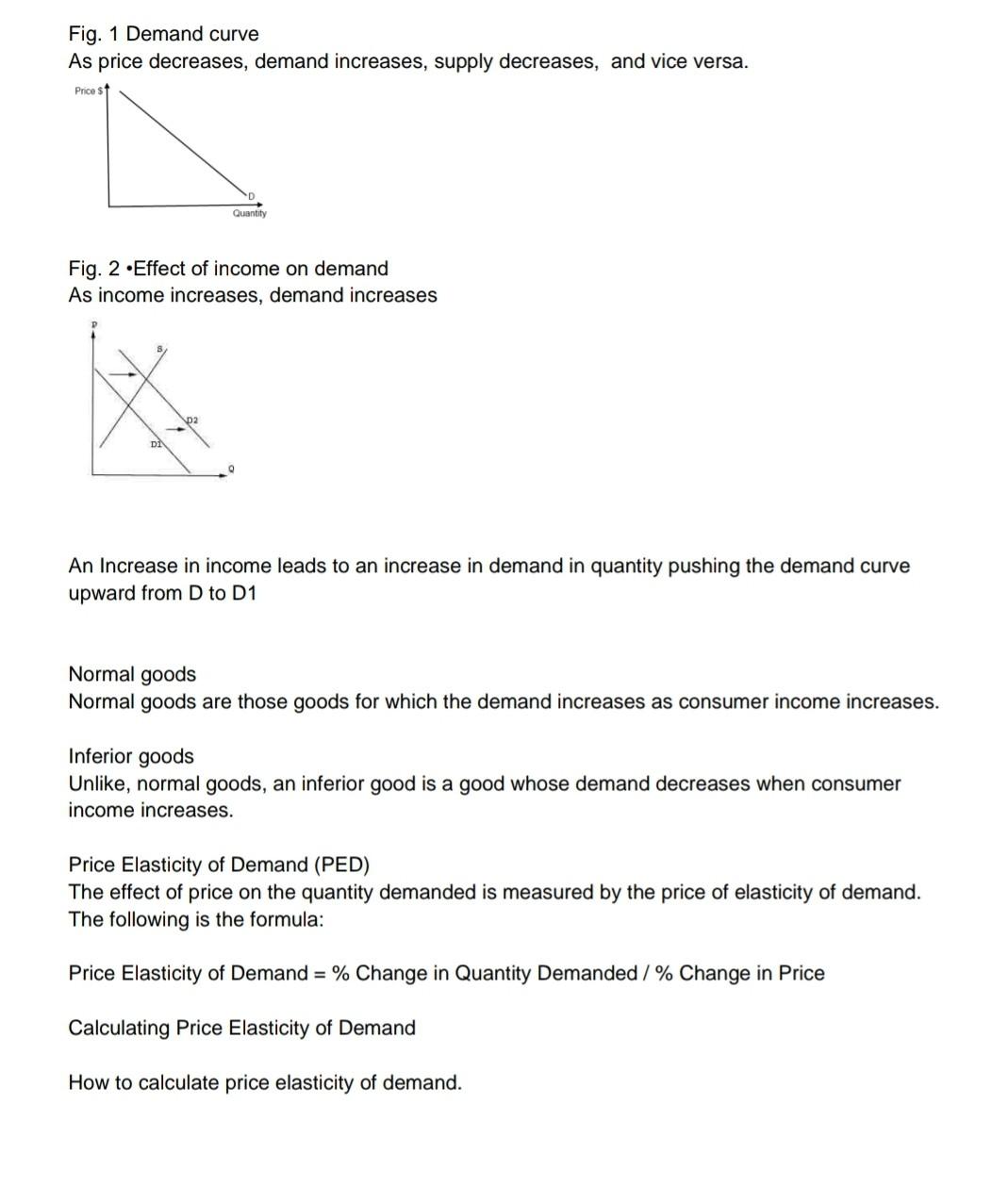
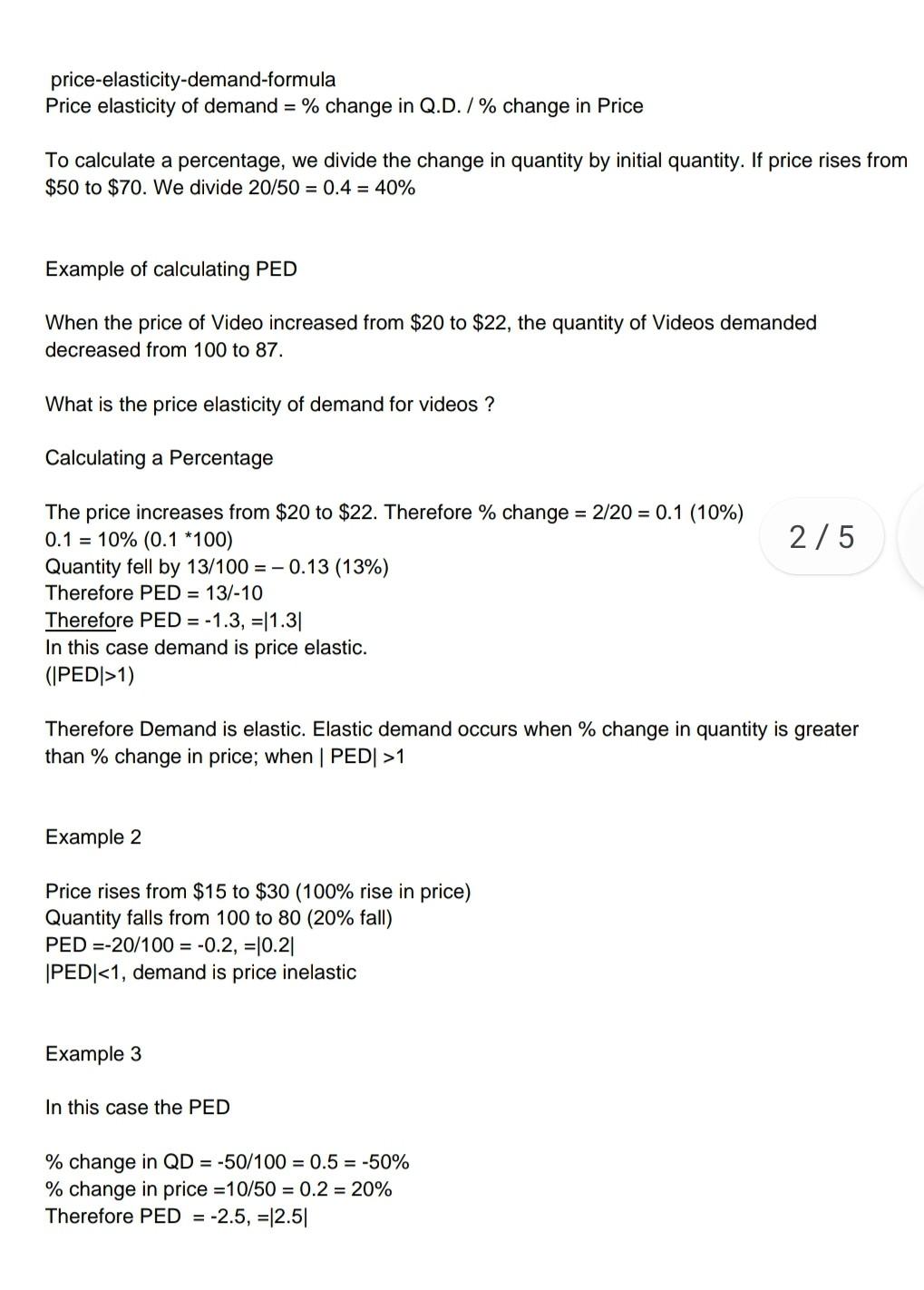
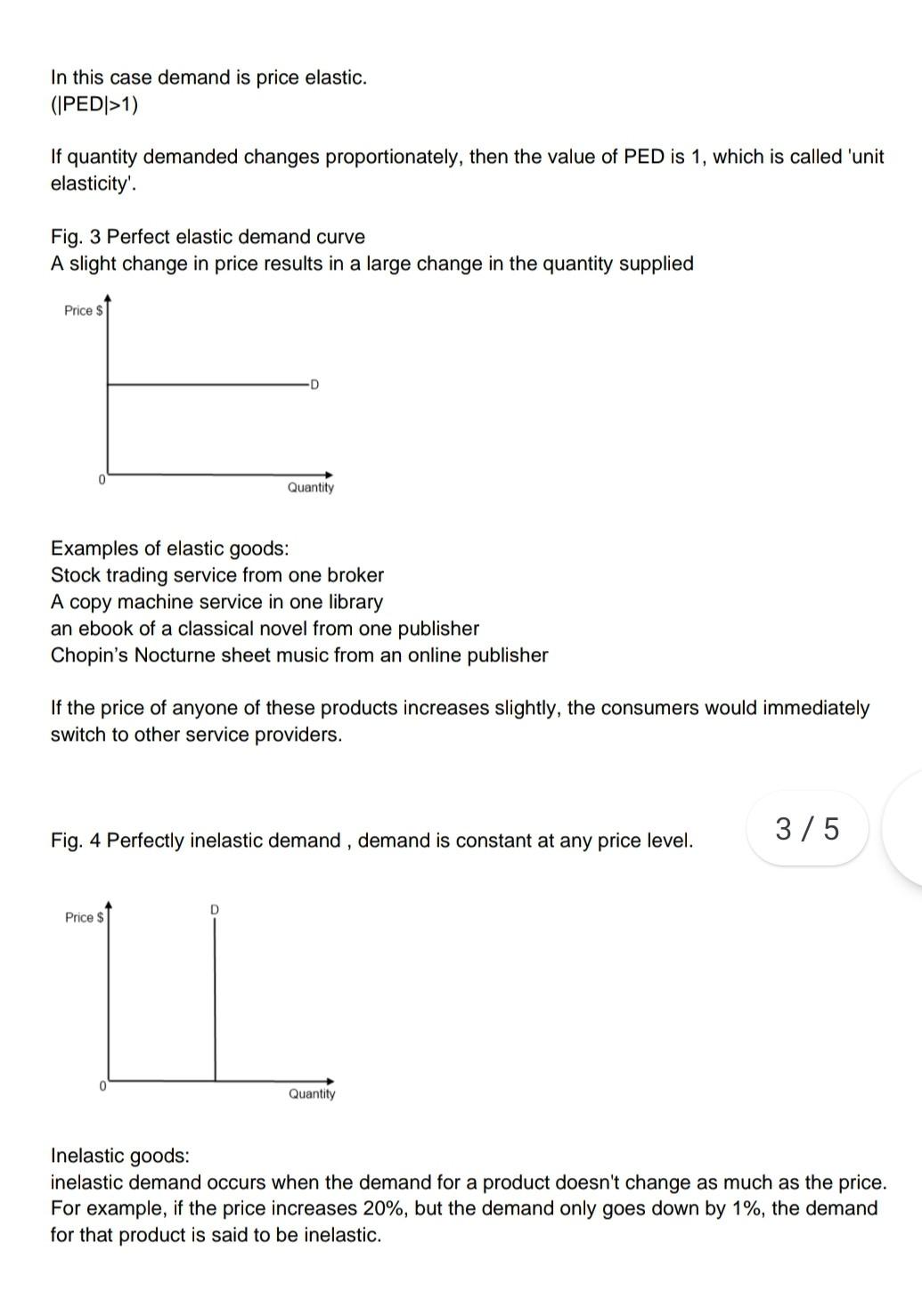
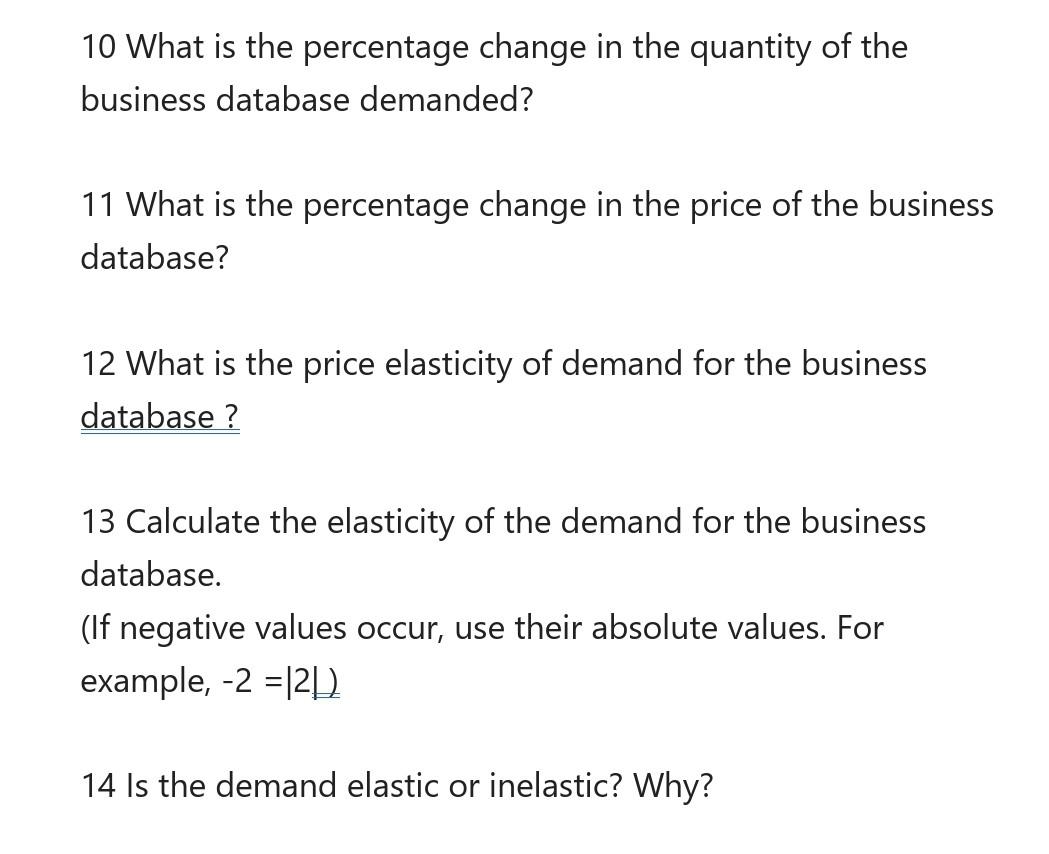
-Read Kingma's textbook Chapter Three -Study the class note 3 and use it to answer the following questions: 10 What is the percentage change in the quantity of the business database demanded? 11 What is the percentage change in the price of the business database? 12 What is the price elasticity of demand for the business database ? 13 Calculate the elasticity of the demand for the business database. (If negative values occur, use their absolute values. For example, -2 =1222 14 Is the demand elastic or inelastic? Why? Fig. 1 Demand curve As price decreases, demand increases, supply decreases, and vice versa. Price st Quantity Fig. 2 Effect of income on demand As income increases, demand increases 02 An Increase in income leads to an increase in demand in quantity pushing the demand curve upward from D to D1 Normal goods Normal goods are those goods for which the demand increases as consumer income increases. Inferior goods Unlike, normal goods, an inferior good is a good whose demand decreases when consumer income increases. Price Elasticity of Demand (PED) The effect of price on the quantity demanded is measured by the price of elasticity of demand. The following is the formula: Price Elasticity of Demand = % Change in Quantity Demanded /% Change in Price Calculating Price Elasticity of Demand How to calculate price elasticity of demand. price-elasticity-demand-formula Price elasticity of demand = % change in Q.D. /% change in Price To calculate a percentage, we divide the change in quantity by initial quantity. If price rises from $50 to $70. We divide 20/50 = 0.4 = 40% Example of calculating PED When the price of Video increased from $20 to $22, the quantity of Videos demanded decreased from 100 to 87. What is the price elasticity of demand for videos ? Calculating a Percentage 2/5 The price increases from $20 to $22. Therefore % change = 2/20 = 0.1 (10%) 0.1 = 10% (0.1 *100) Quantity fell by 13/100 = -0.13 (13%) Therefore PED = 13/-10 Therefore PED = -1.3, =/1.3| In this case demand is price elastic. (IPEDI>1) Therefore Demand is elastic. Elastic demand occurs when % change in quantity is greater than % change in price; when | PEDI >1 Example 2 Price rises from $15 to $30 (100% rise in price) Quantity falls from 100 to 80 (20% fall) PED =-20/100 = -0.2, =10.2| |PEDI1) If quantity demanded changes proportionately, then the value of PED is 1, which is called 'unit elasticity'. Fig. 3 Perfect elastic demand curve A slight change in price results in a large change in the quantity supplied Price $ -D 0 Quantity Examples of elastic goods: Stock trading service from one broker A copy machine service in one library an ebook of a classical novel from one publisher Chopin's Nocturne sheet music from an online publisher If the price of anyone of these products increases slightly, the consumers would immediately switch to other service providers. Fig. 4 Perfectly inelastic demand, demand is constant at any price level. 3/5 D Price $ 0 Quantity Inelastic goods: inelastic demand occurs when the demand for a product doesn't change as much as the price. For example, if the price increases 20%, but the demand only goes down by 1%, the demand for that product is said to be inelastic. Examples: Patented drugs Top scientific journals Top secrete information about nuclear weapons in foreign countries Top antitrust attorneys' service Effect of complementary goods An decrease in price of one good leads to an increase in demand of other goods Example: a drop in the price of VCR recorders leads to an increase in the demand for Video rentals A Complementary good is a good that adds value to another. They are two goods that are consumed together. For example, a DVD and a DVD player. On occasion, the complementary good is absolutely necessary, as is the case with gas and a car. If gas is cheaper, more people may buy cars . However, a complementary good can add value to the initial product. For instance, bagels and eggs. Complementary products have a negative relationship with each other which means that when product A increases in price, the demand for product B decreases because fewer people buy product A due to the higher price. As a result, fewer people are also buying product B. . In economics it called is 'negative cross-elasticity of demand'. Elastic goods have close substitutes. The substitute goods are the goods that can be consumed interchangeably to satisfy the same requirement of consumers. These goods have positive cross elasticity of demand, which means the sale of one good rises when there is a rise in the price of another good and vice versa. Examples: Iphone vs Samsung Smart phone Honda Pilot vs Toyota Highlander If iPhones are too expensive, people may buy Samsung phones Non-information good substitutes: Coke & Pepsi. McDonald's & Burger King. Colgate & Crest (toothpaste) Kindle & Books Printed on Paper. Eggs in one Supermarket & Eggs in another Supermarket. Information good and service substitutes : -Stock trading service from one broker -A copy machine service in one library -an ebook of a classical novel from one publisher -Chopin's Nocturne sheet music from an online publisher Inelastic goods: inelastic demand occurs when the demand for a product doesn't change as much as the price. For example, if the price increases by 20%, but the demand only goes down by 1%, the demand for that product is said to be inelastic. Examples: -Patented drugs -Top scientific journals - Top secrete information about nuclear weapons in foreign countries -Top antitrust attorneys' service 5/5
Step by Step Solution
There are 3 Steps involved in it
1 Expert Approved Answer
Step: 1 Unlock

Question Has Been Solved by an Expert!
Get step-by-step solutions from verified subject matter experts
Step: 2 Unlock
Step: 3 Unlock
 Study Help