



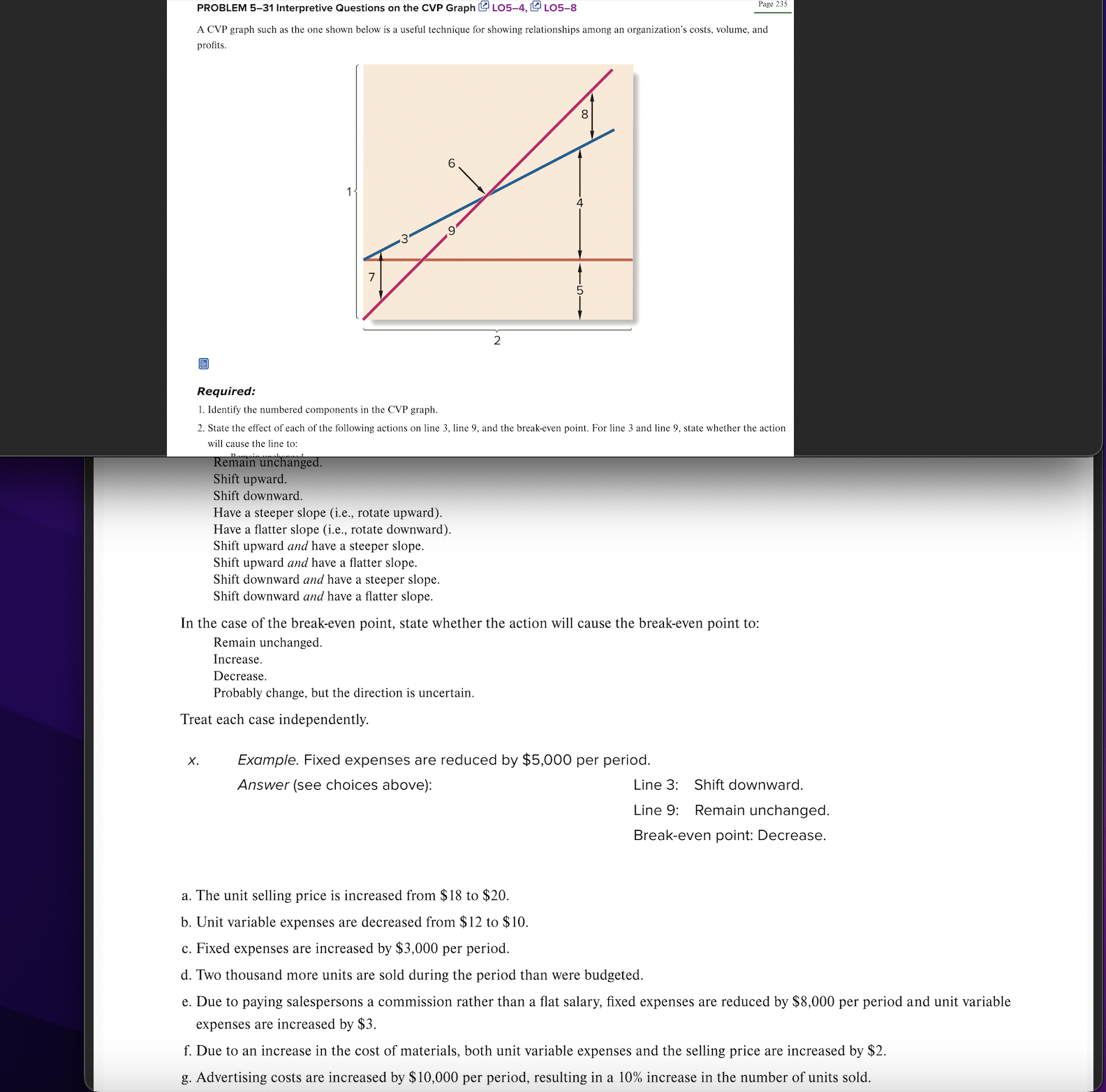
Question: Remain unchanged. Shift upward. Shift downward. Have a steeper slope ( i . e . , rotate upward ) . Have a flatter slope (
Remain unchanged.
Shift upward.
Shift downward.
Have a steeper slope ie rotate upward
Have a flatter slope ie rotate downward
Shift upward and have a steeper slope.
Shift upward and have a flatter slope.
Shift downward and have a steeper slope.
Shift downward and have a flatter slope.
In the case of the breakeven point, state whether the action will cause the breakeven point to:
Remain unchanged.
Increase.
Decrease.
Probably change, but the direction is uncertain.
Treat each case independently.
x Example. Fixed expenses are reduced by $ per period.
Answer see choices above:
Line : Shift downward.
Line : Remain unchanged.
Breakeven point: Decrease.
a The unit selling price is increased from $ to $
b Unit variable expenses are decreased from $ to $
c Fixed expenses are increased by $ per period.
d Two thousand more units are sold during the period than were budgeted.
e Due to paying salespersons a commission rather than a flat salary, fixed expenses are reduced by $ per period and unit variable
expenses are increased by $
f Due to an increase in the cost of materials, both unit variable expenses and the selling price are increased by $
g Advertising costs are increased by $ per period, resulting in a increase in the number of units sold.
Step by Step Solution
There are 3 Steps involved in it
1 Expert Approved Answer
Step: 1 Unlock

Question Has Been Solved by an Expert!
Get step-by-step solutions from verified subject matter experts
Step: 2 Unlock
Step: 3 Unlock