



Question: Required: different costs, enter the units with the HIGHER unit cost first in the Cost of Goods Sold Unit Cost column and LOWER unit cost
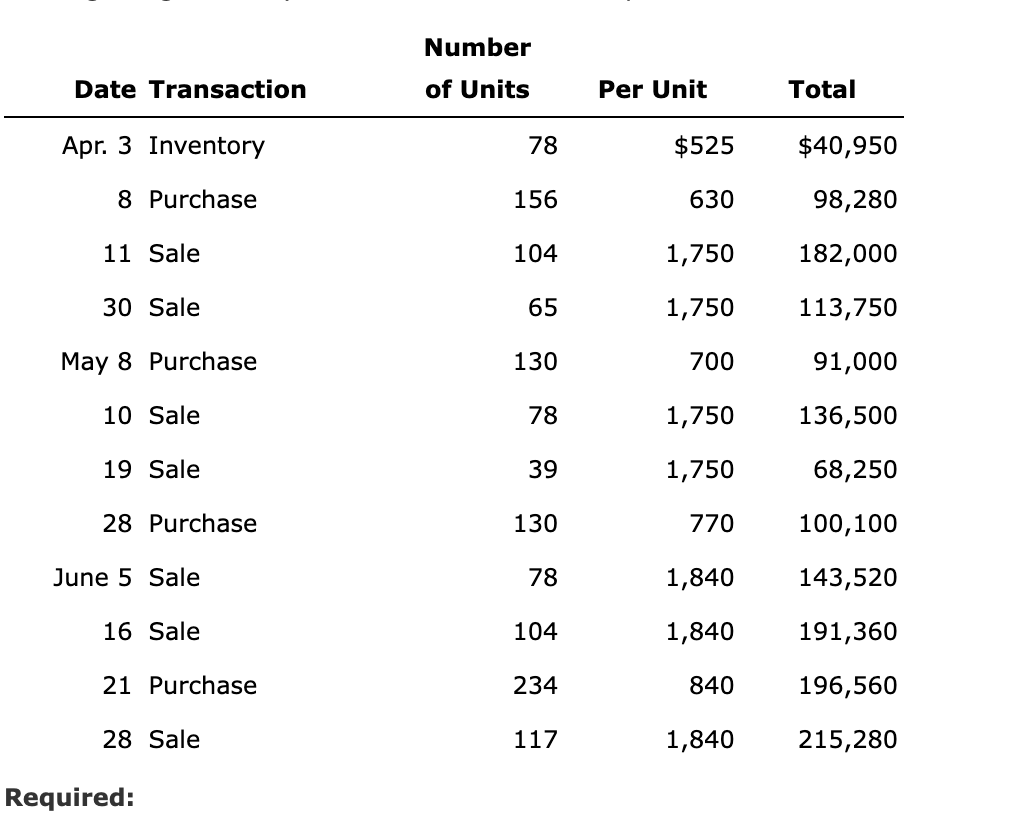

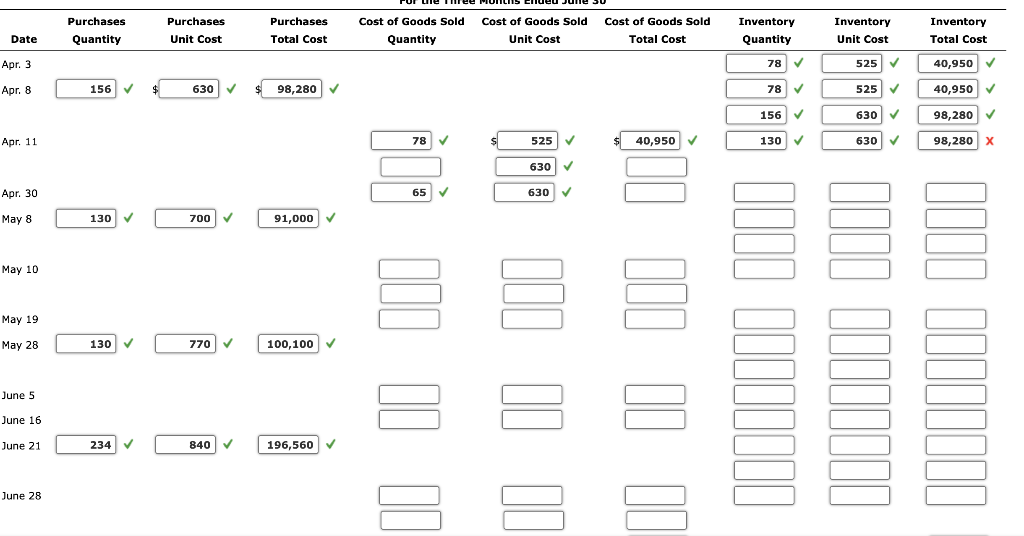
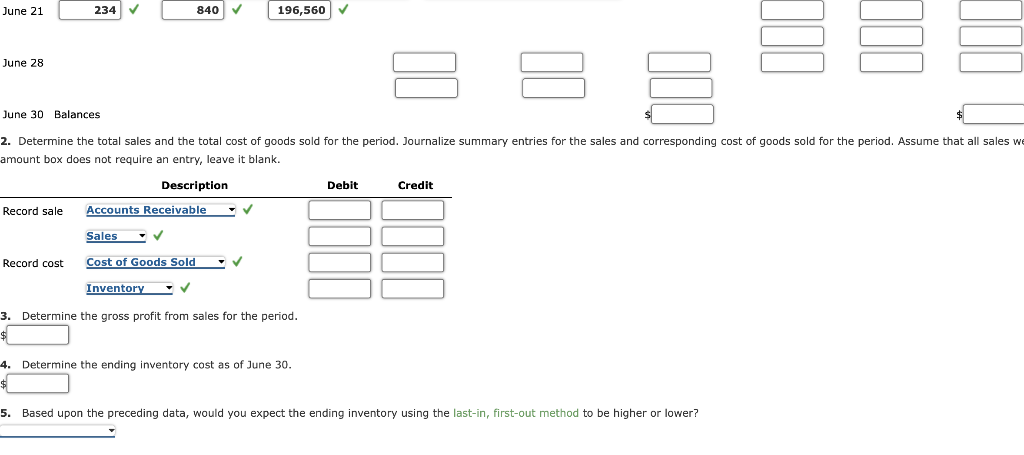
Required: different costs, enter the units with the HIGHER unit cost first in the Cost of Goods Sold Unit Cost column and LOWER unit cost first in the Inventory Unit Cost column. \begin{tabular}{crrr} \hline Date & PurchasesQuantity & PurchasesUnitCost & PurchasesTotalCost \\ \hline Apr. 3 & & & \\ Apr. 8 & 156 & $30 & $98,280 \\ \hline \end{tabular} Apr. 11 Apr. 30 $40,950 13063098,280 May 8 May 10 May 19 May 28 770100,100 June 5 June 16 June 21 196,560 June 28 amount box does not require an entry, leave it blank. 3. Determine the gross profit from sales for the period. \$ 4. Determine the ending inventory cost as of June 30 . $ 5. Based upon the preceding data, would you expect the ending inventory using the last-in, first-out method to be higher or lower
Step by Step Solution
There are 3 Steps involved in it

Get step-by-step solutions from verified subject matter experts