







Question: Required information Problem 6-2AA Periodic: Alternative cost flows LO P3 (The following information applies to the questions displayed below.] Warnerwoods Company uses a periodic inventory
![following information applies to the questions displayed below.] Warnerwoods Company uses a](https://s3.amazonaws.com/si.experts.images/answers/2024/09/66e00bcf7b5f7_11966e00bcf0e0cd.jpg)
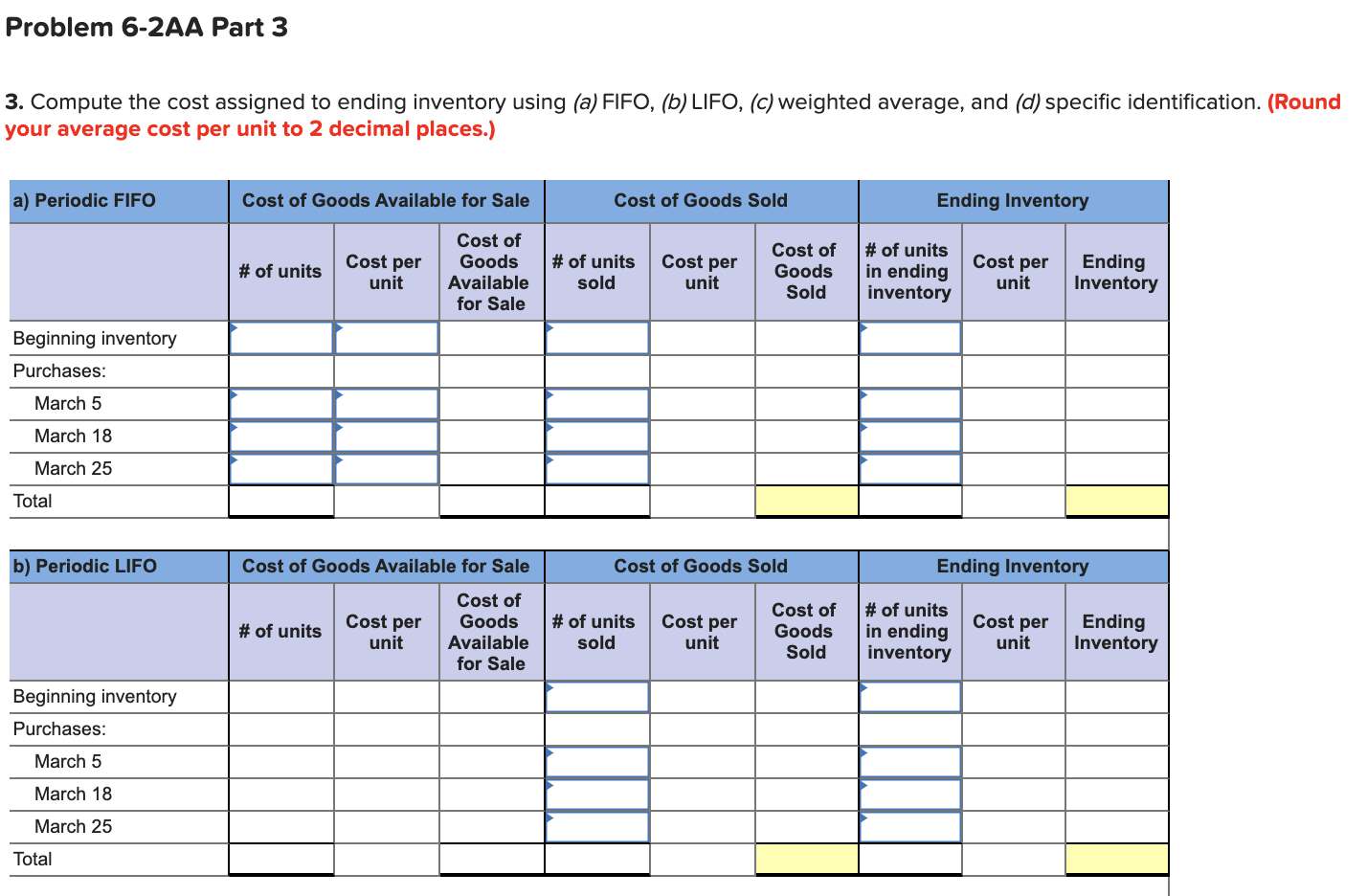
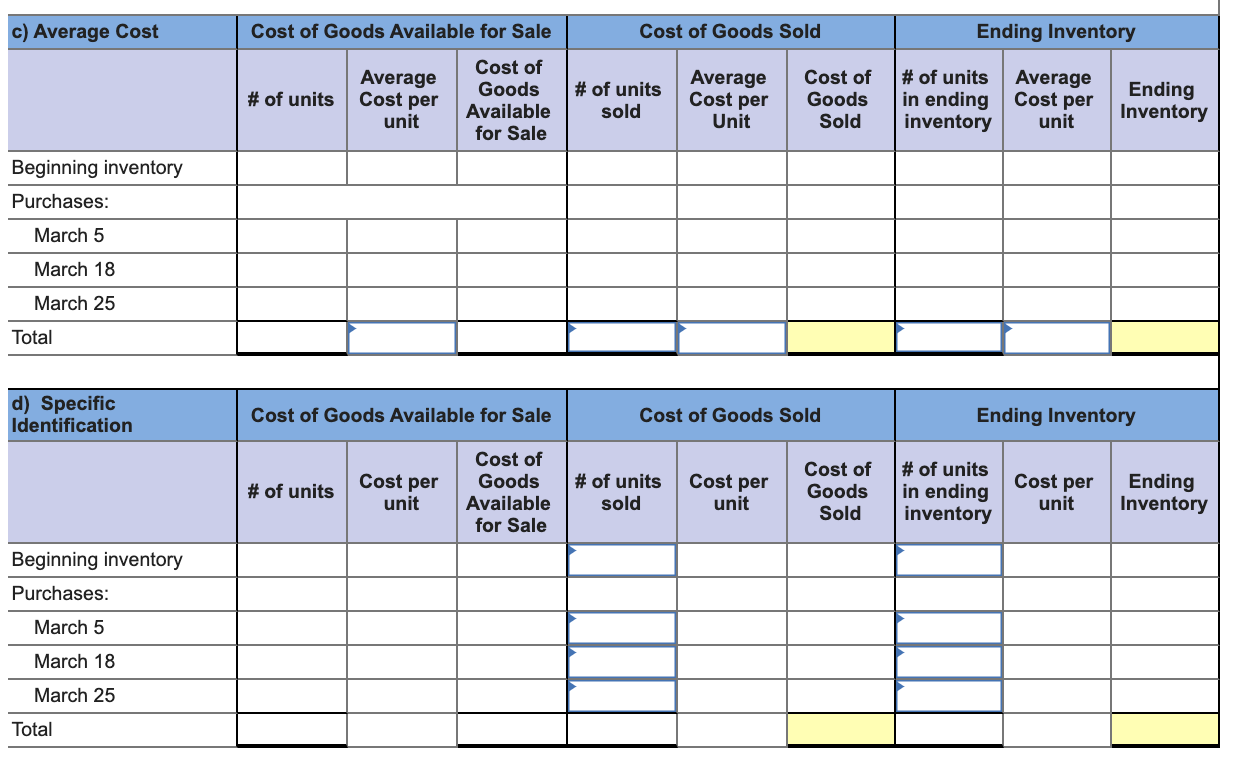
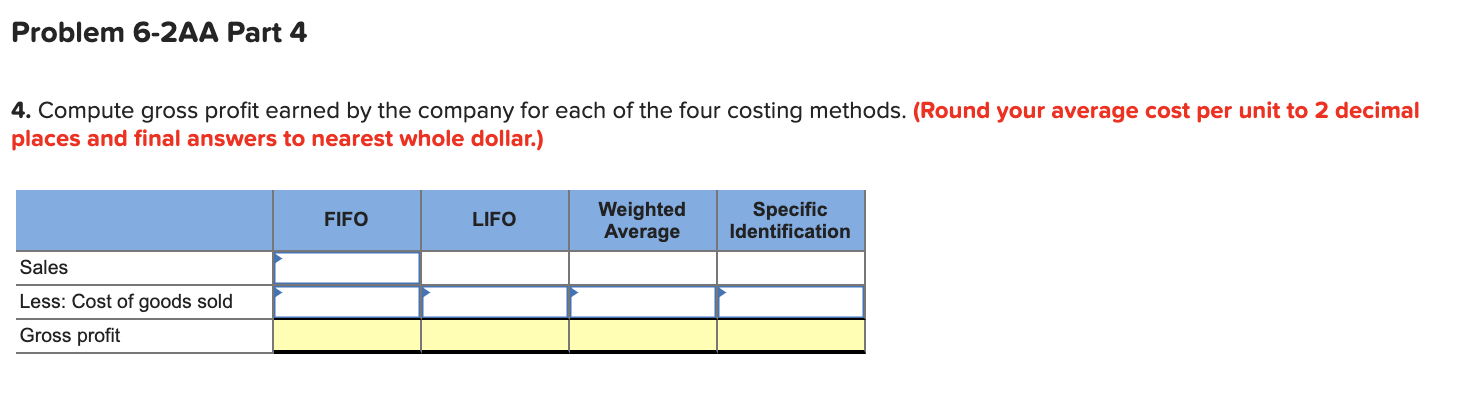
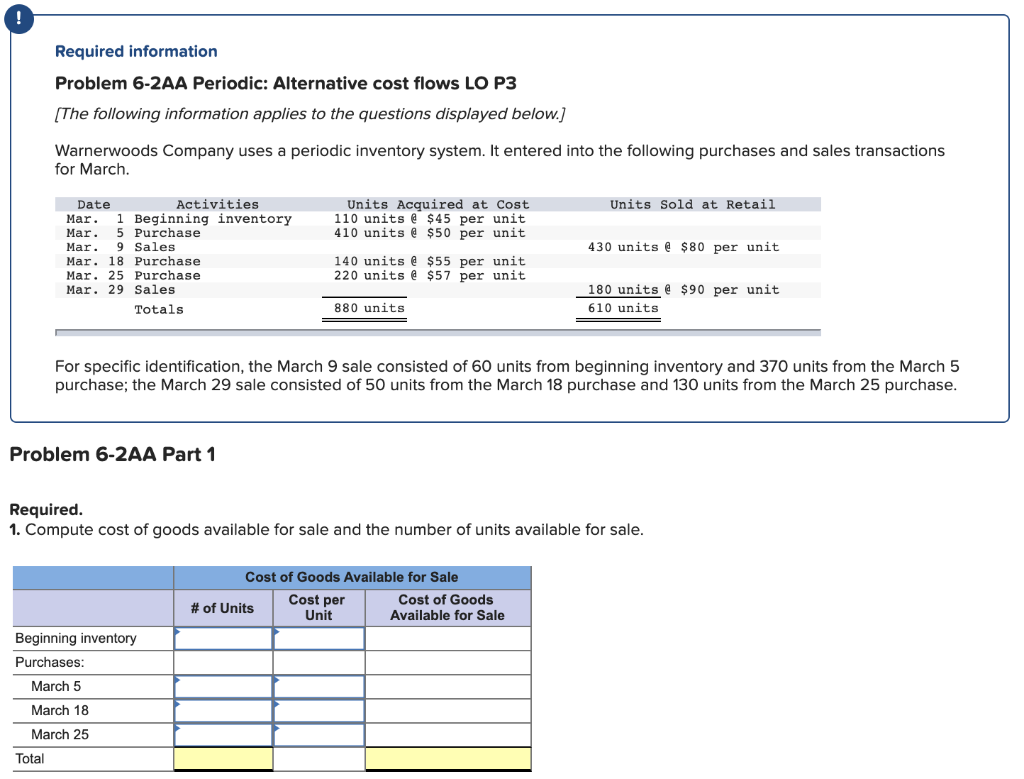
Required information Problem 6-2AA Periodic: Alternative cost flows LO P3 (The following information applies to the questions displayed below.] Warnerwoods Company uses a periodic inventory system. It entered into the following purchases and sales transactions for March. Units Sold at Retail Units Acquired at Cost 110 units @ $45 per unit 410 units @ $50 per unit 430 units @ $80 per unit Activities Mar. 1 Beginning inventory Mar. 5 Purchase Mar. 9 Sales Mar. 18 Purchase Mar. 25 Purchase Mar. 29 Sales Totals 140 units @ $55 per unit 220 units @ $57 per unit 180 units @ $90 per unit 610 units 880 units For specific identification, the March 9 sale consisted of 60 units from beginning inventory and 370 units from the March 5 purchase; the March 29 sale consisted of 50 units from the March 18 purchase and 130 units from the March 25 purchase. Problem 6-2AA Part 1 Required. 1. Compute cost of goods available for sale and the number of units available for sale. Cost of Goods Available for Sale # of Units Cost per Cost of Goods Unit Available for Sale Beginning inventory Purchases: March 5 March 18 March 25 Total Problem 6-2AA Part 2 2. Compute the number of units in ending inventory. Ending inventory units Problem 6-2AA Part 3 3. Compute the cost assigned to ending inventory using (a) FIFO, (b) LIFO, (C) weighted average, and (d) specific identification. (Round your average cost per unit to 2 decimal places.) a) Periodic FIFO Cost of Goods Available for Sale Cost of Goods Sold Ending Inventory # of units Cost per unit Cost of Goods Available for Sale # of units sold Cost per unit Cost of Goods Sold # of units in ending inventory Cost per unit Ending Inventory Beginning inventory Purchases: March 5 March 18 March 25 Total b) Periodic LIFO Cost of Goods Available for Sale Cost of Goods Sold Ending Inventory # of units Cost per unit Cost of Goods Available for Sale # of units sold Cost per unit Cost of Goods Sold # of units in ending inventory Cost per unit Ending Inventory Beginning inventory Purchases: March 5 March 18 March 25 Total c) Average Cost Cost of Goods Sold Ending Inventory Cost of Goods Available for Sale Cost of Average | Goods # of units Cost per Available unit for Sale # of units sold Average Cost per Unit Cost of Goods Sold # of units in ending inventory Average Cost per unit Ending Inventory Beginning inventory Purchases: March 5 March 18 March 25 Total d) Specific Identification Cost of Goods Available for Sale Cost of Goods Sold Ending Inventory Cost of # of units Cost per unit Cost of Goods Available for Sale # of units sold Cost per unit # of units in ending inventory Cost per unit Ending Inventory Sold Beginning inventory Purchases: March 5 March 18 March 25 Total Problem 6-2AA Part 4 4. Compute gross profit earned by the company for each of the four costing methods. (Round your average cost per unit to 2 decimal places and final answers to nearest whole dollar.) FIFO LIFO Weighted Average Specific Identification Sales Less: Cost of goods sold Gross profit
Step by Step Solution
There are 3 Steps involved in it

Get step-by-step solutions from verified subject matter experts
 Study Help