



Question: Review Case Study 5.3 in Organizational ethics a practical approach, text and take into consideration the 5 discussion probes provided at the end of the
Review Case Study 5.3 in Organizational ethics a practical approach, text and take into consideration the 5 discussion probes provided at the end of the case. Provide a well-written memo in the proper format to an airline official of your choice specifically addressing the discussion probes 4 and 5. Support the position with ethical perspectives evidence from chapter 5 of your textbook. Use a minimum of 3 citations from your test book applying these perspectives to your analysis.
NEED A MEMO with 3 citations from Organizational ethics a practical approach please
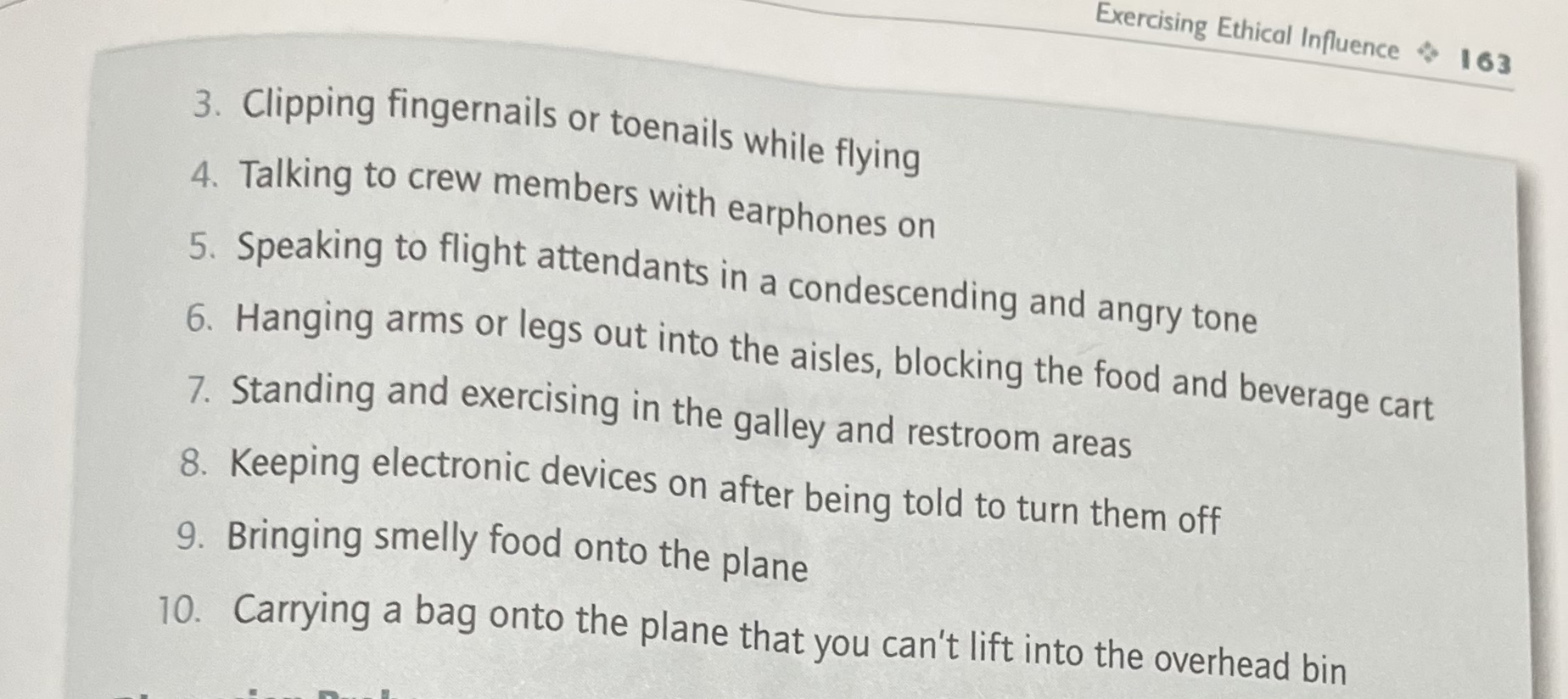
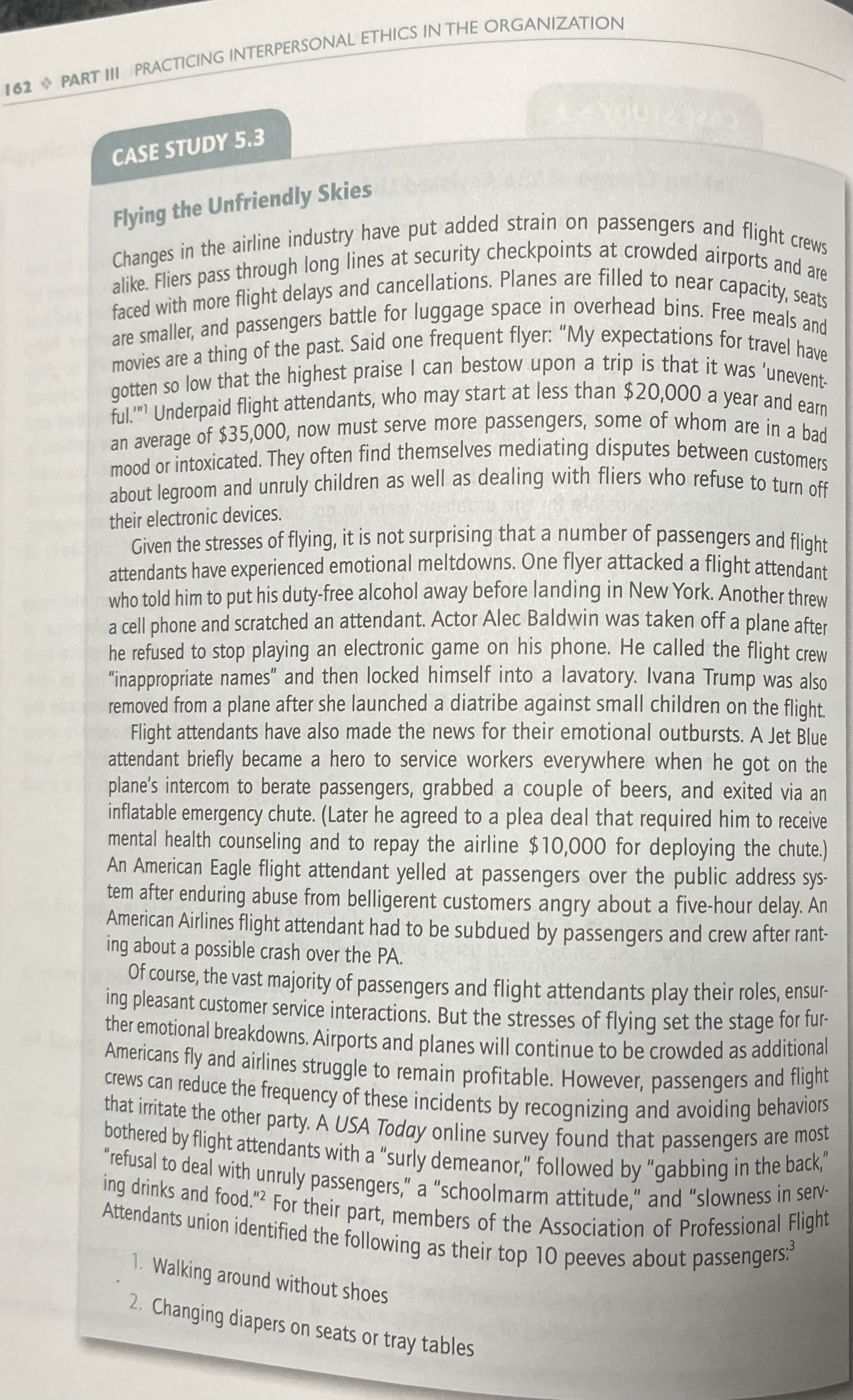
Exercising Ethical Influence @ 163 3. Clipping fingernails or toenails while flying 4. Talking to crew members with earphones on 5. Speaking to flight attendants in a condescending and angry tone 6. Hanging arms or legs out into the aisles, blocking the food and beverage cart 7. Standing and exercising in the galley and restroom areas 8. Keeping electronic devices on after being told to turn them off 9. Bringing smelly food onto the plane 10. Carrying a bag onto the plane that you can't lift into the overhead bin162 . PART III PRACTICING INTERPERSONAL ETHICS IN THE ORGANIZATION CASE STUDY 5.3 Flying the Unfriendly Skies Changes in the airline industry have put added strain on passengers and flight crews alike. Fliers pass through long lines at security checkpoints at crowded airports and are faced with more flight delays and cancellations. Planes are filled to near capacity, seats are smaller, and passengers battle for luggage space in overhead bins. Free meals and movies are a thing of the past. Said one frequent flyer: "My expectations for travel have gotten so low that the highest praise I can bestow upon a trip is that it was 'unevent- ful." Underpaid flight attendants, who may start at less than $20,000 a year and earn an average of $35,000, now must serve more passengers, some of whom are in a bad mood or intoxicated. They often find themselves mediating disputes between customers about legroom and unruly children as well as dealing with fliers who refuse to turn off their electronic devices. Given the stresses of flying, it is not surprising that a number of passengers and flight attendants have experienced emotional meltdowns. One flyer attacked a flight attendant who told him to put his duty-free alcohol away before landing in New York. Another threw a cell phone and scratched an attendant. Actor Alec Baldwin was taken off a plane after he refused to stop playing an electronic game on his phone. He called the flight crew "inappropriate names" and then locked himself into a lavatory. Ivana Trump was also removed from a plane after she launched a diatribe against small children on the flight. Flight attendants have also made the news for their emotional outbursts. A Jet Blue attendant briefly became a hero to service workers everywhere when he got on the plane's intercom to berate passengers, grabbed a couple of beers, and exited via an inflatable emergency chute. (Later he agreed to a plea deal that required him to receive mental health counseling and to repay the airline $ 10,000 for deploying the chute.) An American Eagle flight attendant yelled at passengers over the public address sys- tem after enduring abuse from belligerent customers angry about a five-hour delay. An American Airlines flight attendant had to be subdued by passengers and crew after rant- ing about a possible crash over the PA. Of course, the vast majority of passengers and flight attendants play their roles, ensur- ing pleasant customer service interactions. But the stresses of flying set the stage for fur- ther emotional breakdowns. Airports and planes will continue to be crowded as additional Americans fly and airlines struggle to remain profitable. However, passengers and flight crews can reduce the frequency of these incidents by recognizing and avoiding behaviors that irritate the other party. A USA Today online survey found that passengers are most bothered by flight attendants with a "surly demeanor," followed by "gabbing in the back," "refusal to deal with unruly passengers," a "schoolmarm attitude," and "slowness in serv- ing drinks and food." For their part, members of the Association of Professional Flight Attendants union identified the following as their top 10 peeves about passengers:" 1. Walking around without shoes 2. Changing diapers on seats or tray tables
Step by Step Solution
There are 3 Steps involved in it

Get step-by-step solutions from verified subject matter experts