







Question: S PROGRAM DESCRIPTION Mechanical Energy (ME) is the sum total of potential and kinetic energy, where potential energy (PE) is due to its position while
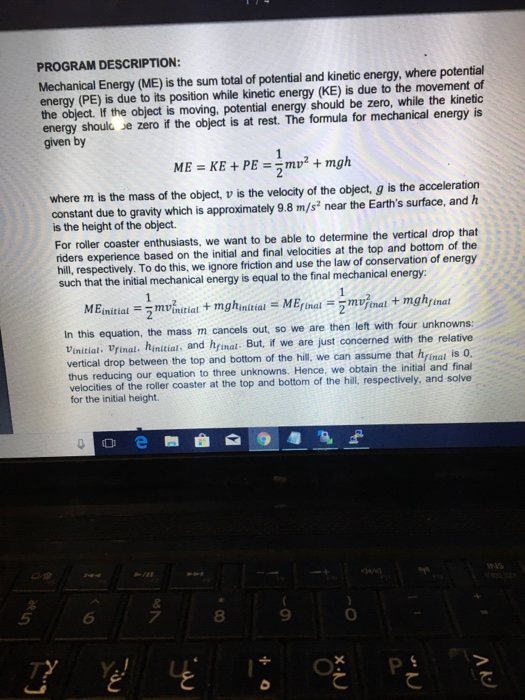
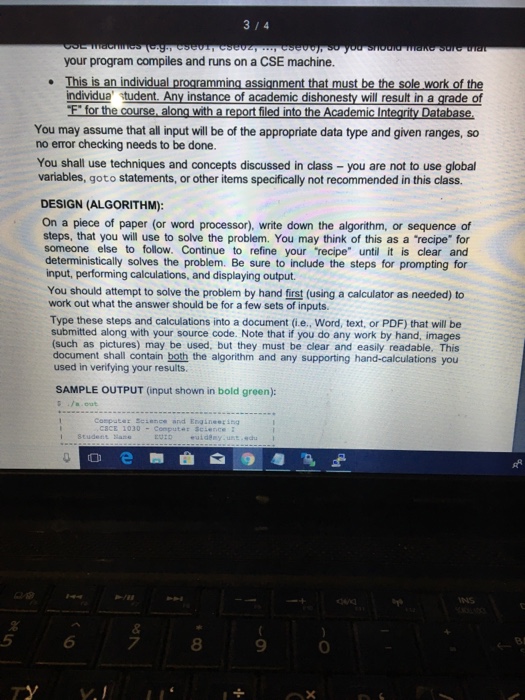
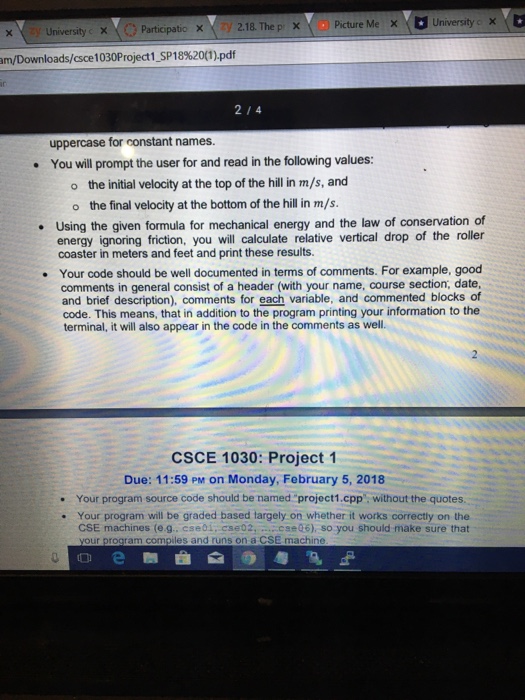
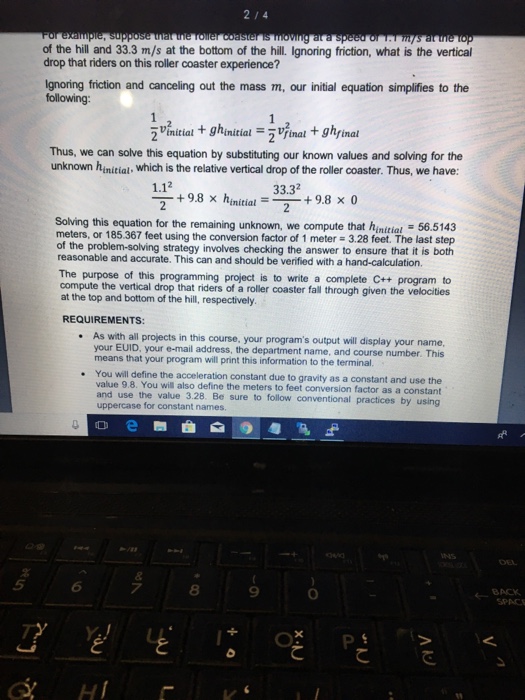
PROGRAM DESCRIPTION Mechanical Energy (ME) is the sum total of potential and kinetic energy, where potential energy (PE) is due to its position while kinetic energy (KE) is due to the movement of the object. If the object is moving, potential energy should be zero, while the kinetic energy shoulc e zero if the object is at rest. The formula for mechanical energy is given by ME-KE + PE = mv2 + mgh where m is the mass of the object, v is the velocity of the object, g is the acceleration constant due to gravity which is approximately 9.8 m/s2 near the Earth's surface, and h is the height of the object For roller coaster enthusiasts, we want to be able to determine the vertical drop that riders experience based on the initial and final velocities at the top and bottom of the hill, respectively. To do this, we ignore friction and use the law of conservation of energy such that the initial mechanical energy is equal to the final mechanical energy In this equation, the mass m cancels out, so we are then left with four unknowns: Vinitial Prinal, hinitial, and hrinal But, if we are just concerned with the relative vertical drop between the top and bottom of the hill we can assume that hrinal is o thus reducing our equation to three unknowns. Hence, we obtain the initial and final velocities of the roller coaster at the top and bottom of the hill, respectively, and solve for the initial height. 6 7 8 9 0
Step by Step Solution
There are 3 Steps involved in it

Get step-by-step solutions from verified subject matter experts
 Study Help