Question: Satisfy basic needs=Manager subscribing to this theory understand that they can only motivate employees once basic needs have been satisfied. Likelihood of Attainment= According to
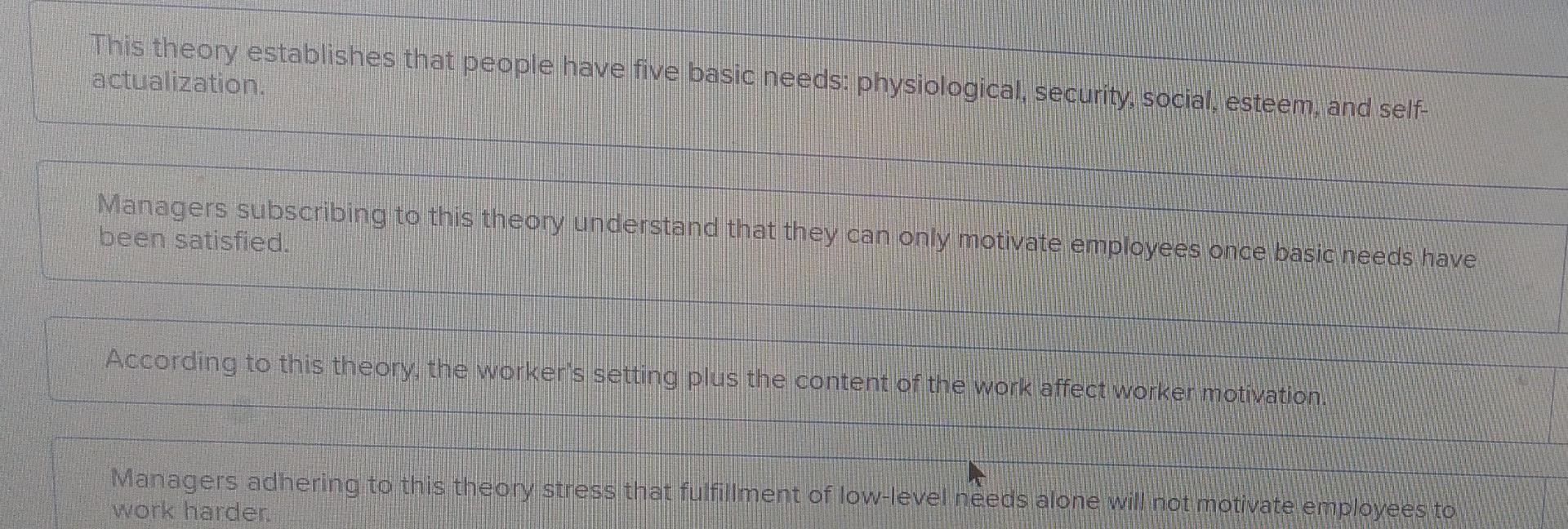
Satisfy basic needs=Manager subscribing to this theory understand that they can only motivate employees once basic needs have been satisfied.
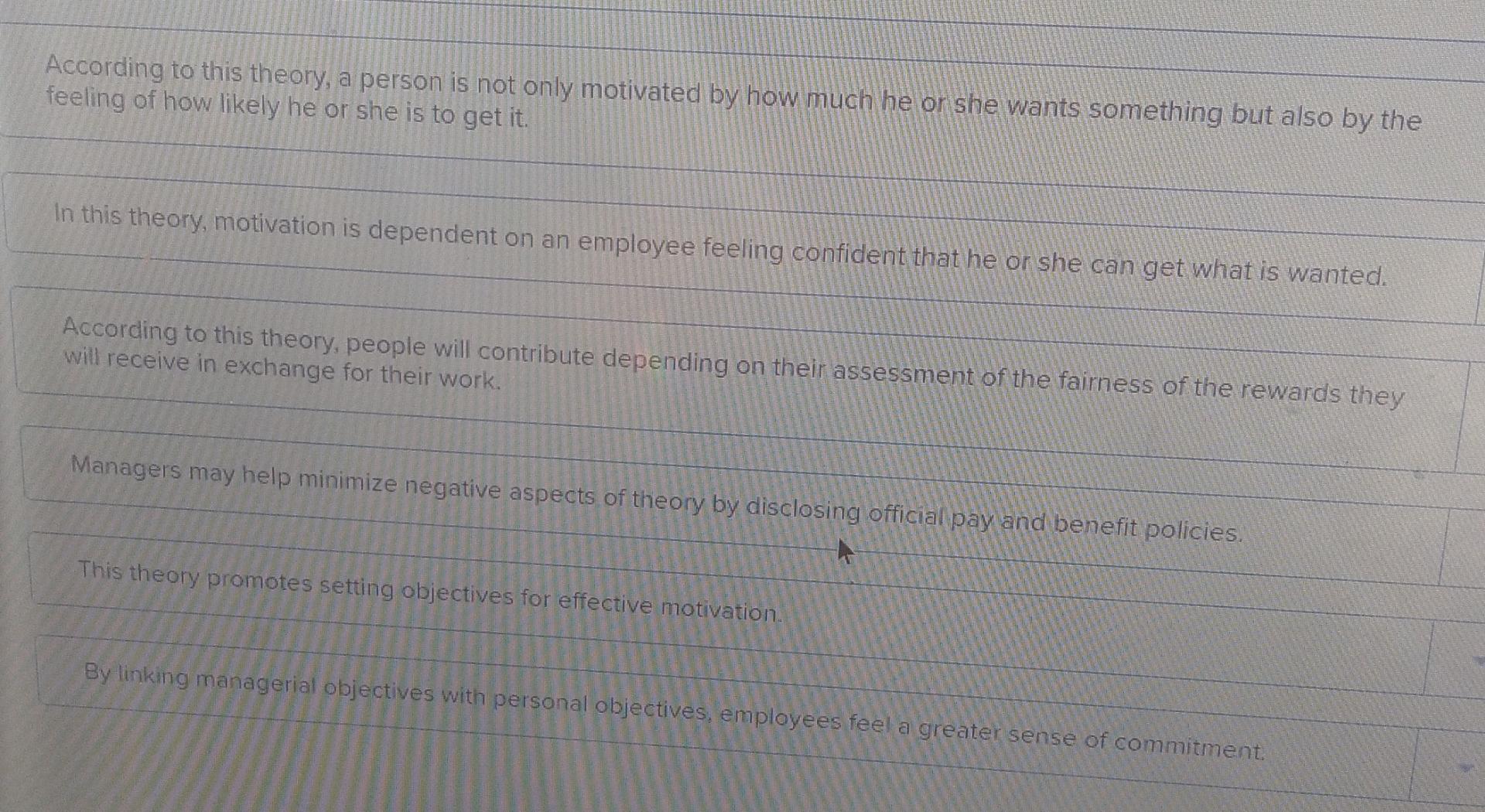
Likelihood of Attainment= According to this theory, a person is not only motivated by how much he or she wants something but also by the feeling of how likely he she is to get it.
Pay and benefit disclosure= managers may help minimize negative aspect of theory by disclosing official pay and benefit policies.
fairness of rewards=according to this theory people will contribute depending on the assessment of the fairness of the rewards they will receive in exchange for the work.
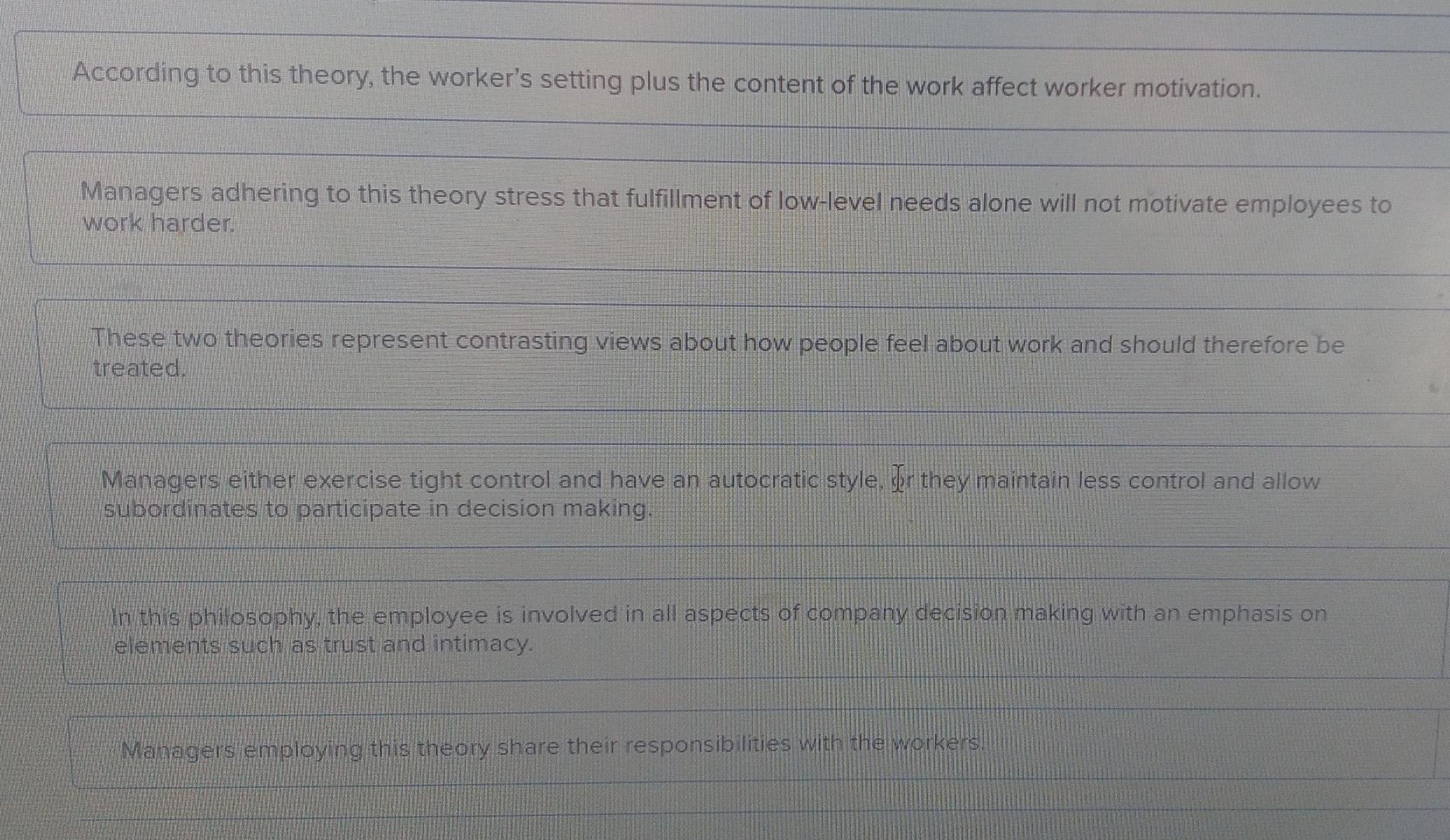
auto-/democratic style=managers either exercise tight control and have an autocratic style or they maintain less control and allow subordinates to participate in decision making.
provide attainable goals=in this theory motivation is dependent on an employee feeling confident that he or she can get what is wanted.
set personal goals=by linking managerial objectives with personal objectives employees feel a greater sense of commitment.
five basic needs this theory established that people have five basic needs physiological,security,social, esteem,and self-actualization.
Setting+content= according to this theory the workers setting bless the contents of the word affect worker motivation.
share responsibilities=manager employee distillery share the responsibilities with the workers
management by objective =this theory promotes setting objectives for effective motivation.
employee participation =in this philosophy the employees involved in all aspects of company decision making with an emphasis on element such as stress and intimacy.

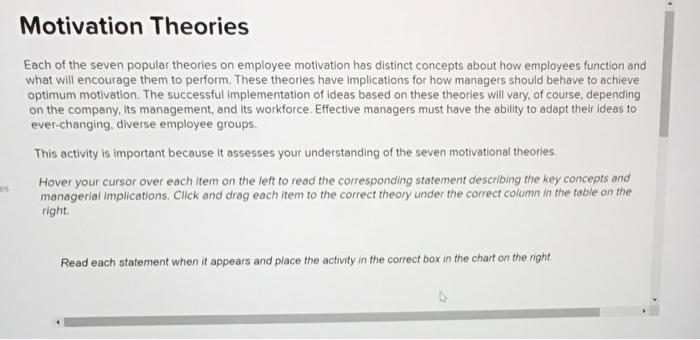
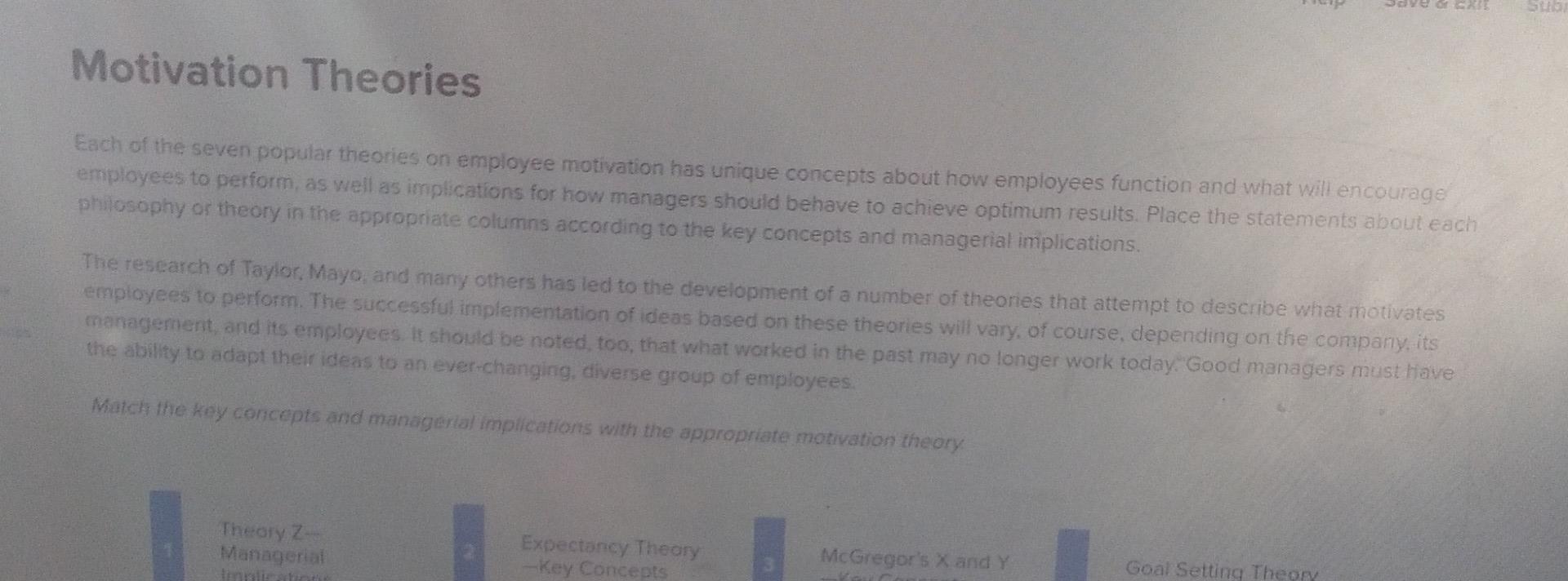
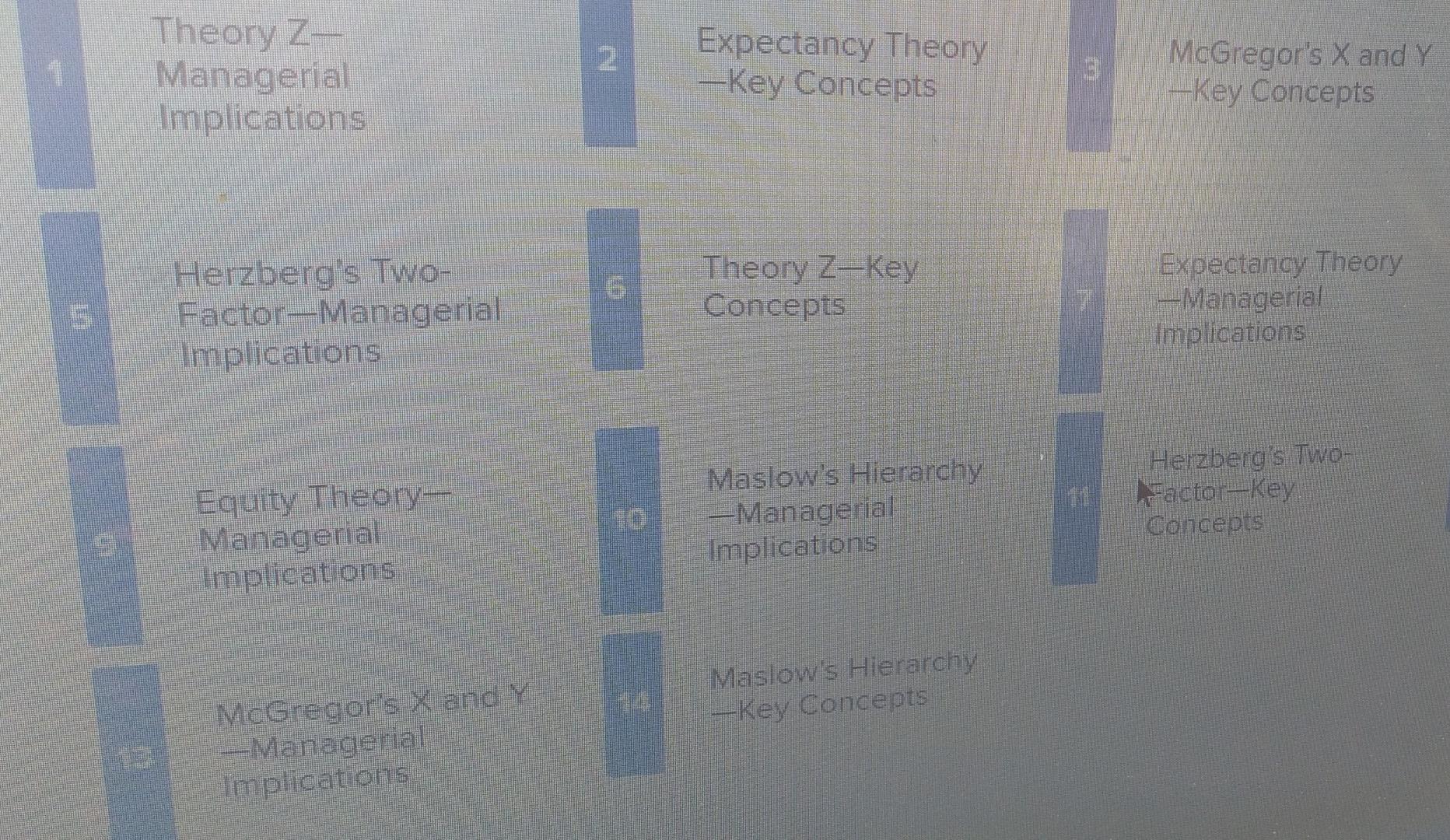
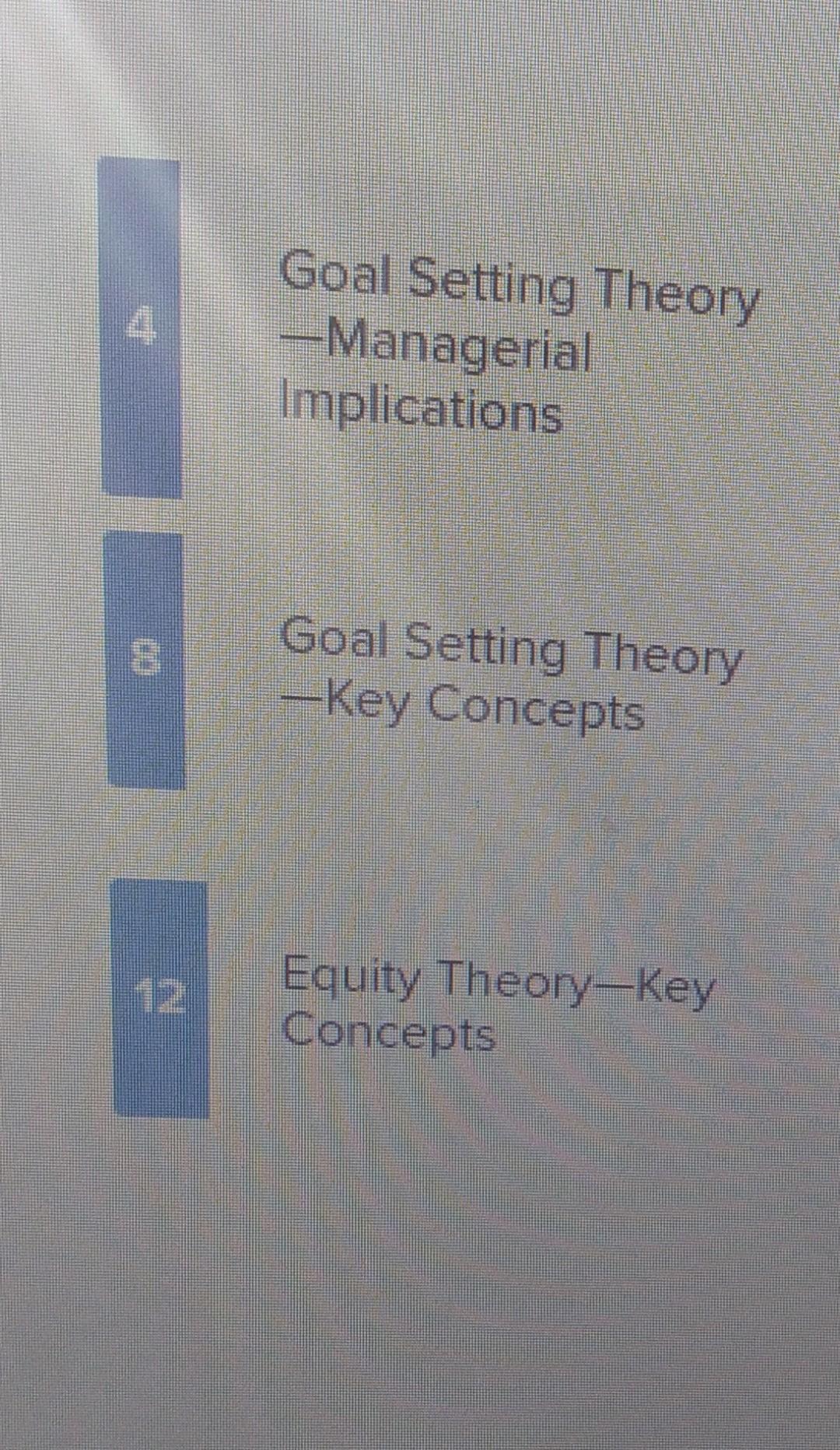
ve Motivation Theories Each of the seven popular theories on employee motivation has unique concepts about how employees function and what will encourage employees to perform as well as implications for how managers should behave to achieve optimum results. Place the statements about each philosophy or theory in the appropriate columns according to the key concepts and managerial implications. The research of Taylor, Mayo, and many others has led to the development of a number of theories that attempt to describe what motivates employees to perform. The successful implementation of ideas based on these theories will vary, of course, depending on the company. its management and its employees. It should be noted, too, that what worked in the past may no longer work today. Good managers must have the ability to adapt their ideas to an ever-changing, diverse group of employees. Match the key concepts and managerial implications with the appropriate motivation theory Theory z Managerial Expectancy Theory -Key Concepts McGregor's X and Y Goal Setting Theory Theory Z- Managerial Implications Expectancy Theory -Key Concepts 3 McGregor's X and Y Key Concepts Herzberg's Two- Factor-Managerial Implications Theory Z-key Concepts Expectancy Theory -Managerial Implications Herzberg's Two- actorkey Concepts C Maslow's Hierarchy -Managerial Implications Equity Theory Managerial Implications Maslow's Hierarchy -Key Concepts McGregoris X and Y - Managerial implications Goal Setting Theory -Managerial Implications Goal Setting Theory -Key Concepts Equity Theory-Key Concepts This theory establishes that people have five basic needs: physiologica, security, social, esteem, and self- actualization. Managers subscribing to this theory understand that they can only motivate employees once basic needs have been satisfied According to this theory, the worker's setting plus the content of the work affect worker motivation. Managers adhering to this theory stress that fulfillment of low-level needs alone will not motivate employees to work harder According to this theory, the worker's setting plus the content of the work affect worker motivation. Managers adhering to this theory stress that fulfillment of low-level needs alone will not motivate employees to work harder These two theories represent contrasting views about how people feel about work and should therefore be treated. Managers either exercise tight control and have an autocratic style, or they maintain less control and allow subordinates to participate in decision making. In this philosophy, the employee is involved in all aspects of company decision making with an emphasis on elements such as trust and intimacy. Managers employing this theory share their responsibilities with the workers, According to this theory, a person is not only motivated by how much he or she wants something but also by the feeling of how likely he or she is to get it. In this theory, motivation is dependent on an employee feeling confident that he or she can get what is wanted. According to this theory, people will contribute depending on their assessment of the fairness of the rewards they will receive in exchange for their work. Managers may help minimize negative aspects of theory by disclosing official pay and benefit policies. This theory promotes setting objectives for effective motivation. By linking managerial objectives with personal objectives, employees feel a greater sense of commitment. Satisty Basic Needs Likelihood of Allarment Key Concepts Managerial Implications Pay and Benet Disclosure Fairness of Rewards Maslow's Hierarchy Herzberg's Two-Factor Auto-/Democratic Style Provide Atainable Goals Set Personal Goals Five Basic Needs Setting + Content Share Responsibilities McGregor's X and Y Theory z Expectancy Theory Equity Theory Goal Setting Theory Management by Objectives Employee Participation High-level Needs Traditional vs. Humanistic to search 19 O 699F 1145 AM 12/1/2021 C Motivation Theories Each of the seven popular theories on employee motivation has distinct concepts about how employees function and what will encourage them to perform. These theories have implications for how managers should behave to achieve optimum motivation. The successful implementation of ideas based on these theories will vary, of course, depending on the company, its management, and its workforce. Effective managers must have the ability to adapt their ideas to ever-changing, diverse employee groups This activity is important because it assesses your understanding of the seven motivational theories, Hover your cursor over each item on the left to read the corresponding statement describing the key concepts and managerial implications. Click and drag each item to the correct theory under the correct column in the table on the right Read each statement when it appears and place the activity in the correct box in the chart on the night









 Study Help