







Question: SE 350: worksheet #5-Singleton Pattern class Singleton ( 0 What is a possible solution to make code in the left safe in multi private static
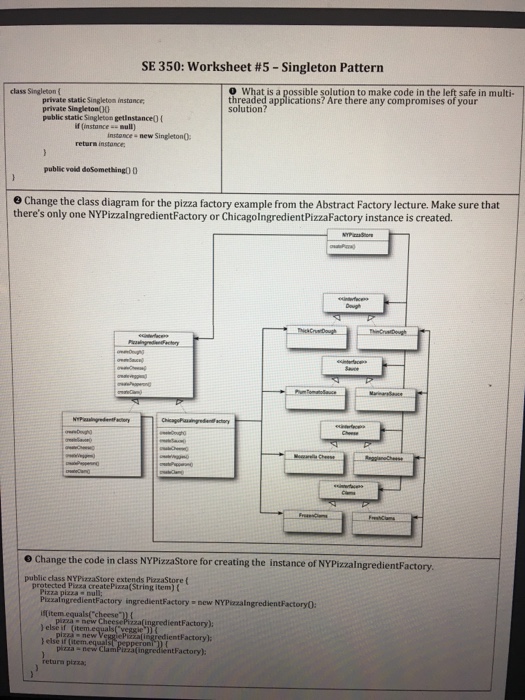
SE 350: worksheet #5-Singleton Pattern class Singleton ( 0 What is a possible solution to make code in the left safe in multi private static Singleton instance private Singleton00 tions? Are there any compromises of your solution? public static Singleton getinstance) f (instance -mull) instance- new Singleton returm instance public voild doSomething0 0 e Change the class diagram for the pizza factory example from the Abstract Factory lecture. Make sure that there's only one NYPizzalngredientFactory or ChicagolngredientPizzaFactory instance is created. e Change the code in class NYPizzaStore for creating the instance of NYPizzalngredientFactory public class NYPizzaStore extends PizzaStore ( protected Pizza createPizza(String item) Pizza pizza null PizzalngredientFactory ingredientFactory-new NYPazzalngredientFactory0 if(item dientFactory); edientFactory) l else if (item.equa ingredientFactory) etura pizza; SE 350: worksheet #5-Singleton Pattern class Singleton ( 0 What is a possible solution to make code in the left safe in multi private static Singleton instance private Singleton00 tions? Are there any compromises of your solution? public static Singleton getinstance) f (instance -mull) instance- new Singleton returm instance public voild doSomething0 0 e Change the class diagram for the pizza factory example from the Abstract Factory lecture. Make sure that there's only one NYPizzalngredientFactory or ChicagolngredientPizzaFactory instance is created. e Change the code in class NYPizzaStore for creating the instance of NYPizzalngredientFactory public class NYPizzaStore extends PizzaStore ( protected Pizza createPizza(String item) Pizza pizza null PizzalngredientFactory ingredientFactory-new NYPazzalngredientFactory0 if(item dientFactory); edientFactory) l else if (item.equa ingredientFactory) etura pizza
Step by Step Solution
There are 3 Steps involved in it

Get step-by-step solutions from verified subject matter experts
 Study Help