Question: Section A: Question 1, Compulsory The International Computing Corporation (ICC) is incorporated in the USA and is a major worldwide manufacturer of main frame processors,
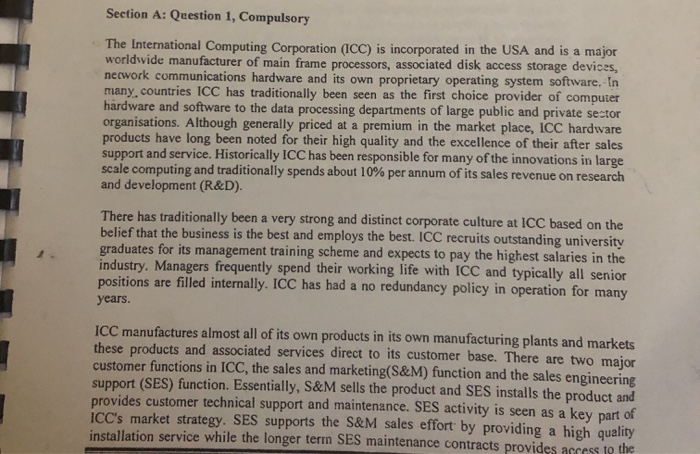
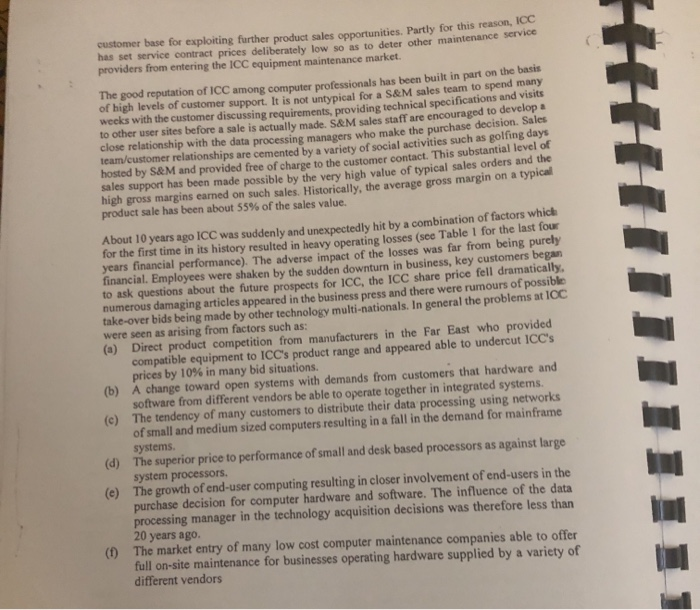
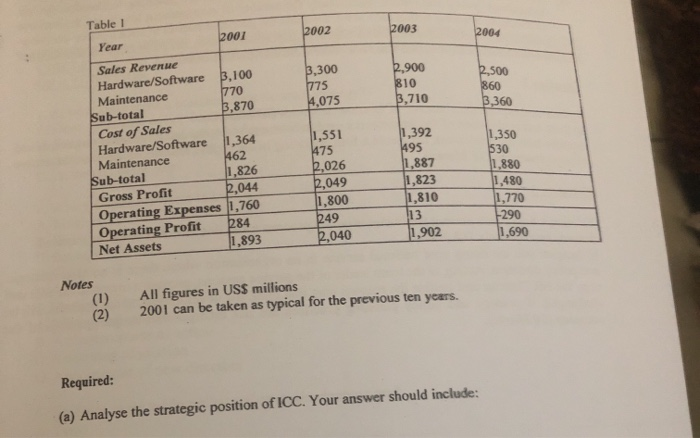
Section A: Question 1, Compulsory The International Computing Corporation (ICC) is incorporated in the USA and is a major worldwide manufacturer of main frame processors, associated disk access storage devices, nerwork communications hardware and its own proprietary operating system software. In many countries ICC has traditionally been seen as the first choice provider of computer hardware and software to the data processing departments of large public and private sector organisations. Although generally priced at a premium in the market place, ICC hardware products have long been noted for their high quality and the excellence of their after sales support and service. Historically ICC has been responsible for many of the innovations in large scale computing and traditionally spends about 10% per annum of its sales revenue on research and development (R&D). There has traditionally been a very strong and distinct corporate culture at ICC based on the belief that the business is the best and employs the best. ICC recruits outstanding university graduates for its management training scheme and expects to pay the highest salaries in the industry. Managers frequently spend their working life with ICC and typically all senior positions are filled internally. ICC has had a no redundancy policy in operation for many years. ICC manufactures almost all of its own products in its own manufacturing plants and markets these products and associated services direct to its customer base. There are two major customer functions in ICC, the sales and marketing(S&M) function and the sales engineering support (SES) function. Essentially, S&M sells the product and SES installs the product and provides customer technical support and maintenance. SES activity is seen as a key part of ICC's market strategy. SES supports the S&M sales effort by providing a high quality installation service while the longer terr SES maintenance contracts provides access to the HHH customer base for exploiting further product sales opportunities. Partly for this reason, ICC has set service contract prices deliberately low so as to deter other maintenance service providers from entering the ICC equipment maintenance market. The good reputation of ICC among computer professionals has been built in part on the basis of high levels of customer support. It is not untypical for a S&M sales team to spend many weeks with the customer discussing requirements, providing technical specifications and visits to other user sites before a sale is actually made. S&M sales staff are encouraged to develop a close relationship with the data processing managers who make the purchase decision. Sales team/customer relationships are cemented by a variety of social activities such as golfing days hosted by S&M and provided free of charge to the customer contact. This substantial level of sales support has been made possible by the very high value of typical sales orders and the high gross margins earned on such sales. Historically, the average gross margin on a typical product sale has been about 55% of the sales value. About 10 years ago ICC was suddenly and unexpectedly hit by a combination of factors which for the first time in its history resulted in heavy operating losses (see Table 1 for the last four years financial performance). The adverse impact of the losses was far from being purely financial. Employees were shaken by the sudden downturn in business, key customers began to ask questions about the future prospects for ICC, the ICC share price fell dramatically, numerous damaging articles appeared in the business press and there were rumours of possible take-over bids being made by other technology multi-nationals. In general the problems at ICC were seen as arising from factors such as: (a) Direct product competition from manufacturers in the Far East who provided compatible equipment to ICC's product range and appeared able to undercut ICC's prices by 10% in many bid situations. (b) A change toward open systems with demands from customers that hardware and software from different vendors be able to operate together in integrated systems. (c) The tendency of many customers to distribute their data processing using networks of small and medium sized computers resulting in a fall in the demand for mainframe systems (d) The superior price to performance of small and desk based processors as against large system processors (e) The growth of end-user computing resulting in closer involvement of end-users in the purchase decision for computer hardware and software. The influence of the data processing manager in the technology acquisition decisions was therefore less than 20 years ago (1) The market entry of many low cost computer maintenance companies able to offer full on-site maintenance for businesses operating hardware supplied by a variety of different vendors Table 1 2001 2002 2003 2004 Year 3,300 775 4,075 1.900 810 3,710 2.500 860 3,360 Sales Revenue Hardware/Software 3,100 Maintenance 770 Sub-total 3,870 Cost of Sales Hardware/Software 1,364 Maintenance 462 Sub-total 1,826 Gross Profit Operating Expenses 1,760 Operating Profit 284 Net Assets 1,893 2,044 1,551 475 2,026 2,049 1,800 149 2,040 1,392 495 11.887 1,823 1,810 13 11,902 1,350 $30 1,880 1.480 1,770 290 1,690 Notes (1) (2) All figures in USS millions 2001 can be taken as typical for the previous ten years. Required: (a) Analyse the strategic position of ICC. Your answer should include: (6) Driven by the urgent need to reduce costs, ICC management are planning to abandon the 'no redundancy policy and reduce significantly the number of management levels and the number of managers working within each level. Evaluate the potential impact of such a policy decision-F paying particular attention to the effect on the prevailing culture, the role of the middle manager and the implications for management control information (8 Marks). Section A: Question 1, Compulsory The International Computing Corporation (ICC) is incorporated in the USA and is a major worldwide manufacturer of main frame processors, associated disk access storage devices, nerwork communications hardware and its own proprietary operating system software. In many countries ICC has traditionally been seen as the first choice provider of computer hardware and software to the data processing departments of large public and private sector organisations. Although generally priced at a premium in the market place, ICC hardware products have long been noted for their high quality and the excellence of their after sales support and service. Historically ICC has been responsible for many of the innovations in large scale computing and traditionally spends about 10% per annum of its sales revenue on research and development (R&D). There has traditionally been a very strong and distinct corporate culture at ICC based on the belief that the business is the best and employs the best. ICC recruits outstanding university graduates for its management training scheme and expects to pay the highest salaries in the industry. Managers frequently spend their working life with ICC and typically all senior positions are filled internally. ICC has had a no redundancy policy in operation for many years. ICC manufactures almost all of its own products in its own manufacturing plants and markets these products and associated services direct to its customer base. There are two major customer functions in ICC, the sales and marketing(S&M) function and the sales engineering support (SES) function. Essentially, S&M sells the product and SES installs the product and provides customer technical support and maintenance. SES activity is seen as a key part of ICC's market strategy. SES supports the S&M sales effort by providing a high quality installation service while the longer terr SES maintenance contracts provides access to the HHH customer base for exploiting further product sales opportunities. Partly for this reason, ICC has set service contract prices deliberately low so as to deter other maintenance service providers from entering the ICC equipment maintenance market. The good reputation of ICC among computer professionals has been built in part on the basis of high levels of customer support. It is not untypical for a S&M sales team to spend many weeks with the customer discussing requirements, providing technical specifications and visits to other user sites before a sale is actually made. S&M sales staff are encouraged to develop a close relationship with the data processing managers who make the purchase decision. Sales team/customer relationships are cemented by a variety of social activities such as golfing days hosted by S&M and provided free of charge to the customer contact. This substantial level of sales support has been made possible by the very high value of typical sales orders and the high gross margins earned on such sales. Historically, the average gross margin on a typical product sale has been about 55% of the sales value. About 10 years ago ICC was suddenly and unexpectedly hit by a combination of factors which for the first time in its history resulted in heavy operating losses (see Table 1 for the last four years financial performance). The adverse impact of the losses was far from being purely financial. Employees were shaken by the sudden downturn in business, key customers began to ask questions about the future prospects for ICC, the ICC share price fell dramatically, numerous damaging articles appeared in the business press and there were rumours of possible take-over bids being made by other technology multi-nationals. In general the problems at ICC were seen as arising from factors such as: (a) Direct product competition from manufacturers in the Far East who provided compatible equipment to ICC's product range and appeared able to undercut ICC's prices by 10% in many bid situations. (b) A change toward open systems with demands from customers that hardware and software from different vendors be able to operate together in integrated systems. (c) The tendency of many customers to distribute their data processing using networks of small and medium sized computers resulting in a fall in the demand for mainframe systems (d) The superior price to performance of small and desk based processors as against large system processors (e) The growth of end-user computing resulting in closer involvement of end-users in the purchase decision for computer hardware and software. The influence of the data processing manager in the technology acquisition decisions was therefore less than 20 years ago (1) The market entry of many low cost computer maintenance companies able to offer full on-site maintenance for businesses operating hardware supplied by a variety of different vendors Table 1 2001 2002 2003 2004 Year 3,300 775 4,075 1.900 810 3,710 2.500 860 3,360 Sales Revenue Hardware/Software 3,100 Maintenance 770 Sub-total 3,870 Cost of Sales Hardware/Software 1,364 Maintenance 462 Sub-total 1,826 Gross Profit Operating Expenses 1,760 Operating Profit 284 Net Assets 1,893 2,044 1,551 475 2,026 2,049 1,800 149 2,040 1,392 495 11.887 1,823 1,810 13 11,902 1,350 $30 1,880 1.480 1,770 290 1,690 Notes (1) (2) All figures in USS millions 2001 can be taken as typical for the previous ten years. Required: (a) Analyse the strategic position of ICC. Your answer should include: (6) Driven by the urgent need to reduce costs, ICC management are planning to abandon the 'no redundancy policy and reduce significantly the number of management levels and the number of managers working within each level. Evaluate the potential impact of such a policy decision-F paying particular attention to the effect on the prevailing culture, the role of the middle manager and the implications for management control information (8 Marks)










 Study Help