Question: SECTION A: The Product Life Cycle (TOTAL 20 MARKS] Answer ALL questions. For each paragraph below there are 5 blanks and 10 word terms to
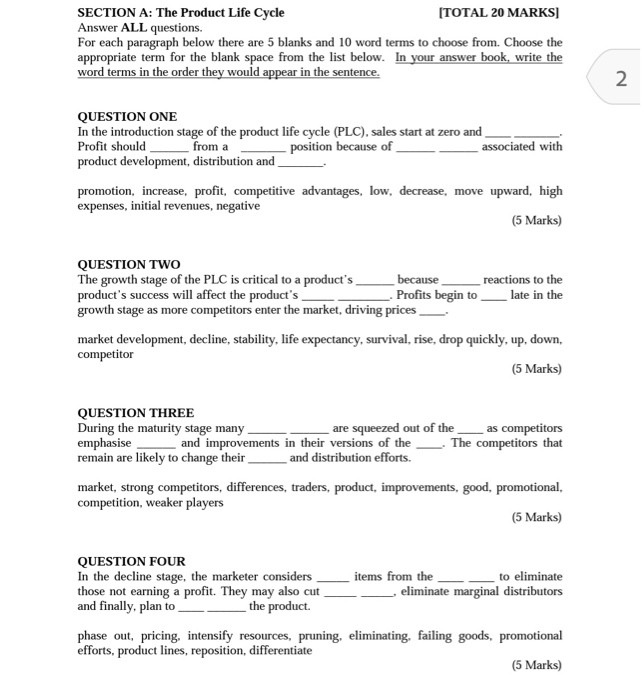
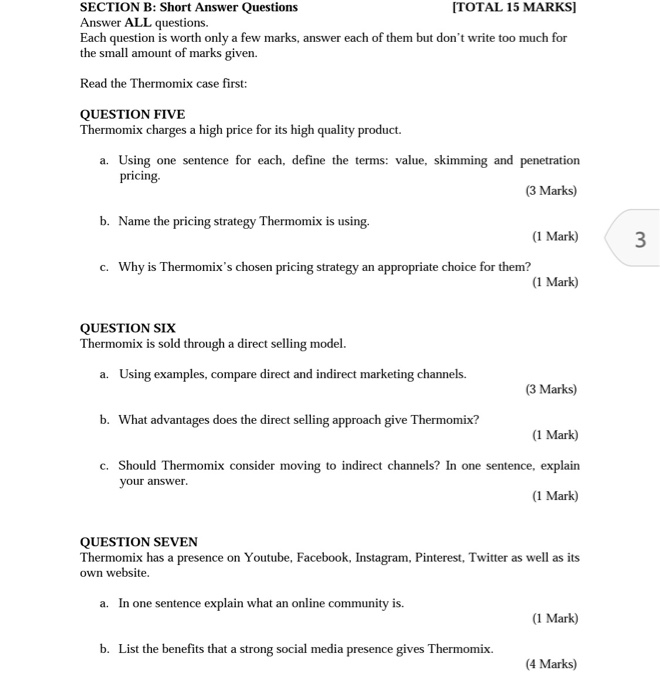
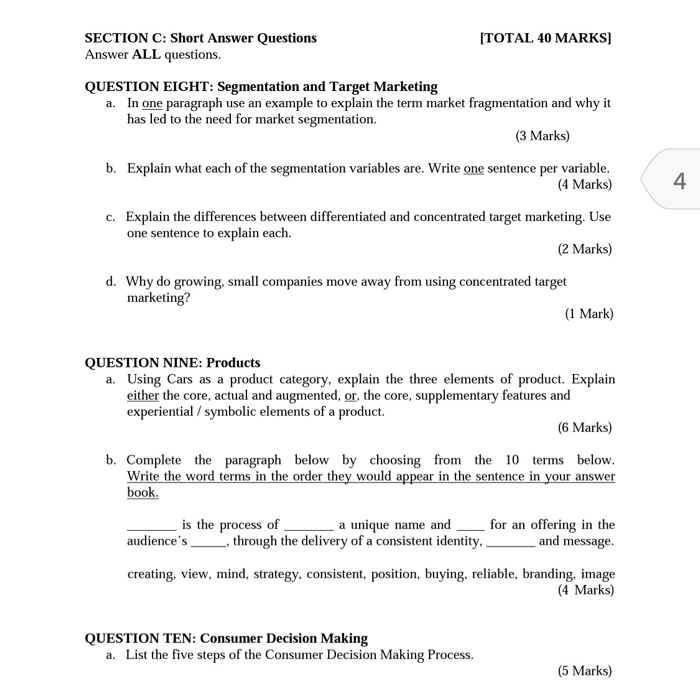
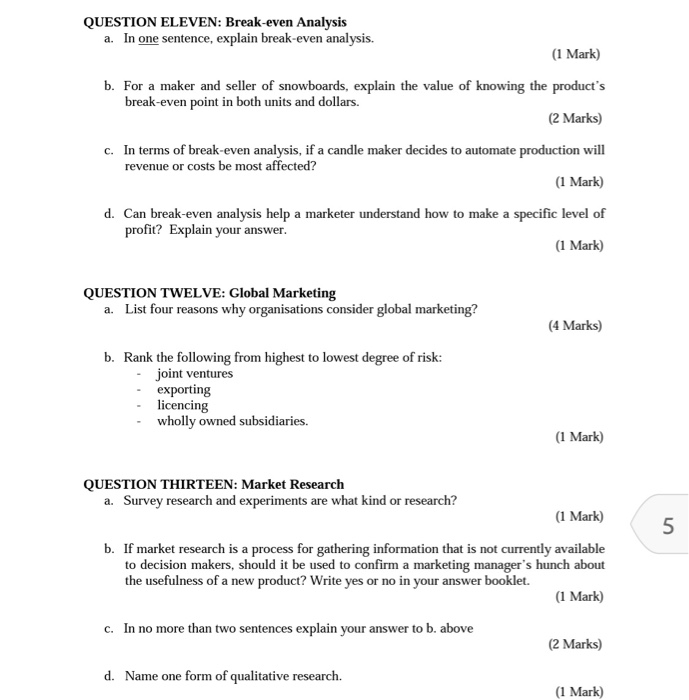
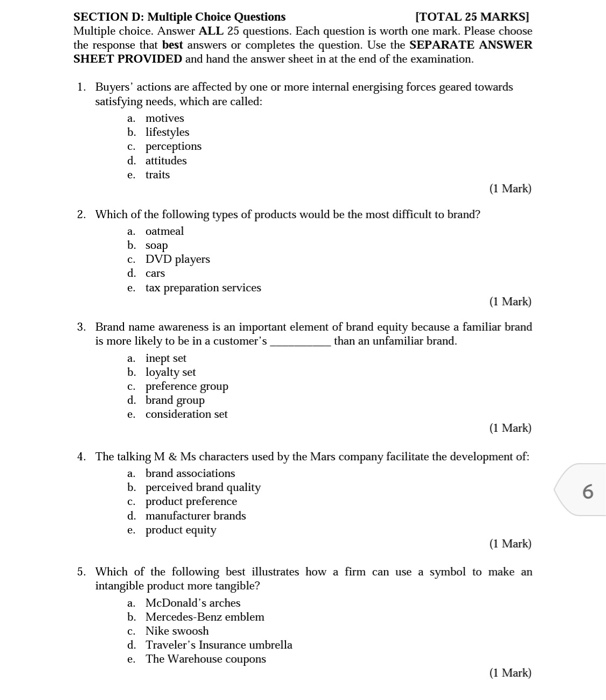
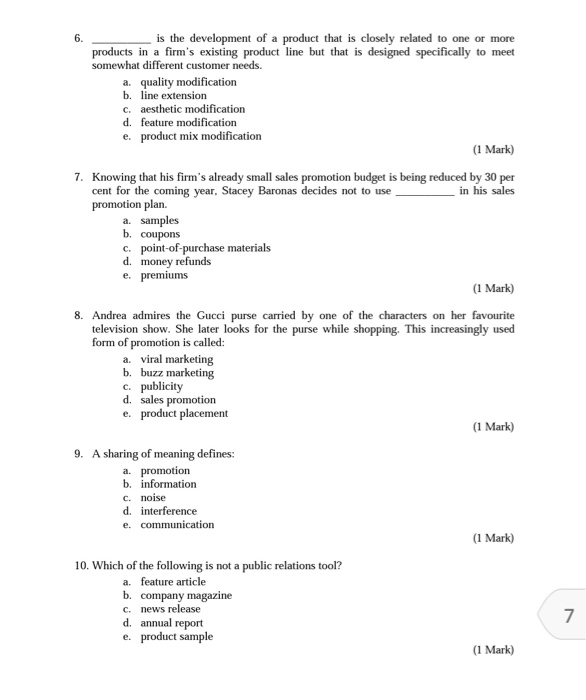
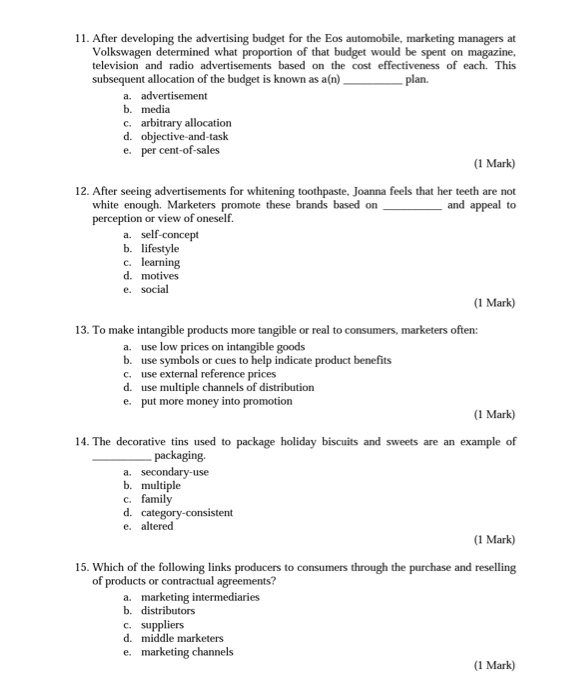
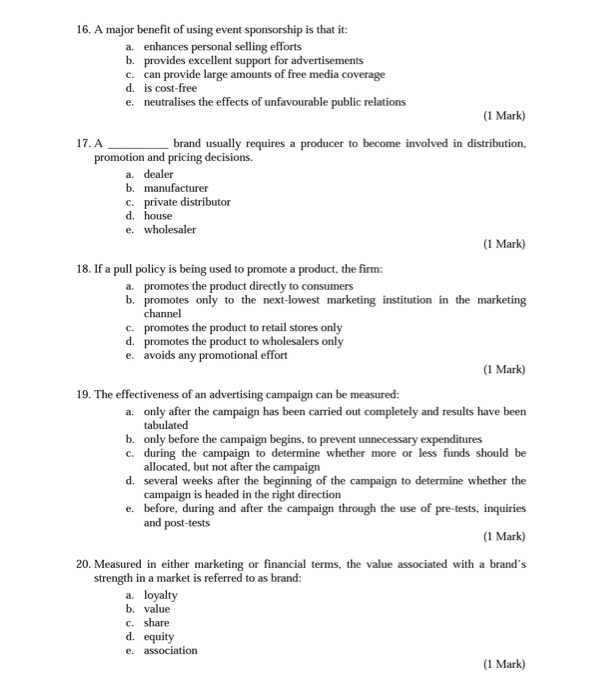
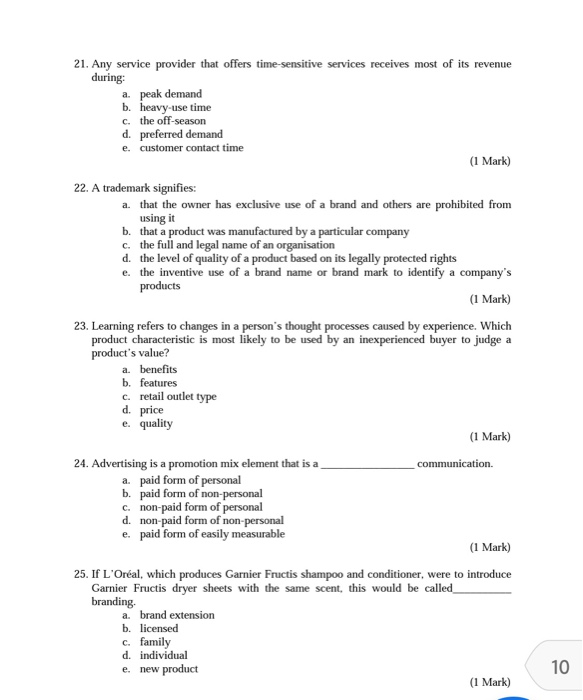
SECTION A: The Product Life Cycle (TOTAL 20 MARKS] Answer ALL questions. For each paragraph below there are 5 blanks and 10 word terms to choose from. Choose the appropriate term for the blank space from the list below. In your answer book, write the word terms in the order they would appear in the sentence. QUESTION ONE In the introduction stage of the product life cycle (PLC), sales start at zero and Profit should from a - position because of - associated with product development, distribution and promotion, increase, profit, competitive advantages, low, decrease, move upward, high expenses, initial revenues, negative (5 Marks) QUESTION TWO The growth stage of the PLC is critical to a product's_ because product's success will affect the product's - Profits begin to growth stage as more competitors enter the market, driving prices reactions to the late in the market development, decline, stability, life expectancy, survival, rise, drop quickly, up, down, competitor (5 Marks) QUESTION THREE During the maturity stage many are squeezed out of the as competitors emphasise _ and improvements in their versions of the_ The competitors that remain are likely to change their and distribution efforts. market, strong competitors, differences, traders, product, improvements, good, promotional, competition, weaker players (5 Marks) QUESTION FOUR In the decline stage, the marketer considers- those not earning a profit. They may also cut and finally, plan to the product. items from the to eliminate eliminate marginal distributors phase out, pricing, intensify resources, pruning, eliminating, failing goods, promotional efforts, product lines, reposition, differentiate (5 Marks) SECTION B: Short Answer Questions [TOTAL 15 MARKS] Answer ALL questions. Each question is worth only a few marks, answer each of them but don't write too much for the small amount of marks given. Read the Thermomix case first: QUESTION FIVE Thermomix charges a high price for its high quality product. a. Using one sentence for each, define the terms: value, skimming and penetration pricing (3 Marks) b. Name the pricing strategy Thermomix is using. (1 Mark) c. Why is Thermomix's chosen pricing strategy an appropriate choice for them? (1 Mark) QUESTION SIX Thermomix is sold through a direct selling model. a. Using examples, compare direct and indirect marketing channels. (3 Marks) b. What advantages does the direct selling approach give Thermomix? (1 Mark) c. Should Thermomix consider moving to indirect channels? In one sentence, explain your answer. (1 Mark) QUESTION SEVEN Thermomix has a presence on Youtube, Facebook, Instagram, Pinterest, Twitter as well as its own website. a. In one sentence explain what an online community is. (1 Mark) b. List the benefits that a strong social media presence gives Thermomix. (4 Marks) [TOTAL 40 MARKS] SECTION C: Short Answer Questions Answer ALL questions. QUESTION EIGHT: Segmentation and Target Marketing a. In one paragraph use an example to explain the term market fragmentation and why it has led to the need for market segmentation. (3 Marks) b. Explain what each of the segmentation variables are. Write one sentence per variable. (4 Marks) c. Explain the differences between differentiated and concentrated target marketing. Use one sentence to explain each. (2 Marks) d. Why do growing, small companies move away from using concentrated target marketing? (1 Mark) QUESTION NINE: Products a. Using Cars as a product category, explain the three elements of product. Explain either the core, actual and augmented, or, the core, supplementary features and experiential / symbolic elements of a product. (6 Marks) b. Complete the paragraph below by choosing from the 10 terms below. Write the word terms in the order they would appear in the sentence in your answer book. is the process of _ a unique name and ____for an offering in the audience's through the delivery of a consistent identity, and message. creating, view, mind, strategy, consistent, position, buying, reliable, branding, image (4 Marks) QUESTION TEN: Consumer Decision Making a. List the five steps of the Consumer Decision Making Process. (5 Marks) QUESTION ELEVEN: Break-even Analysis a. In one sentence, explain break-even analysis. (1 Mark) b. For a maker and seller of snowboards, explain the value of knowing the product's break-even point in both units and dollars. (2 Marks) c. In terms of break-even analysis, if a candle maker decides to automate production will revenue or costs be most affected? (1 Mark) d. Can break-even analysis help a marketer understand how to make a specific level of profit? Explain your answer. (1 Mark) QUESTION TWELVE: Global Marketing a. List four reasons why organisations consider global marketing? (4 Marks) b. Rank the following from highest to lowest degree of risk: - joint ventures - exporting - licencing - wholly owned subsidiaries. (1 Mark) QUESTION THIRTEEN: Market Research a. Survey research and experiments are what kind or research? (1 Mark) b. If market research is a process for gathering information that is not currently available to decision makers, should it be used to confirm a marketing manager's hunch about the usefulness of a new product? Write yes or no in your answer booklet. (1 Mark) c. In no more than two sentences explain your answer to b. above (2 Marks) d. Name one form of qualitative research. (1 Mark) SECTION D: Multiple Choice Questions [TOTAL 25 MARKS] Multiple choice. Answer ALL 25 questions. Each question is worth one mark. Please choose the response that best answers or completes the question. Use the SEPARATE ANSWER SHEET PROVIDED and hand the answer sheet in at the end of the examination. 1. Buyers' actions are affected by one or more internal energising forces geared towards satisfying needs, which are called: a. motives b. lifestyles c. perceptions d. attitudes e. traits (1 Mark) 2. Which of the following types of products would be the most difficult to brand? a. oatmeal b. soap c. DVD players d. cars e tax preparation services (1 Mark) 3. Brand name awareness is an important element of brand equity because a familiar brand is more likely to be in a customer's than an unfamiliar brand. a. inept set b. loyalty set c. preference group d. brand group e. consideration set (1 Mark) 4. The talking M&Ms characters used by the Mars company facilitate the development of: a. brand associations b. perceived brand quality c. product preference d. manufacturer brands e. product equity (1 Mark) 5. Which of the following best illustrates how a firm can use a symbol to make an intangible product more tangible? a. McDonald's arches b. Mercedes-Benz emblem C. Nike swoosh d. Traveler's Insurance umbrella e. The Warehouse coupons (1 Mark) is the development of a product that is closely related to one or more products in a firm's existing product line but that is designed specifically to meet somewhat different customer needs. a. quality modification b. line extension c. aesthetic modification d. feature modification e. product mix modification (1 Mark) 7. Knowing that his firm's already small sales promotion budget is being reduced by 30 per cent for the coming year, Stacey Baronas decides not to use in his sales promotion plan. a. samples b. coupons c. point-of-purchase materials d. money refunds e. premiums (1 Mark) 8. Andrea admires the Gucci purse carried by one of the characters on her favourite television show. She later looks for the purse while shopping. This increasingly used form of promotion is called: a. viral marketing b. buzz marketing c. publicity d. sales promotion e. product placement (1 Mark) 9. A sharing of meaning defines: a. promotion b. information c. noise d. interference e. communication (1 Mark) 10. Which of the following is not a public relations tool? a. feature article b. company magazine c. news release d. annual report e. product sample (1 Mark) 11. After developing the advertising budget for the Eos automobile, marketing managers at Volkswagen determined what proportion of that budget would be spent on magazine, television and radio advertisements based on the cost effectiveness of each. This subsequent allocation of the budget is known as a(n) plan a. advertisement b. media c. arbitrary allocation d. objective-and-task e per cent-of-sales (1 Mark) 12. After seeing advertisements for whitening toothpaste, Joanna feels that her teeth are not white enough. Marketers promote these brands based on and appeal to perception or view of oneself. a. self-concept b. lifestyle c. learning d. motives e. social (1 Mark) 13. To make intangible products more tangible or real to consumers, marketers often: a. use low prices on intangible goods b. use symbols or cues to help indicate product benefits c. use external reference prices d. use multiple channels of distribution e. put more money into promotion (1 Mark) 14. The decorative tins used to package holiday biscuits and sweets are an example of - packaging a. secondary-use b. multiple c. family d. category-consistent e. altered (1 Mark) 15. Which of the following links producers to consumers through the purchase and reselling of products or contractual agreements? a. marketing intermediaries b. distributors c. suppliers d. middle marketers e marketing channels (1 Mark) 16. A major benefit of using event sponsorship is that it: a. enhances personal selling efforts b. provides excellent support for advertisements c. can provide large amounts of free media coverage d. is cost-free e. neutralises the effects of unfavourable public relations (1 Mark) 17. A brand usually requires a producer to become involved in distribution, promotion and pricing decisions. a. dealer b. manufacturer c. private distributor d. house e. wholesaler (1 Mark) 18. If a pull policy is being used to promote a product, the firm: a. promotes the product directly to consumers b. promotes only to the next-lowest marketing institution in the marketing channel c. promotes the product to retail stores only d. promotes the product to wholesalers only e. avoids any promotional effort (1 Mark) 19. The effectiveness of an advertising campaign can be measured: a. only after the campaign has been carried out completely and results have been tabulated b. only before the campaign begins, to prevent unnecessary expenditures c. during the campaign to determine whether more or less funds should be allocated, but not after the campaign d. several weeks after the beginning of the campaign to determine whether the campaign is headed in the right direction e. before, during and after the campaign through the use of pre-tests, inquiries and post-tests (1 Mark) 20. Measured in either marketing or financial terms, the value associated with a brand's strength in a market is referred to as brand: a. loyalty b.value c. share d. equity e. association (1 Mark) 21. Any service provider that offers time-sensitive services receives most of its revenue during: a. peak demand b. heavy-use time c. the off-season d. preferred demand e. customer contact time (1 Mark) 22. A trademark signifies: a. that the owner has exclusive use of a brand and others are prohibited from using it b. that a product was manufactured by a particular company c. the full and legal name of an organisation d. the level of quality of a product based on its legally protected rights e. the inventive use of a brand name or brand mark to identify a company's products (1 Mark) 23. Learning refers to changes in a person's thought processes caused by experience. Which product characteristic is most likely to be used by an inexperienced buyer to judge a product's value? a. benefits b. features c. retail outlet type d. price e. quality (1 Mark) communication. 24. Advertising is a promotion mix element that is a a. paid form of personal b. paid form of non-personal c. non-paid form of personal d. non-paid form of non-personal e. paid form of easily measurable (1 Mark) 25. If L'Oral, which produces Garnier Fructis shampoo and conditioner, were to introduce Garnier Fructis dryer sheets with the same scent, this would be called branding a. brand extension b. licensed c. family d. individual e. new product (1 Mark) 10









 Study Help