Question: Section A: True & False (1x10) Question 1: The management of organization can control all external forces or factors. team an A. True B. False
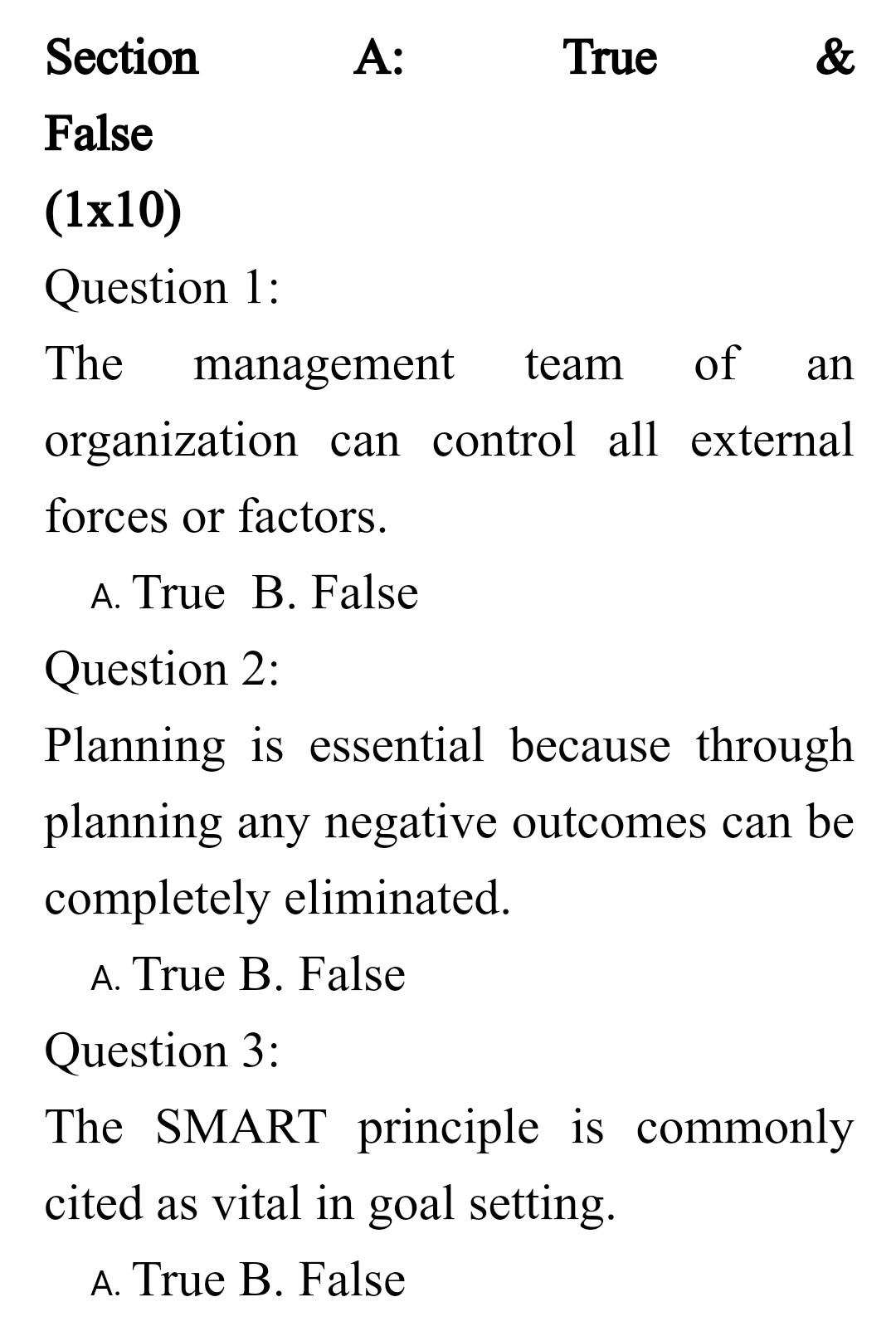
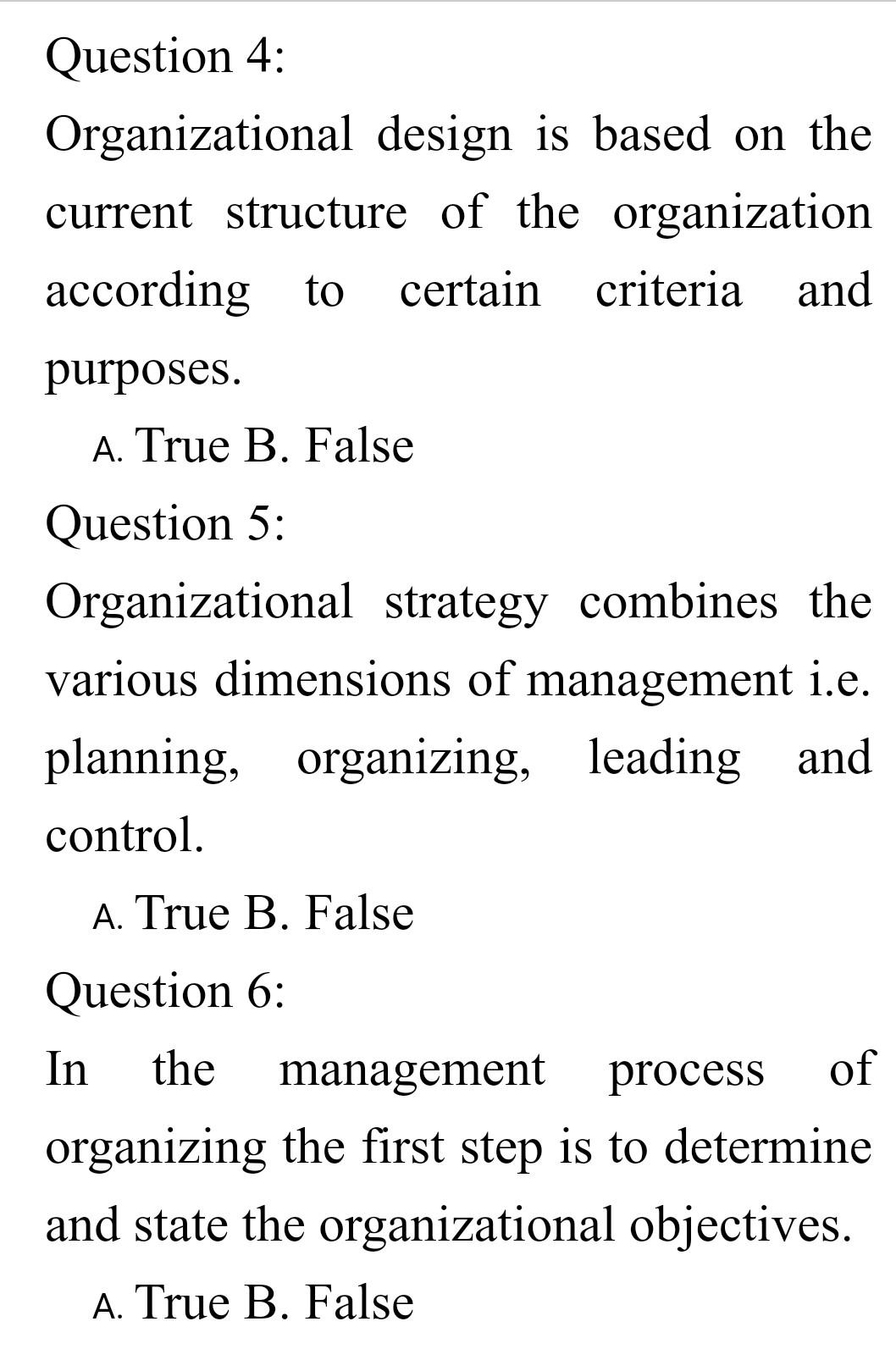
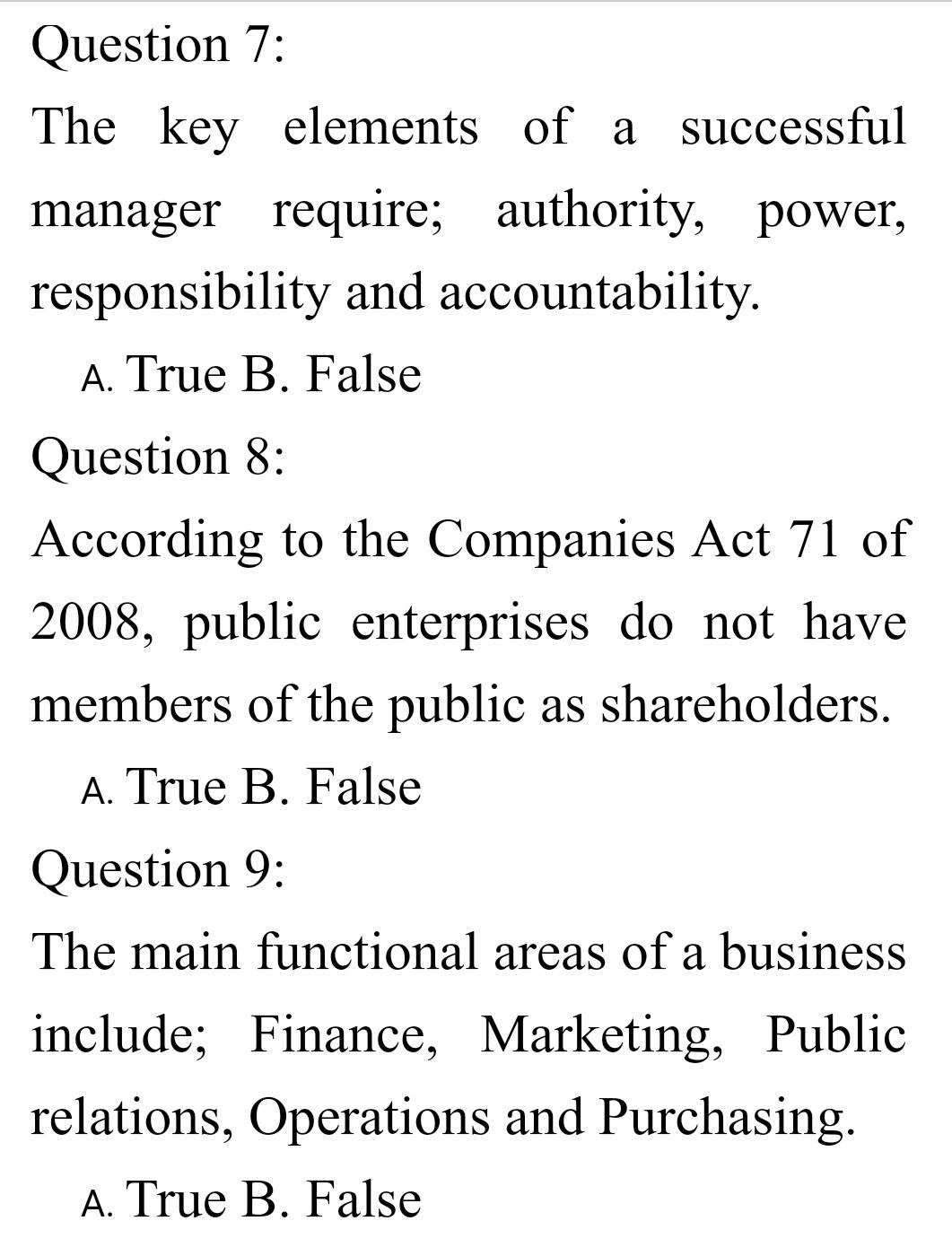
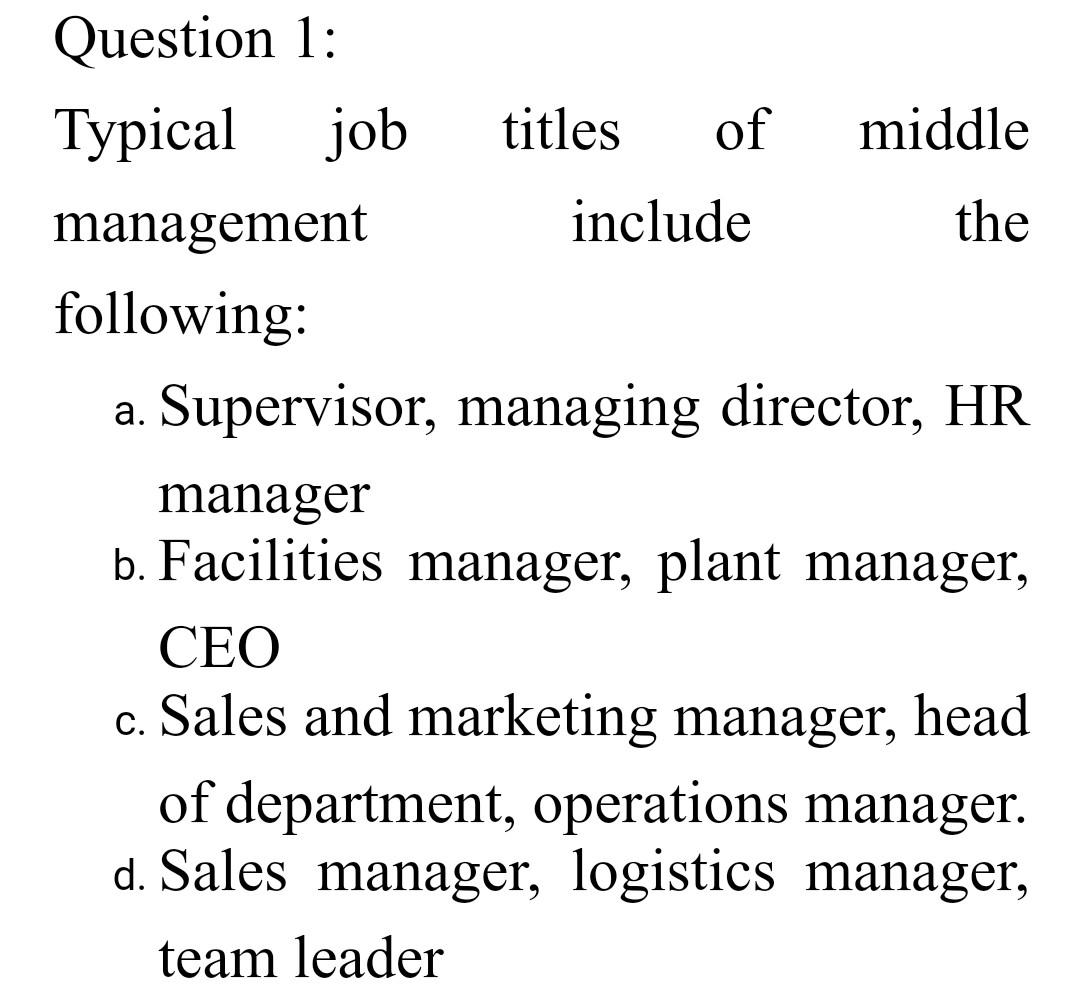
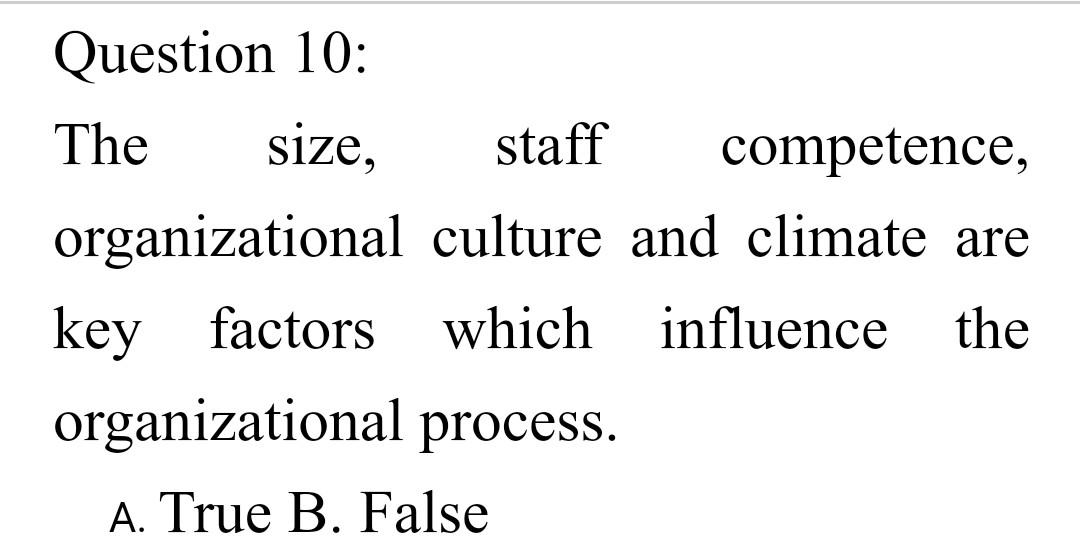
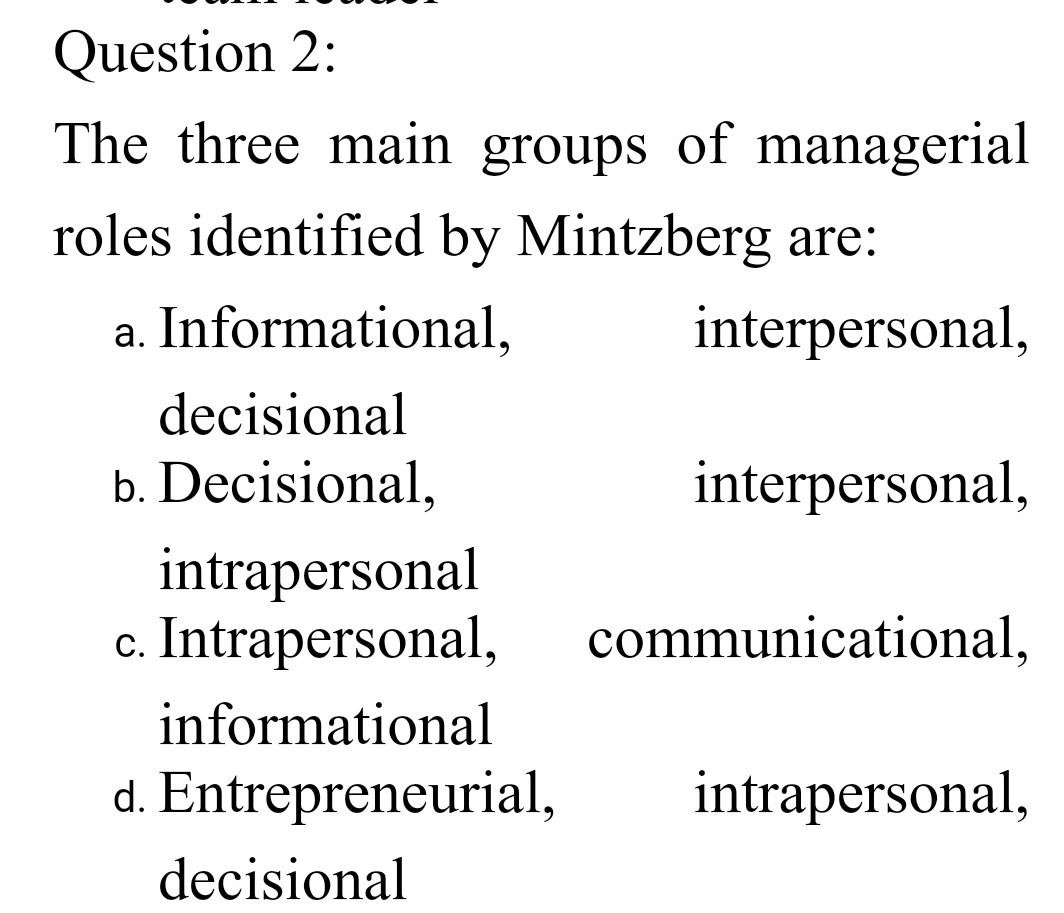
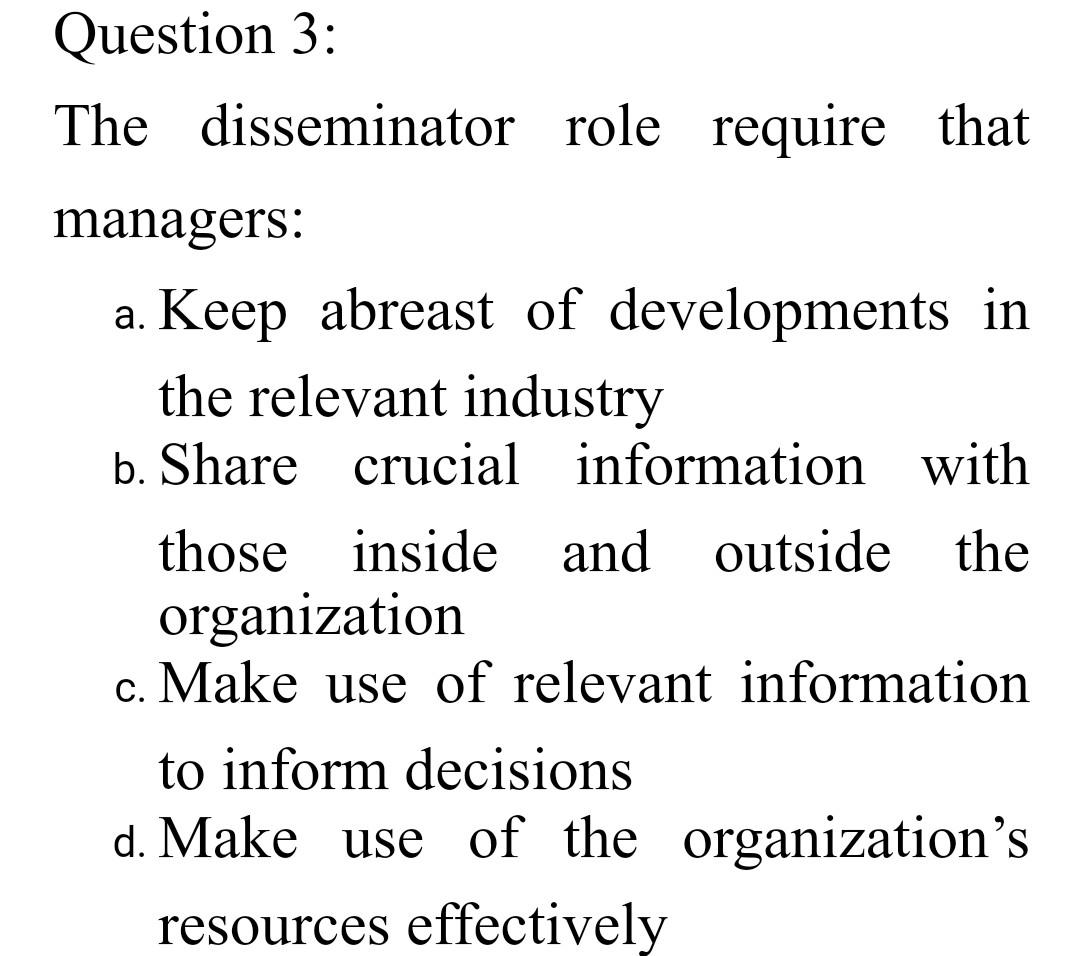
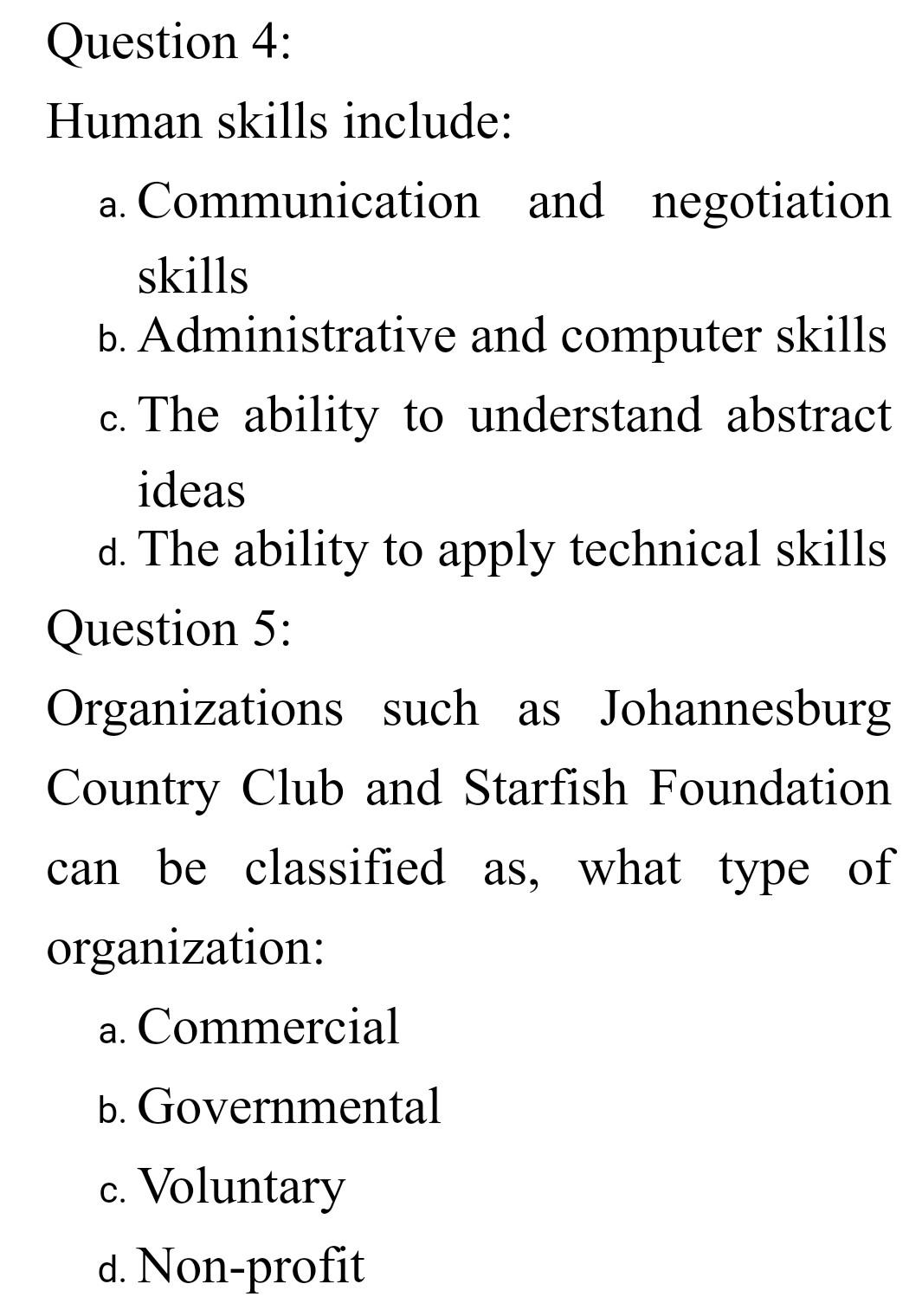
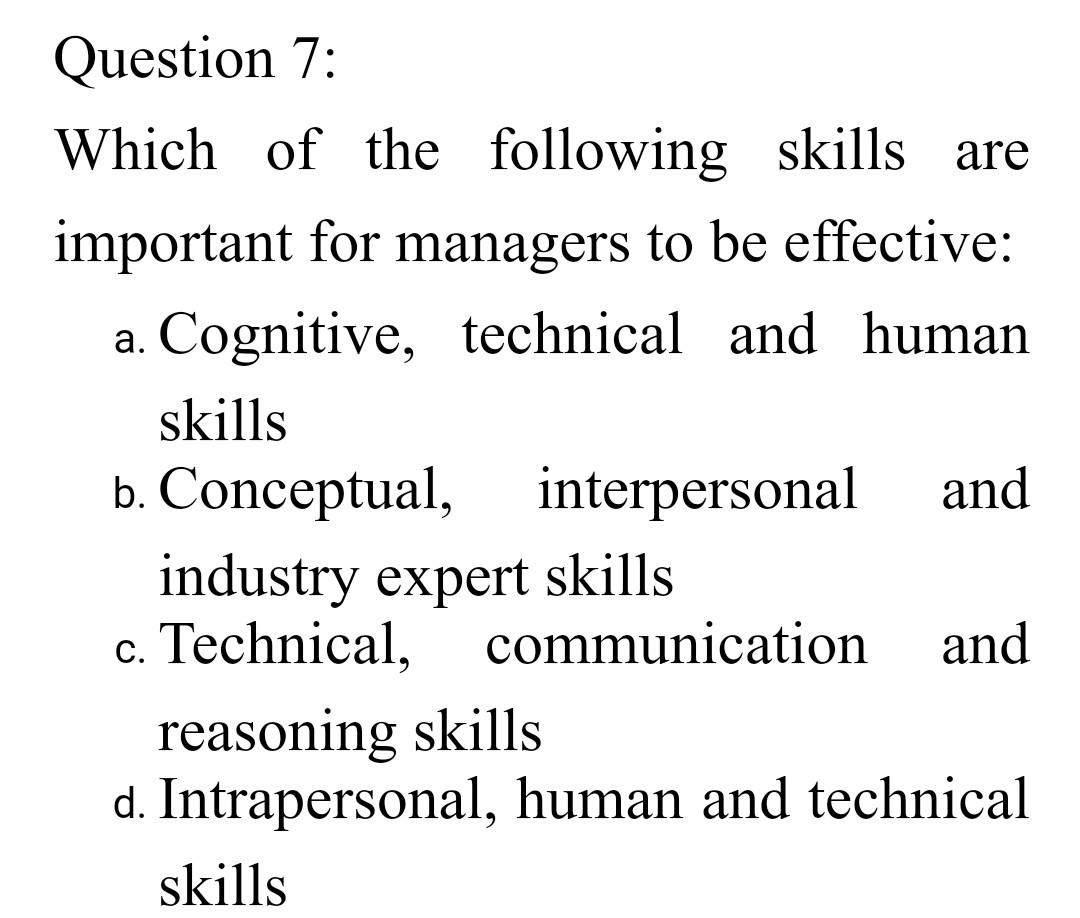
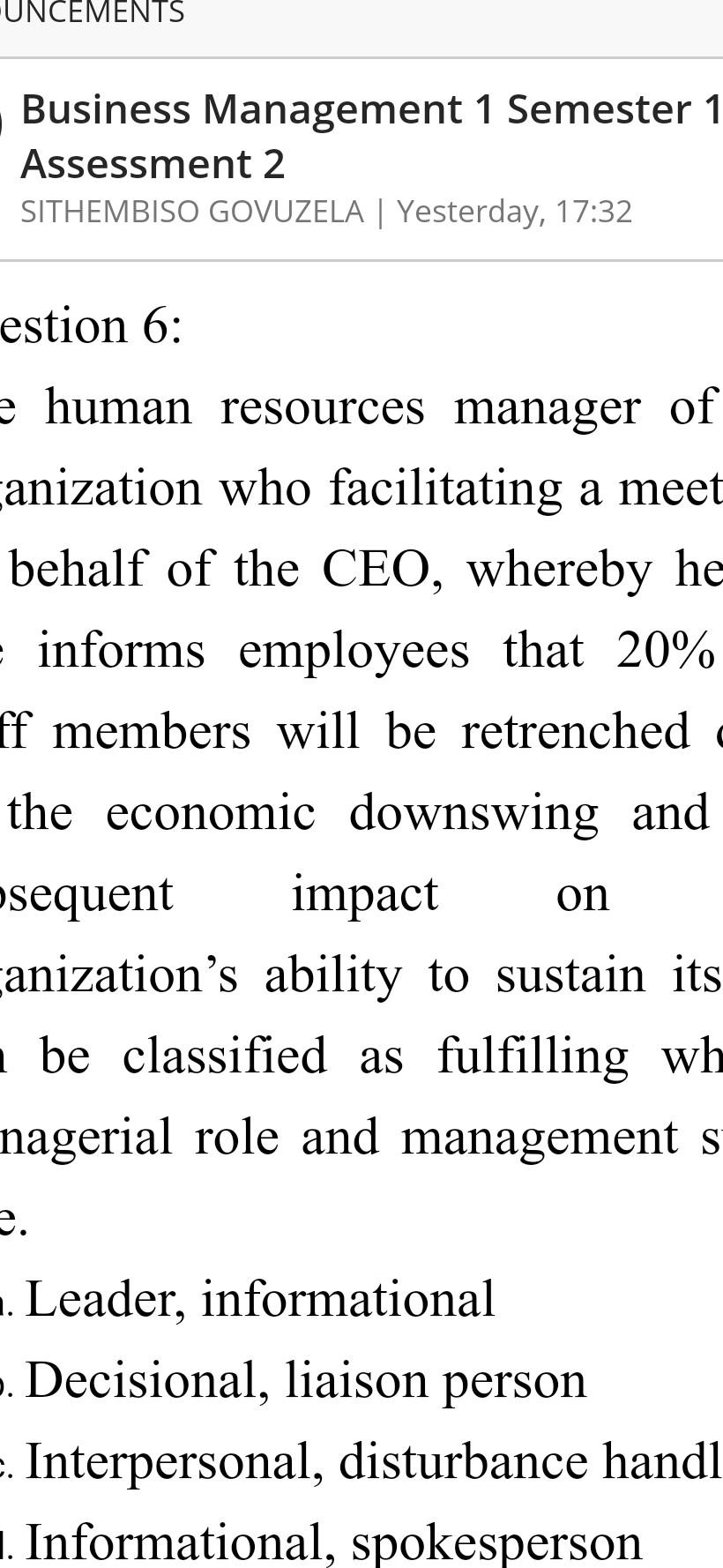
Section A: True & False (1x10) Question 1: The management of organization can control all external forces or factors. team an A. True B. False Question 2: Planning is essential because through planning any negative outcomes can be completely eliminated. A. True B. False Question 3: The SMART principle is commonly cited as vital in goal setting. A. True B. False Question 4: Organizational design is based on the current structure of the organization according to certain criteria and purposes. A. True B. False Question 5: Organizational strategy combines the various dimensions of management i.e. planning, organizing, leading and control. A. True B. False Question 6: In the management process of organizing the first step is to determine and state the organizational objectives. A. True B. False Question 7: The key elements of a successful manager require; authority, power, responsibility and accountability. A. True B. False Question 8: According to the Companies Act 71 of 2008, public enterprises do not have members of the public as shareholders. A. True B. False Question 9: The main functional areas of a business include; Finance, Marketing, Public relations, Operations and Purchasing. A. True B. False Question 1: Typical job titles of middle management include the following: a. Supervisor, managing director, HR manager b. Facilities manager, plant manager, CEO Sales and marketing manager, head of department, operations manager. d. Sales manager, logistics manager, team leader C. size, Question 10: The staff competence, organizational culture and climate are key factors which influence the organizational process. A. True B. False Question 2: The three main groups of managerial roles identified by Mintzberg are: a. Informational, interpersonal, decisional b. Decisional, interpersonal, intrapersonal c. Intrapersonal, communicational, informational d. Entrepreneurial, intrapersonal, decisional Question 3: The disseminator role require that managers: a. Keep abreast of developments in the relevant industry b. Share crucial information with those inside and outside the organization c. Make use of relevant information to inform decisions d. Make use of the organization's resources effectively Question 4: Human skills include: a. Communication and negotiation skills b. Administrative and computer skills c. The ability to understand abstract ideas d. The ability to apply technical skills Question 5: Organizations such as Johannesburg Country Club and Starfish Foundation can be classified as, what type of organization: a. Commercial b. Governmental c. Voluntary d. Non-profit Question 7: Which of the following skills are important for managers to be effective: a. Cognitive, technical and human skills b. Conceptual, interpersonal and industry expert skills c. Technical, communication and reasoning skills d. Intrapersonal, human and technical skills UNCEMENTS Business Management 1 Semester 1 Assessment 2 SITHEMBISO GOVUZELA | Yesterday, 17:32 estion 6: e human resources manager of canization who facilitating a meet behalf of the CEO, whereby he informs employees that 20% ff members will be retrenched the economic downswing and osequent impact anization's ability to sustain its be classified as fulfilling wh nagerial role and management s on 2. .. Leader, informational -. Decisional, liaison person c. Interpersonal, disturbance handl 1. Informational, spokesperson









 Study Help