







Question: SECTION B 1 . Answer the case study below using the law of contract principles in the answer booklet provided. Carol has decided to sell
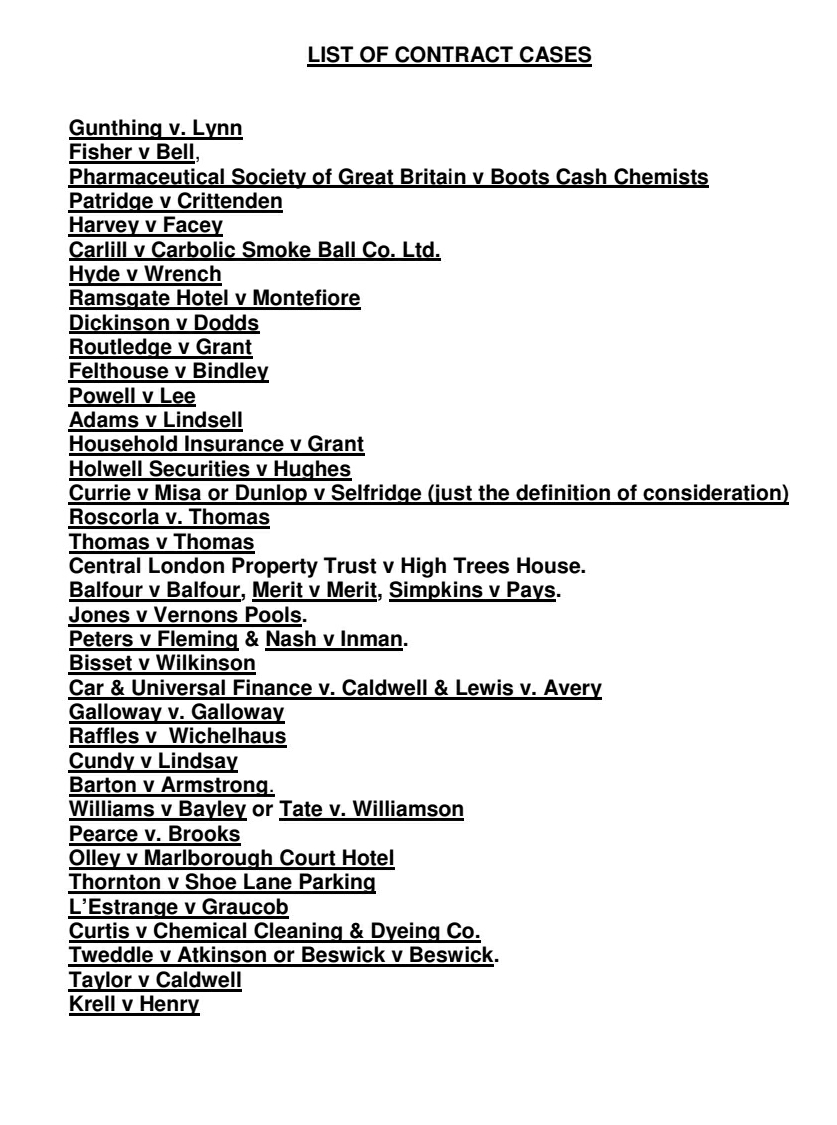
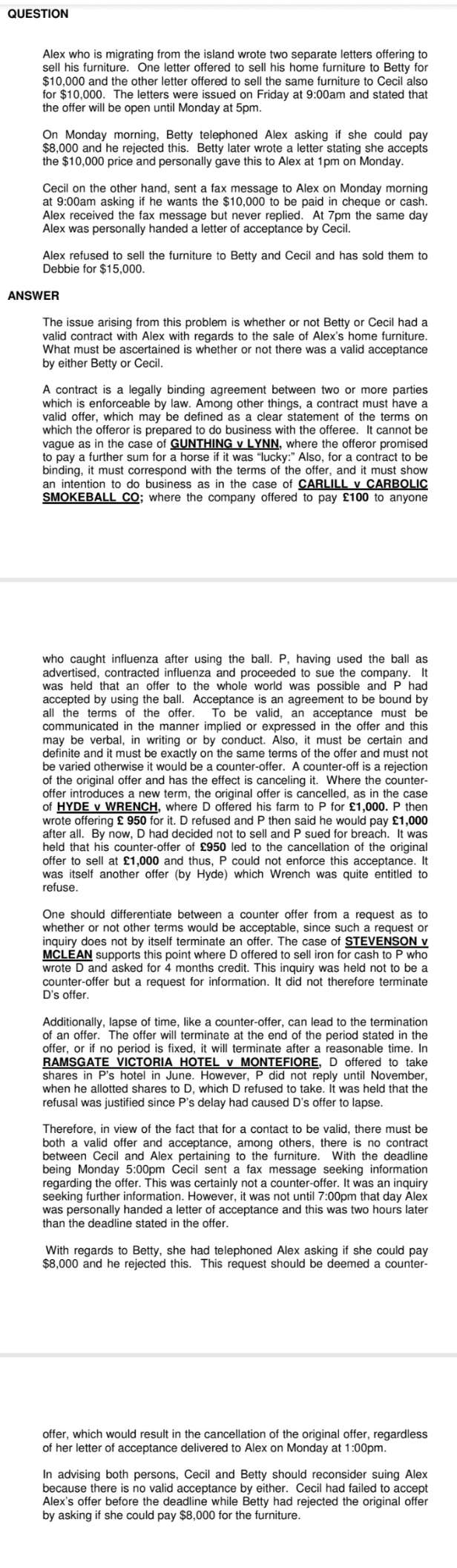
SECTION B 1 . Answer the case study below using the law of contract principles in the answer booklet provided. Carol has decided to sell her 2 0 2 2 Toyota Corolla and her VW Motor van On July 1 0 She wrote to John offering to sell her car for $ 3 . 5 M . The same day she also wrote to Margie informing her that she was selling her van for $ 3 . 5 M . They were both to let her know by July 3 0 , by post if they were interested. Margie on receiving the letter, responded by posting a letter to Carol on July 1 5 th stating that she was willing to buy the car at the stated price of $ 3 . 5 M . The letter posted by Margie did not reach Carol. John also received his letter on July 1 5 th and immediately responds by phone informing her that he is willing to pay $ 2 . 5 mM for the van. Carol told him no . The next day he calls and agrees to pay $ 3 . 5 M but Carol told him that she was no longer selling the van. John is very upset and tells her that she just bought a law suit. Carol, on the 2 0 th July decided to sell the van to Simon for $ 4 million. Simon decided to make the payment with 1 0 0 lbs of cocaine and $ 2 million cash. Carol agreed and Simon paid the $ 2 million cash but Carol is still waiting for the cocaine, as Simon has not handed this over. Margie has come for the car on July 1 5 with the cheque for the $ 3 . 5 M but Carol told her on that day that she is no longer selling the car. Maggie is unhappy and plans to sue her. Carol told her sister Tamara who she lives with, that she would give her $ 5 0 , 0 0 0 . 0 0 to assist with household expenses, however, because of a previous failed investment, she had no money to give to her. Tamara is upset and is contemplating suing her. Carol has come to you for advice. Advise Carol a . Identify the issues arising b . Discuss the relevant legal principles and cases that support c . Apply these principles to the case study d . Advise Carol ( 3 5 marks )us the following cases below to answer the above
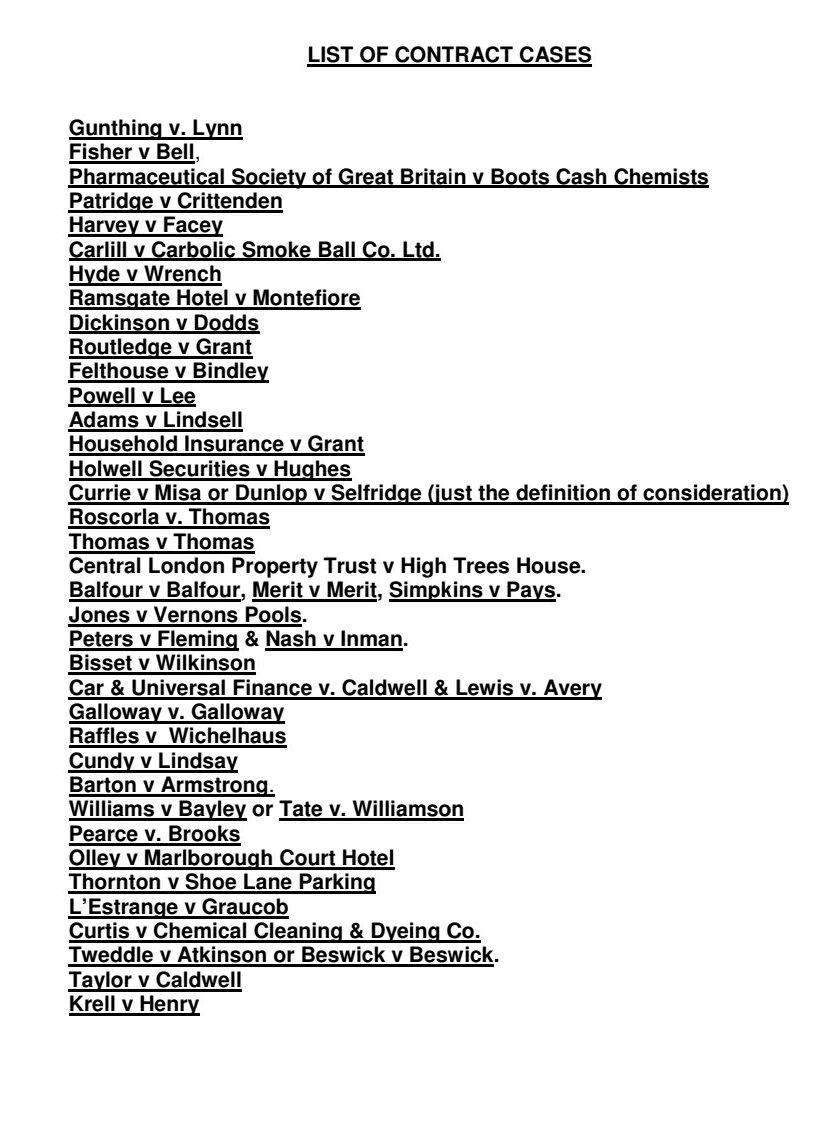
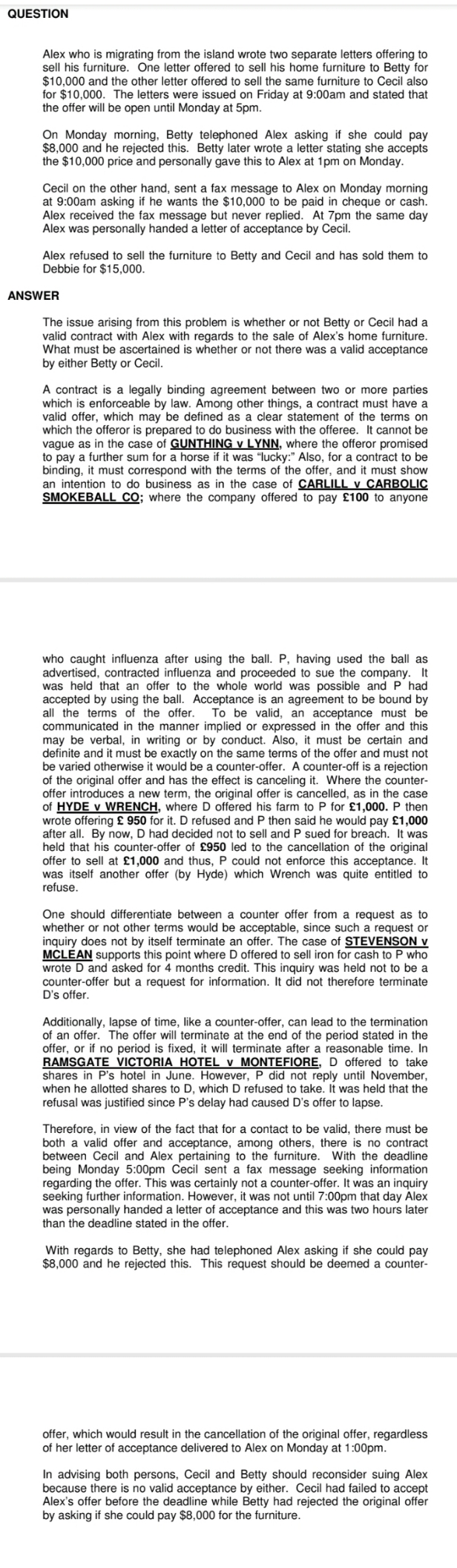
LIST OF CONTRACT CASES Gunthing v. Lynn Fisher v Bell Pharmaceutical Society of Great Britain v Boots Cash Chemists Patridge v Crittenden Harvey v Facey Carlill v Carbolic Smoke Ball Co. Ltd. Hyde v Wrench Ramsgate Hotel v Montefiore Dickinson v Dodds Routledge v Grant Felthouse v Bindley Powell v Lee Adams v Lindsell Household Insurance v Grant Holwell Securities v Hughes Currie v Misa or Dunlop v Selfridge (just the definition of consideration) Roscorla v. Thomas Thomas v Thomas Central London Property Trust v High Trees House. Balfour v Balfour, Merit v Merit, Simpkins v Pays. Jones v Vernons Pools. Peters v Fleming & Nash v Inman. Bisset v Wilkinson Car & Universal Finance v. Caldwell & Lewis v. Avery Galloway v. Galloway Raffles v Wichelhaus Cundy v Lindsay Barton v Armstrong. Williams v Bayley or Tate v. Williamson Pearce v. Brooks Olley v Marlborough Court Hotel Thornton v Shoe Lane Parking L'Estrange v Graucob Curtis v Chemical Cleaning & Dyeing Co. Tweddle v Atkinson or Beswick v Beswick. Taylor v Caldwell Krell v HenryQUESTION Alex who is migrating from the island wrote two separate letters offering to sell his furniture. One letter offered to sell his home furniture to Betty for $10,000 and the other letter offered to sell the same furniture to Cecil also for $10,000. The letters were issued on Friday at 9:00am and stated that the offer will be open until Monday at Spm. On Moenday morning, Betty telephoned Alex asking if she could pay $8,000 and he rejected this. Betty later wrote a letter stating she accepts the $10,000 price and personally gave this to Alex at 1pm on Monday. Cecil on the other hand, sent a fax message to Alex on Monday morning at 9:00am asking if he wants the $10,000 to be paid in cheque or cash. Alex received the fax message but never replied. At 7pm the same day Alex was personally handed a letter of acceptance by Cecil. Alex refused to sell the furniture to Betty and Cecil and has sold them to Debbie for $15,000. ANSWER The issue arising from this problem is whether or not Betty or Cecil had a valid contract with Alex with regards to the sale of Alex's home furniture. What must be ascertained is whether or not there was a valid acceptance by either Betty or Cecil. A contract is a legally binding agreement between two or more parties which is enforceable by law. Among other things, a contract must have a valid offer, which may be defined as a clear statement of the terms on which the offeror is prepared to do business with the offeree. It cannot be vague as in the case of GUNTHING v LYNN, where the offeror promised to pay a further sum for a horse if it was \"lucky:\" Also, for a contract to be binding, it must correspond with the terms of the offer, and it must show an intention to do business as in the case of CARLILL v CARBOLIC SMOKEBALL CO; where the company offered to pay 100 to anyone who caught influenza after using the ball. P, having used the ball as advertised, contracted influenza and proceeded to sue the company. It was held that an offer to the whole world was possible and P had accepted by using the ball. Acceptance is an agreement to be bound by all the terms of the offer. To be valid, an acceptance must be communicated in the manner implied or expressed in the offer and this may be verbal, in writing or by conduct. Also, it must be certain and definite and it must be exactly on the same terms of the offer and must not be varied otherwise it would be a counter-offer. A counter-off is a rejection of the original offer and has the effect is canceling it. Where the counter- offer introduces a new term, the original offer is cancelled, as in the case of HYDE v WRENCH, where D offered his farm to P for 1,000. P then wrote offering 950 for it. D refused and P then said he would pay 1,000 after all. By now, D had decided not to sell and P sued for breach. It was held that his counter-offer of 950 led to the cancellation of the original offer to sell at 1,000 and thus, P could not enforce this acceptance. It was itself another offer (by Hyde) which Wrench was quite entitled to refuse. One should differentiate between a counter offer from a request as fo whether or not other terms would be acceptable, since such a request or inquiry does not by itself terminate an offer. The case of STEVENSON v MCLEAN supports this point where D offered to sell iron for cash to P who wrote D and asked for 4 months credit. This inquiry was held not to be a counter-offer but a request for information. It did not therefore terminate D's offer. Additionally, lapse of time, like a counter-offer, can lead to the termination of an offer. The offer will terminate at the end of the period stated in the offer, or if no period is fixed, it will terminate after a reasonable time. In RAMSGATE VICTORIA HOTEL v _MONTEFIORE, D offered to take shares in P's hotel in June. However, P did not reply until November, when he allotted shares to D, which D refused to take. It was held that the refusal was justified since P's delay had caused D's offer to lapse. Therefore, in view of the fact that for a contact to be valid, there must be both a valid offer and acceptance, among others, there is no contract between Cecil and Alex pertaining to the fumniture. With the deadline being Monday 5:00pm Cecil sent a fax message seeking information regarding the offer. This was certainly not a counter-offer. It was an inquiry seeking further information. However, it was not until 7:00pm that day Alex was personally handed a letter of acceptance and this was two hours later than the deadline stated in the offer. With regards to Betty, she had telephoned Alex asking if she could pay $8,000 and he rejected this. This request should be deemed a counter- offer, which would result in the cancellation of the original offer, regardless of her letter of acceptance delivered to Alex on Monday at 1:00pm. In advising both persons, Cecil and Betty should reconsider suing Alex because there is no valid acceptance by either. Cecil had failed to accept Alex's offer before the deadline while Betty had rejected the original offer by asking if she could pay $8,000 for the furniture
Step by Step Solution
There are 3 Steps involved in it

Get step-by-step solutions from verified subject matter experts
 Study Help