







Question: Section B: Multiple choice questions (1x40) Question 1: Typical job titles of middle management include the following: a. Supervisor, managing director, HR manager b. Facilities
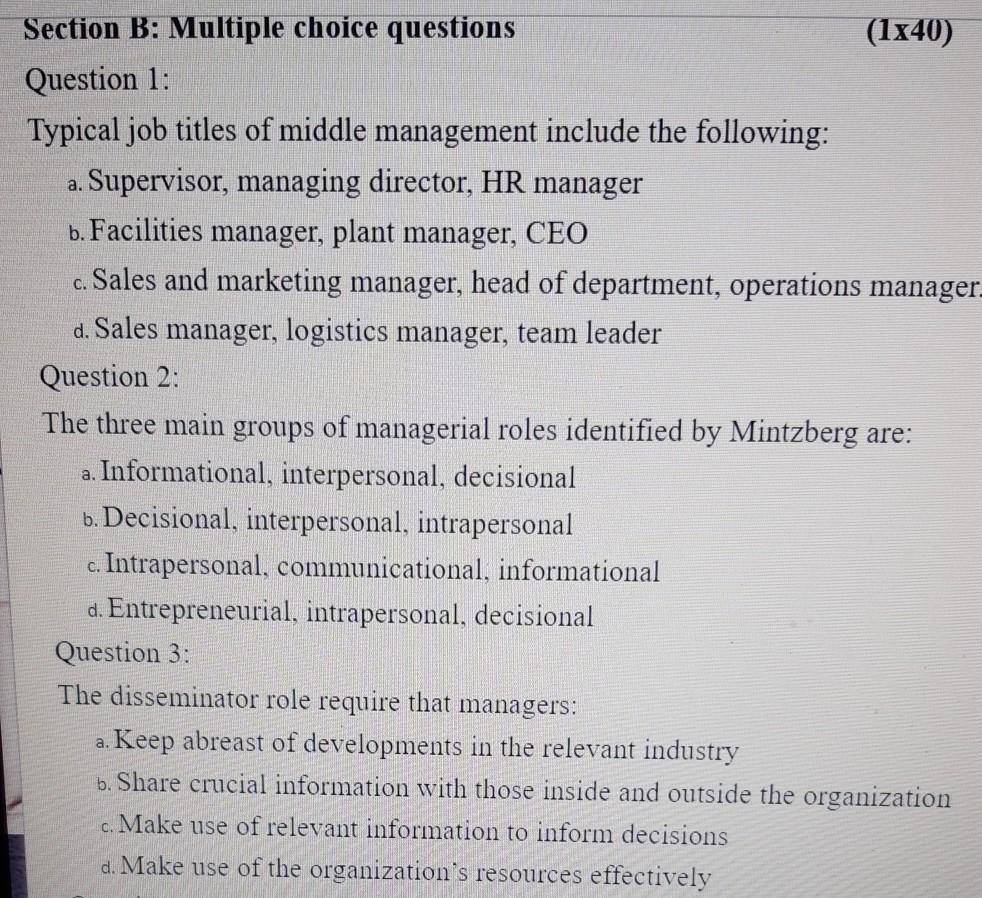
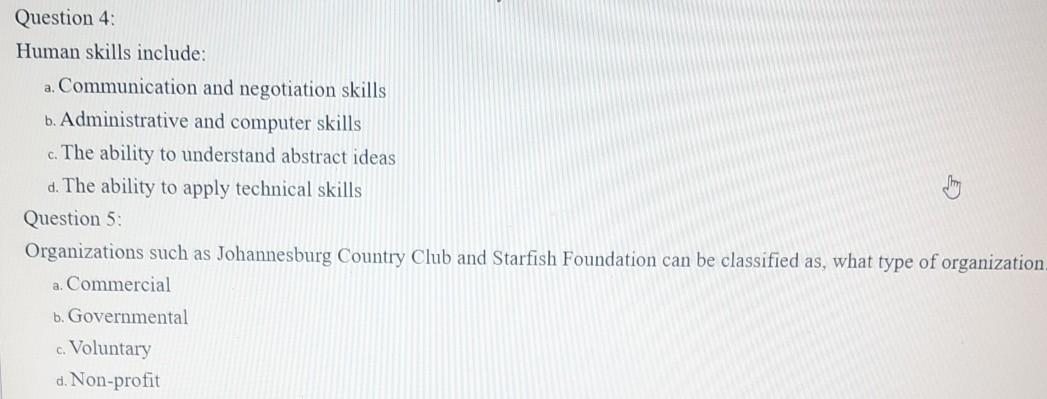
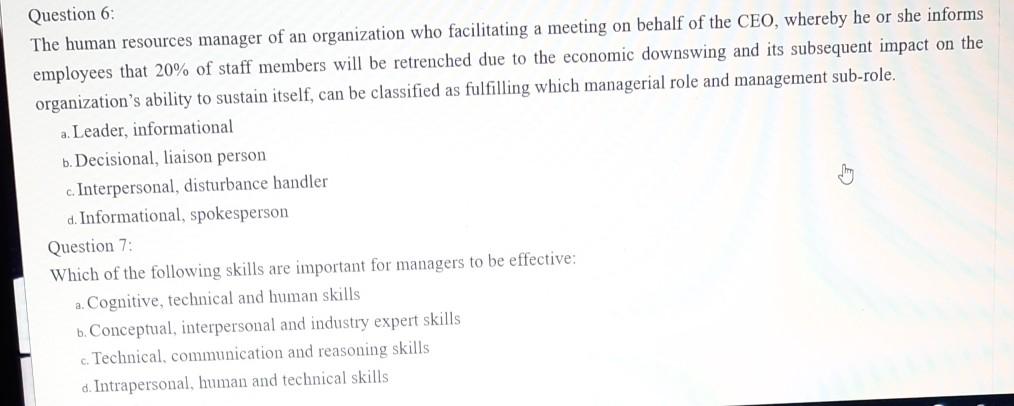
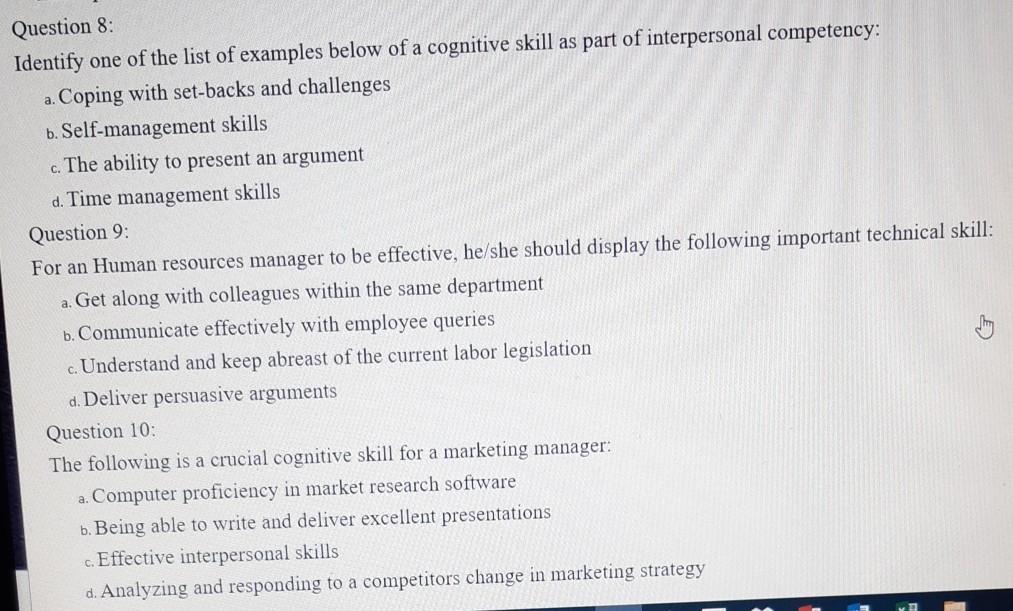
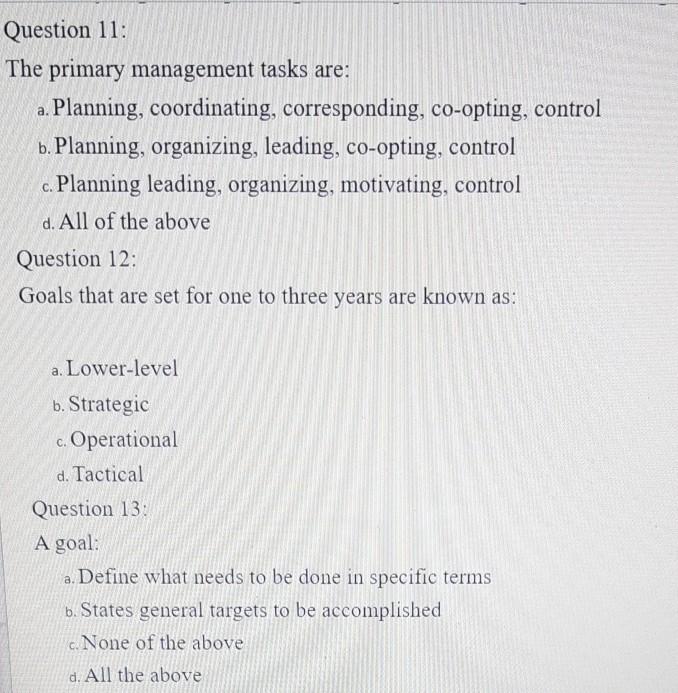
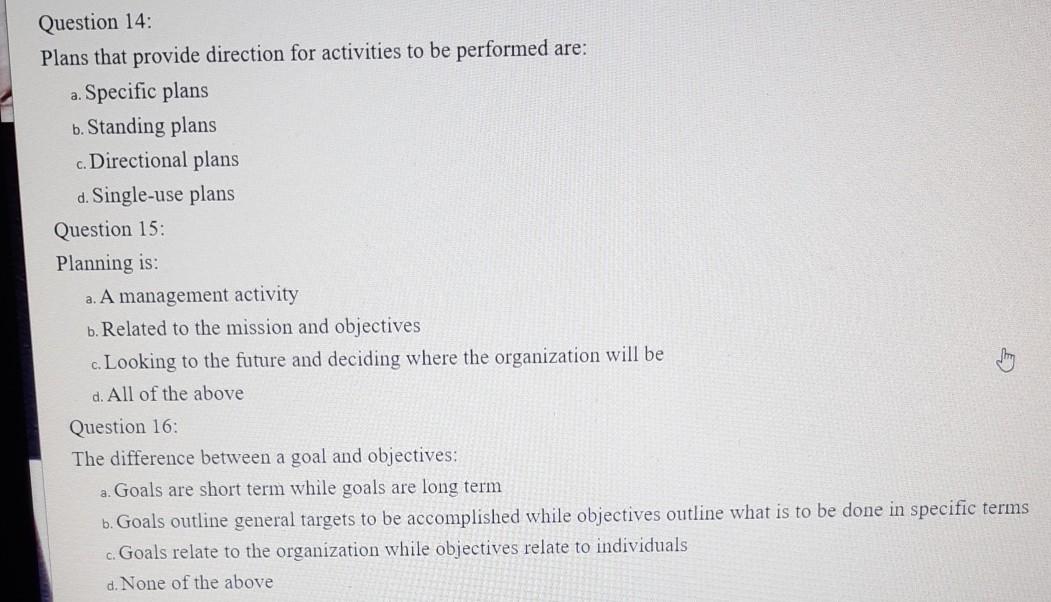
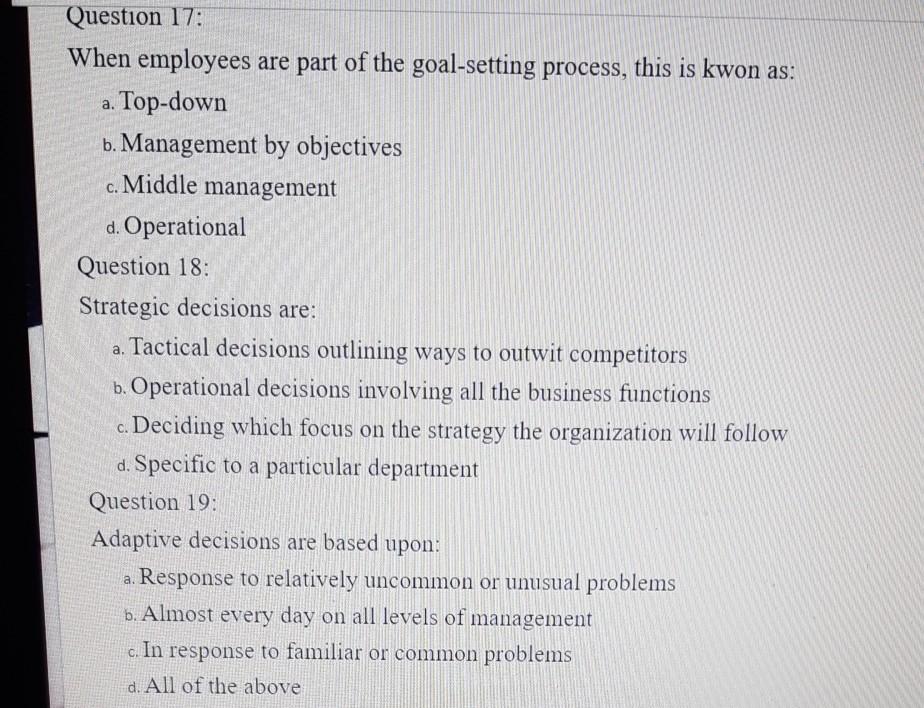
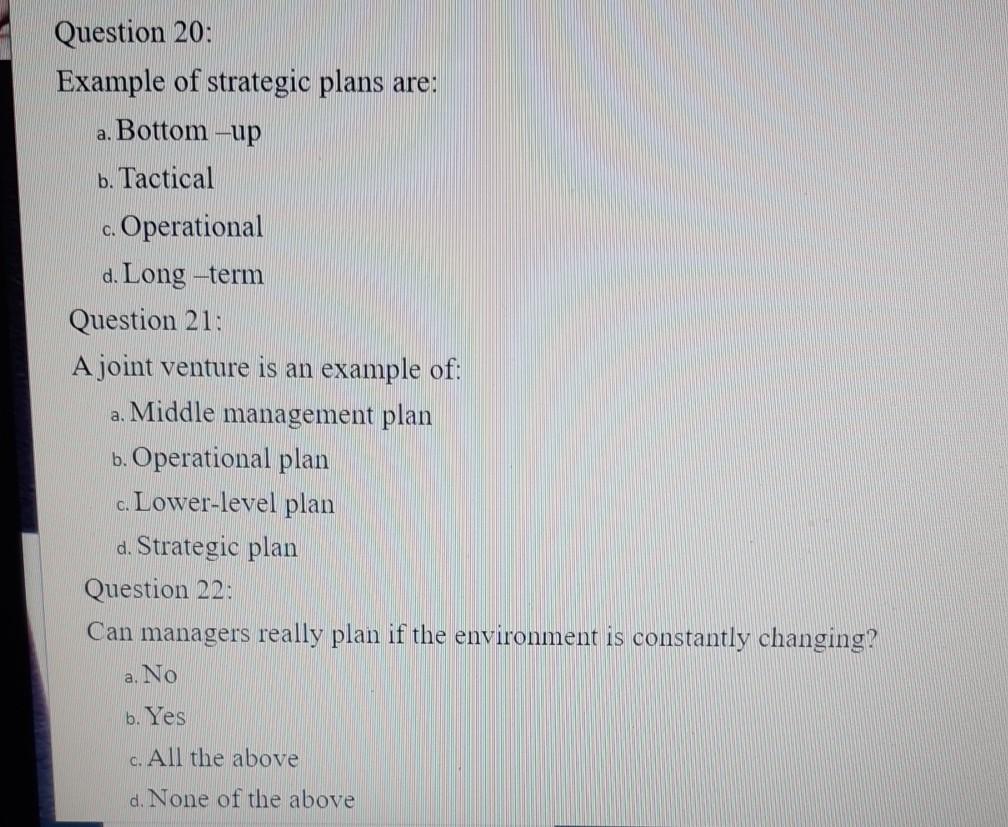
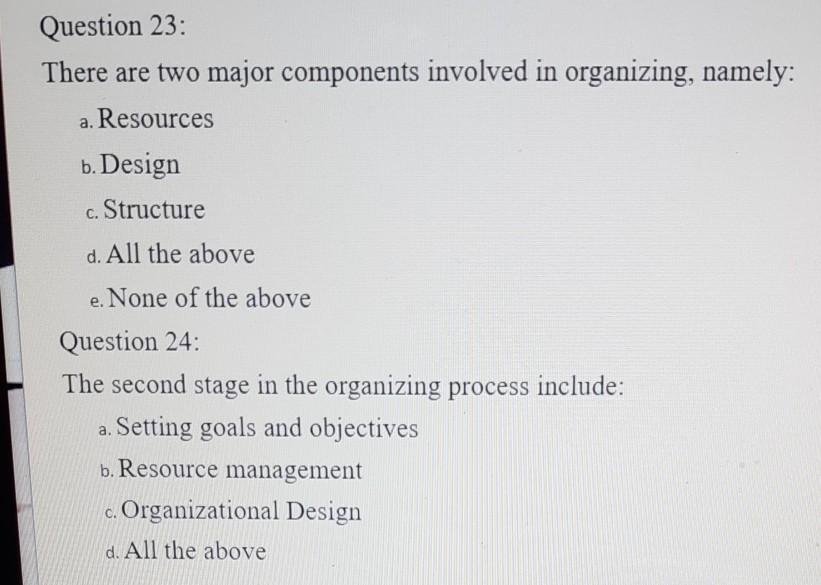
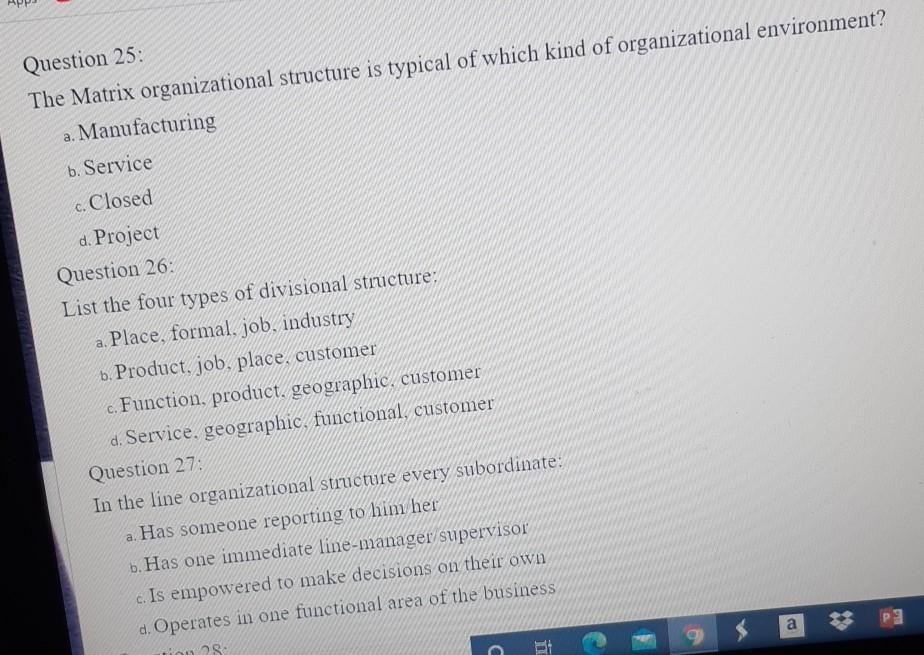
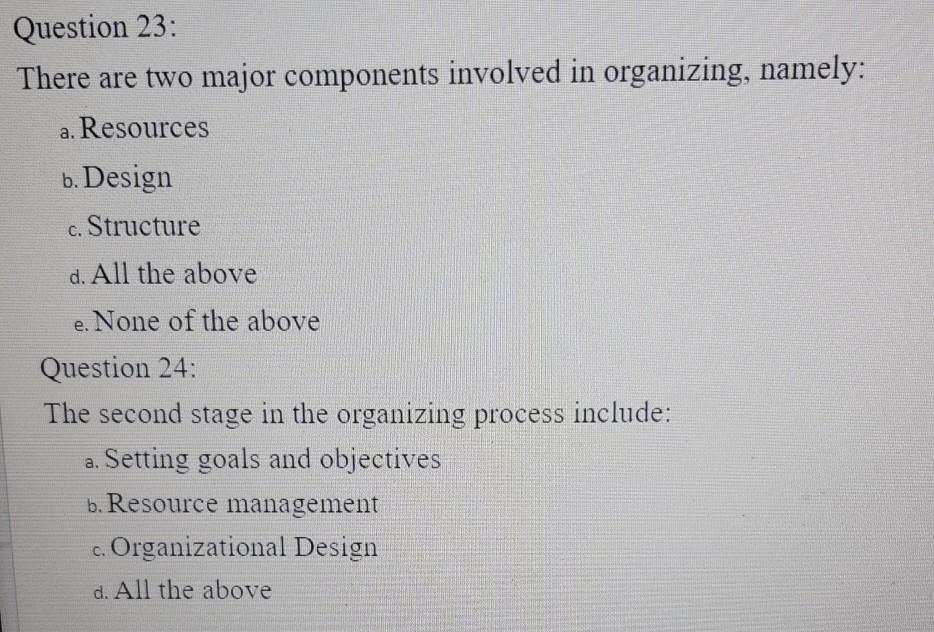
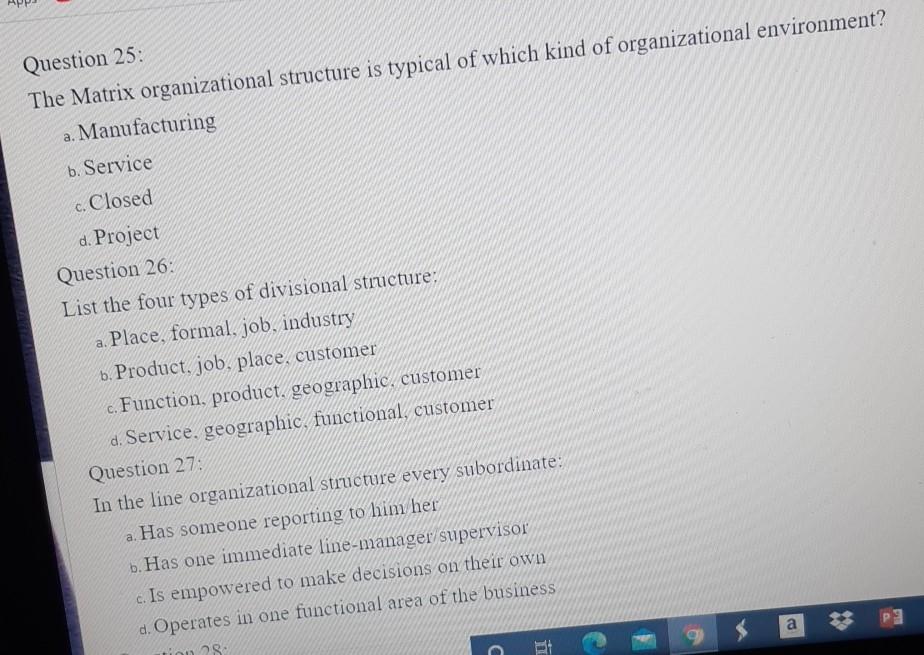
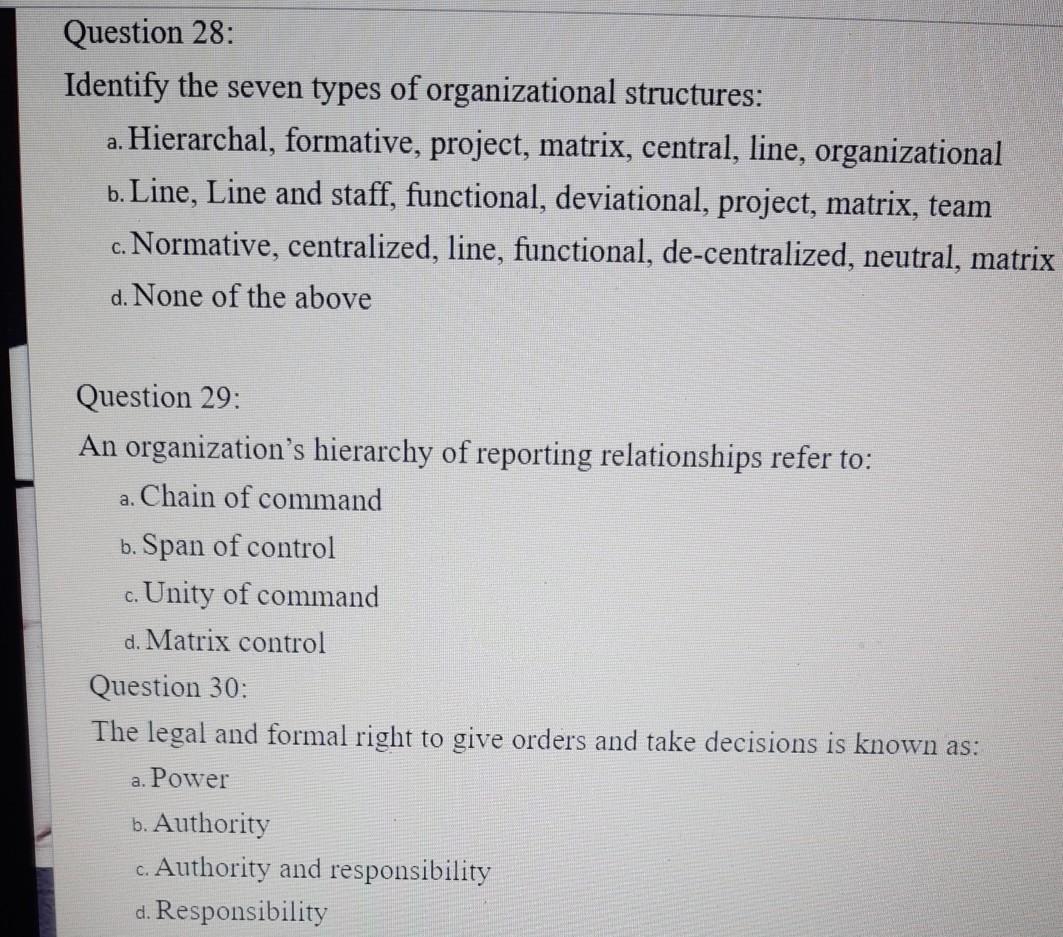
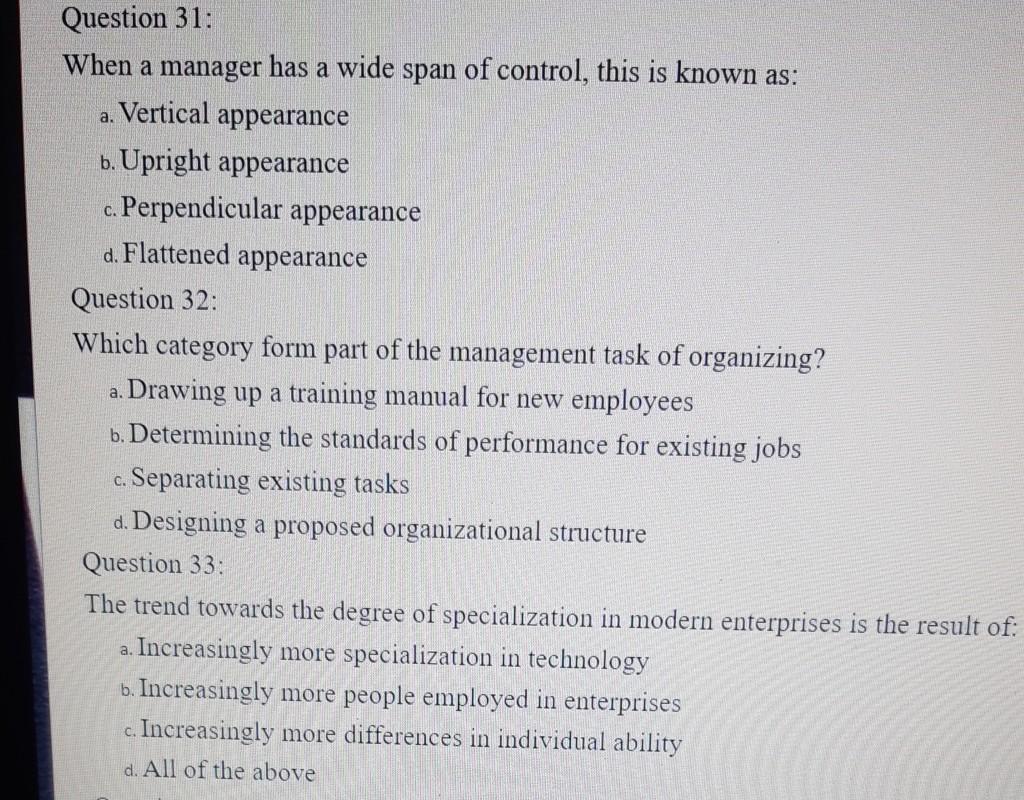
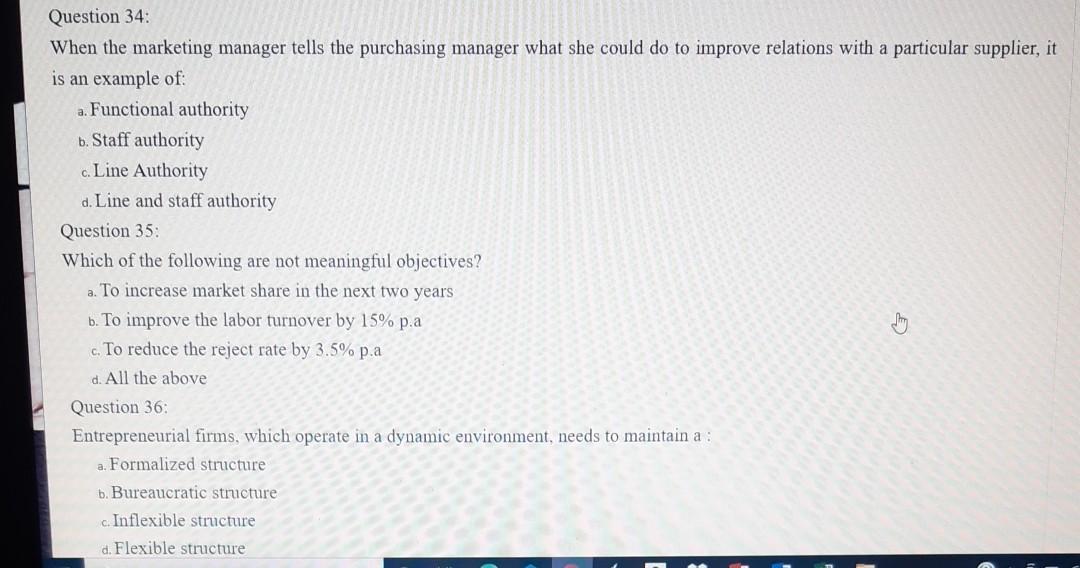
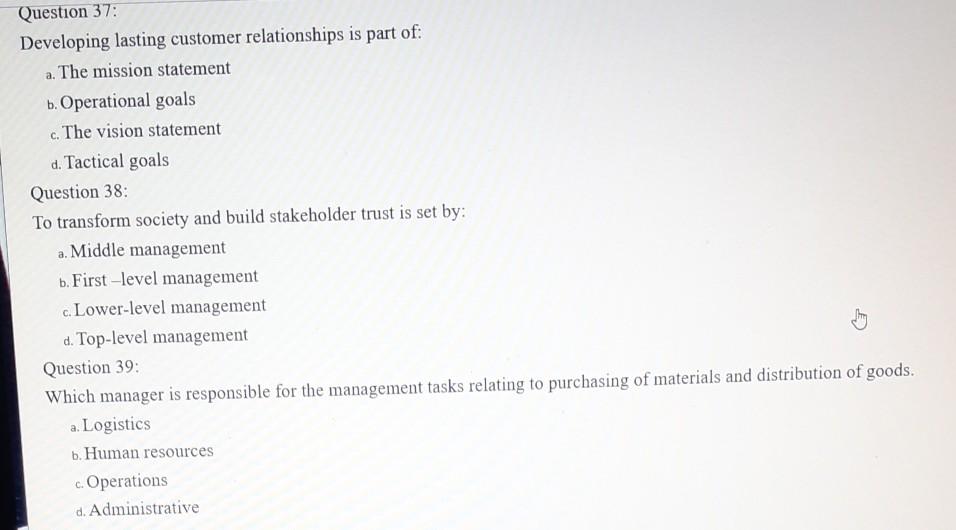
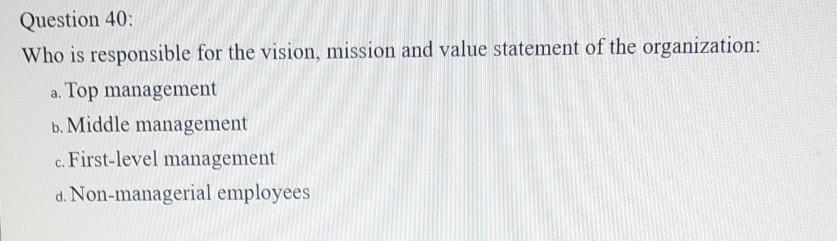
Section B: Multiple choice questions (1x40) Question 1: Typical job titles of middle management include the following: a. Supervisor, managing director, HR manager b. Facilities manager, plant manager, CEO c. Sales and marketing manager, head of department, operations manager d. Sales manager, logistics manager, team leader Question 2: The three main groups of managerial roles identified by Mintzberg are: a. Informational, interpersonal, decisional b. Decisional, interpersonal, intrapersonal Intrapersonal, communicational, informational d. Entrepreneurial, intrapersonal, decisional Question 3: The disseminator role require that managers: Keep abreast of developments in the relevant industry b. Share crucial information with those inside and outside the organization c. Make use of relevant information to inform decisions d. Make use of the organization's resources effectively c. a. Question 4: Human skills include: a. Communication and negotiation skills b. Administrative and computer skills c. The ability to understand abstract ideas d. The ability to apply technical skills Question 5 Organizations such as Johannesburg Country Club and Starfish Foundation can be classified as, what type of organization. a. Commercial b. Governmental c. Voluntary d. Non-profit Question 6: The human resources manager of an organization who facilitating a meeting on behalf of the CEO, whereby he or she informs employees that 20% of staff members will be retrenched due to the economic downswing and its subsequent impact on the organization's ability to sustain itself, can be classified as fulfilling which managerial role and management sub-role, a. Leader, informational b. Decisional, liaison person c. Interpersonal, disturbance handler d. Informational, spokesperson Question 7 Which of the following skills are important for managers to be effective: a. Cognitive, technical and human skills b. Conceptual, interpersonal and industry expert skills c. Technical communication and reasoning skills d. Intrapersonal, human and technical skills Question 8: Identify one of the list of examples below of a cognitive skill as part of interpersonal competency: a. Coping with set-backs and challenges b. Self-management skills c. The ability to present an argument d. Time management skills Question 9: For an Human resources manager to be effective, he/she should display the following important technical skill: a. Get along with colleagues within the same department b. Communicate effectively with employee queries c. Understand and keep abreast of the current labor legislation d. Deliver persuasive arguments Question 10: The following is a crucial cognitive skill for a marketing manager: a. Computer proficiency in market research software b. Being able to write and deliver excellent presentations c. Effective interpersonal skills d. Analyzing and responding to a competitors change in marketing strategy Question 11: The primary management tasks are: a. Planning, coordinating, corresponding, co-opting, control b. Planning, organizing, leading, co-opting, control c. Planning leading, organizing, motivating, control d. All of the above Question 12: Goals that are set for one to three years are known as: a. Lower-level b. Strategic c. Operational d. Tactical Question 13: A goal: a. Define what needs to be done in specific terms b. States general targets to be accomplished c.None of the above d. All the above a. Question 14: Plans that provide direction for activities to be performed are: Specific plans b. Standing plans c. Directional plans d. Single-use plans Question 15: Planning is: a. A management activity b. Related to the mission and objectives c. Looking to the future and deciding where the organization will be d. All of the above Question 16: The difference between a goal and objectives: a. Goals are short term while goals are long term b. Goals outline general targets to be accomplished while objectives outline what is to be done in specific terms c. Goals relate to the organization while objectives relate to individuals d. None of the above Question 17: When employees are part of the goal-setting process, this is kwon as: a. Top-down b. Management by objectives c. Middle management d. Operational Question 18: Strategic decisions are: a. Tactical decisions outlining ways to outwit competitors b. Operational decisions involving all the business functions c. Deciding which focus on the strategy the organization will follow d. Specific to a particular department Question 19: Adaptive decisions are based upon: a. Response to relatively uncommon or unusual problems b. Almost every day on all levels of management c. In response to familiar or common problems d. All of the above Question 23: There are two major components involved in organizing, namely: a. Resources b. Design Structure d. All the above c. e. None of the above Question 24: The second stage in the organizing process include: a. Setting goals and objectives b. Resource management Organizational Design d. All the above Question 25: The Matrix organizational structure is typical of which kind of organizational environment? a. Manufacturing b. Service c. Closed d. Project Question 26: List the four types of divisional structure: a. Place, formal, job, industry b. Product, job, place, customer c. Function, product. geographic, customer d. Service, geographic, functional, customer Question 27: In the line organizational structure every subordinate: a. Has someone reporting to him her b. Has one immediate line-manager supervisor Is empowered to make decisions on their own d. Operates in one functional area of the business C. To: C Question 23: There are two major components involved in organizing, namely: a. Resources b. Design c. Structure d. All the above e. None of the above Question 24 The second stage in the organizing process include: Setting goals and objectives b. Resource management c. Organizational Design d. All the above Question 28: Identify the seven types of organizational structures: a. Hierarchal, formative, project, matrix, central, line, organizational b. Line, Line and staff, functional, deviational, project, matrix, team c. Normative, centralized, line, functional, de-centralized, neutral, matrix d. None of the above Question 29: An organization's hierarchy of reporting relationships refer to: a. Chain of command b. Span of control c. Unity of command d. Matrix control Question 30: The legal and formal right to give orders and take decisions is known as: a. Power b. Authority c. Authority and responsibility d. Responsibility Question 31: When a manager has a wide span of control, this is known as: a. Vertical appearance b. Upright appearance Perpendicular appearance d. Flattened appearance Question 32: Which category form part of the management task of organizing? a. Drawing up a training manual for new employees b. Determining the standards of performance for existing jobs Separating existing tasks d. Designing a proposed organizational structure Question 33: The trend towards the degree of specialization in modern enterprises is the result of: a. Increasingly more specialization in technology b. Increasingly more people employed in enterprises c. Increasingly more differences in individual ability d. All of the above c. Question 34: When the marketing manager tells the purchasing manager what she could do to improve relations with a particular supplier, it is an example of a. Functional authority b. Staff authority c.Line Authority d. Line and staff authority Question 35: Which of the following are not meaningful objectives? a. To increase market share in the next two years b. To improve the labor turnover by 15% pa c. To reduce the reject rate by 3.5% pa d. All the above Question 36: Entrepreneurial firms, which operate in a dynamic environment, needs to maintain a : a. Formalized structure b. Bureaucratic structure c. Inflexible structure d. Flexible structure L > Question 37: Developing lasting customer relationships is part of: a. The mission statement b. Operational goals c. The vision statement d. Tactical goals Question 38: To transform society and build stakeholder trust is set by: a. Middle management b. First-level management c.Lower-level management d. Top-level management Question 39: Which manager is responsible for the management tasks relating to purchasing of materials and distribution of goods. a. Logistics b. Human resources c. Operations d. Administrative Question 40: Who is responsible for the vision, mission and value statement of the organization: a. Top management b. Middle management c. First-level management d. Non-managerial employees
Step by Step Solution
There are 3 Steps involved in it
1 Expert Approved Answer
Step: 1 Unlock

Question Has Been Solved by an Expert!
Get step-by-step solutions from verified subject matter experts
Step: 2 Unlock
Step: 3 Unlock
 Study Help