Question: SECTION C: CASE STUDY (25 MARKS) Read the case and answer ALL questions that follow You Work Where? Yahoo!, a pioneer in Web search and
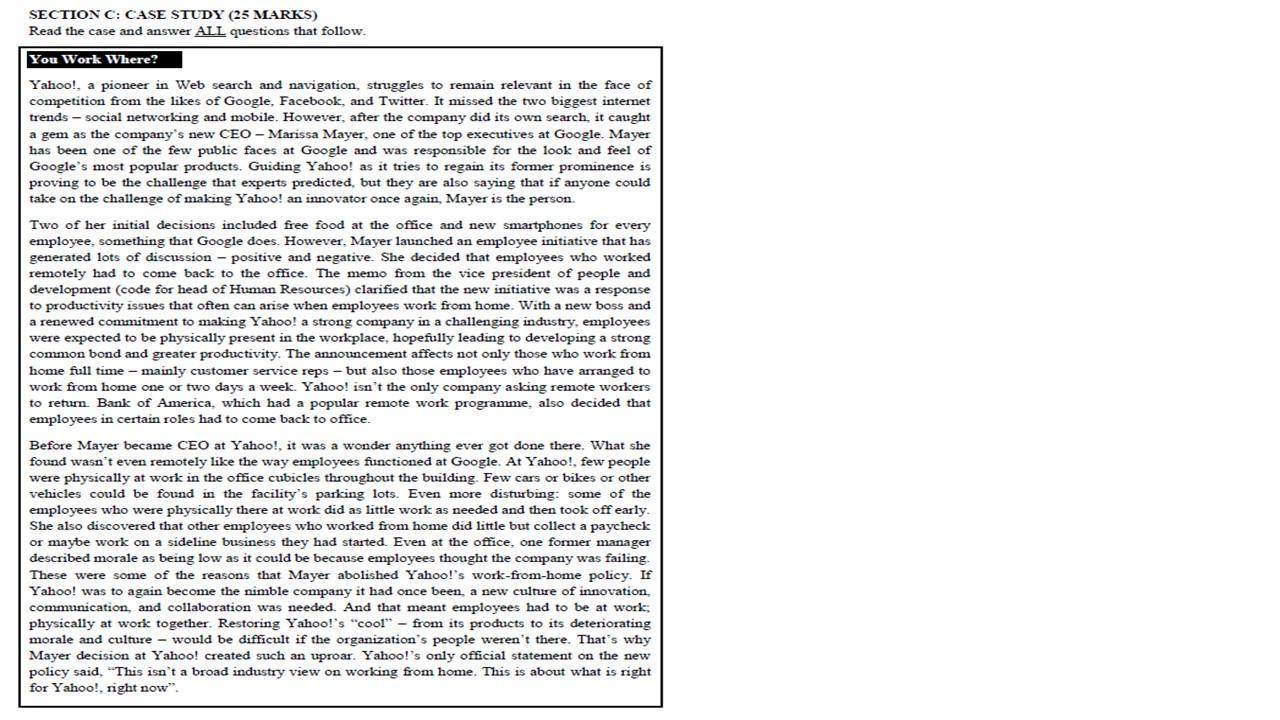
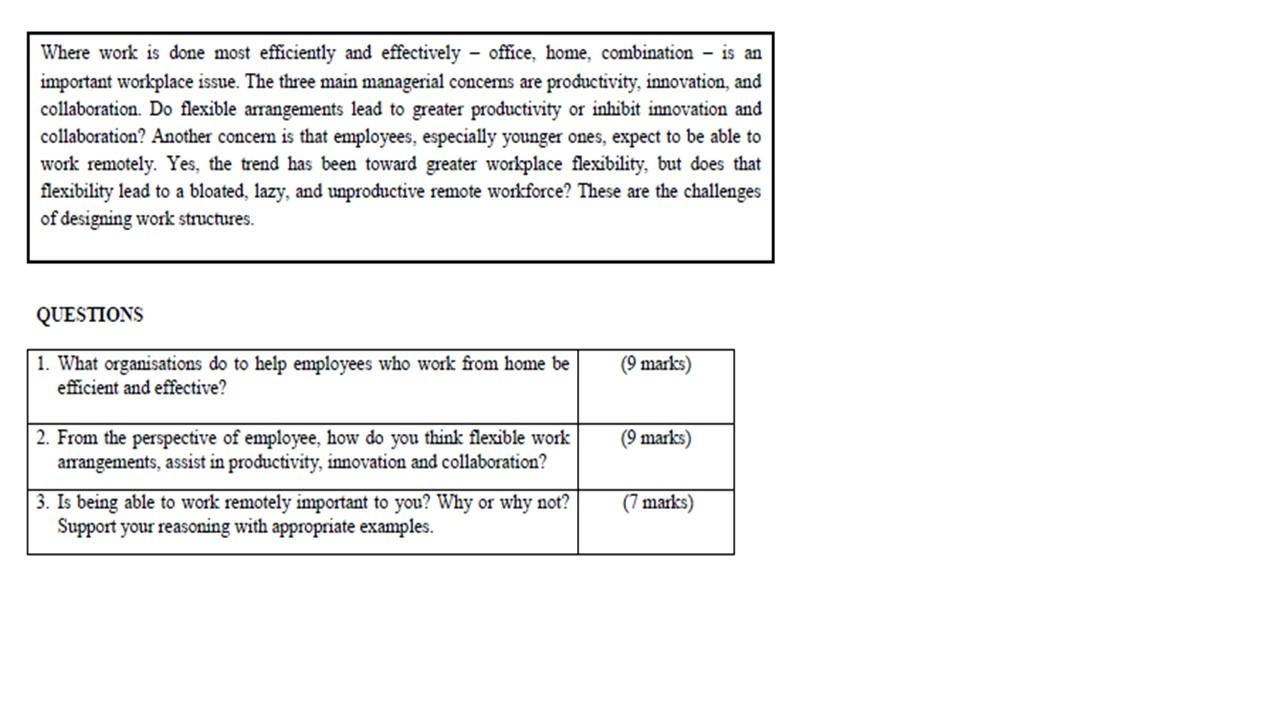
SECTION C: CASE STUDY (25 MARKS) Read the case and answer ALL questions that follow You Work Where? Yahoo!, a pioneer in Web search and navigation, struggles to remain relevant in the face of competition from the likes of Google, Facebook, and Twitter. It missed the two biggest internet trends social networking and mobile. However, after the company did its own search, it caught a gem as the company's new CEO - Marissa Mayer, one of the top executives at Google. Mayer has been one of the few public faces at Google and was responsible for the look and feel of Google's most popular products. Guiding Yahoo! as it tries to regain its former prominence is proving to be the challenge that experts predicted, but they are also saying that if anyone could take on the challenge of making Yahoo! an innovator once again, Mayer is the person Two of her initial decisions included free food at the office and new smartphones for every employee, something that Google does. However, Mayer launched an employee initiative that has generated lots of discussion - positive and negative. She decided that employees who worked remotely had to come back to the office. The memo from the vice president of people and development (code for head of Human Resources) clarified that the new initiative was a to productivity issues that often can arise when employees work from home. With a new boss and a renewed commitment to making Yahoo! a strong company in a challenging industry, employees were expected to be physically present in the workplace, hopefully leading to developing a strong common bond and greater productivity. The announcement affects not only those who work from home full time - mainly customer service reps but also those employees who have arranged to work from home one or two days a week. Yahoo! isn't the only company asking remote workers to return Bank of America, which had a popular remote work programme, also decided that employees in certain roles had to come back to office Before Mayer became CEO at Yahoo!, it was a wonder anything ever got done there. What she found wasn't even remotely like the oyees functioned Goog At Yahoo!, few peo were physically at work in the office cubicles throughout the building. Few cars or bikes or other vehicles could be found in the facility's parking lots. Even more disturbing: some of the employees who were physically there at work did as little work as needed and then took off early She also discovered that other employees who worked from home did little but collect a or maybe work on a sideline business they had started. Even at the office, one former manager described morale as as being low as it could be because employees thought the company was failing These were some of the reasons that Mayer abolished Yahoo!'s work-from-bome policy If Yahoo! was to again become the nimble company it had once been a new culture of innovation communication, and collaboration was needed. And that meant employees had to be at work; physically at work together. Restoring Yahoo!'s "cool" - from its products to its deteriorating morale and culture would be difficult if the organization's people weren't there. That's why Mayer decision at Yahoo! created such an uproar. Yahoo!'s only official statement on the new policy said, "This isn't a broad industry view on working from home. This is about what is right for Yahoo!, right now". a paycheck Where work is done most efficiently and effectively - office, home, combination - is an important workplace issue. The three main managerial concerns are productivity, innovation, and collaboration. Do flexible arrangements lead to greater productivity or inhibit innovation and collaboration? Another concem is that employees, especially younger ones, expect to be able to work remotely. Yes, the trend has been toward greater workplace flexibility, but does that flexibility lead to a bloated, lazy, and unproductive remote workforce? These are the challenges of designing work structures. QUESTIONS (9 marks) 1. What organisations do to help employees who work from home be efficient and effective? (9 marks) 2. From the perspective of employee, how do you think flexible work arrangements, assist in productivity, innovation and collaboration? (7 marks) 3. Is being able to work remotely important to you? Why or why not? Support your reasoning with appropriate examples









 Study Help