Question: Select two organizations from the quality indicator section below and present the following for have a comparative analysis of each . Overview of the organization
Select two organizations from the quality indicator section below and present the following for have a comparative analysis of each .
- Overview of the organization and its commitment to quality in healthcare using data. Thisinformation could be through the organization's sections titled About Us, Mission and Vision, organizational chart, policies, etc.
- Explain how they collect, analyze and share data. For example, do they use primary or secondary data? What are the reporting requirements by a healthcare organization to this organization? Are their databases available to the public and if so, can they be manipulated for desired data?
- Discuss when you would use one of your selections over the other for data research and why? The underpinning of this question is to facilitate student critical thinking and analysis in determining when to use a specific website over another one.
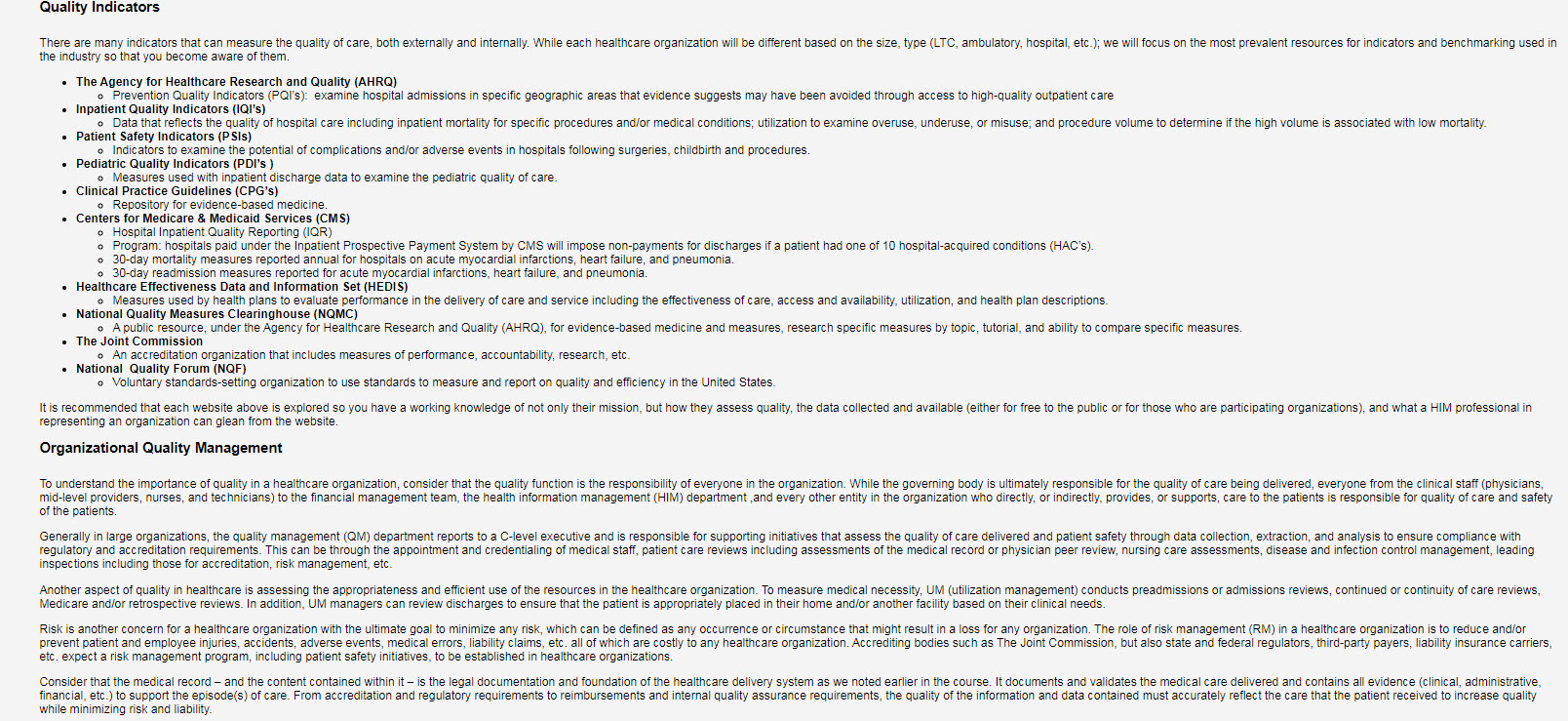
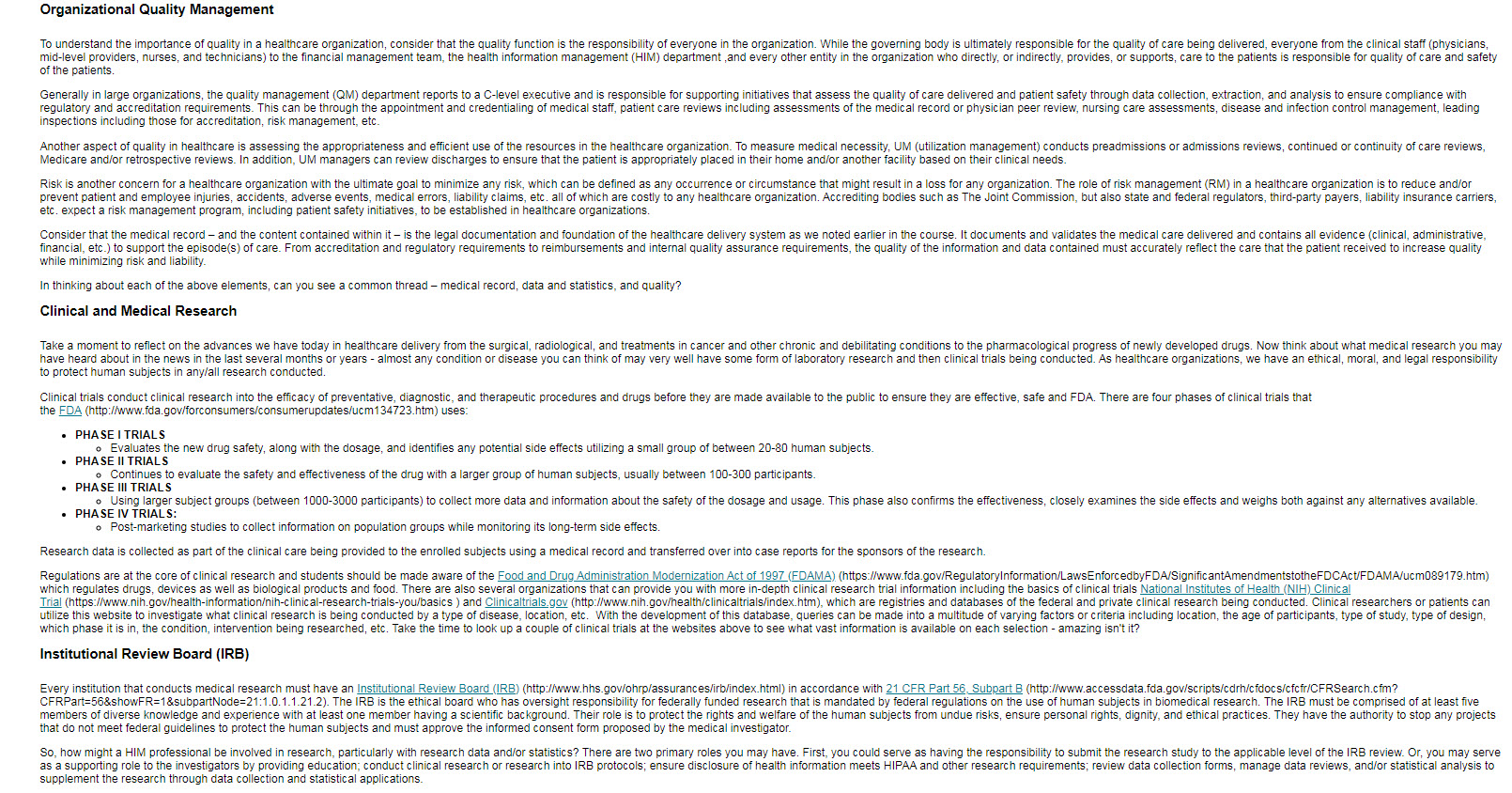
Quality Indicators There are many indicators that can measure the quality of care, both externally and internally. While each healthcare organization will be different based on the size, type (LTC, ambulatory, hospital, etc.); we will focus on the most prevalent resources for indicators and benchmarking used in the industry so that you become aware of them. . The Agency for Healthcare Research and Quality (AHRQ) . Prevention Quality Indicators (PQI's): examine hospital admissions in specific geographic areas that evidence suggests may have been avoided through access to high-quality outpatient care . Inpatient Quality Indicators (IQI's) . Patient Safety Indicators (PSIs) . Data that reflects the quality of hospital care including inpatient mortality for specific procedures and/or medical conditions; utilization to examine overuse, underuse, or misuse; and procedure volume to determine if the high volume is associated with low mortality. . Indicators to examine the potential of complications and/or adverse events in hospitals following surgeries, childbirth and procedures. Pediatric Quality Indicators (PDI's ) . Measures used with inpatient discharge data to examine the pediatric quality of care. . Clinical Practice Guidelines (CPG's) . Repository for evidence-based medicine. Centers for Medicare & Medicaid Services (CMS) Hospital Inpatient Quality Reporting (IQR) . Program: hospitals paid under the Inpatient Prospective Payment System by CMS will impose non-payments for discharges if a patient had one of 10 hospital-acquired conditions (HAC's). 30-day mortality measures reported annual for hospitals on acute myocardial infarctions, heart failure, and pneumonia. 30-day readmission measures reported for acute myocardial infarctions, heart failure, and pneumonia. . Healthcare Effectiveness Data and Information Set (HEDIS) . Measures used by health plans to evaluate performance in the delivery of care and service including the effectiveness of care, access and availability, utilization, and health plan descriptions. National Quality Measures Clearinghouse (NQMC) . The Joint Commission . A public resource, under the Agency for Healthcare Research and Quality (AHRQ), for evidence-based medicine and measures, research specific measures by topic, tutorial, and ability to compare specific measures. . An accreditation organization that includes measures of performance, accountability, research, etc. . National Quality Forum (NQF) . Voluntary standards-setting organization to use standards to measure and report on quality and efficiency in the United States. It is recommended that each website above is explored so you have a working knowledge of not only their mission, but how they assess quality, the data collected and available (either for free to the public or for those who are participating organizations), and what a HIM professional in representing an organization can glean from the website. Organizational Quality Management To understand the importance of quality in a healthcare organization, consider that the quality function is the responsibility of everyone in the organization. While the governing body is ultimately responsible for the quality of care being delivered, everyone from the clinical staff (physicians, mid-level providers, nurses, and technicians) to the financial management team, the health information management (HIM) department , and every other entity in the organization who directly, or indirectly, provides, or supports, care to the patients is responsible for quality of care and safety of the patients. Generally in large organizations, the quality management (QM) department reports to a C-level executive and is responsible for supporting initiatives that assess the quality of care delivered and patient safety through data collection, extraction, and analysis to ensure compliance with regulatory and accreditation requirements. This can be through the appointment and credentialing of medical staff, patient care reviews including assessments of the medical record or physician peer review, nursing care assessments, disease and infection control management, leading inspections including those for accreditation, risk management, etc. Another aspect of quality in healthcare is assessing the appropriateness and efficient use of the resources in the healthcare organization. To measure medical necessity, UM (utilization management) conducts preadmissions or admissions reviews, continued or continuity of care reviews, Medicare and/or retrospective reviews. In addition, UM managers can review discharges to ensure that the patient is appropriately placed in their home and/or another facility based on their clinical needs. Risk is another concern for a healthcare organization with the ultimate goal to minimize any risk, which can be defined as any occurrence or circumstance that might result in a loss for any organization. The role of risk management (RM) in a healthcare organization is to reduce and/or prevent patient and employee injuries, accidents, adverse events, medical errors, liability claims, etc. all of which are costly to any healthcare organization. Accrediting bodies such as The Joint Commission, but also state and federal regulators, third-party payers, liability insurance carriers, etc. expect a risk management program, including patient safety initiatives, to be established in healthcare organizations. Consider that the medical record - and the content contained within it - is the legal documentation and foundation of the healthcare delivery system as we noted earlier in the course. It documents and validates the medical care delivered and contains all evidence (clinical, administrative, financial, etc.) to support the episode(s) of care. From accreditation and regulatory requirements to reimbursements and internal quality assurance requirements, the quality of the information and data contained must accurately reflect the care that the patient received to increase quality while minimizing risk and liability.Organizational Quality Management To understand the importance of quality in a healthcare organization, consider that the quality function is the responsibility of everyone in the organization. While the governing body is ultimately responsible for the quality of care being delivered, everyone from the clinical staff (physicians, mid-level providers, nurses, and technicians) to the financial management team, the health information management (HIM) department , and every other entity in the organization who directly, or indirectly, provides, or supports, care to the patients is responsible for quality of care and safety of the patients Generally in large organizations, the quality management (QM) department reports to a C-level executive and is responsible for supporting initiatives that assess the quality of care delivered and patient safety through data collection, extraction, and analysis to ensure compliance with regulatory and accreditation requirements. This can be through the appointment and credentialing of medical staff, patient care reviews including assessments of the medical record or physician peer review, nursing care assessments, disease and infection control management, leading inspections including those for accreditation, risk management, etc. Another aspect of quality in healthcare is assessing the appropriateness and efficient use of the resources in the healthcare organization. To measure medical necessity, UM (utilization management) conducts preadmissions or admissions reviews, continued or continuity of care reviews, Medicare and/or retrospective reviews. In addition, UM managers can review discharges to ensure that the patient is appropriately placed in their home and/or another facility based on their clinical needs. Risk is another concern for a healthcare organization with the ultimate goal to minimize any risk, which can be defined as any occurrence or circumstance that might result in a loss for any organization. The role of risk management (RM) in a healthcare organization is to reduce and/or prevent patient and employee injuries, accidents, adverse events, medical errors, liability claims, etc. all of which are costly to any healthcare organization. Accrediting bodies such as The Joint Commission, but also state and federal regulators, third-party payers, liability insurance carriers, etc. expect a risk management program, including patient safety initiatives, to be established in healthcare organizations. Consider that the medical record - and the content contained within it - is the legal documentation and foundation of the healthcare delivery system as we noted earlier in the course. It documents and validates the medical care delivered and contains all evidence (clinical, administrative, financial, etc.) to support the episode(s) of care. From accreditation and regulatory requirements to reimbursements and internal quality assurance requirements, the quality of the information and data contained must accurately reflect the care that the patient received to increase quality while minimizing risk and liability. In thinking about each of the above elements, can you see a common thread - medical record, data and statistics, and quality? Clinical and Medical Research Take a moment to reflect on the advances we have today in healthcare delivery from the surgical, radiological, and treatments in cancer and other chronic and debilitating conditions to the pharmacological progress of newly developed drugs. Now think about what medical research you may have heard about in the news in the last several months or years - almost any condition or disease you can think of may very well have some form of laboratory research and then clinical trials being conducted. As healthcare organizations, we have an ethical, moral, and legal responsibility to protect human subjects in any/all research conducted. Clinical trials conduct clinical research into the efficacy of preventative, diagnostic, and therapeutic procedures and drugs before they are made available to the public to ensure they are effective, safe and FDA. There are four phases of clinical trials that the FDA (http://www.ida.gov/forconsumers/consumerupdates/ucm134723.htm) uses: . PHASE I TRIALS . Evaluates the new drug safety, along with the dosage, and identifies any potential side effects utilizing a small group of between 20-80 human subjects. . PHASE II TRIALS . PHASE III TRIALS . Continues to evaluate the safety and effectiveness of the drug with a larger group of human subjects, usually between 100-300 participants. . PHASE IV TRIALS: . Using larger subject groups (between 1000-3000 participants) to collect more data and information about the safety of the dosage and usage. This phase also confirms the effectiveness, closely examines the side effects and weighs both against any alternatives available. o Post-marketing studies to collect information on population groups while monitoring its long-term side effects. Research data is collected as part of the clinical care being provided to the enrolled subjects using a medical record and transferred over into case reports for the sponsors of the research. Regulations are at the core of clinical research and students should be made aware of the Food and Drug Administration Modernization Act of 1997 (FDAMA) (https://www.fda.gov/RegulatoryInformation/LawsEnforcedbyFDA/SignificantAmendmentstotheFDCAct/FDAMA/ucm089179.htm) which regulates drugs, devices as well as biological products and food. There are also several organizations that can provide you with more in-depth clinical research trial information including the basics of clinical trials National Institutes of Health (NIH)_Clinical Trial (https://www.nih.gov/health-informationih-clinical-research-trials-you/basics ) and Clinicaltrials.gov (http://www.nih.gov/health/clinicaltrials/index.htm), which are registries and databases of the federal and private clinical research being conducted. Clinical researchers or patients can utilize this website to investigate what clinical research is being conducted by a type of disease, location, etc. With the development of this database, queries can be made into a multitude of varying factors or criteria including location, the age of participants, type of study, type of design, which phase it is in, the condition, intervention being researched, etc. Take the time to look up a couple of clinical trials at the websites above to see what vast information is available on each selection - amazing isn't it? Institutional Review Board (IRB) Every institution that conducts medical research must have an Institutional Review Board (IRB) (http://www.hhs.gov/ohrp/assurances/irb/index.html) in accordance with 21 CFR Part 56, Subpart B (http://www.accessdata.fda.gov/scripts/cdrh/cfdocs/cfcfr/CFRSearch.cim? CFRPart=56&showFR=1&subpartNode=21:1.0.1.1.21.2). The IRB is the ethical board who has oversight responsibility for federally funded research that is mandated by federal regulations on the use of human subjects in biomedical research. The IRB must be comprised of at least five members of diverse knowledge and experience with at least one member having a scientific background. Their role is to protect the rights and welfare of the human subjects from undue risks, ensure personal rights, dignity, and ethical practices. They have the authority to stop any projects that do not meet federal guidelines to protect the human subjects and must approve the informed consent form proposed by the medical investigator. So, how might a HIM professional be involved in research, particularly with research data and/or statistics? There are two primary roles you may have. First, you could serve as having the responsibility to submit the research study to the applicable level of the IRB review. Or, you may serve as a supporting role to the investigators by providing education; conduct clinical research or research into IRB protocols; ensure disclosure of health information meets HIPAA and other research requirements; review data collection forms, manage data reviews, and/or statistical analysis to supplement the research through data collection and statistical applications









 Study Help