







Question: solve please 4.(a) A retail chain operates a grocery store in a neighbourhood. This store has a single checkout counter with a full-time operator. Customers
solve please
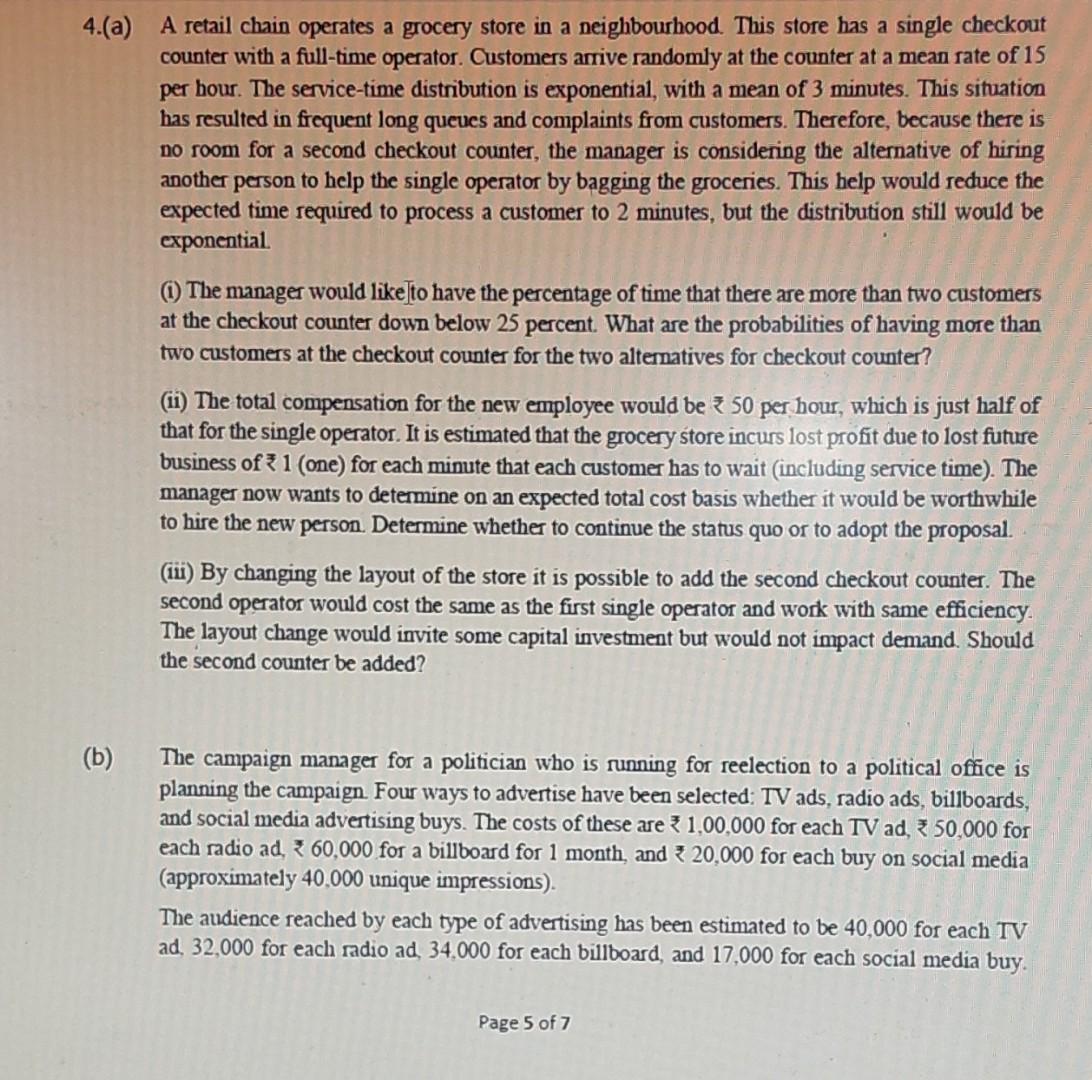
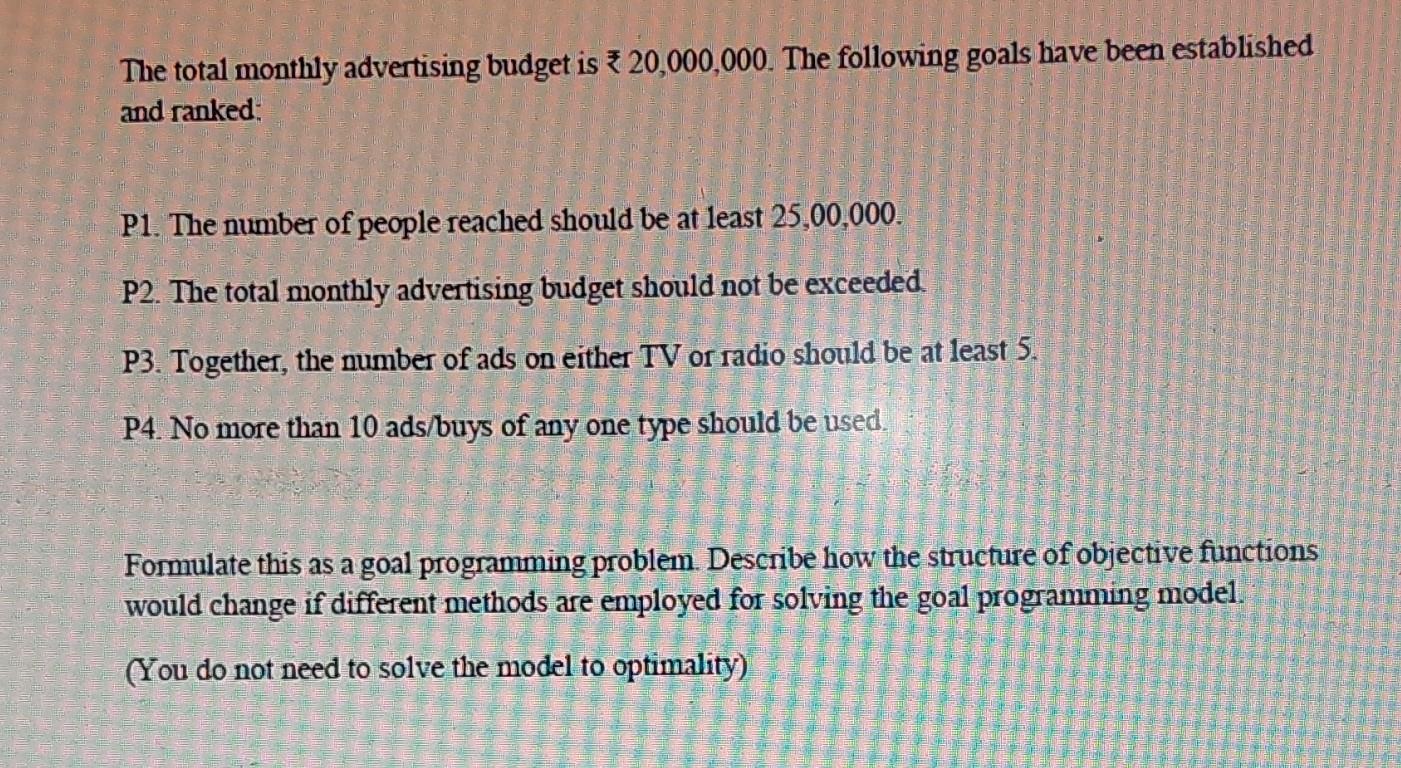
4.(a) A retail chain operates a grocery store in a neighbourhood. This store has a single checkout counter with a full-time operator. Customers arrive randomly at the counter at a mean rate of 15 per hour. The service-time distribution is exponential, with a mean of 3 minutes. This situation has resulted in frequent long queues and complaints from customers. Therefore, because there is no room for a second checkout counter, the manager is considering the alternative of hiring another person to help the single operator by bagging the groceries. This help would reduce the expected time required to process a customer to 2 minutes, but the distribution still would be exponential. (i) The manager would like]to have the percentage of time that there are more than two customers at the checkout counter down below 25 percent. What are the probabilities of having more than two customers at the checkout counter for the two alternatives for checkout counter? (ii) The total compensation for the new employee would be 50 per hour, which is just half of that for the single operator. It is estimated that the grocery store incurs lost profit due to lost future business of 1 (one) for each minute that each customer has to wait (including service time). The manager now wants to determine on an expected total cost basis whether it would be worthwhile to hire the new person. Determine whether to continue the status quo or to adopt the proposal. (iii) By changing the layout of the store it is possible to add the second checkout counter. The second operator would cost the same as the first single operator and work with same efficiency. The layout change would invite some capital investment but would not impact demand. Should the second counter be added? (b) The campaign manager for a politician who is running for reelection to a political office is planning the campaign. Four ways to advertise have been selected: TV ads, radio ads, billboards, and social media advertising buys. The costs of these are 1,00,000 for each TV ad, 50,000 for each radio ad, 60,000 for a billboard for 1 month, and 20,000 for each buy on social media (approximately 40,000 unique impressions). The audience reached by each type of advertising has been estimated to be 40,000 for each TV ad, 32,000 for each radio ad, 34,000 for each billboard, and 17,000 for each social media buy. Page 5 of 7 The total monthly advertising budget is 20,000,000. The following goals have been established and ranked: P1. The number of people reached should be at least 25,00,000. P2. The total monthly advertising budget should not be exceeded. P3. Together, the number of ads on either TV or radio should be at least 5 . P4. No more than 10 ads/buys of any one type should be used. Formulate this as a goal programming problem. Describe how the structure of objective functions would change if different methods are employed for solving the goal programming model. (You do not need to solve the model to optimality)
Step by Step Solution
There are 3 Steps involved in it

Get step-by-step solutions from verified subject matter experts
 Study Help