







Question: Solve the given programming question in C/C++. You can try submitting your code on Kattis website and see all test cases pass. Once done also
Solve the given programming question in C/C++. You can try submitting your code on Kattis website and see all test cases pass. Once done also write a summary of your journey in developing the solution as asked below. 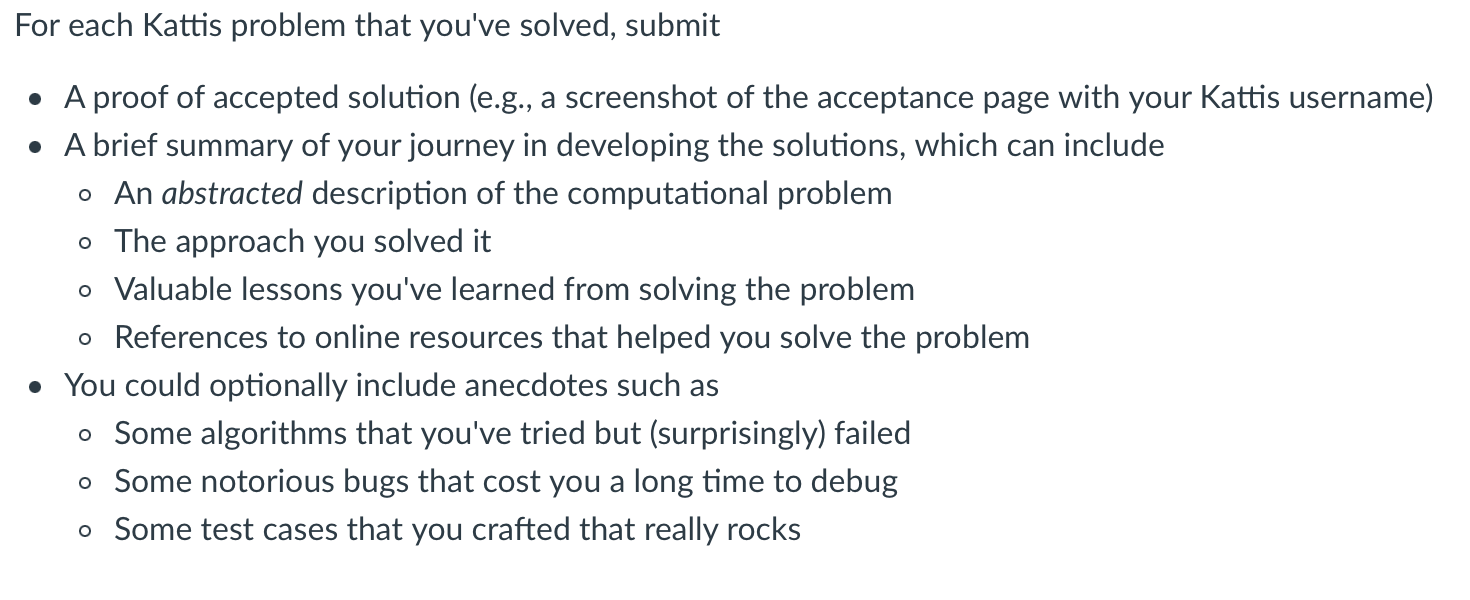
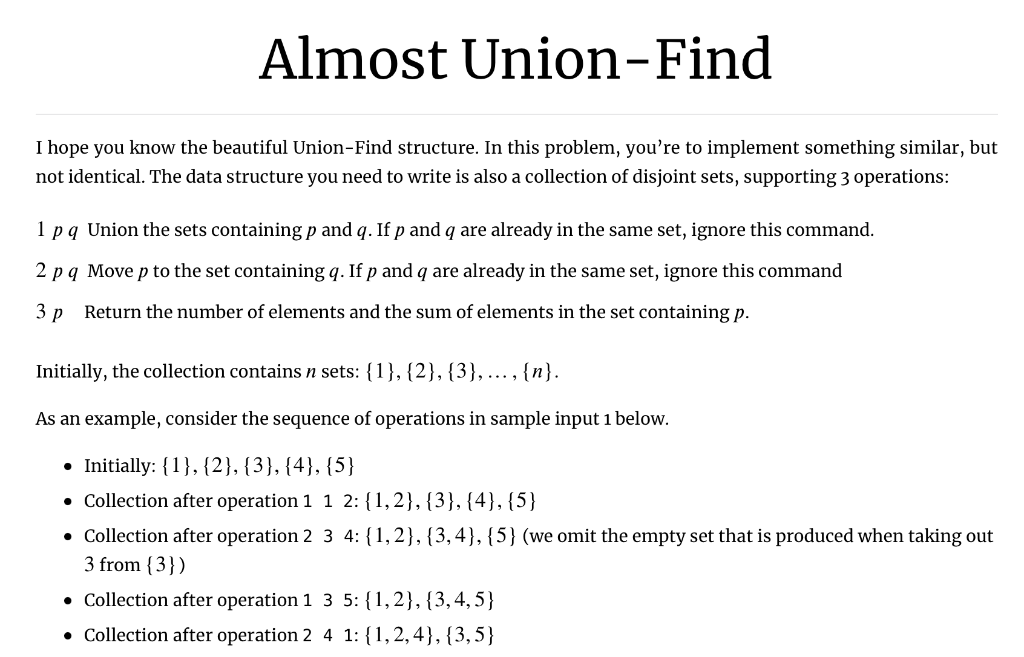
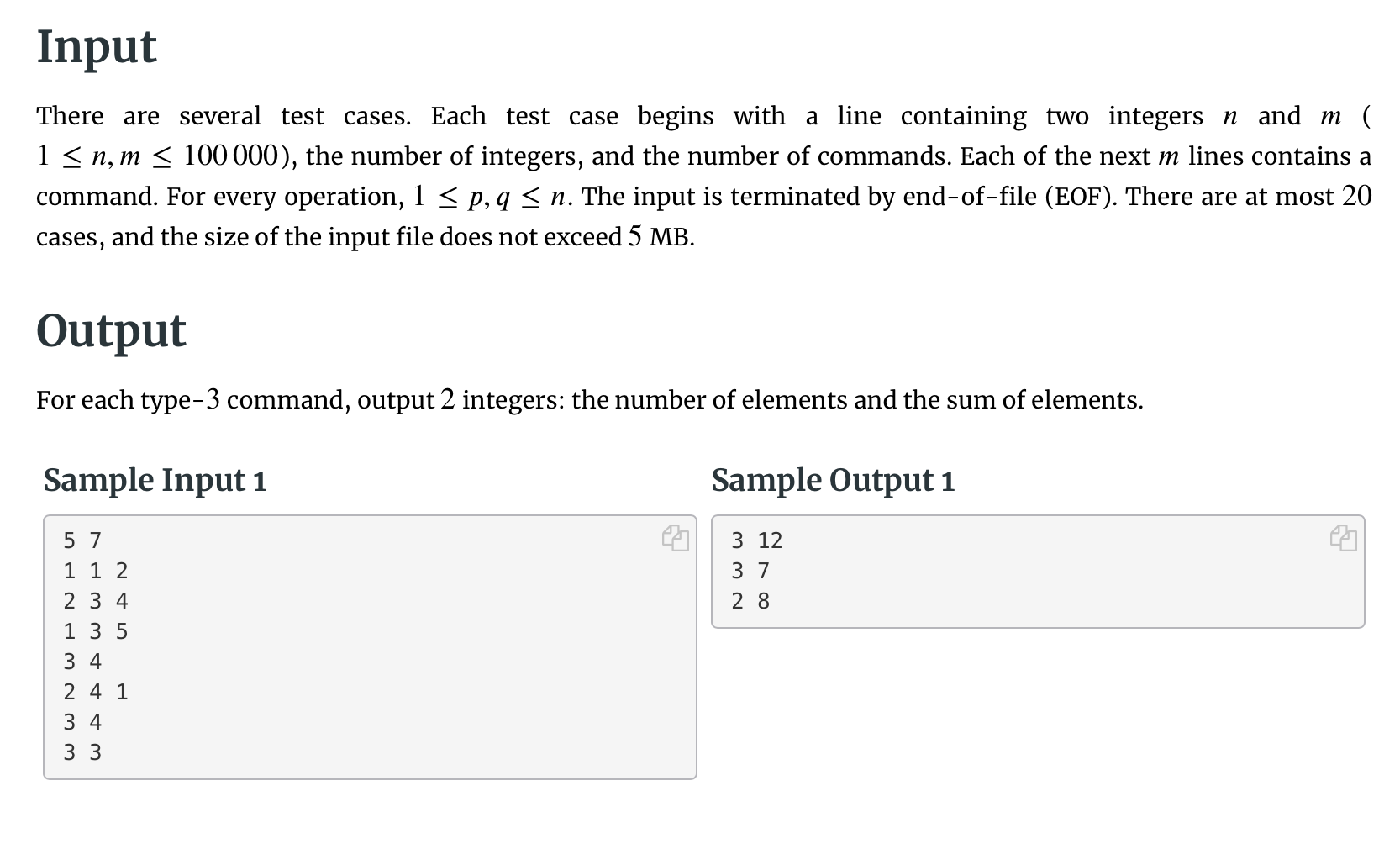
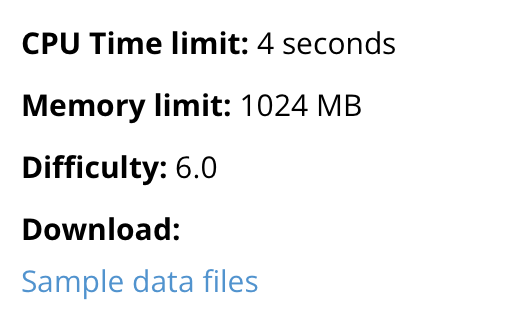
For each Kattis problem that you've solved, submit A proof of accepted solution (e.g., a screenshot of the acceptance page with your Kattis username) A brief summary of your journey in developing the solutions, which can include o An abstracted description of the computational problem o The approach you solved it o Valuable lessons you've learned from solving the problem o References to online resources that helped you solve the problem You could optionally include anecdotes such as o Some algorithms that you've tried but (surprisingly) failed o Some notorious bugs that cost you a long time to debug o Some test cases that you crafted that really rocks Almost Union-Find I hope you know the beautiful Union-Find structure. In this problem, you're to implement something similar, but not identical. The data structure you need to write is also a collection of disjoint sets, supporting 3 operations: 1 p q Union the sets containing p and q. If p and q are already in the same set, ignore this command. 2 p q Move p to the set containing q. If p and q are already in the same set, ignore this command 3 p Return the number of elements and the sum of elements in the set containing p. Initially, the collection contains n sets: {1}, {2}, {3},..., {n}. As an example, consider the sequence of operations in sample input 1 below. C Initially: {1}, {2},{3}, {4}, {5} Collection after operation 1 1 2:{1,2},{3}, {4},{5} Collection after operation 2 3 4: {1,2},{3,4}, {5} (we omit the empty set that is produced when taking out 3 from {3}) Collection after operation 1 3 5:{1,2}, {3,4,5} Collection after operation 2 4 1:{1,2,4},{3,5} Input There are several test cases. Each test case begins with a line containing two integers n and m ( 1
Step by Step Solution
There are 3 Steps involved in it

Get step-by-step solutions from verified subject matter experts
 Study Help