







Question: Startup period ( 1 . e . , all of this happens on January 1 ) a . Finance with $ 2 0 0 ,
Startup period e all of this happens on January
a Finance with $;$ is contributed by Doreen in exchange for shares
of common stock ownership and $ is borrowed, longterm with a
'balloon' repayment due in years from a bank at annual interest, due annually.
b Buy equipment, which she thinks will last years, for $ in cash.
c Sign a year store lease and pay a $ security deposit and $ for January
March rent, both in cash.
d Prepay a $ annual premium for a property liability insurance policy, in cash.
e Acquire $ of inventory from food suppliers on credit, with payment due in days
Operating period ie all of this happens between January and January
Sell of the food inventory which cost $ for $ receiving $ in
cash and the rest is due within days.
Pay $ of the accounts payable for the inventory acquired in step e above.
Acquire $ of additional food inventory on credit, payment due in days.
Collect $ of accounts receivable from customers in step above.
Pay $ in salaries, in cash, for the period from January to January weeks
Required:
Provide journal entries for the 'explicit' transactions.
Provide the necessary "adjusting" journal entries as of January if any so that the
resulting financial statements are on an "accrual" basis in accordance with US GAAP.
Provide the Income Statement for the month of January ie ending January
Provide the Balance Sheet as of January
What is Operating Cash Flow for the month of January ie ending January Startup period ie all of this happens on January
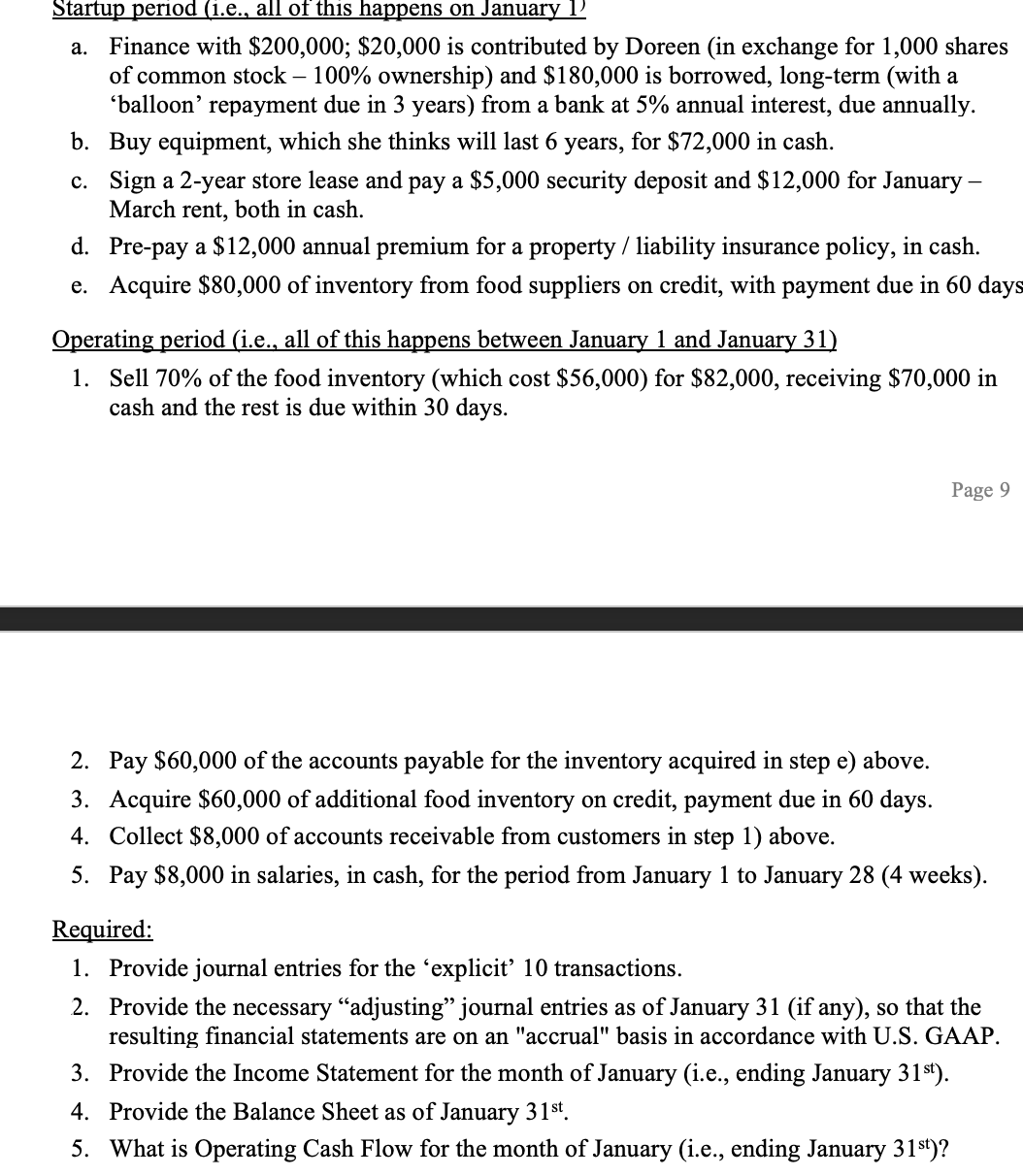
a Finance with $; $ is contributed by Doreen in exchange for shares of common stock ownership and $ is borrowed, longterm with a balloon repayment due in years from a bank at annual interest, due annually.
b Buy equipment, which she thinks will last years, for $ in cash.
c Sign a year store lease and pay a $ security deposit and $ for January March rent, both in cash.
d Prepay a $ annual premium for a property liability insurance policy, in cash.
e Acquire $ of inventory from food suppliers on credit, with payment due in days.
Operating period ie all of this happens between January and January
Sell of the food inventory which cost $ for $ receiving $ in cash and the rest is due within days.
Pay $ of the accounts payable for the inventory acquired in step e above.
Acquire $ of additional food inventory on credit, payment due in days.
Collect $ of accounts receivable from customers in step above.
Pay $ in salaries, in cash, for the period from January to January weeks
Required:
Provide journal entries for the explicit transactions.
Provide the necessary adjusting journal entries as of January if any so that the resulting financial statements are on an "accrual" basis in accordance with US GAAP.
Provide the Income Statement for the month of January ie ending January st
Provide the Balance Sheet as of January st
What is Operating Cash Flow for the month of January ie ending January st
Step by Step Solution
There are 3 Steps involved in it
1 Expert Approved Answer
Step: 1 Unlock

Question Has Been Solved by an Expert!
Get step-by-step solutions from verified subject matter experts
Step: 2 Unlock
Step: 3 Unlock
 Study Help