







Question: Stat 2 Lab #21: Tests for comparing groups Learning objectives: Carry out two-sample 2 tests for observational studies Carry out two-sample 2 tests for experiments
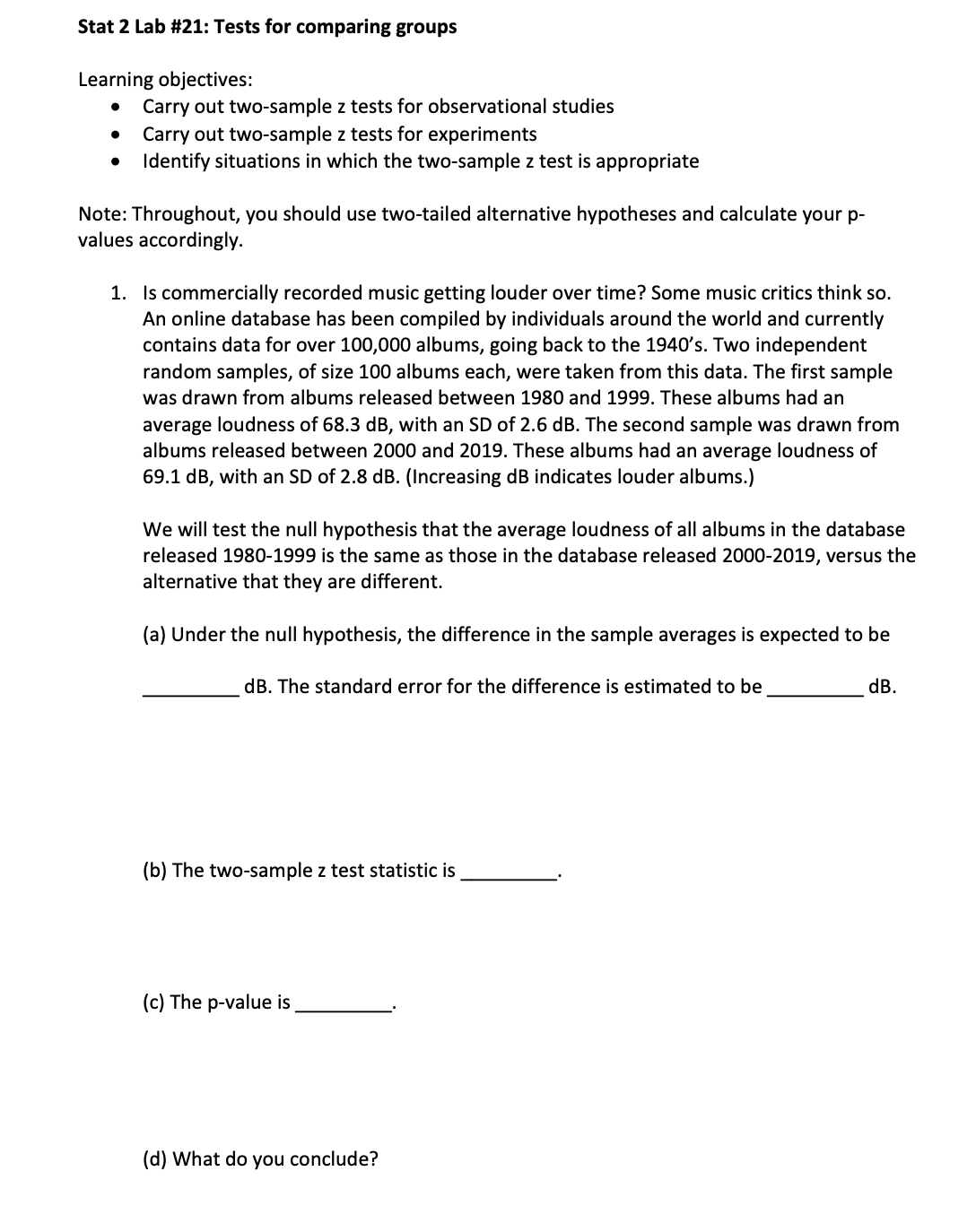
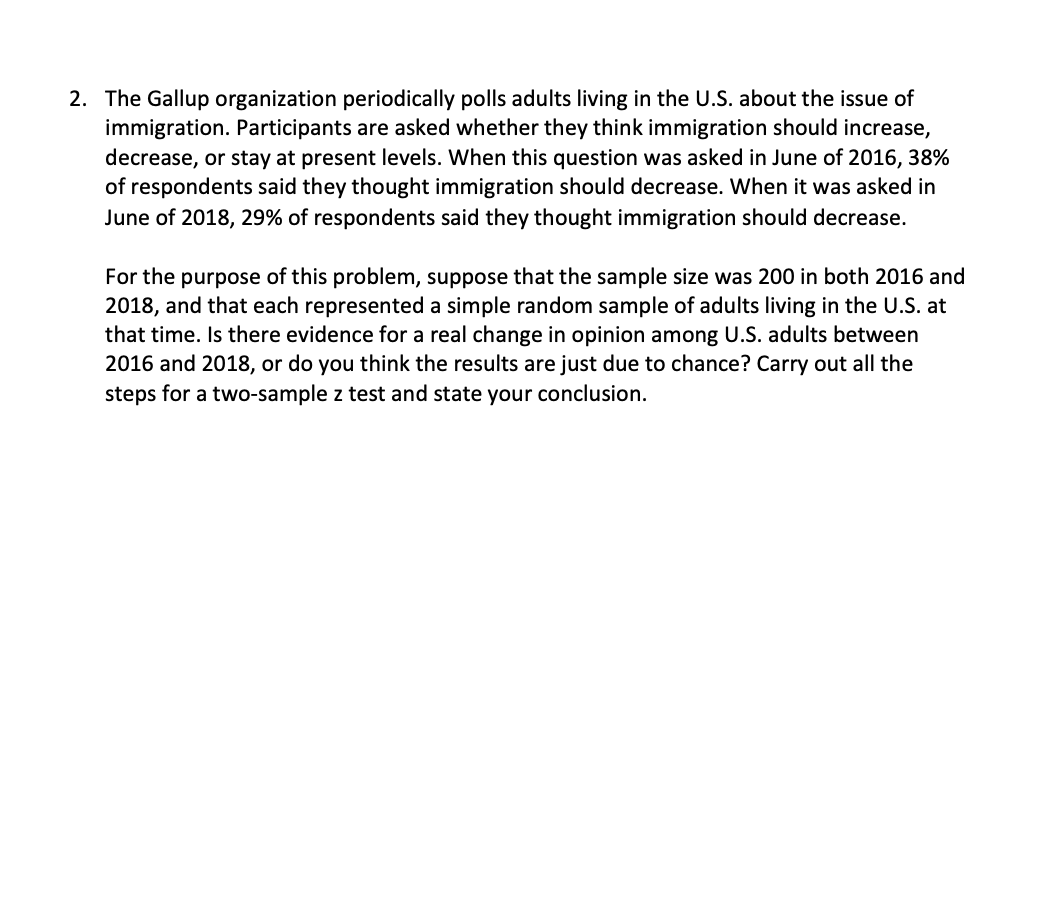
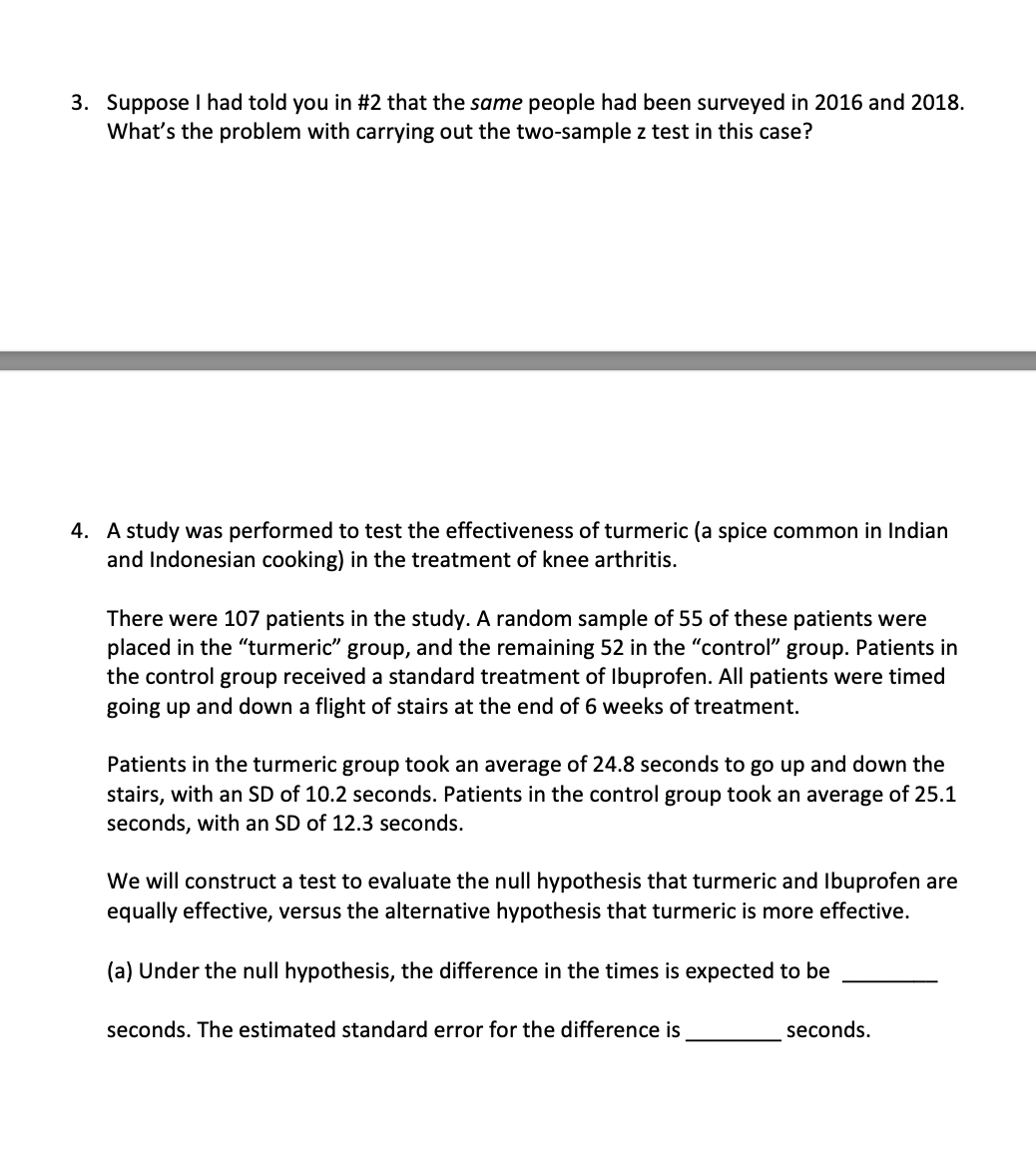
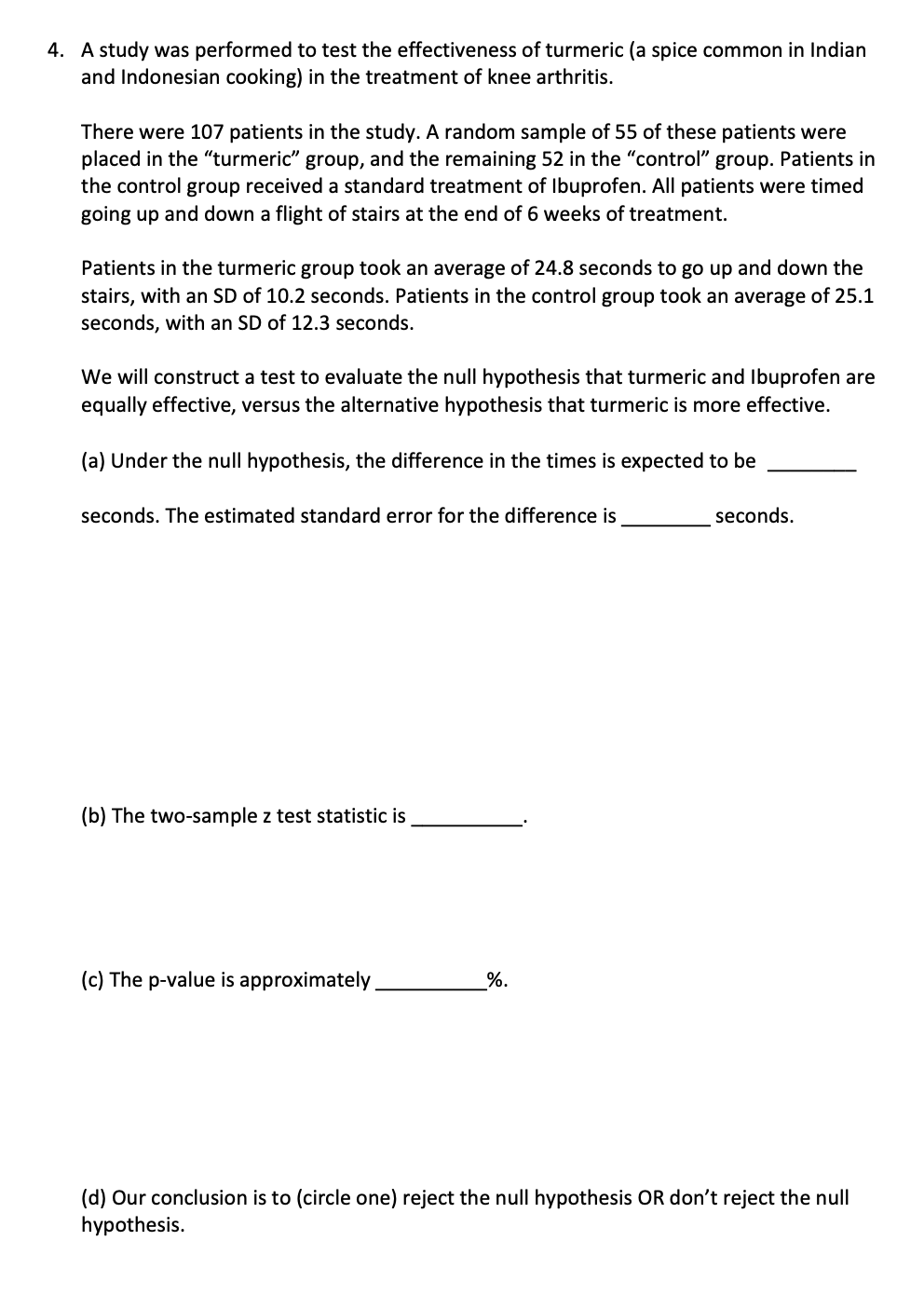
Stat 2 Lab #21: Tests for comparing groups Learning objectives: Carry out two-sample 2 tests for observational studies Carry out two-sample 2 tests for experiments Identify situations in which the two-sample 2 test is appropriate Note: Throughout, you should use two-tailed alternative hypotheses and calculate your p- values accordingly. 1. Is commercially recorded music getting louder over time? Some music critics think so. An online database has been compiled by individuals around the world and currently contains data for over 100,000 albums, going back to the 1940's. Two independent random samples, of size 100 albums each, were taken from this data. The first sample was drawn from albums released between 1980 and 1999. These albums had an average loudness of 68.3 dB, with an SD of 2.6 dB. The second sample was drawn from albums released between 2000 and 2019. These albums had an average loudness of 69.1 dB, with an SD of 2.8 dB. (Increasing dB indicates louder albums.) We will test the null hypothesis that the average loudness of all albums in the database released 1980-1999 is the same as those in the database released 2000-2019, versus the alternative that they are different. (a) Under the null hypothesis, the difference in the sample averages is expected to be dB. The standard error for the difference is estimated to be dB. (b) The two-sample 2 test statistic is (c) The p-value is (d) What do you conclude? 2. The Gallup organization periodically polls adults living in the U.S. about the issue of immigration. Participants are asked whether they think immigration should increase, decrease, or stay at present levels. When this question was asked in June of 2015, 38% of respondents said they thought immigration should decrease. When it was asked in June of 2018, 29% of respondents said they thought immigration should decrease. For the purpose of this problem, suppose that the sample size was 200 in both 2016 and 2018, and that each represented a simple random sample of adults living in the U.S. at that time. Is there evidence for a real change in opinion among U.S. adults between 2015 and 2018, or do you think the results arejust due to chance? Carry out all the steps for a two-sample 2 test and state your conclusion. 3. Suppose I had told you in #2 that the some people had been surveyed in 2016 and 2018. What's the problem with carrying out the two-sample 2 test in this case? 4. A study was performed to test the effectiveness of turmeric (a spice common in Indian and Indonesian cooking) in the treatment of knee arthritis. There were 107 patients in the study. A random sample of 55 of these patients were placed in the \"turmeric\" group, and the remaining 52 in the \"control\" group. Patients in the control group received a standard treatment of Ibuprofen. All patients were timed going up and down a flight of stairs at the end of 6 weeks of treatment. Patients in the turmeric group took an average of 24.8 seconds to go up and down the stairs, with an SD of 10.2 seconds. Patients in the control group took an average of 25.1 seconds, with an SD of 12.3 seconds. We will construct a test to evaluate the null hypothesis that turmeric and Ibuprofen are equally effective, versus the alternative hypothesis that turmeric is more effective. (a) Under the null hypothesis, the difference in the times is expected to be seconds. The estimated standard error for the difference is seconds. 4. A study was performed to test the effectiveness of turmeric (a spice common in Indian and Indonesian cooking) in the treatment of knee arthritis. There were 107 patients in the study. A random sample of 55 of these patients were placed in the \"turmeric\" group, and the remaining 52 in the \"control\" group. Patients in the control group received a standard treatment of Ibuprofen. All patients were timed going up and down a flight of stairs at the end of 6 weeks of treatment. Patients in the turmeric group took an average of 24.8 seconds to go up and down the stairs, with an SD of 10.2 seconds. Patients in the control group took an average of 25.1 seconds, with an SD of 12.3 seconds. We will construct a test to evaluate the null hypothesis that turmeric and Ibuprofen are equally effective, versus the alternative hypothesis that turmeric is more effective. (a) Under the null hypothesis, the difference in the times is expected to be seconds. The estimated standard error for the difference is seconds. (b) The two-sample 2 test statistic is (c) The pvalue is approximately %. (d) Our conclusion is to (circle one) reject the null hypothesis OR don't reject the null hypothesis
Step by Step Solution
There are 3 Steps involved in it

Get step-by-step solutions from verified subject matter experts
 Study Help