







Question: Statistical analysis 4. In the simulated suspect analysis, why are two samples given for each site? One sample is a part of the paternal gene
Statistical analysis

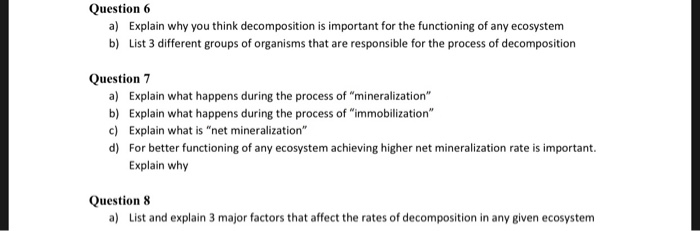
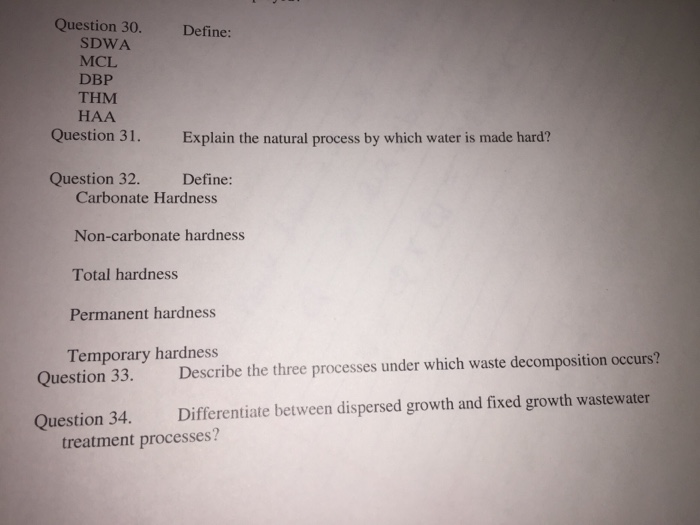
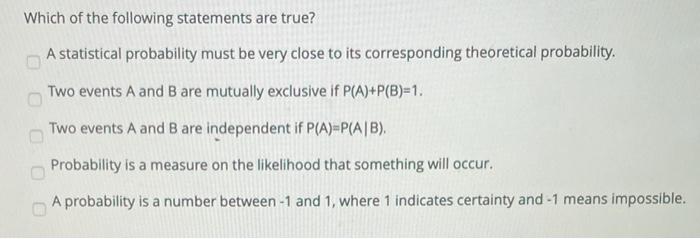
4. In the simulated suspect analysis, why are two samples given for each site? One sample is a part of the paternal gene and the other the maternal one. 5. What is the statistical probability of two caucasians have identical STR profiles (refer to the assigned Forensics paper https:/www.nature.com/scitable topicpage/forensics-dna- fingerprinting-and-codis-736/)?Question 6 a) Explain why you think decomposition is important for the functioning of any ecosystem b) List 3 different groups of organisms that are responsible for the process of decomposition Question 7 a) Explain what happens during the process of "mineralization" b) Explain what happens during the process of "immobilization" c) Explain what is "net mineralization" d) For better functioning of any ecosystem achieving higher net mineralization rate is important. Explain why Question 8 a) List and explain 3 major factors that affect the rates of decomposition in any given ecosystemQuestion 30. Define: SDWA MCL DBP THM HAA Question 31. Explain the natural process by which water is made hard? Question 32. Define: Carbonate Hardness Non-carbonate hardness Total hardness Permanent hardness Temporary hardness Question 33. Describe the three processes under which waste decomposition occurs? Question 34. Differentiate between dispersed growth and fixed growth wastewater treatment processes?Which of the following statements are true? A statistical probability must be very close to its corresponding theoretical probability. Two events A and B are mutually exclusive if P(A)+P(B)=1. Two events A and B are independent if P(A)=P(A | B). D Probability is a measure on the likelihood that something will occur. A probability is a number between -1 and 1, where 1 indicates certainty and -1 means impossible
Step by Step Solution
There are 3 Steps involved in it

Get step-by-step solutions from verified subject matter experts
 Study Help