



Question: Steps for And give me full answer Introduction and Background Material 0 . 1 . Message transmission through a noisy communication channel A digital message
Steps for And give me full answer
Introduction and Background Material
Message transmission through a noisy communication channel
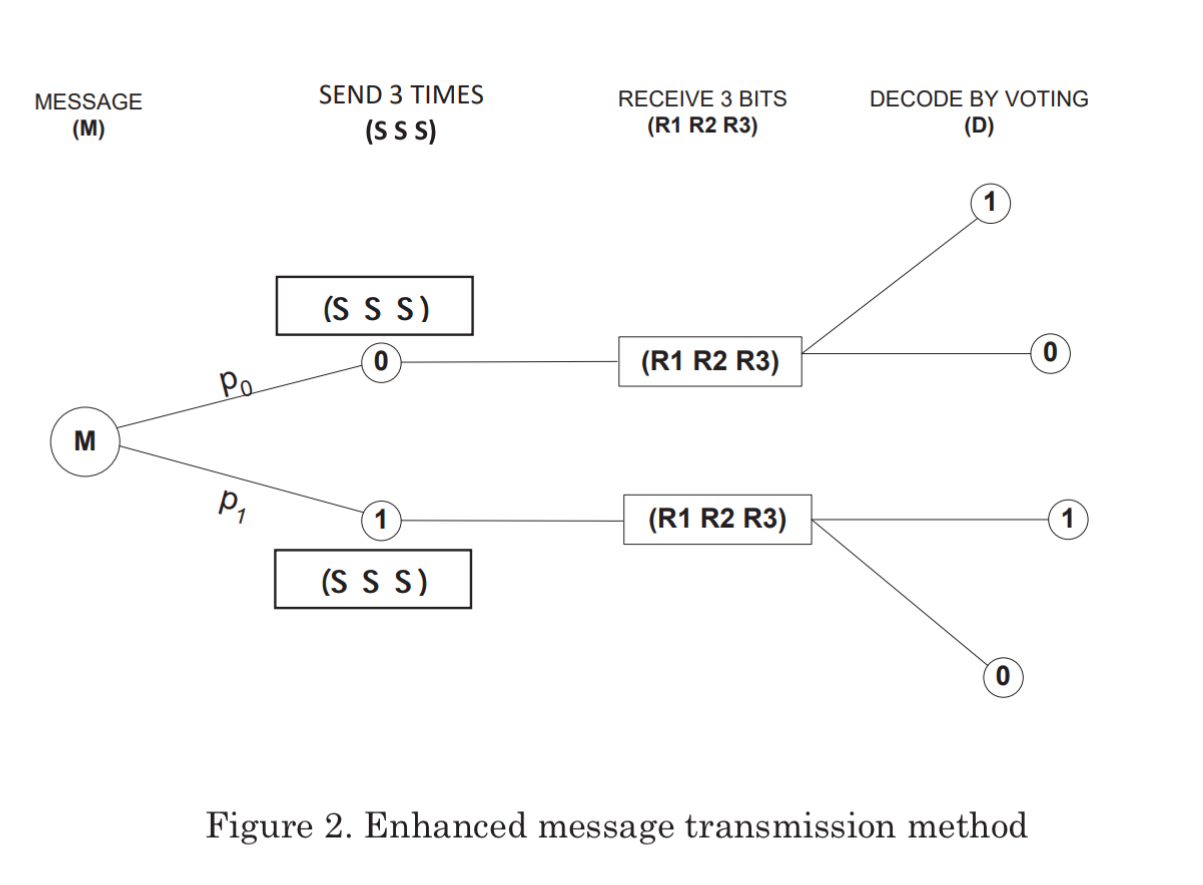
A digital message M is created and sent through a noisy communication channel
Figure The signal S to be transmitted consists of a series of zeros and ones:
symbol appears in the signal with probability
symbol appears in the signal with probability
The transmitted signal S is received at the other end of the channel as signal
Due to noise in the communication channel, a transmitted bit may change during
transmission:
a transmitted bit may be received as with probability probability of
transmission error for symbol ;
a transmitted bit may be received as with probability probability of
transmission error for symbol
The errors for different symbol transmissions are independent.
In order to create one bit of the transmitted message S you have to:
Generate a random number: rand
Generate the transmitted message as:
In order to create the received signal you have to:
Generate a random number: rand Note that the random number
should be different than the previous random number
Generate the received signal R as:
Figure Probabilities for symbol transmission error
Reference: "Introduction to probability", D Bertsekas and N Tsitsiklis, nd
Edition, Athena Scientific,
Probability of erroneous transmission
Consider the following experiment, where the required probabilities are given as:
;
You transmit a onebit message and look at the received signal If
You repeat this experiment times and count the number of failures.
Find the probability that the transmitted bit will be received incorrectly, ie
the probability of failure.
SUBMIT the your answer and the Python code in a Word file. Use the table
below for your answer. Note: You will need to replicate the table in your Word
file, in order to provide the answer in your report. Points wil be taken off if you
do not use the table. bit If the experiment is a success, ie success is defin
Conditional probability:
Consider the following experiment, where the required probabilities are given as
You create and transmit a onebit message as you did before. The goal is to
calculate the conditional probability This means that you will
focus only in those transmissions where
For all the events for which the transmitted signal is look at the received
conditional event:
You repeat this experiment times and count the number of successes.
Find the conditional probability ie the probability that if
you transmit the symbol it will be received correctly.
SUBMIT your answer and the Python code in a Word file. Use the table below
for your answer. Note: You will need to replicate the table in your Word file, in
order to provide the answer in your report. Points will be taken off if you do not
use the table.
Conditional probability:
Consider the following experiment, where the required probabilities are given as:
;
You create and transmit a onebit message S as you did before. The goal is to
calculate the conditional probability This means that you will
only be interested in those messages where the received signal is
For all the events for which the received signal is look at transmitted bit
If the experiment is a succes
Step by Step Solution
There are 3 Steps involved in it
1 Expert Approved Answer
Step: 1 Unlock

Question Has Been Solved by an Expert!
Get step-by-step solutions from verified subject matter experts
Step: 2 Unlock
Step: 3 Unlock