







Question: Steps:1) Choose a starting vector: diagonal rather than straight, longer rather than short.2) Redraw the tail of the second vector onto the head of the
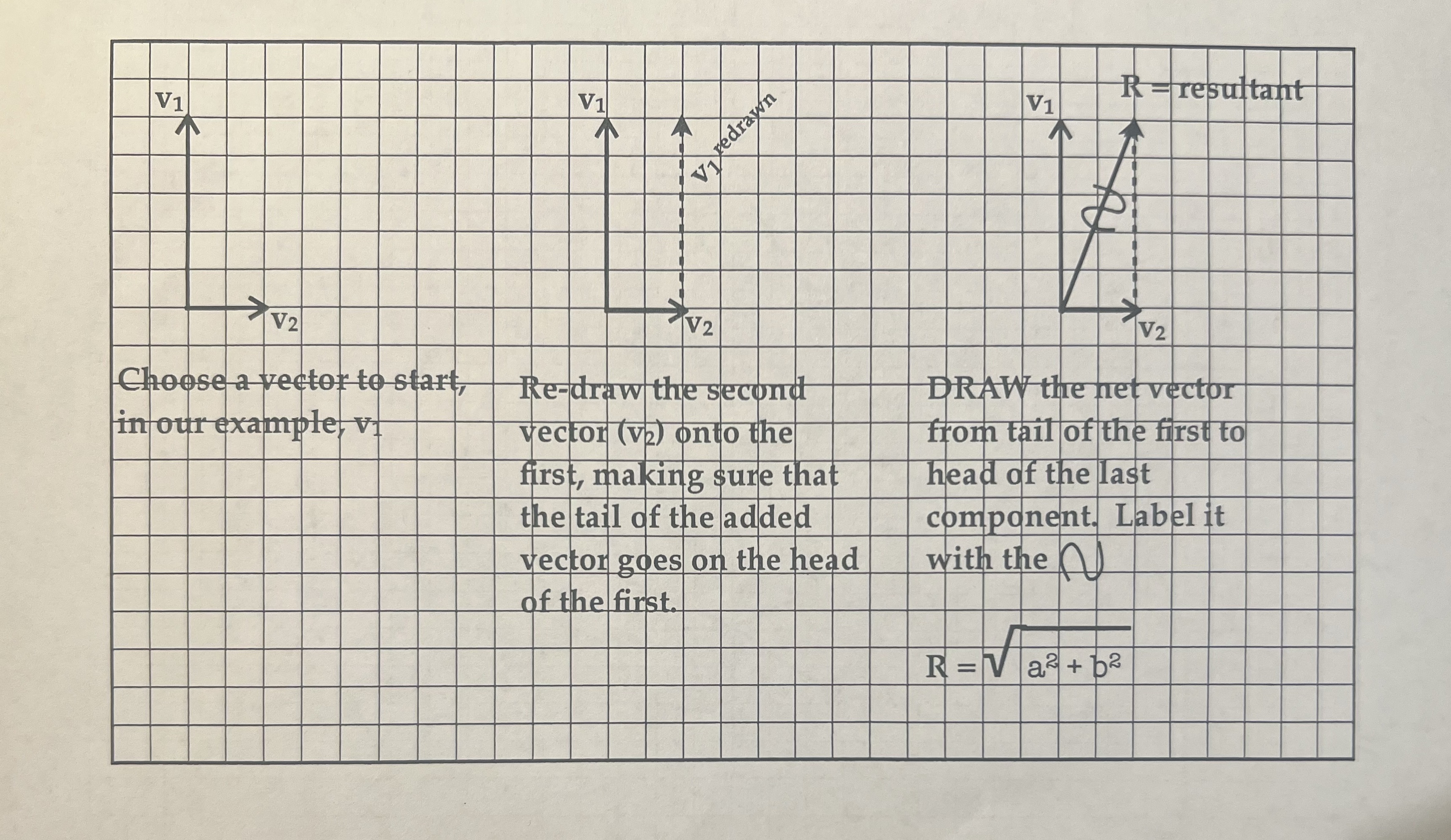
Steps:1) Choose a starting vector: diagonal rather than straight, longer rather than short.2) Redraw the tail of the second vector onto the head of the first vector.3) Repeat Step 2 if you have more vectors, placing the tail of the 3rd vector on the head of the 2nd vector, and so on.4) DRAW the net vector from the tail of the first vector to the head of the last vector.5) LABEL your resultant vector.6) Determine the length of your resultant vector using Pythagorean Theorem.
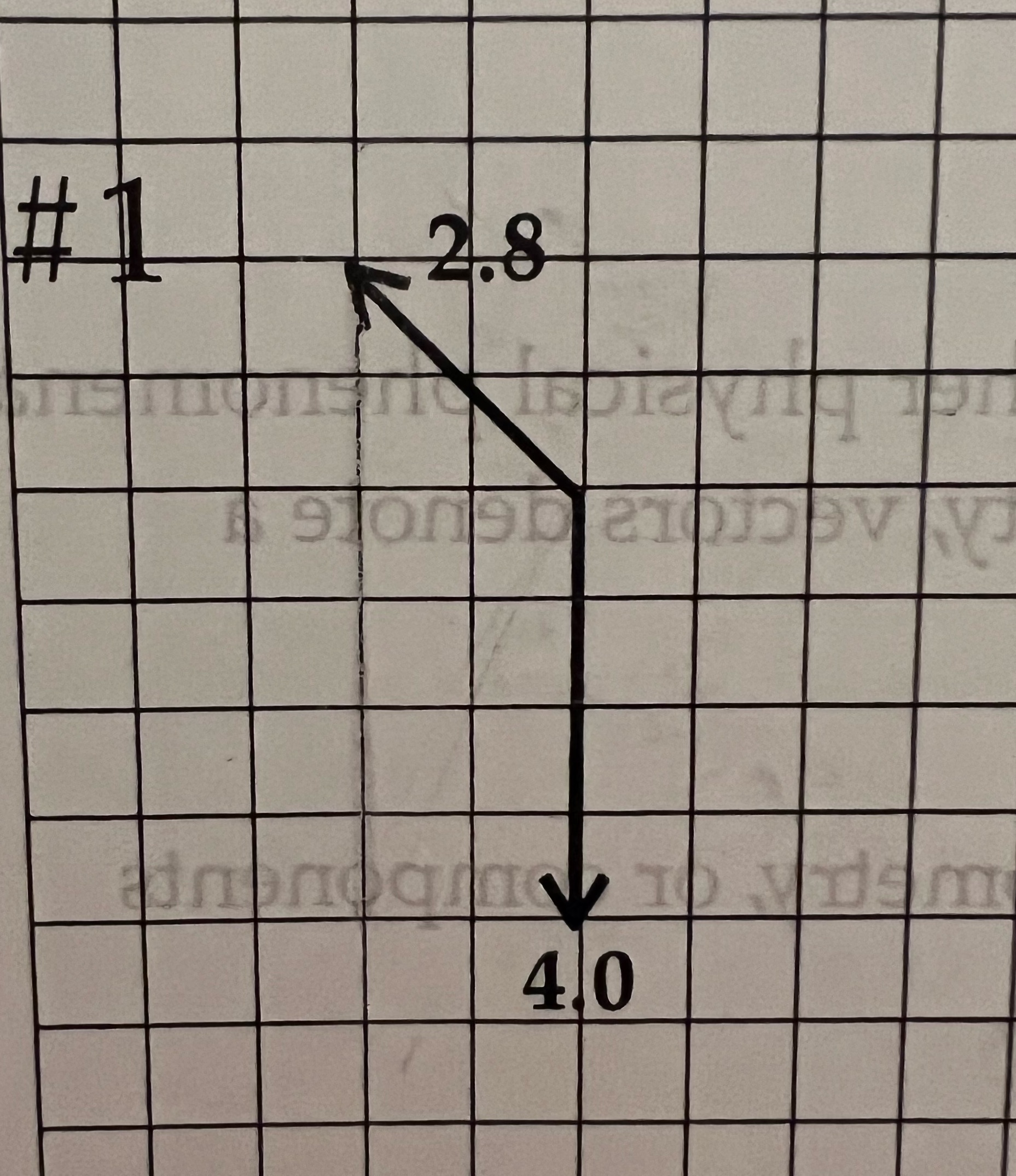
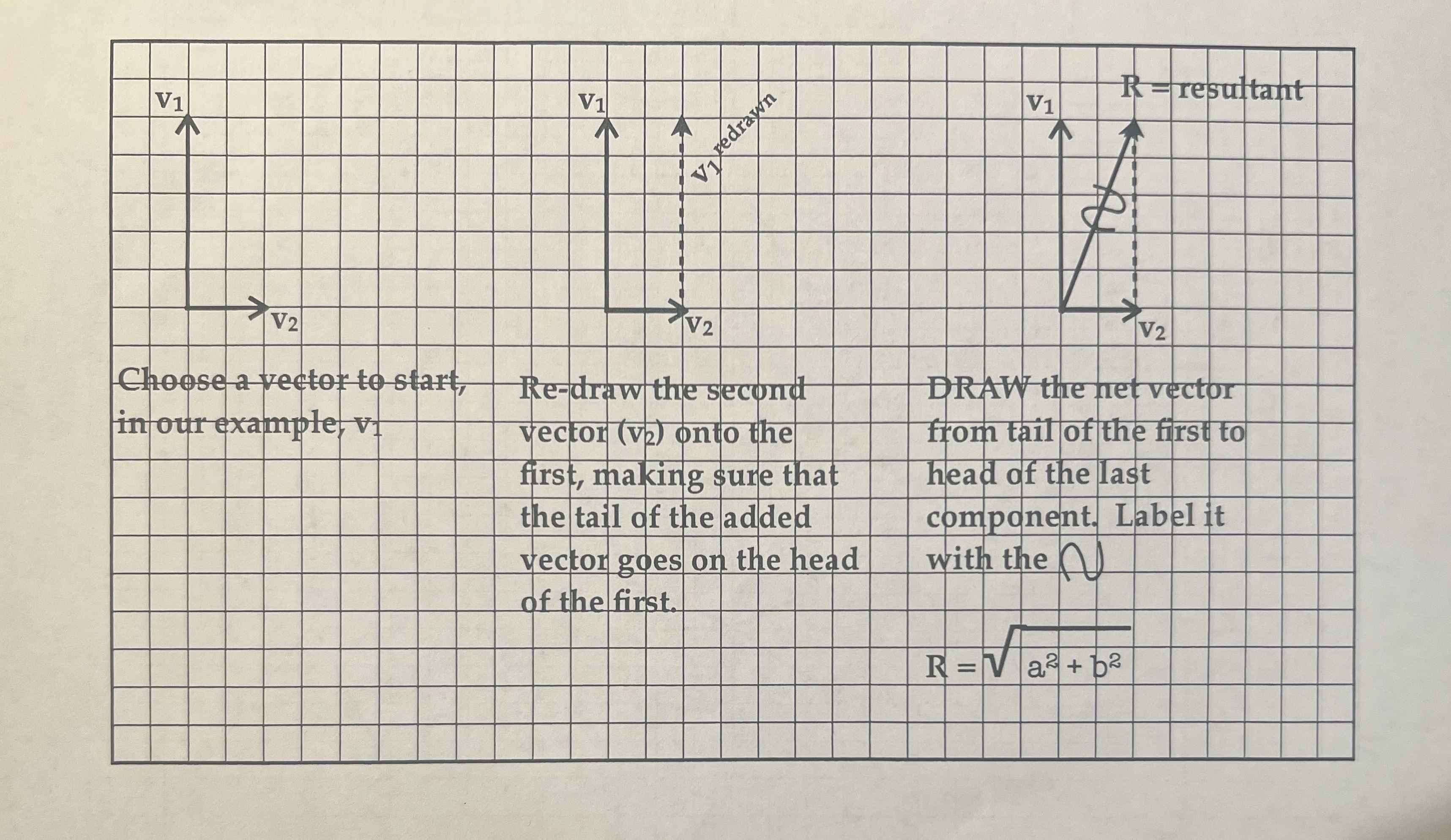
# 2.8 9longerDOV Y 410V1 V1 V1 R = resultant Vitedrawn V2 V2 V 2 Choose a vector to start, Re-draw the second DRAW the net vector in our example, v. vector (Ve) onto the from tail of the first to first, making sure that head of the last the tail of the added component. Label it vector goes on the head with the of the first. R = V a+ 62
Step by Step Solution
There are 3 Steps involved in it

Get step-by-step solutions from verified subject matter experts
 Study Help