Question: Stock X has a 9.5% expected return, a beta coefficient of 0.8, and a 40% standard deviation of expected returns. Stock Y has a 12.5%
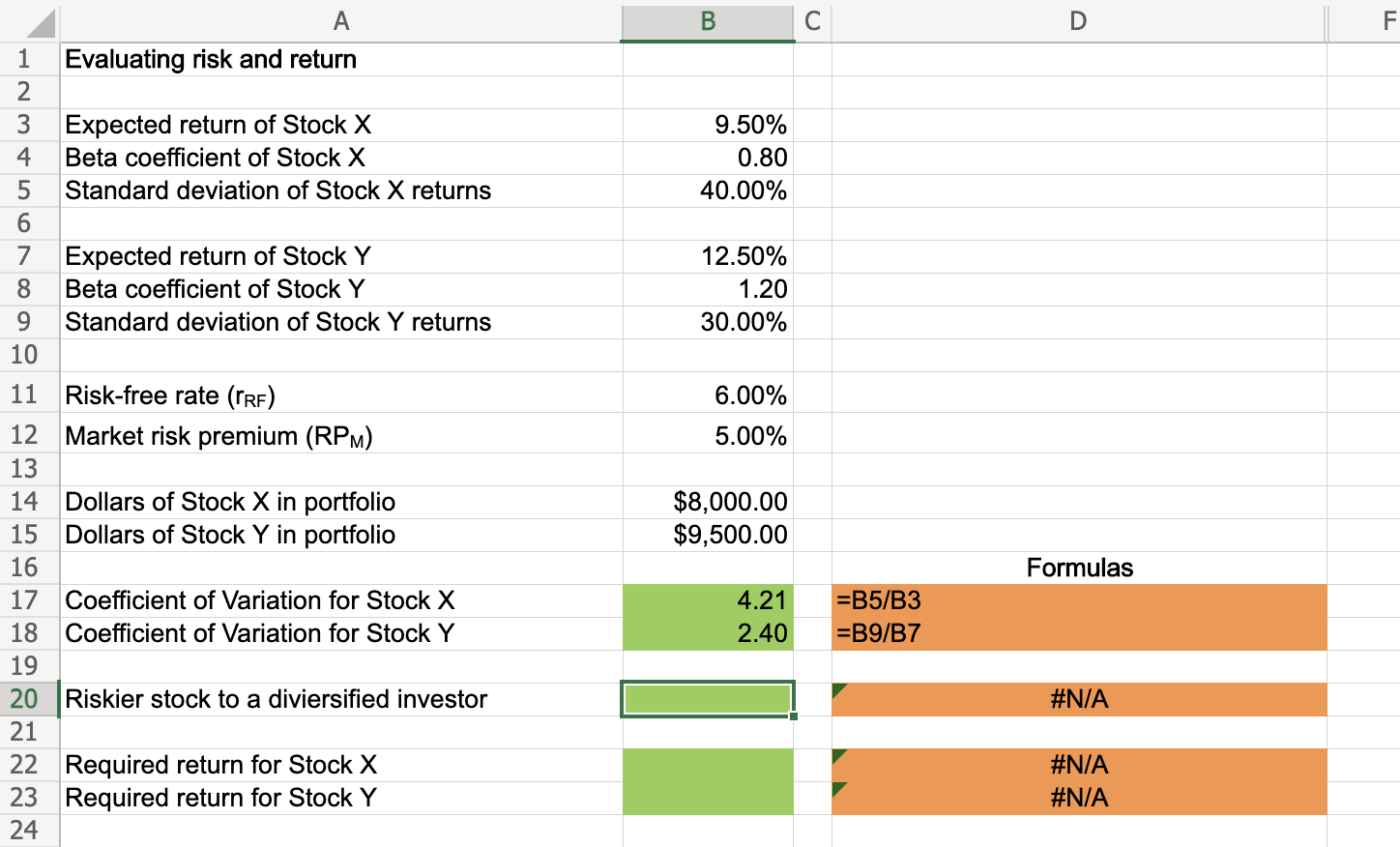
Stock X has a 9.5% expected return, a beta coefficient of 0.8, and a 40% standard deviation of expected returns. Stock Y has a 12.5% expected return, a beta coefficient of 1.2, and a 30.0% standard deviation. The risk-free rate is 6%, and the market risk premium is 5%. The data has been collected in the Microsoft Excel Online file below. Open the spreadsheet and perform the required analysis to answer the questions below.
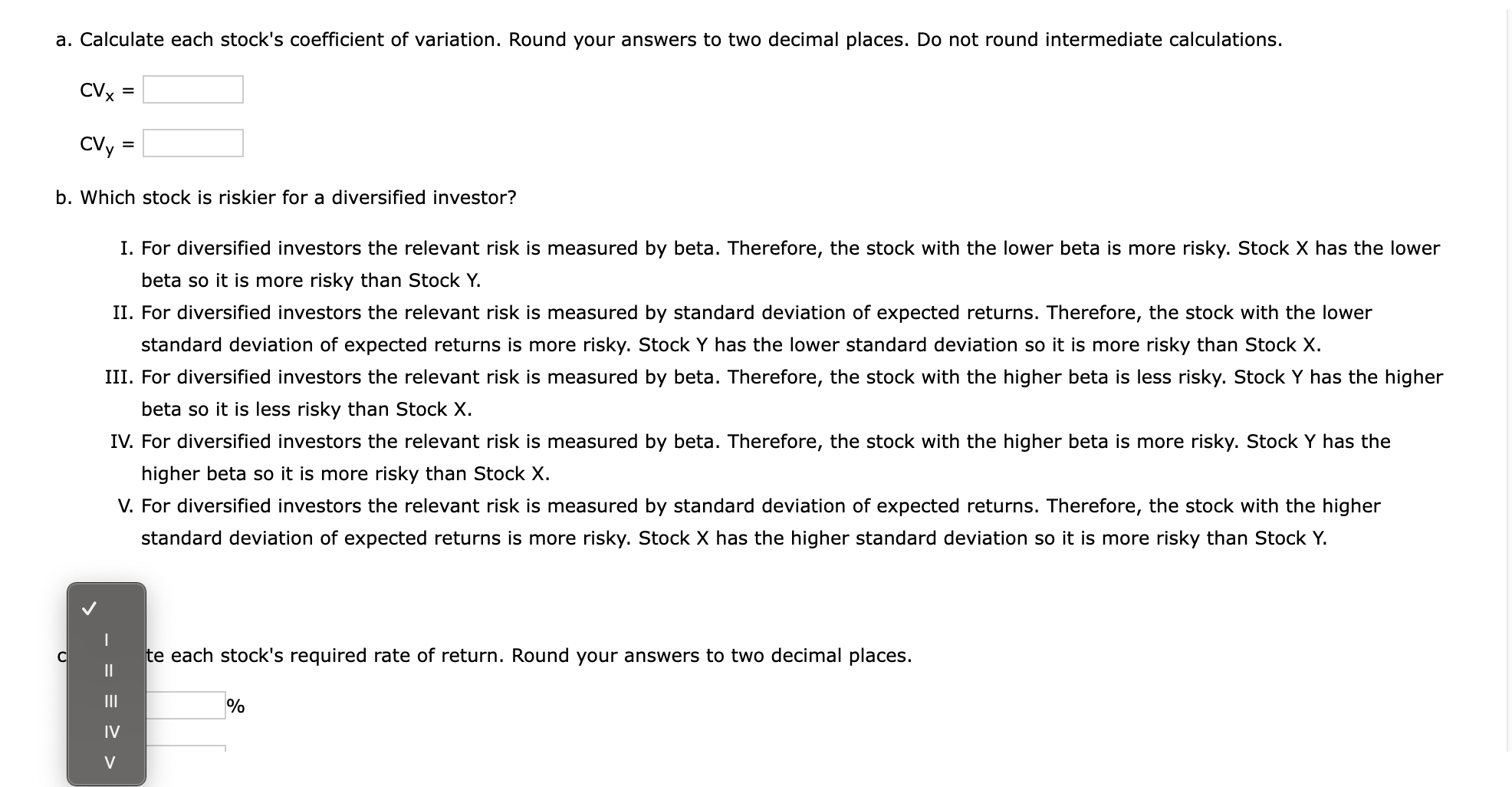
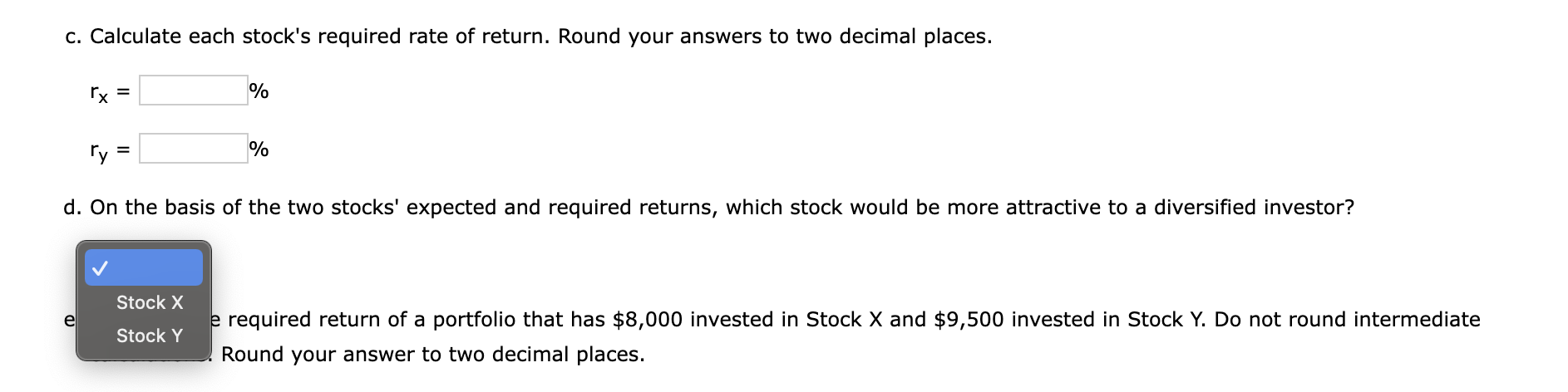
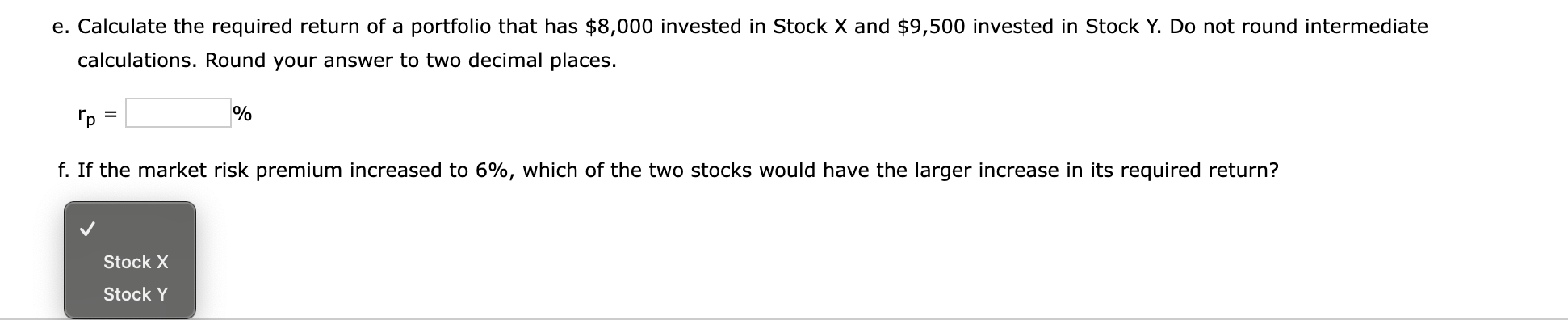
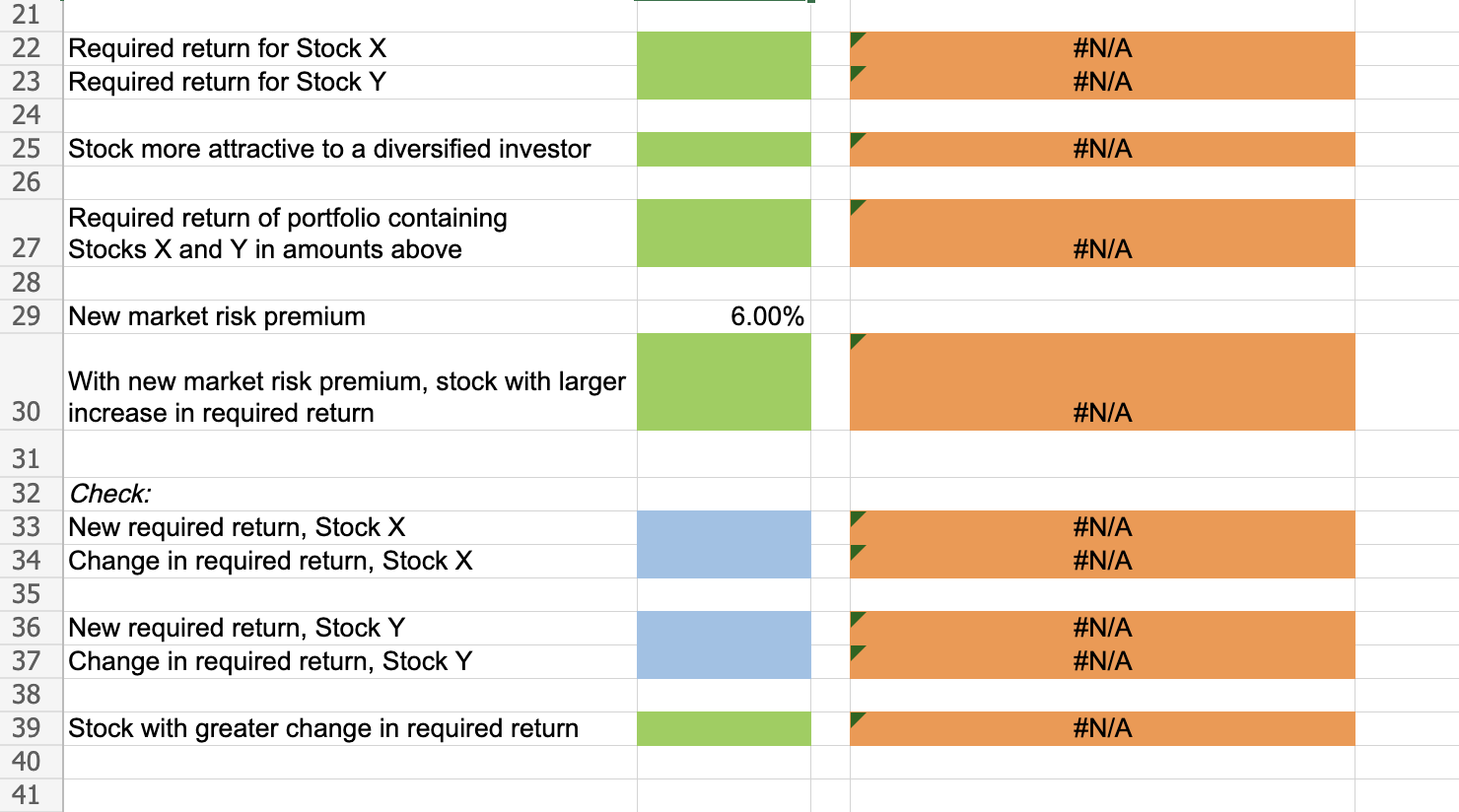
a. Calculate each stock's coefcient of variation. Round your answers to two decimal places. Do not round intermediate calculations. cvx cvy b. Which II. III. IV. stock is riskier for a diversified investor? . For diversified investors the relevant risk is measured by beta. Therefore, the stock with the lower beta is more risky. Stock X has the lower beta so it is more risky than Stock Y. For diversified investors the relevant risk is measured by standard deviation of expected returns. Therefore, the stock with the lower standard deviation of expected returns is more risky. Stock Y has the lower standard deviation so it is more risky than Stock X. For diversified investors the relevant risk is measured by beta. Therefore, the stock with the higher beta is less risky. Stock Y has the higher beta so it is less risky than Stock X. For diversified investors the relevant risk is measured by beta. Therefore, the stock with the higher beta is more risky. Stock Y has the higher beta so it is more risky than Stock X. For diversified investors the relevant risk is measured by standard deviation of expected returns. Therefore, the stock with the higher standard deviation of expected returns is more risky. Stock X has the higher standard deviation so it is more risky than Stock Y. e each stock's required rate of return. Round your answers to two decimal places. 0In c. Calculate each stock's required rate of return. Round your answers to two decimal places. My = % ry = % d. On the basis of the two stocks' expected and required returns, which stock would be more attractive to a diversified investor? Stock X e required return of a portfolio that has $8,000 invested in Stock X and $9,500 invested in Stock Y. Do not round intermediate Stock Y Round your answer to two decimal places.e. Calculate the required return of a portfolio that has $8,000 invested in Stock X and $9,500 invested in Stock Y. Do not round intermediate calculations. Round your answer to two decimal places. rp = 0/o f. If the market risk premium increased to 6%, which of the two stocks would have the larger increase in its required return? A B C D F Evaluating risk and return W N Expected return of Stock X 9.50% 4 Beta coefficient of Stock X 0.80 Standard deviation of Stock X returns 40.00% V Expected return of Stock Y 12.50% 8 Beta coefficient of Stock Y 1.20 9 Standard deviation of Stock Y returns 30.00% 10 11 Risk-free rate (RF) 6.00% 12 Market risk premium (RPM) 5.00% 13 14 Dollars of Stock X in portfolio $8,000.00 15 Dollars of Stock Y in portfolio $9,500.00 16 Formulas 17 Coefficient of Variation for Stock X 4.21 =B5/B3 18 Coefficient of Variation for Stock Y 2.40 =B9/B7 19 20 Riskier stock to a diviersified investor #N/A 21 22 Required return for Stock X #N/A 23 Required return for Stock Y #N/A 2421 22 23 24 25 26 27 28 29 3D 31 32 33 34 35 36 37 38 39 4D 41 Required return for Stock X Required return for Stock Y Stock more attractive to a diversied investor Required return of portfolio containing Stocks X and Y in amounts above New market risk premium 6.00% With new market risk premium, stock with larger increase in required return Check: New required return, Stock X Change in required return, Stock X New required return, Stock Y Change in required return, Stock Y Stock with greater change in required return
Step by Step Solution
There are 3 Steps involved in it
1 Expert Approved Answer
Step: 1 Unlock
Question Has Been Solved by an Expert!
Get step-by-step solutions from verified subject matter experts
Step: 2 Unlock
Step: 3 Unlock
Students Have Also Explored These Related Finance Questions!









 Study Help