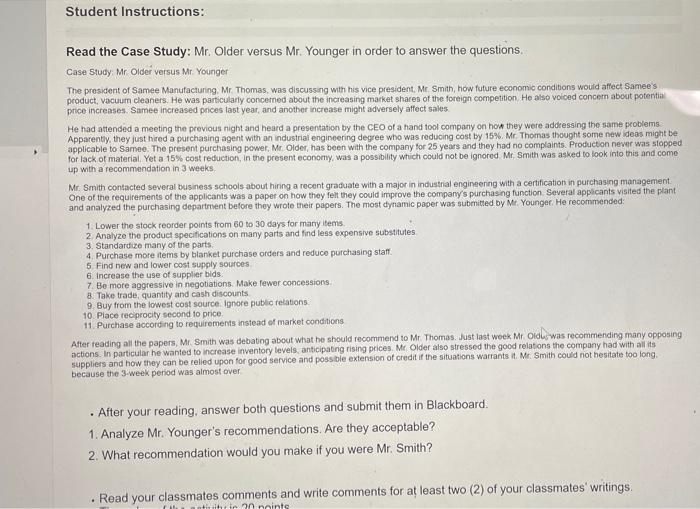
Question: Student Instructions: Read the Case Study: Mr. Older versus Mr. Younger in order to answer the questions. Case Study: Mr. Older vs. Mr. Younger The
Student Instructions:
Read the Case Study: Mr. Older versus Mr. Younger in order to answer the questions.
Case Study: Mr. Older vs. Mr. Younger
The president of Samee Manufacturing, Mr. Thomas, was discussing with his vice president, Mr. Smith, how future economic conditions would affect Samee's product, vacuum cleaners. He was particularly concerned about the increasing market shares of the foreign competition. He also voiced concern about potential price increases. Samee increased prices last year, and another increase might adversely affect sales.
He had attended a meeting the previous night and heard a presentation by the CEO of a hand tool company on how they were addressing the same problems. Apparently, they just hired a purchasing agent with an industrial engineering degree who was reducing cost by 15%. Mr. Thomas thought some new ideas might be applicable to Samee. The present purchasing power, Mr. Older, has been with the company for 25 years and they had no complaints. Production never was stopped for lack of material. Yet a 15% cost reduction, in the present economy, was a possibility which could not be ignored. Mr. Smith was asked to look into this and come up with a recommendation in 3 weeks.
Mr. Smith contacted several business schools about hiring a recent graduate with a major in industrial engineering with a certification in purchasing management. One of the requirements of the applicants was a paper on how they felt they could improve the company's purchasing function. Several applicants visited the plant and analyzed the purchasing department before they wrote their papers. The most dynamic paper was submitted by Mr. Younger. I have recommended:
1. Lower the stock reorder points from 60 to 30 days for many items.
2. Analyze the product specifications on many parts and find less expensive substitutes.
3. Standardize many of the parts.
4. Purchase more items by blanket purchase orders and reduce purchasing staff.
5. Find new and lower cost supply sources. 6. Increase the use of supplier bids.
7. Be more aggressive in negotiations. Make fewer concessions.
8. Take trade, quantity and cash discounts. 9. Buy from the lowest cost source. Ignore public relations.
10. Place reciprocity second to price.
11. Purchase according to requirements instead of market conditions.
After reading all the papers, Mr. Smith was debating about what he should recommend to Mr. Thomas. Just last week Mr. Oldus was recommending many opposing actions. In particular he wanted to increase inventory levels, anticipating rising prices. Mr. Older also stressed the good relations the company had with all its suppliers and how they can be relied upon for good service and possible extension of credit if the situations warrants it. Mr. Smith could not hesitate too long. because the 3-week period was almost over.
. After your reading, answer both questions and submit them in Blackboard..
1. Analyze Mr. Younger's recommendations. Are they acceptable?
2. What recommendation would you make if you were Mr. Smith?
Read your classmates comments and write comments for at least two (2) of your classmates' writings. the notivity is 30 points
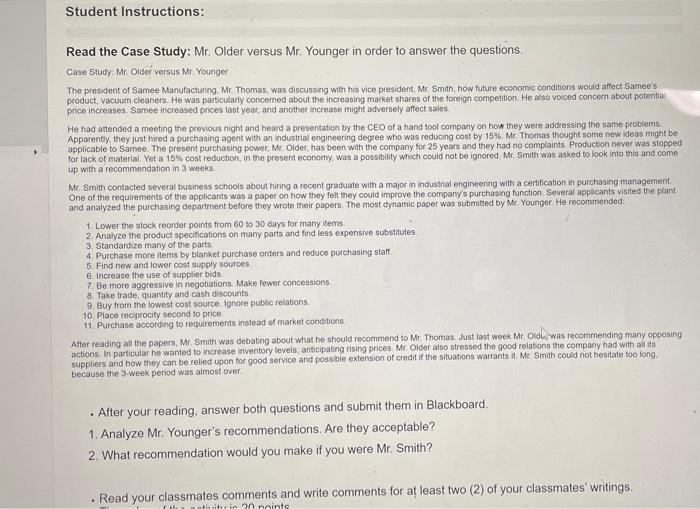
Student Instructions: Read the Case Study: Mr. Older versus Mr. Younger in order to answer the questions. Case Study: Mr Older versus Mr. Younger The president of Samee Manufacturing, Mr. Thomas, was discussing with his vice president, Me Smith, how future economic conditions would affect Samee's product, vacuum cleaners. He was particularly concerned about the increasing market shares of the foreign competition. He also voiced concern about potential price increases. Samee increased prices last year, and another increase might adversely affect sales He had attended a meeting the previous night and heard a presentation by the CEO of a hand tool company on how they were addressing the same problems Apparently, they just hired a purchasing agent with an industrial engineering degree who was reducing cost ty 15%. Mr. Thomas thought some new ideas might be applicable to Samee. The present purchasing power, Mr. Older, has been with the company for 25 years and they had no complaints. Production never was stopped for lack of material. Yet a 15% cost reduction in the present economy, was a possibility which could not be ignored Mr. Smith was asked to look into this and come up with a recommendation in 3 weeks Mr. Smith contacted several business schools about hiring a recent graduate with a major in industrial engineering with a certification in purchasing management One of the requirements of the applicants was a paper on how they felt they could improve the company's purchasing function Several applicants visited the plant and analyzed the purchasing department before they wrote their papers. The most dynamic paper was submitted by Mt. Younger. He recommended: 1. Lower the stock reorder points from 60 to 30 days for many items 2 Analyze the product specifications on many parts and find less expensive substitutes 3. Standardize many of the parts 4. Purchase more items by blanket purchase orders and reduce purchasing staff 5. Find new and lower cost supply sources 6. Increase the use of supplier bilds. 7. Be more aggressive in negotiations. Make fewer concessions 8. Take trade, quantity and cash discounts 9. Buy from the lowest cost source Ignore public relations 10. Place reciprocity second to price 11. Purchase according to requirements instead of market conditions After reading all the papers, Mr. Smith was debating about what he should recommend to Mr. Thomas, Just last week Meoidl, was recommending many opposing actions. In particular he wanted to increase inventory levels anticipating rising prices. Me Older also stressed the good relations the company had with all its suppliers and how they can be relied upon for good service and possible extension of credit if the situations warrants it. Mr. Smith could not hesitate too long, because the 3-week period was almost over After your reading, answer both questions and submit them in Blackboard. 1. Analyze Mr. Younger's recommendations. Are they acceptable? 2. What recommendation would you make if you were Mr. Smith? . Read your classmates comments and write comments for at least two (2) of your classmates writings tinti 20 noints Student Instructions: Read the Case Study: Mr. Older versus Mr. Younger in order to answer the questions, Case Study: Mr Older versus Mr. Younger The president of Samee Manufacturing, Mr Thomas, was discussing with his vice president. Mr. Smith, how future economic conditions would affect Samee's product, vacuum cleaners. He was particularly concerned about the increasing market shares of the foreign competition. He also voiced concern about potential price increases. Samee increased prices last year, and another increase might adversely affect sales He had attended a meeting the previous night and heard a presentation by the CEO of a hand tool company on how they were addressing the same problems Apparently, they just hired a purchasing agent with an industrial engineering degree who was reducing cost by 15%. Mr. Thomas thought some new ideas might be applicable to Samee. The present purchasing power, Mr Older, has been with the company for 25 years and they had no complaints Production never was stopped for lack of material Yet a 15% cost reduction in the present economy, was a possibility which could not be ignored Mr. Smith was asked to look into this and come up with a recommendation in 3 weeks Mr. Smith contacted several business schools about hiring a recent graduate with a major in industrial engineering with a certification in purchasing management One of the requirements of the applicants was a paper on how they felt they could improve the company's purchasing function. Several applicants visited the plant and analyzed the purchasing department before they wrote their papers. The most dynamic paper was submitted by Mr. Younger. He recommended: 1. Lower the stock reorder points from 60 to 30 days for many items 2. Analyze the product specifications on many parts and find less expensive substitutes 3. Standardize many of the parts 4. Purchase more items by blanket purchase orders and reduce purchasing statt. 5 Find new and lower cost supply sources 6. Increase the use of supplier bids 7. Be more aggressive in negotiations. Make fewer concessions, 8. Take trade, quantity and cash discounts 9. Buy from the lowest cost source Ignore public relations 10. Place reciprocity second to price 11. Purchase according to requirements instead of market conditions After reading all the papers, Mr. Smith was debating about what he should recommend to Mr. Thomas, Just last week Mediol, was recommending many opposing actions. In particular he wanted to increase inventory levels anticipating rising prices. Me Older also stressed the good relations the company had with all its suppliers and how they can be relied upon for good service and possible extension of credit if the situations warrants it. Mr. Smith could not hesitate too long, because the 3-week period was almost over After your reading, answer both questions and submit them in Blackboard. 1. Analyze Mr. Younger's recommendations. Are they acceptable? 2. What recommendation would you make if you were Mr. Smith? . Read your classmates comments and write comments for at least two (2) of your classmates' writings titten nainte









 Study Help