







Question: STUDY Case 11 pics A resource-based analysis is an approach which organisations use to analyse their internal market. Use the Nikon case study in Business

STUDY Case 11 pics
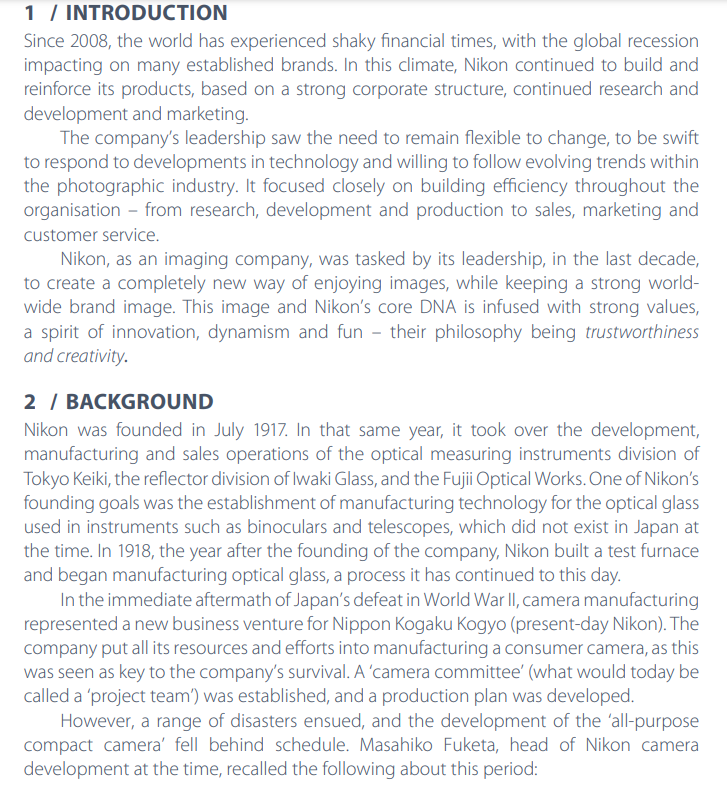
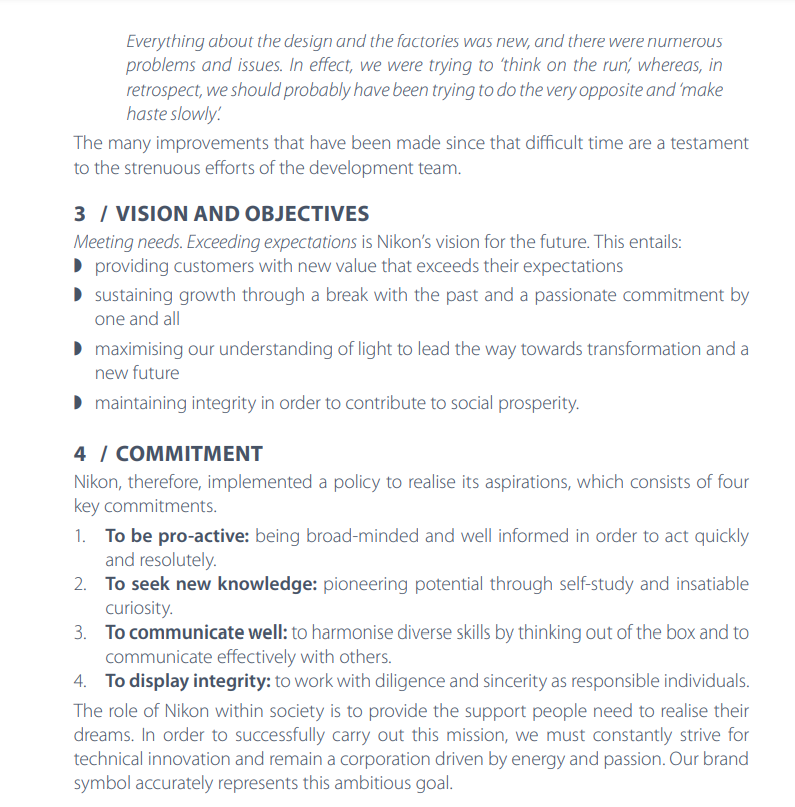
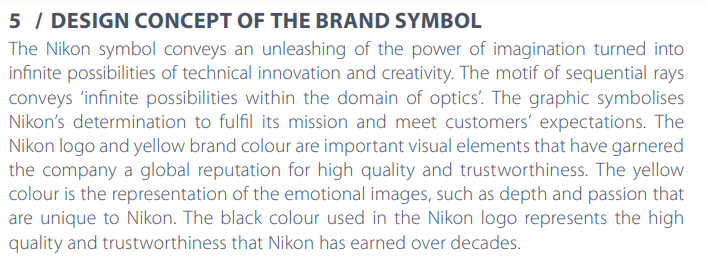
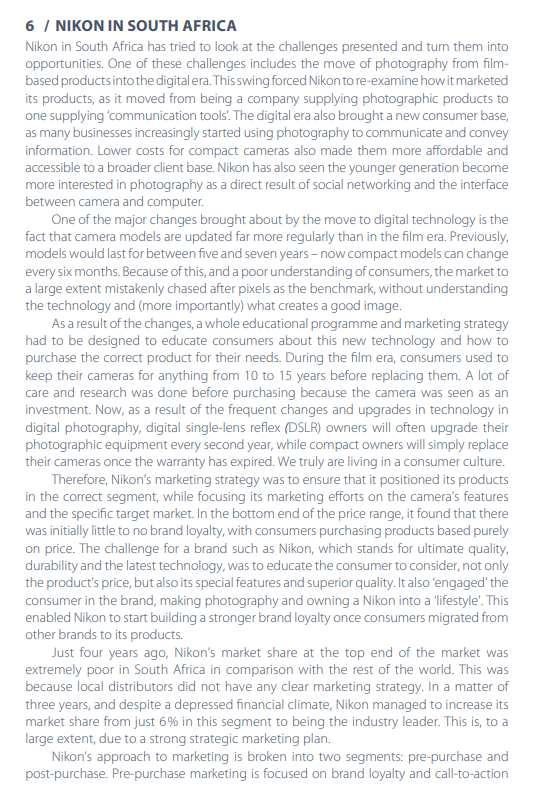
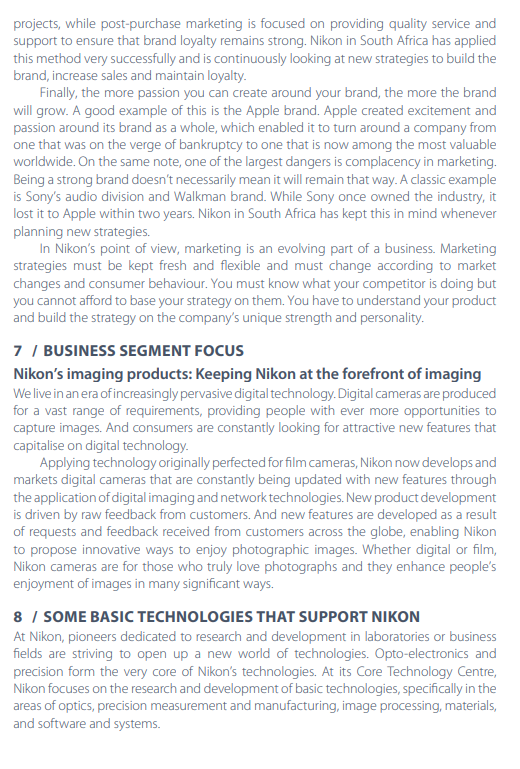
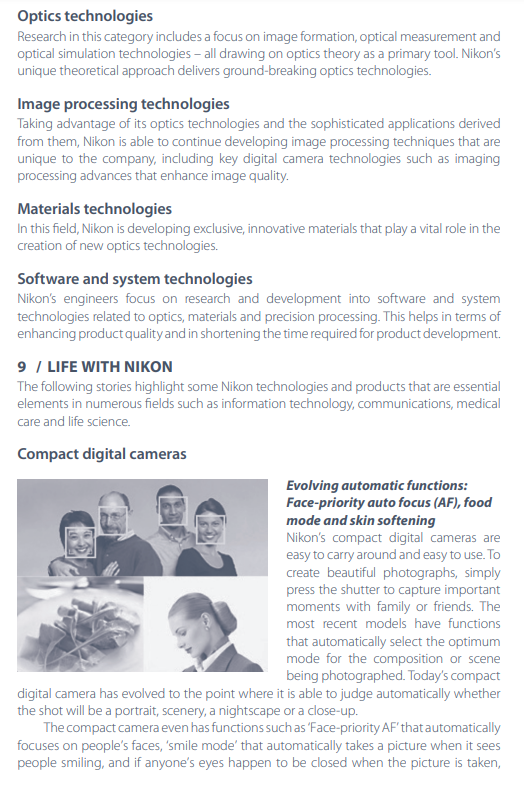
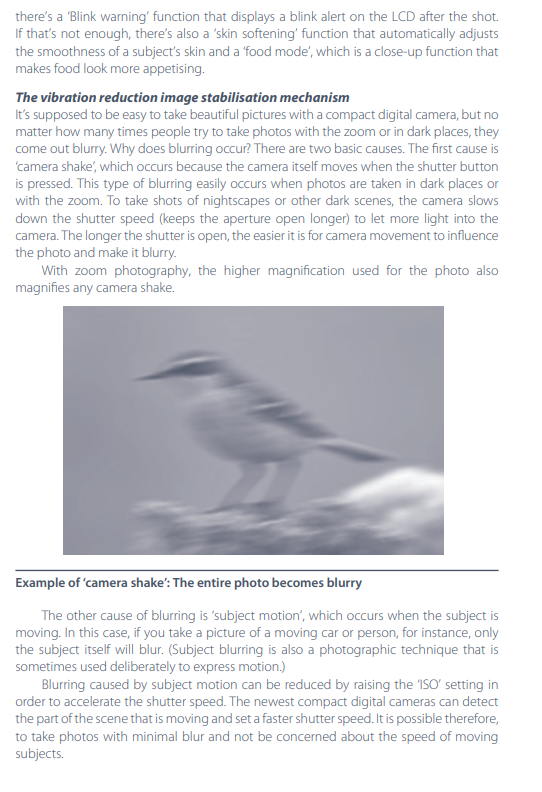
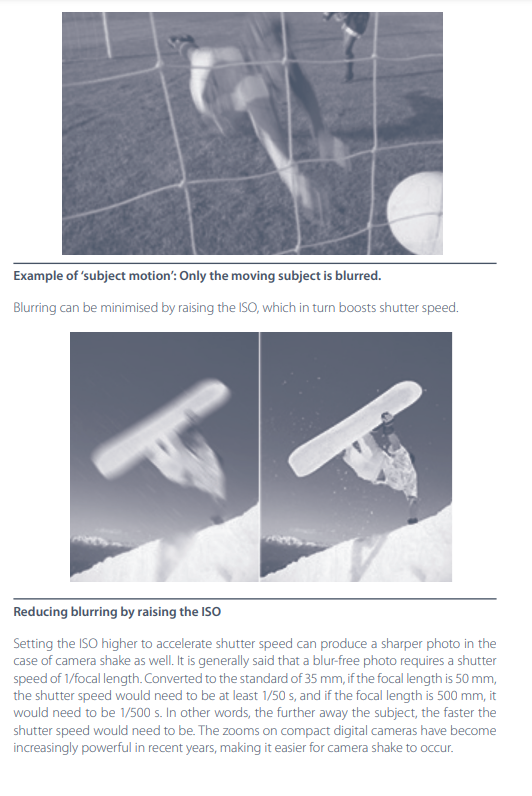
A resource-based analysis is an approach which organisations use to analyse their internal market. Use the Nikon case study in Business Cases: From SA Companies (Niewenhuizen, 2020:141-150) to demonstrate how Nikon can use resource-based analysis to analyse its internal market. Duplicate the table below, then provide (1) a clear definition of each factor in your own words, and (2) a practical example, from the case study, which illustrates each step clearly. You do not need to write lengthy discussions, just show your understanding of each factor. Always use the mark allocation as a guide for how much information is needed. [TURN OVER] 1 / INTRODUCTION Since 2008, the world has experienced shaky financial times, with the global recession impacting on many established brands. In this climate, Nikon continued to build and reinforce its products, based on a strong corporate structure, continued research and development and marketing. The company's leadership saw the need to remain flexible to change, to be swift to respond to developments in technology and willing to follow evolving trends within the photographic industry. It focused closely on building efficiency throughout the organisation - from research, development and production to sales, marketing and customer service. Nikon, as an imaging company, was tasked by its leadership, in the last decade, to create a completely new way of enjoying images, while keeping a strong worldwide brand image. This image and Nikon's core DNA is infused with strong values, a spirit of innovation, dynamism and fun - their philosophy being trustworthiness and creativity. 2 / BACKGROUND Nikon was founded in July 1917. In that same year, it took over the development, manufacturing and sales operations of the optical measuring instruments division of Tokyo Keiki, the reflector division of Iwaki Glass, and the Fujii Optical Works. One of Nikon's founding goals was the establishment of manufacturing technology for the optical glass used in instruments such as binoculars and telescopes, which did not exist in Japan at the time. In 1918, the year after the founding of the company, Nikon built a test furnace and began manufacturing optical glass, a process it has continued to this day. In the immediate aftermath of Japan's defeat in World War II, camera manufacturing represented a new business venture for Nippon Kogaku Kogyo (present-day Nikon). The company put all its resources and efforts into manufacturing a consumer camera, as this was seen as key to the company's survival. A 'camera committee' (what would today be called a 'project team') was established, and a production plan was developed. However, a range of disasters ensued, and the development of the 'all-purpose compact camera' fell behind schedule. Masahiko Fuketa, head of Nikon camera development at the time, recalled the following about this period: Everything about the design and the factories was new, and there were numerous problems and issues. In effect, we were trying to 'think on the run', whereas, in retrospect, we should probably have been trying to do the very opposite and 'make haste slowly.' The many improvements that have been made since that difficult time are a testament to the strenuous efforts of the development team. 3 / VISION AND OBJECTIVES Meeting needs. Exceeding expectations is Nikon's vision for the future. This entails: - providing customers with new value that exceeds their expectations - sustaining growth through a break with the past and a passionate commitment by one and all - maximising our understanding of light to lead the way towards transformation and a new future - maintaining integrity in order to contribute to social prosperity. 4 / COMMITMENT Nikon, therefore, implemented a policy to realise its aspirations, which consists of four key commitments. 1. To be pro-active: being broad-minded and well informed in order to act quickly and resolutely. 2. To seek new knowledge: pioneering potential through self-study and insatiable curiosity. 3. To communicate well: to harmonise diverse skills by thinking out of the box and to communicate effectively with others. 4. To display integrity: to work with diligence and sincerity as responsible individuals. The role of Nikon within society is to provide the support people need to realise their dreams. In order to successfully carry out this mission, we must constantly strive for technical innovation and remain a corporation driven by energy and passion. Our brand symbol accurately represents this ambitious goal. 5 / DESIGN CONCEPT OF THE BRAND SYMBOL The Nikon symbol conveys an unleashing of the power of imagination turned into infinite possibilities of technical innovation and creativity. The motif of sequential rays conveys 'infinite possibilities within the domain of optics'. The graphic symbolises Nikon's determination to fulfil its mission and meet customers' expectations. The Nikon logo and yellow brand colour are important visual elements that have garnered the company a global reputation for high quality and trustworthiness. The yellow colour is the representation of the emotional images, such as depth and passion that are unique to Nikon. The black colour used in the Nikon logo represents the high quality and trustworthiness that Nikon has earned over decades. 6 / NIKON IN SOUTH AFRICA Nikon in South Africa has tried to look at the challenges presented and turn them into opportunities. One of these challenges includes the move of photography from filmbased products into the digital era. This swing forced Nikon to re-examine how it marketed its products, as it moved from being a company supplying photographic products to one supplying 'communication tools'. The digital era also brought a new consumer base, as many businesses increasingly started using photography to communicate and convey information. Lower costs for compact cameras also made them more affordable and accessible to a broader client base. Nikon has also seen the younger generation become more interested in photography as a direct result of social networking and the interface between camera and computer. One of the major changes brought about by the move to digital technology is the fact that camera models are updated far more regularly than in the film era. Previously, models would last for between five and seven years - now compact models can change every six months. Because of this, and a poor understanding of consumers, the market to a large extent mistakenly chased after pixels as the benchmark, without understanding the technology and (more importantly) what creates a good image. As a result of the changes, a whole educational programme and marketing strategy had to be designed to educate consumers about this new technology and how to purchase the correct product for their needs. During the film era, consumers used to keep their cameras for anything from 10 to 15 years before replacing them. A lot of care and research was done before purchasing because the camera was seen as an investment. Now, as a result of the frequent changes and upgrades in technology in digital photography, digital single-lens reflex (DSLR) owners will often upgrade their photographic equipment every second year, while compact owners will simply replace their cameras once the warranty has expired. We truly are living in a consumer culture. Therefore, Nikon's marketing strategy was to ensure that it positioned its products in the correct segment, while focusing its marketing efforts on the camera's features and the specific target market. In the bottom end of the price range, it found that there was initially little to no brand loyalty, with consumers purchasing products based purely on price. The challenge for a brand such as Nikon, which stands for ultimate quality, durability and the latest technology, was to educate the consumer to consider, not only the product's price, but also its special features and superior quality. It also 'engaged' the consumer in the brand, making photography and owning a Nikon into a 'lifestyle'. This enabled Nikon to start building a stronger brand loyalty once consumers migrated from other brands to its products. Just four years ago, Nikon's market share at the top end of the market was extremely poor in South Africa in comparison with the rest of the world. This was because local distributors did not have any clear marketing strategy. In a matter of three years, and despite a depressed financial climate, Nikon managed to increase its market share from just 6% in this segment to being the industry leader. This is, to a large extent, due to a strong strategic marketing plan. Nikon's approach to marketing is broken into two segments: pre-purchase and post-purchase. Pre-purchase marketing is focused on brand loyalty and call-to-action projects, while post-purchase marketing is focused on providing quality service and support to ensure that brand loyalty remains strong. Nikon in South Africa has applied this method very successfully and is continuously looking at new strategies to build the brand, increase sales and maintain loyalty. Finally, the more passion you can create around your brand, the more the brand will grow. A good example of this is the Apple brand. Apple created excitement and passion around its brand as a whole, which enabled it to turn around a company from one that was on the verge of bankruptcy to one that is now among the most valuable worldwide. On the same note, one of the largest dangers is complacency in marketing. Being a strong brand doesn't necessarily mean it will remain that way. A classic example is Sony's audio division and Walkman brand. While Sony once owned the industry, it lost it to Apple within two years. Nikon in South Africa has kept this in mind whenever planning new strategies. In Nikon's point of view, marketing is an evolving part of a business. Marketing strategies must be kept fresh and flexible and must change according to market changes and consumer behaviour. You must know what your competitor is doing but you cannot afford to base your strategy on them. You have to understand your product and build the strategy on the company's unique strength and personality. 7 / BUSINESS SEGMENT FOCUS Nikon's imaging products: Keeping Nikon at the forefront of imaging We live in an era of increasingly pervasive digital technology. Digital cameras are produced for a vast range of requirements, providing people with ever more opportunities to capture images. And consumers are constantly looking for attractive new features that capitalise on digital technology. Applying technology originally perfected for film cameras, Nikon now develops and markets digital cameras that are constantly being updated with new features through the application of digital imaging and network technologies. New product development is driven by raw feedback from customers. And new features are developed as a result of requests and feedback received from customers across the globe, enabling Nikon to propose innovative ways to enjoy photographic images. Whether digital or film, Nikon cameras are for those who truly love photographs and they enhance people's enjoyment of images in many significant ways. 8 / SOME BASIC TECHNOLOGIES THAT SUPPORT NIKON At Nikon, pioneers dedicated to research and development in laboratories or business fields are striving to open up a new world of technologies. Opto-electronics and precision form the very core of Nikon's technologies. At its Core Technology Centre, Nikon focuses on the research and development of basic technologies, specifically in the areas of optics, precision measurement and manufacturing, image processing, materials, and software and systems. Optics technologies Research in this category includes a focus on image formation, optical measurement and optical simulation technologies - all drawing on optics theory as a primary tool. Nikon's unique theoretical approach delivers ground-breaking optics technologies. Image processing technologies Taking advantage of its optics technologies and the sophisticated applications derived from them, Nikon is able to continue developing image processing techniques that are unique to the company, including key digital camera technologies such as imaging processing advances that enhance image quality. Materials technologies In this field, Nikon is developing exclusive, innovative materials that play a vital role in the creation of new optics technologies. Software and system technologies Nikon's engineers focus on research and development into software and system technologies related to optics, materials and precision processing. This helps in terms of enhancing product quality and in shortening the time required for product development. 9 / LIFE WITH NIKON The following stories highlight some Nikon technologies and products that are essential elements in numerous fields such as information technology, communications, medical care and life science. Compact digital cameras Evolving automatic functions: Face-priority auto focus (AF), food mode and skin softening Nikon's compact digital cameras are easy to carry around and easy to use. To create beautiful photographs, simply press the shutter to capture important moments with family or friends. The that automatically select the optimum mode for the composition or scene being photographed. Today's compact digital camera has evolved to the point where it is able to judge automatically whether the shot will be a portrait, scenery, a nightscape or a close-up. The compact camera even has functions such as 'Face-priority AF' that automatically focuses on people's faces, 'smile mode' that automatically takes a picture when it sees people smiling, and if anyone's eyes happen to be closed when the picture is taken, there's a 'Blink warning' function that displays a blink alert on the LCD after the shot. If that's not enough, there's also a 'skin softening' function that automatically adjusts the smoothness of a subject's skin and a 'food mode', which is a close-up function that makes food look more appetising. The vibration reduction image stabilisation mechanism It's supposed to be easy to take beautiful pictures with a compact digital camera, but no matter how many times people try to take photos with the zoom or in dark places, they come out blurry. Why does blurring occur? There are two basic causes. The first cause is 'camera shake', which occurs because the camera itself moves when the shutter button is pressed. This type of blurring easily occurs when photos are taken in dark places or with the zoom. To take shots of nightscapes or other dark scenes, the camera slows down the shutter speed (keeps the aperture open longer) to let more light into the camera. The longer the shutter is open, the easier it is for camera movement to influence the photo and make it blurry. With zoom photography, the higher magnification used for the photo also magnifies any camera shake. Example of 'camera shake': The entire photo becomes blurry The other cause of blurring is 'subject motion', which occurs when the subject is moving. In this case, if you take a picture of a moving car or person, for instance, only the subject itself will blur. (Subject blurring is also a photographic technique that is sometimes used deliberately to express motion.) Blurring caused by subject motion can be reduced by raising the 'ISO' setting in order to accelerate the shutter speed. The newest compact digital cameras can detect the part of the scene that is moving and set a faster shutter speed. It is possible therefore, to take photos with minimal blur and not be concerned about the speed of moving subjects. Example of 'subject motion': Only the moving subject is blurred. Blurring can be minimised by raising the 1SO, which in turn boosts shutter speed. Reducing blurring by raising the ISO Setting the ISO higher to accelerate shutter speed can produce a sharper photo in the case of camera shake as well. It is generally said that a blur-free photo requires a shutter speed of 1/ focal length. Converted to the standard of 35mm, if the focal length is 50mm, the shutter speed would need to be at least 1/50s, and if the focal length is 500mm, it would need to be 1/500s. In other words, the further away the subject, the faster the shutter speed would need to be. The zooms on compact digital cameras have become increasingly powerful in recent years, making it easier for camera shake to occur. Improvements aimed at preventing blurry photos are focused on raising ISO sensitivity to accelerate shutter speed. Owing to the camera's performance, however, there is a limit to how much ISO sensitivity can be raised, since noise occurs more easily at higher ISOs. The vibration reduction (VR) image stabilisation function is thus an effective approach to addressing this problem. Various methods of vibration reduction image stabilisation There are various ways to stabilise images, such as the optical method in which the lens and image sensor move to achieve the correct image, or the electronic method that processes the image after it is shot. Cameras in the COOLPIX compact digital series use a number of methods as discussed below. - Lens shift VR: Cancelling out blurring by moving the lens. The camera detects how much and in which direction - up, down, left or right - the hand or body has moved, and the VR lens then moves in the required direction (opposite from the direction of the blur) to correct the optical axis and cancel out the blur. The high accuracy of this method even corrects small amounts of blurring that occur when the shutter is pressed. - Image sensor shift VR: Moving the image sensor. This method detects the distance at which the shake occurred on the sensor, and then moves the image sensor in the direction of the blur to correct the position of the optical axis. - Electronic VR: Detecting blur from the image. This method detects the amount of blurring from the captured image and uses image processing to correct the blurring. It automatically takes two shots, one shot with a small amount of blurring taken at a faster than normal shutter speed, and another shot with a large amount of blurring taken at a normal shutter speed. The trajectory of the blurring is detected from the two shots, and the picture taken at the normal shutter speed is processed to correct the blurring. Some camera models use image processing to correct blurring without taking two shots. - Lens shift plus electronic VR: Hybrid VR image stabilisation. First, camera shake is corrected with the lens shift VR. If further image correction is required, the camera automatically takes two shots, one with a small amount of blurring taken at a faster than normal shutter speed, and another with a large amount of blurring taken at the normal shutter speed (the image with camera shake). It then aligns the two images to detect how much each pixel has moved. An appropriate amount of blurring, noise and chroma is extracted from each image, and a stabilised image is produced by processing the images while altering the synthesis ratio of both images. This method is most effective with large amounts of blurring. In 1994, Nikon released the 'Nikon Zoom 700VR', the world's first compact film camera with VR using the lens shift method. Compact digital cameras that can be easily carried around inherited this superior technology and the idea of 'keeping a beautiful record of nice memories'. 10/ DIGITAL SLR CAMERAS - NIKON'S SCENE RECOGNITION SYSTEM A new era in which anyone can take beautiful photographs Many beautiful photographs can be seen on photo blogs and personal websites. Bearing in mind the old adage 'a picture tells a thousand words', Nikon attaches great importance to the expressive and communicative power of the visual image. Photography is now more accessible, and the way in which photographs are taken has changed significantly because of the spread of the digital camera. We can take photographs without fear of making mistakes, since we check how a photograph looks as soon as we have taken it. We can also touch up photographs afterwards to a certain extent, using image-processing software on our computers. Increased memory-card capacity and the use of wireless LAN for transmission of image data enables us to shoot photographs without caring about the number of pictures we are taking. Camera functionality has also developed. In this new era, anyone can enjoy photography and shoot largely error-free photographs owing to the increased precision of features such as auto focus (AF), automatic exposure (AE), and auto white balance (AWB). A camera that enhances the photographic experience We live in an era in which anyone can take reasonable photos simply by pressing the shutter button. This may be the reason why people now have a growing desire to take photographs that can rival those taken by professionals. The photographer's assessment of the situation at the instant at which the shutter button is pressed is probably reflected in every aspect of the picture, such as the disposition and movement of the subject, the balance between the subject and the background, and the photographer's colour sense. At this juncture, the professional photographer instantly assesses the situation as he or she perceives it through the viewfinder, based on extensive photographic experience and expertise, and presses the shutter button to achieve the desired photograph. However, not everyone has the same rich photographic experience as a professional photographer. Would it be possible to design a camera that, as far as possible, enables the amateur photographer to make the same kind of instantaneous assessment of a situation as a seasoned professional, Nikon asked? The result is the Nikon Scene Recognition System. The Nikon Scene Recognition System -the brain of a professional, installed in a camera The Scene Recognition System, with which the D3 and D300 professional cameras are equipped, recognises the subject that is to be shot by means of an optical system that consists of a 1005 pixel RGB sensor and a diffractive optical element, and which performs advanced information processing. Using this system, the camera drives the AF to emphasise human subjects, follows a subject that is moving within the image frame, calculates the exposure based on the area and distribution of light and dark sections of the image, and corrects the colour balance based on extensive photographic data. The Scene Recognition System recognises and integrates various types of data captured by the sensors, and identifies the situation of the subject (a task traditionally performed by the photographer) using a combination of AF,AE and AWB. In essence, the camera thinks and functions much like a human brain. It is as if the camera has been equipped with the shooting techniques of a professional photographer. This makes for a more convenient system, reducing the need for corrective image processing on a computer after shooting, and facilitating print-out directly from the camera or transmission of photographs for use in mail and blogs. This system enables a photographer to shoot beautiful photographs under a range of photographic conditions and to concentrate on his or her artistic aims, such as the way in which he or she wishes to photograph and portray the subject. The use of images is the most effective method for expressing our feelings to other people, as humans rely on visual perception for at least 80% of their perception of the outside world. Facilitating self-expression, the Scene Recognition System seems to be revitalising the use of photographs and making communication even easier. A resource-based analysis is an approach which organisations use to analyse their internal market. Use the Nikon case study in Business Cases: From SA Companies (Niewenhuizen, 2020:141-150) to demonstrate how Nikon can use resource-based analysis to analyse its internal market. Duplicate the table below, then provide (1) a clear definition of each factor in your own words, and (2) a practical example, from the case study, which illustrates each step clearly. You do not need to write lengthy discussions, just show your understanding of each factor. Always use the mark allocation as a guide for how much information is needed. [TURN OVER] 1 / INTRODUCTION Since 2008, the world has experienced shaky financial times, with the global recession impacting on many established brands. In this climate, Nikon continued to build and reinforce its products, based on a strong corporate structure, continued research and development and marketing. The company's leadership saw the need to remain flexible to change, to be swift to respond to developments in technology and willing to follow evolving trends within the photographic industry. It focused closely on building efficiency throughout the organisation - from research, development and production to sales, marketing and customer service. Nikon, as an imaging company, was tasked by its leadership, in the last decade, to create a completely new way of enjoying images, while keeping a strong worldwide brand image. This image and Nikon's core DNA is infused with strong values, a spirit of innovation, dynamism and fun - their philosophy being trustworthiness and creativity. 2 / BACKGROUND Nikon was founded in July 1917. In that same year, it took over the development, manufacturing and sales operations of the optical measuring instruments division of Tokyo Keiki, the reflector division of Iwaki Glass, and the Fujii Optical Works. One of Nikon's founding goals was the establishment of manufacturing technology for the optical glass used in instruments such as binoculars and telescopes, which did not exist in Japan at the time. In 1918, the year after the founding of the company, Nikon built a test furnace and began manufacturing optical glass, a process it has continued to this day. In the immediate aftermath of Japan's defeat in World War II, camera manufacturing represented a new business venture for Nippon Kogaku Kogyo (present-day Nikon). The company put all its resources and efforts into manufacturing a consumer camera, as this was seen as key to the company's survival. A 'camera committee' (what would today be called a 'project team') was established, and a production plan was developed. However, a range of disasters ensued, and the development of the 'all-purpose compact camera' fell behind schedule. Masahiko Fuketa, head of Nikon camera development at the time, recalled the following about this period: Everything about the design and the factories was new, and there were numerous problems and issues. In effect, we were trying to 'think on the run', whereas, in retrospect, we should probably have been trying to do the very opposite and 'make haste slowly.' The many improvements that have been made since that difficult time are a testament to the strenuous efforts of the development team. 3 / VISION AND OBJECTIVES Meeting needs. Exceeding expectations is Nikon's vision for the future. This entails: - providing customers with new value that exceeds their expectations - sustaining growth through a break with the past and a passionate commitment by one and all - maximising our understanding of light to lead the way towards transformation and a new future - maintaining integrity in order to contribute to social prosperity. 4 / COMMITMENT Nikon, therefore, implemented a policy to realise its aspirations, which consists of four key commitments. 1. To be pro-active: being broad-minded and well informed in order to act quickly and resolutely. 2. To seek new knowledge: pioneering potential through self-study and insatiable curiosity. 3. To communicate well: to harmonise diverse skills by thinking out of the box and to communicate effectively with others. 4. To display integrity: to work with diligence and sincerity as responsible individuals. The role of Nikon within society is to provide the support people need to realise their dreams. In order to successfully carry out this mission, we must constantly strive for technical innovation and remain a corporation driven by energy and passion. Our brand symbol accurately represents this ambitious goal. 5 / DESIGN CONCEPT OF THE BRAND SYMBOL The Nikon symbol conveys an unleashing of the power of imagination turned into infinite possibilities of technical innovation and creativity. The motif of sequential rays conveys 'infinite possibilities within the domain of optics'. The graphic symbolises Nikon's determination to fulfil its mission and meet customers' expectations. The Nikon logo and yellow brand colour are important visual elements that have garnered the company a global reputation for high quality and trustworthiness. The yellow colour is the representation of the emotional images, such as depth and passion that are unique to Nikon. The black colour used in the Nikon logo represents the high quality and trustworthiness that Nikon has earned over decades. 6 / NIKON IN SOUTH AFRICA Nikon in South Africa has tried to look at the challenges presented and turn them into opportunities. One of these challenges includes the move of photography from filmbased products into the digital era. This swing forced Nikon to re-examine how it marketed its products, as it moved from being a company supplying photographic products to one supplying 'communication tools'. The digital era also brought a new consumer base, as many businesses increasingly started using photography to communicate and convey information. Lower costs for compact cameras also made them more affordable and accessible to a broader client base. Nikon has also seen the younger generation become more interested in photography as a direct result of social networking and the interface between camera and computer. One of the major changes brought about by the move to digital technology is the fact that camera models are updated far more regularly than in the film era. Previously, models would last for between five and seven years - now compact models can change every six months. Because of this, and a poor understanding of consumers, the market to a large extent mistakenly chased after pixels as the benchmark, without understanding the technology and (more importantly) what creates a good image. As a result of the changes, a whole educational programme and marketing strategy had to be designed to educate consumers about this new technology and how to purchase the correct product for their needs. During the film era, consumers used to keep their cameras for anything from 10 to 15 years before replacing them. A lot of care and research was done before purchasing because the camera was seen as an investment. Now, as a result of the frequent changes and upgrades in technology in digital photography, digital single-lens reflex (DSLR) owners will often upgrade their photographic equipment every second year, while compact owners will simply replace their cameras once the warranty has expired. We truly are living in a consumer culture. Therefore, Nikon's marketing strategy was to ensure that it positioned its products in the correct segment, while focusing its marketing efforts on the camera's features and the specific target market. In the bottom end of the price range, it found that there was initially little to no brand loyalty, with consumers purchasing products based purely on price. The challenge for a brand such as Nikon, which stands for ultimate quality, durability and the latest technology, was to educate the consumer to consider, not only the product's price, but also its special features and superior quality. It also 'engaged' the consumer in the brand, making photography and owning a Nikon into a 'lifestyle'. This enabled Nikon to start building a stronger brand loyalty once consumers migrated from other brands to its products. Just four years ago, Nikon's market share at the top end of the market was extremely poor in South Africa in comparison with the rest of the world. This was because local distributors did not have any clear marketing strategy. In a matter of three years, and despite a depressed financial climate, Nikon managed to increase its market share from just 6% in this segment to being the industry leader. This is, to a large extent, due to a strong strategic marketing plan. Nikon's approach to marketing is broken into two segments: pre-purchase and post-purchase. Pre-purchase marketing is focused on brand loyalty and call-to-action projects, while post-purchase marketing is focused on providing quality service and support to ensure that brand loyalty remains strong. Nikon in South Africa has applied this method very successfully and is continuously looking at new strategies to build the brand, increase sales and maintain loyalty. Finally, the more passion you can create around your brand, the more the brand will grow. A good example of this is the Apple brand. Apple created excitement and passion around its brand as a whole, which enabled it to turn around a company from one that was on the verge of bankruptcy to one that is now among the most valuable worldwide. On the same note, one of the largest dangers is complacency in marketing. Being a strong brand doesn't necessarily mean it will remain that way. A classic example is Sony's audio division and Walkman brand. While Sony once owned the industry, it lost it to Apple within two years. Nikon in South Africa has kept this in mind whenever planning new strategies. In Nikon's point of view, marketing is an evolving part of a business. Marketing strategies must be kept fresh and flexible and must change according to market changes and consumer behaviour. You must know what your competitor is doing but you cannot afford to base your strategy on them. You have to understand your product and build the strategy on the company's unique strength and personality. 7 / BUSINESS SEGMENT FOCUS Nikon's imaging products: Keeping Nikon at the forefront of imaging We live in an era of increasingly pervasive digital technology. Digital cameras are produced for a vast range of requirements, providing people with ever more opportunities to capture images. And consumers are constantly looking for attractive new features that capitalise on digital technology. Applying technology originally perfected for film cameras, Nikon now develops and markets digital cameras that are constantly being updated with new features through the application of digital imaging and network technologies. New product development is driven by raw feedback from customers. And new features are developed as a result of requests and feedback received from customers across the globe, enabling Nikon to propose innovative ways to enjoy photographic images. Whether digital or film, Nikon cameras are for those who truly love photographs and they enhance people's enjoyment of images in many significant ways. 8 / SOME BASIC TECHNOLOGIES THAT SUPPORT NIKON At Nikon, pioneers dedicated to research and development in laboratories or business fields are striving to open up a new world of technologies. Opto-electronics and precision form the very core of Nikon's technologies. At its Core Technology Centre, Nikon focuses on the research and development of basic technologies, specifically in the areas of optics, precision measurement and manufacturing, image processing, materials, and software and systems. Optics technologies Research in this category includes a focus on image formation, optical measurement and optical simulation technologies - all drawing on optics theory as a primary tool. Nikon's unique theoretical approach delivers ground-breaking optics technologies. Image processing technologies Taking advantage of its optics technologies and the sophisticated applications derived from them, Nikon is able to continue developing image processing techniques that are unique to the company, including key digital camera technologies such as imaging processing advances that enhance image quality. Materials technologies In this field, Nikon is developing exclusive, innovative materials that play a vital role in the creation of new optics technologies. Software and system technologies Nikon's engineers focus on research and development into software and system technologies related to optics, materials and precision processing. This helps in terms of enhancing product quality and in shortening the time required for product development. 9 / LIFE WITH NIKON The following stories highlight some Nikon technologies and products that are essential elements in numerous fields such as information technology, communications, medical care and life science. Compact digital cameras Evolving automatic functions: Face-priority auto focus (AF), food mode and skin softening Nikon's compact digital cameras are easy to carry around and easy to use. To create beautiful photographs, simply press the shutter to capture important moments with family or friends. The that automatically select the optimum mode for the composition or scene being photographed. Today's compact digital camera has evolved to the point where it is able to judge automatically whether the shot will be a portrait, scenery, a nightscape or a close-up. The compact camera even has functions such as 'Face-priority AF' that automatically focuses on people's faces, 'smile mode' that automatically takes a picture when it sees people smiling, and if anyone's eyes happen to be closed when the picture is taken, there's a 'Blink warning' function that displays a blink alert on the LCD after the shot. If that's not enough, there's also a 'skin softening' function that automatically adjusts the smoothness of a subject's skin and a 'food mode', which is a close-up function that makes food look more appetising. The vibration reduction image stabilisation mechanism It's supposed to be easy to take beautiful pictures with a compact digital camera, but no matter how many times people try to take photos with the zoom or in dark places, they come out blurry. Why does blurring occur? There are two basic causes. The first cause is 'camera shake', which occurs because the camera itself moves when the shutter button is pressed. This type of blurring easily occurs when photos are taken in dark places or with the zoom. To take shots of nightscapes or other dark scenes, the camera slows down the shutter speed (keeps the aperture open longer) to let more light into the camera. The longer the shutter is open, the easier it is for camera movement to influence the photo and make it blurry. With zoom photography, the higher magnification used for the photo also magnifies any camera shake. Example of 'camera shake': The entire photo becomes blurry The other cause of blurring is 'subject motion', which occurs when the subject is moving. In this case, if you take a picture of a moving car or person, for instance, only the subject itself will blur. (Subject blurring is also a photographic technique that is sometimes used deliberately to express motion.) Blurring caused by subject motion can be reduced by raising the 'ISO' setting in order to accelerate the shutter speed. The newest compact digital cameras can detect the part of the scene that is moving and set a faster shutter speed. It is possible therefore, to take photos with minimal blur and not be concerned about the speed of moving subjects. Example of 'subject motion': Only the moving subject is blurred. Blurring can be minimised by raising the 1SO, which in turn boosts shutter speed. Reducing blurring by raising the ISO Setting the ISO higher to accelerate shutter speed can produce a sharper photo in the case of camera shake as well. It is generally said that a blur-free photo requires a shutter speed of 1/ focal length. Converted to the standard of 35mm, if the focal length is 50mm, the shutter speed would need to be at least 1/50s, and if the focal length is 500mm, it would need to be 1/500s. In other words, the further away the subject, the faster the shutter speed would need to be. The zooms on compact digital cameras have become increasingly powerful in recent years, making it easier for camera shake to occur. Improvements aimed at preventing blurry photos are focused on raising ISO sensitivity to accelerate shutter speed. Owing to the camera's performance, however, there is a limit to how much ISO sensitivity can be raised, since noise occurs more easily at higher ISOs. The vibration reduction (VR) image stabilisation function is thus an effective approach to addressing this problem. Various methods of vibration reduction image stabilisation There are various ways to stabilise images, such as the optical method in which the lens and image sensor move to achieve the correct image, or the electronic method that processes the image after it is shot. Cameras in the COOLPIX compact digital series use a number of methods as discussed below. - Lens shift VR: Cancelling out blurring by moving the lens. The camera detects how much and in which direction - up, down, left or right - the hand or body has moved, and the VR lens then moves in the required direction (opposite from the direction of the blur) to correct the optical axis and cancel out the blur. The high accuracy of this method even corrects small amounts of blurring that occur when the shutter is pressed. - Image sensor shift VR: Moving the image sensor. This method detects the distance at which the shake occurred on the sensor, and then moves the image sensor in the direction of the blur to correct the position of the optical axis. - Electronic VR: Detecting blur from the image. This method detects the amount of blurring from the captured image and uses image processing to correct the blurring. It automatically takes two shots, one shot with a small amount of blurring taken at a faster than normal shutter speed, and another shot with a large amount of blurring taken at a normal shutter speed. The trajectory of the blurring is detected from the two shots, and the picture taken at the normal shutter speed is processed to correct the blurring. Some camera models use image processing to correct blurring without taking two shots. - Lens shift plus electronic VR: Hybrid VR image stabilisation. First, camera shake is corrected with the lens shift VR. If further image correction is required, the camera automatically takes two shots, one with a small amount of blurring taken at a faster than normal shutter speed, and another with a large amount of blurring taken at the normal shutter speed (the image with camera shake). It then aligns the two images to detect how much each pixel has moved. An appropriate amount of blurring, noise and chroma is extracted from each image, and a stabilised image is produced by processing the images while altering the synthesis ratio of both images. This method is most effective with large amounts of blurring. In 1994, Nikon released the 'Nikon Zoom 700VR', the world's first compact film camera with VR using the lens shift method. Compact digital cameras that can be easily carried around inherited this superior technology and the idea of 'keeping a beautiful record of nice memories'. 10/ DIGITAL SLR CAMERAS - NIKON'S SCENE RECOGNITION SYSTEM A new era in which anyone can take beautiful photographs Many beautiful photographs can be seen on photo blogs and personal websites. Bearing in mind the old adage 'a picture tells a thousand words', Nikon attaches great importance to the expressive and communicative power of the visual image. Photography is now more accessible, and the way in which photographs are taken has changed significantly because of the spread of the digital camera. We can take photographs without fear of making mistakes, since we check how a photograph looks as soon as we have taken it. We can also touch up photographs afterwards to a certain extent, using image-processing software on our computers. Increased memory-card capacity and the use of wireless LAN for transmission of image data enables us to shoot photographs without caring about the number of pictures we are taking. Camera functionality has also developed. In this new era, anyone can enjoy photography and shoot largely error-free photographs owing to the increased precision of features such as auto focus (AF), automatic exposure (AE), and auto white balance (AWB). A camera that enhances the photographic experience We live in an era in which anyone can take reasonable photos simply by pressing the shutter button. This may be the reason why people now have a growing desire to take photographs that can rival those taken by professionals. The photographer's assessment of the situation at the instant at which the shutter button is pressed is probably reflected in every aspect of the picture, such as the disposition and movement of the subject, the balance between the subject and the background, and the photographer's colour sense. At this juncture, the professional photographer instantly assesses the situation as he or she perceives it through the viewfinder, based on extensive photographic experience and expertise, and presses the shutter button to achieve the desired photograph. However, not everyone has the same rich photographic experience as a professional photographer. Would it be possible to design a camera that, as far as possible, enables the amateur photographer to make the same kind of instantaneous assessment of a situation as a seasoned professional, Nikon asked? The result is the Nikon Scene Recognition System. The Nikon Scene Recognition System -the brain of a professional, installed in a camera The Scene Recognition System, with which the D3 and D300 professional cameras are equipped, recognises the subject that is to be shot by means of an optical system that consists of a 1005 pixel RGB sensor and a diffractive optical element, and which performs advanced information processing. Using this system, the camera drives the AF to emphasise human subjects, follows a subject that is moving within the image frame, calculates the exposure based on the area and distribution of light and dark sections of the image, and corrects the colour balance based on extensive photographic data. The Scene Recognition System recognises and integrates various types of data captured by the sensors, and identifies the situation of the subject (a task traditionally performed by the photographer) using a combination of AF,AE and AWB. In essence, the camera thinks and functions much like a human brain. It is as if the camera has been equipped with the shooting techniques of a professional photographer. This makes for a more convenient system, reducing the need for corrective image processing on a computer after shooting, and facilitating print-out directly from the camera or transmission of photographs for use in mail and blogs. This system enables a photographer to shoot beautiful photographs under a range of photographic conditions and to concentrate on his or her artistic aims, such as the way in which he or she wishes to photograph and portray the subject. The use of images is the most effective method for expressing our feelings to other people, as humans rely on visual perception for at least 80% of their perception of the outside world. Facilitating self-expression, the Scene Recognition System seems to be revitalising the use of photographs and making communication even easier
Step by Step Solution
There are 3 Steps involved in it
1 Expert Approved Answer
Step: 1 Unlock

Question Has Been Solved by an Expert!
Get step-by-step solutions from verified subject matter experts
Step: 2 Unlock
Step: 3 Unlock
 Study Help