







Question: Summary In this lab, we will work through the process of pest diagnostics to figure out what problem(s) our model plant has. This lab is
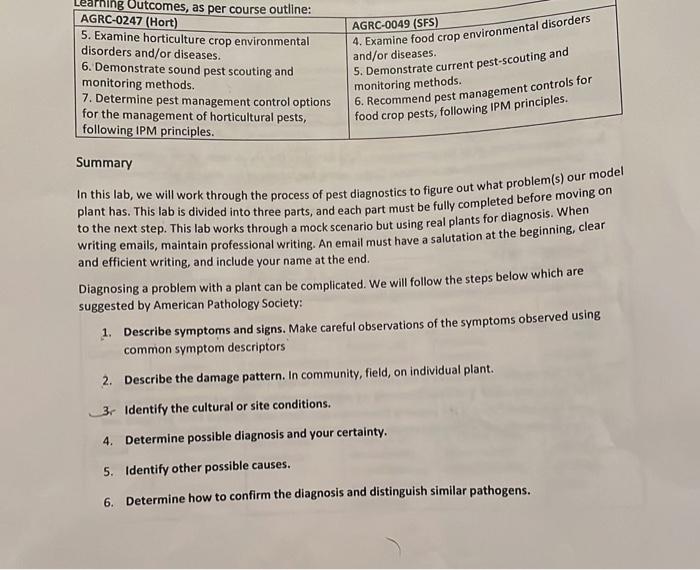
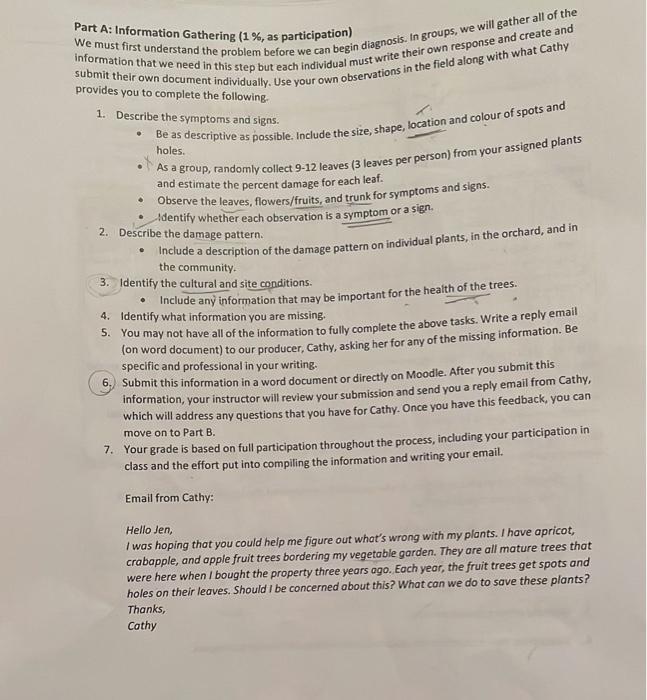
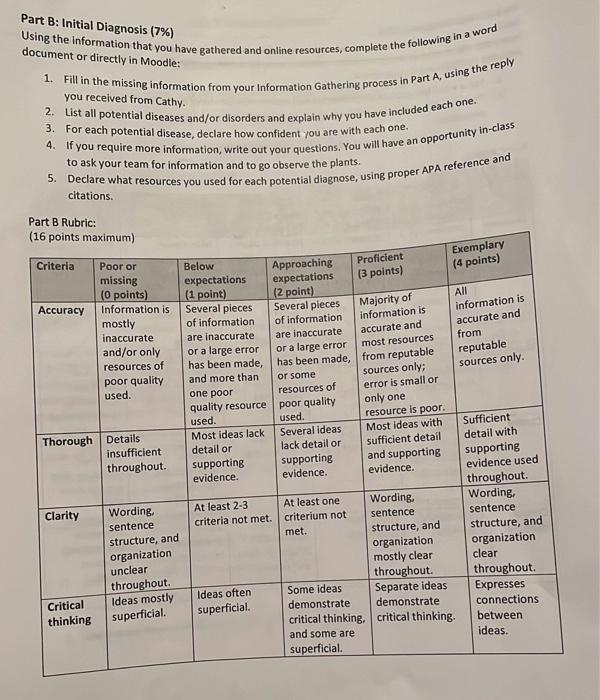
Summary In this lab, we will work through the process of pest diagnostics to figure out what problem(s) our model plant has. This lab is divided into three parts, and each part must be fully completed before moving on to the next step. This lab works through a mock scenario but using real plants for diagnosis. When writing emails, maintain professional writing. An email must have a salutation at the beginning, clear and efficient writing, and include your name at the end. Diagnosing a problem with a plant can be complicated. We will follow the steps below which are suggested by American Pathology Society: 1. Describe symptoms and signs. Make careful observations of the symptoms observed using common symptom descriptors 2. Describe the damage pattern. In community, field, on individual plant. 3. Identify the cultural or site conditions. 4. Determine possible diagnosis and your certainty. 5. Identify other possible causes. 6. Determine how to confirm the diagnosis and distinguish similar pathogens. Part A: Information Gathering ( 1%, as participation) We must first understand the problem before we can begin diagnosis. In groups, we will gather all of the (hat weed in this step but each individual must write their own response and create and (hich along with what Cathy submit their own docume to following. - Be as descriptive as possible. Include the size, shape, location and colour of spots and holes. - As a group, randomly collect 9-12 leaves (3 leaves per person) from your assigned plants and estimate the percent damage for each leaf. - Observe the leaves, flowers/fruits, and trunk for symptoms and signs. - Identify whether each observation is a symptom or a sign. 2. Describe the damage pattern. - Include a description of the damage pattern on individual plants, in the orchard, and in the community. 3. Identify the cultural and site conditions. - Include any information that may be important for the health of the trees. 4. Identify what information you are missing. 5. You may not have all of the information to fully complete the above tasks. Write a reply email (on word document) to our producer, Cathy, asking her for any of the missing information. Be specific and professional in your writing. 6. Submit this information in a word document or directly on Moodle. After you submit this information, your instructor will review your submission and send you a reply email from Cathy, which will address any questions that you have for Cathy. Once you have this feedback, you can move on to Part B. 7. Your grade is based on full participation throughout the process, including your participation in class and the effort put into compiling the information and writing your email. Email from Cathy: Hello Jen, I was hoping that you could help me figure out what's wrong with my plants. I have apricot, crabapple, and apple fruit trees bordering my vegetable garden. They are all mature trees that were here when I bought the property three years ago. Each year, the fruit trees get spots and holes on their leaves. Should I be concerned about this? What can we do to save these plants? Thanks, cathy Part B: Initial Diagnosis (7\%) Using the information that you have gathered and online resources, complete the following in a word document or directly in Moodle: 1. Fill in the missing information from your Information Gathering process in Part A, using the reply you received from Cathy. 2. List all potential diseases and/or disorders and explain why you have included each one. 3. For each potential disease, declare how confident you are with each one. 4. If you require more information, write out your questions. You will have an opportunity in-class to ask your team for information and to go observe the plants. 5. Declare what resources you used for each potential diagnose, using proper APA reference and citations. Part B Rubric: (16 points maximum)
Step by Step Solution
There are 3 Steps involved in it

Get step-by-step solutions from verified subject matter experts
 Study Help