







Question: (Supply Chain Category), Case study. Direct Dispatch in Supply Chain, touching every part of the organization, partnering with over 75,000 suppliers, employing over 110,000 people
(Supply Chain Category), Case study.
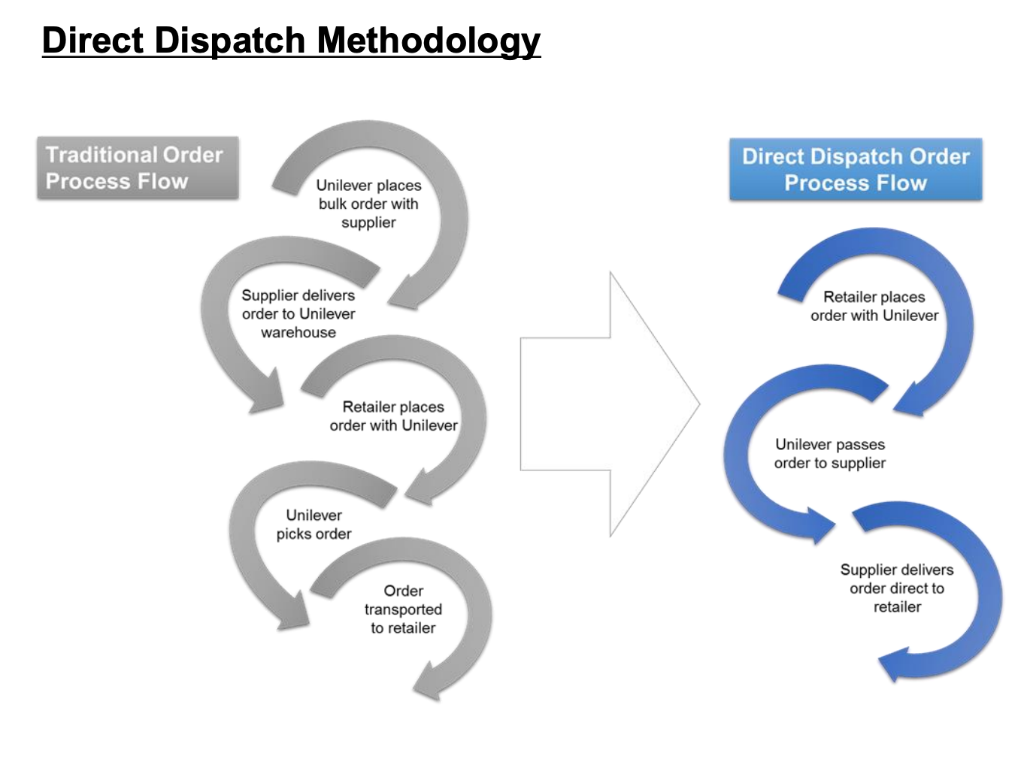
Direct Dispatch in Supply Chain, touching every part of the organization, partnering with over 75,000 suppliers, employing over 110,000 people in 190 countries, were the backbone of the business where every decision can have a huge impact Im sure youll find it an exciting place to work! Kate Levine is a new Strategic Planning Manager who has recently joined the supply chain from Marketing. She has a video conference with the Supply Chain team in Argentina later today, who has asked for her view on the direct dispatch methodology. I would like you to provide Kate with a summary of direct dispatch, its benefits and its risks, so that shes fully briefed for the call. In summary, direct dispatch is an innovation used in some of our markets where products are dispatched from a producer or supplier directly to the customer, rather than via our distribution centers. There are potentially huge cost savings and efficiencies to be gained. There have been some successes and some failures, were continuously learning and improving how we do things, but it may not be right for every market or brand. Ive sent you some information from one of our teams who have adopted it and an article about a clothing retailers experiences.
Article from Supply Chain Innovator industry publication Pierre Laloux, Supply Chain Director with global fashion retailer Z&M talks us about introducing direct dispatch into their supply chain. Why Direct Dispatch? Weve been experiencing insatiable consumer demand for a wider range of products for some time now. Its being fuelled by the shop window of the internet, all retailers are under pressure to offer more product lines from more suppliers, whilst being careful not to increase the cost of logistics or lock up our cash in huge stock holdings. How has it been going? Its been a mixed experience so far. There have been some wins such as order times falling. Our main concern has been maintaining the customer experience. How have suppliers responded? Again, its been a mixed response. Interestingly weve increased the proportion of smaller suppliers; this system means we no longer need their commitment to a huge first order. Most suppliers have been cautious but open to piloting it. It works for them because they can improve their forecasting being more directly connected to consumer demand. But they do need to have the right technology like really efficient ordering systems to reduce the risk of errors. Consumers? They like real-time stock levels; it helps them decide which products to buy. The stores also obviously benefit from this too. And the future? The fact that it can be used for any retail channel, I believe helps us to future proof our supply chain.
Email To: You
From: Alicia Marino, Supply Chain Manager
Subject: Experiences of direct dispatch
Hi,
Ive been asked to send you a summary of our main learning points from our experience of adopting direct dispatch with an external supplier of Sunsilk. There are two I would highlight: Visibility of data: We and our retail customers need accurate data on stock levels as if its held in our own warehouse. We invested in integrating order management systems with the suppliers systems, and real-time stock visibility systems gave everyone more confidence. A whiteboard tool helped us communicate with suppliers for example by adding comments to a specific order. Dispatch documentation and labeling: There were some situations where the product arrived without company or Sunsilk branding or with poor labeling; our concern was damage to our brand reputation. We resolved it by giving our supplier a cost-effective and straightforward document and labeling production facilities. This is, however, just one example of how important quality assurance processes are when adopting a new methodology like direct dispatch. I hope this is useful.
Alicia
So let's move to the business problem, come up with a solution, and prepare to present your recommendations. As part of your response, please cover:
1. How you approach your analysis of the information?
2. What in your opinion is the biggest benefit and why?
3. What in your opinion is the most serious risk and why?
4. What do you believe is the best way to overcome this risk?
5. How does direct dispatch fit with the company's goals?
6. Do you think, in principle, direct dispatch could work for every type of product?
I need professional answers for all the 6 questions, because its a case study.
Direct Dispatch Methodology Traditional Order Process Flow Direct Dispatch Order Process Flow Unilever places bulk order with supplier Supplier delivers order to Unilever warehouse Retailer places order with Unilever Retailer places order with Unilever Unilever passes order to supplier Unilever picks order Order transported to retailer Supplier delivers order direct to retailerStep by Step Solution
There are 3 Steps involved in it

Get step-by-step solutions from verified subject matter experts
 Study Help