



Question: Suppose Ina, the representative consumer, derives utility from consumption and leisure with the following utility function: U = u (c, l) = ln c
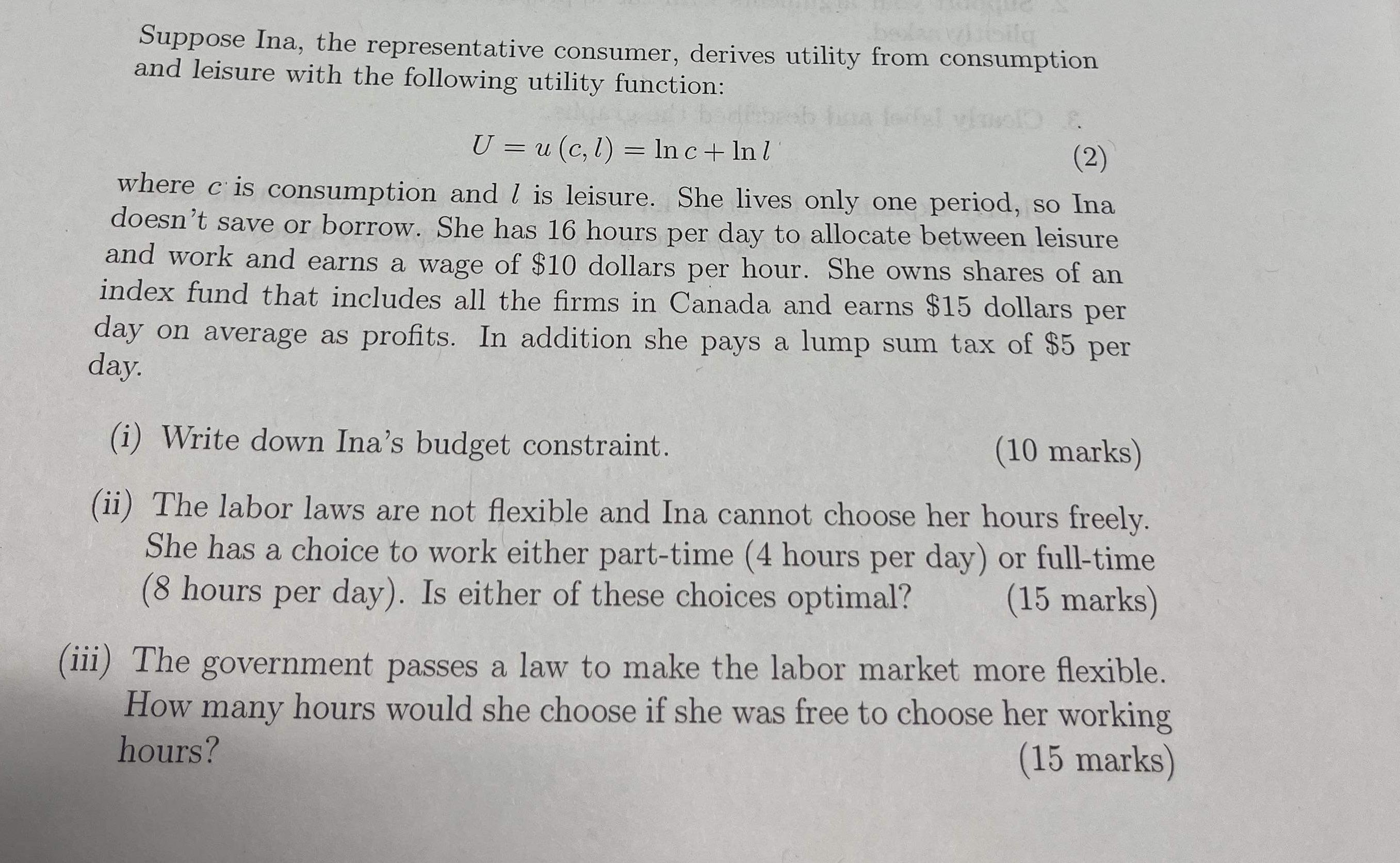
Suppose Ina, the representative consumer, derives utility from consumption and leisure with the following utility function: U = u (c, l) = ln c + ln l (2) where c is consumption and is leisure. She lives only one period, so Ina doesn't save or borrow. She has 16 hours per day to allocate between leisure and work and earns a wage of $10 dollars per hour. She owns shares of an index fund that includes all the firms in Canada and earns $15 dollars per day on average as profits. In addition she pays a lump sum tax of $5 per day. (i) Write down Ina's budget constraint. (10 marks) (ii) The labor laws are not flexible and Ina cannot choose her hours freely. She has a choice to work either part-time (4 hours per day) or full-time (8 hours per day). Is either of these choices optimal? (15 marks) (iii) The government passes a law to make the labor market more flexible. How many hours would she choose if she was free to choose her working hours? (15 marks)
Step by Step Solution
3.29 Rating (149 Votes )
There are 3 Steps involved in it
i Inas budget constraint can be written as follows Total daily income Wage income Profits Tax Wage i... View full answer

Get step-by-step solutions from verified subject matter experts